What the Conveyor Take-Up Pulley Does
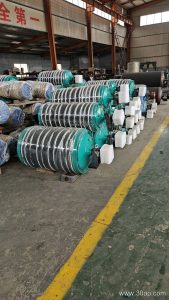
The conveyor take-up pulley is the drum that keeps a belt conveyor under controlled tension. It sits at the take-up station, usually near the tail end or in a dedicated tower, and moves along a guided frame while the belt runs. By pulling the belt taut, this tensioning pulley prevents slip at the drive, limits sag between idlers, and keeps the belt tracking through the load zone. Plants handling abrasive or heavy loads, from a copper mine to a cement plant clinker line, depend on this drum to hold steady tension as the belt stretches with age.
The same component also appears in catalogues as a tension pulley or take-up drum. Those are accurate equivalents for the same product. A drive pulley, tail pulley, or bend pulley is a different item with a different job, and none of these should be treated as a substitute when specifying the tensioning position.
Construction and Surface Options
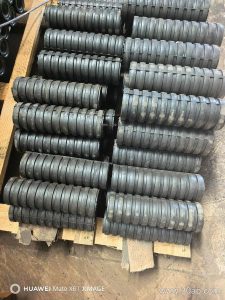
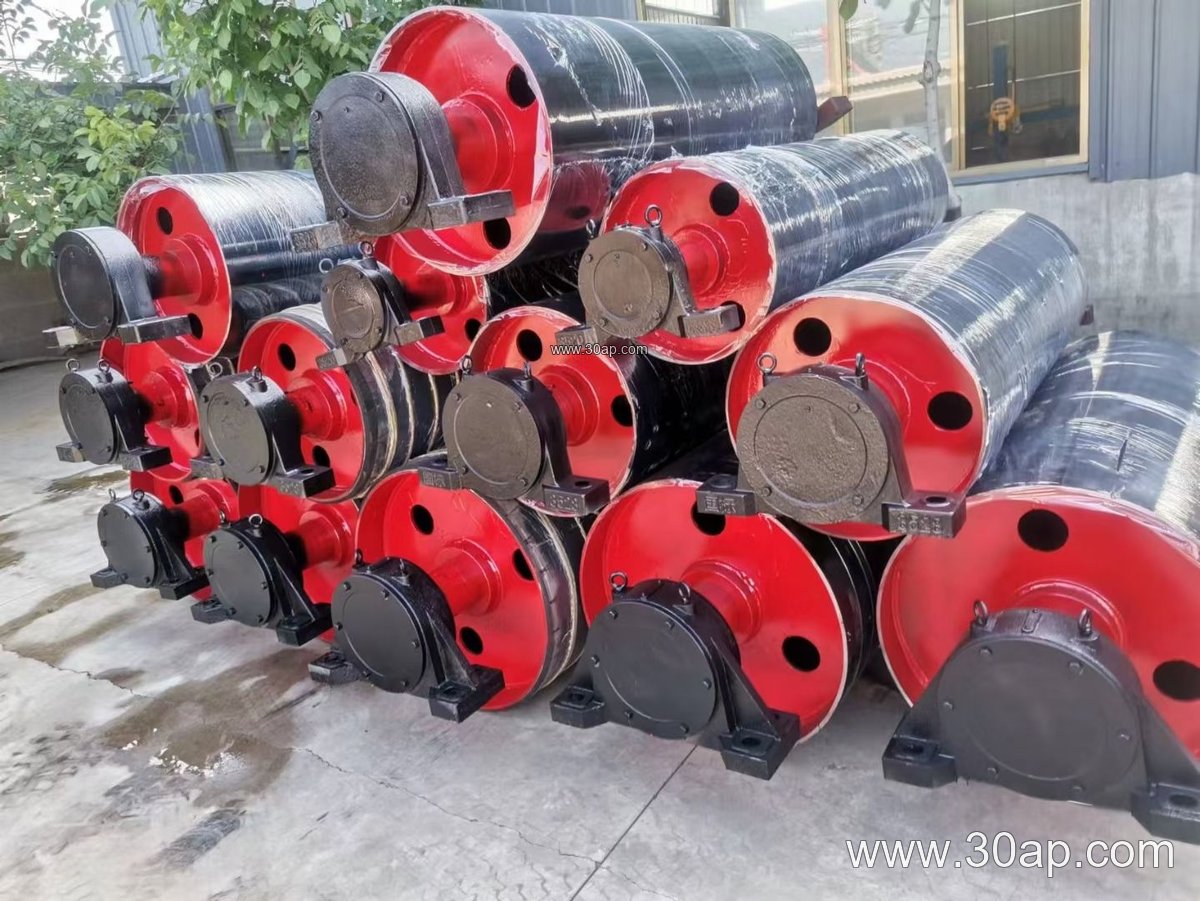
A typical take-up drum is built around a welded steel shell with machined end discs and a through shaft. The shaft runs in bearing housings that slide on the take-up frame, so the pulley can travel as tension is adjusted. Common shell diameters run from about Ø200 up to Ø1250 or more, and the face width is normally a little wider than the belt, for example a B800 belt with a roughly 950 mm face or a B1200 belt with about 1400 mm.
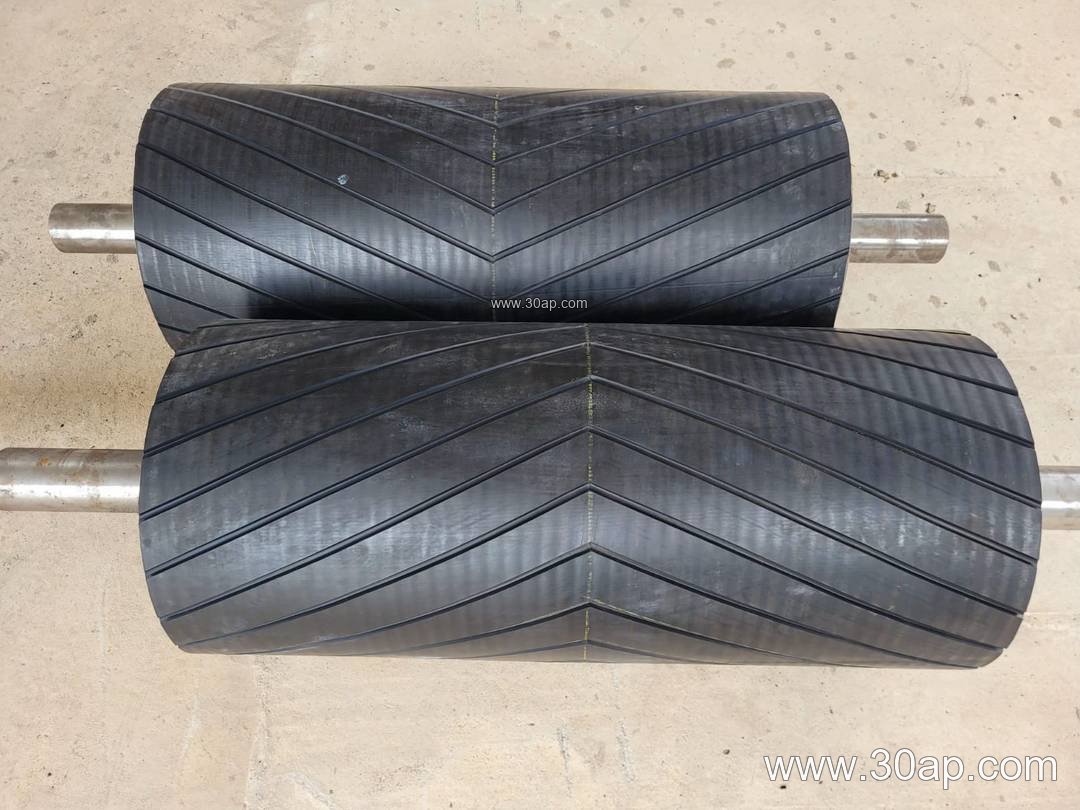
Surface finish matters more here than many buyers expect. A plain face is fine where the wrap angle is small and the belt is clean. Rubber lagging, applied cold or hot vulcanized, improves grip and protects the shell from fine dust. Diamond or herringbone grooving helps shed water and fines in a quarry or aggregate line. Ceramic lagging is chosen when slip and abrasion are both severe. Lagging thickness is commonly 8, 10, 12, 15, or 20 mm depending on duty.
- Plain face for light, clean duty
- Cold-bonded or hot-vulcanized rubber for general grip
- Diamond or herringbone pattern for wet, dusty service
- Ceramic tiles for high-wear tensioning points
Shaft diameter is set by torque and bearing load, not by belt width alone. Common shaft sizes range from Ø50 to Ø200, and the final figure should come from the conveyor designer. Matching a B650 belt to a Ø90 shaft is a design decision, not a rule.
Where It Fits in the System
In a coal handling plant or a power station coal yard, the take-up drum often works with a gravity tower that lets the pulley rise and fall as load changes. In a rock crushing circuit, a screw-type take-up frame moves the drum on slides and holds it with a locknut. Both arrangements need the pulley to stay square to the belt centerline; a cocked frame causes edge wear and misalignment through the idler roller sets.
The drum also has to suit the belt it tensions. A heavy-duty mining conveyor belt with a steel cord carcass behaves differently from a multi-ply fabric core belt, and a flame retardant conveyor belt used underground may need a wider take-up travel because of stretch. Where the line carries a chevron conveyor belt or a corrugated sidewall belt, check that the pulley face and the frame clearance allow the cleats or walls to pass without rubbing.
A conveyor bracket or bearing housing that is undersized will flex under tension and shorten bearing life. The take-up frame, the guide rails, and the pulley bearings should be reviewed together as one assembly.
Specification Reference
Values below are typical reference figures. Final sizes are confirmed by the conveyor design and the belt tension calculation.
| Item | Common reference values |
|---|---|
| Belt width (B) | B400, B500, B650, B800, B1000, B1200, B1400, B1600, B1800, B2000 |
| Face width | Approx. 500, 600, 750, 950, 1150, 1400, 1600, 1800, 2000, 2200 mm |
| Shell diameter | Ø200, Ø250, Ø315, Ø400, Ø500, Ø630, Ø800, Ø1000, Ø1250 |
| Shaft diameter | Ø50, Ø60, Ø70, Ø80, Ø90, Ø100, Ø120, Ø140, Ø160, Ø180, Ø200 |
| Lagging thickness | 8, 10, 12, 15, 20 mm |
Combinations such as B800 × Ø500, B1200 × Ø1000, or B1400 × Ø800 are seen in practice, but many other pairings are valid. A wide belt does not force one diameter, and a small diameter does not limit the line to a narrow belt.
Buyer Checklist
- Confirm the take-up type: gravity, screw, or fixed with an adjustable frame.
- State belt width, belt type, and maximum tension so the shell and shaft can be sized.
- Choose lagging by environment: wet quarry, oily workshop, or dusty coal yard.
- Check bearing size, frame travel, and clearance for cleats or sidewalls.
- Ask for the balancing grade and the shaft keyway detail before ordering.
On a typical bulk material conveyor belt line, a well-matched tensioning drum reduces slip, extends belt life, and keeps the idler roller train running true. Reviewing the take-up pulley together with the belt specification is the simplest way to avoid repeated re-tensioning and premature belt damage.