What an Intermediate Bend Pulley Does
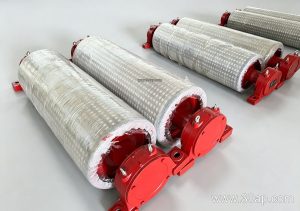
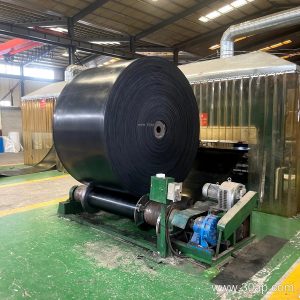
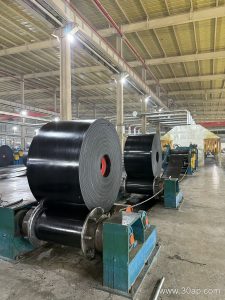
An intermediate bend pulley is a directional change component mounted along the conveyor path rather than at the head or tail. Its job is to guide the conveyor belt around obstacles, adjust the wrap angle on a drive pulley, or route the return strand for better clearance. Unlike a drive pulley that transmits torque or a tail pulley that sets belt tension at the loading end, this roller only changes the belt’s direction. In a coal mining conveyor or a quarry conveyor line, an intermediate bend pulley often appears where the belt must step around a structural column or transition between inclined and horizontal sections. It works together with the conveyor belt, idler roller, and conveyor bracket to keep the route compact and the belt tracking stable.
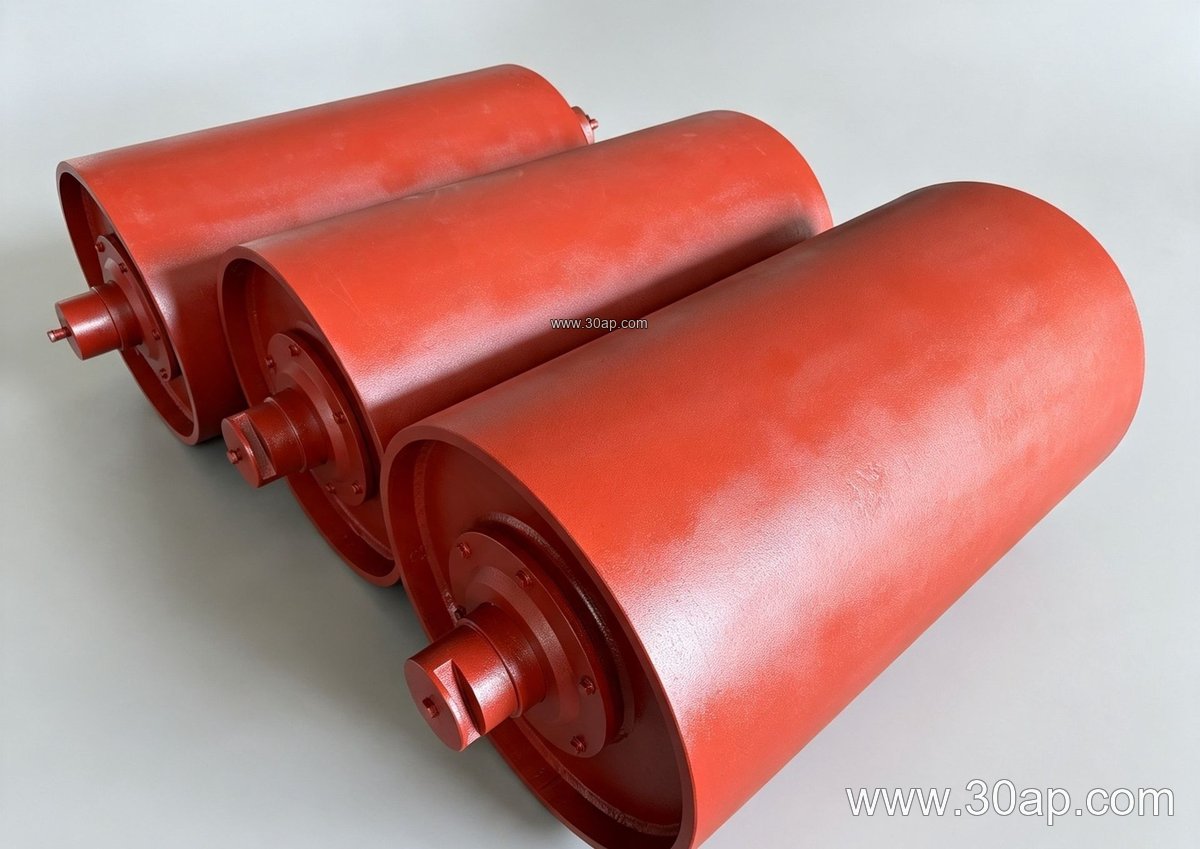
Construction and Surface Options
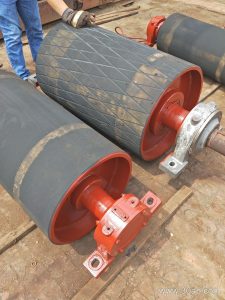
The pulley body is typically a welded steel drum with a machined face, fitted with a shaft, bearing housings, and a lagging layer when extra grip or wear protection is needed. Common surface forms include plain finish, cold-bonded rubber, hot-vulcanized rubber, diamond grooving, and ceramic lagging. Lagging thickness often falls in the 8 mm to 20 mm range, with 10 mm and 12 mm being frequent choices for general bulk material handling. The drum face width is usually wider than the belt — for example, a B800 belt may run on a pulley face of about 950 mm, and a B1200 belt on roughly 1400 mm. Diameter selection depends on belt tension, wrap angle, and available space; common sizes include Ø315, Ø400, Ø500, Ø630, and Ø800. Shaft diameter is determined by torque and load, not by belt width alone. A B1000 conveyor might use a Ø100 or Ø120 shaft, but the final value comes from the design calculation.
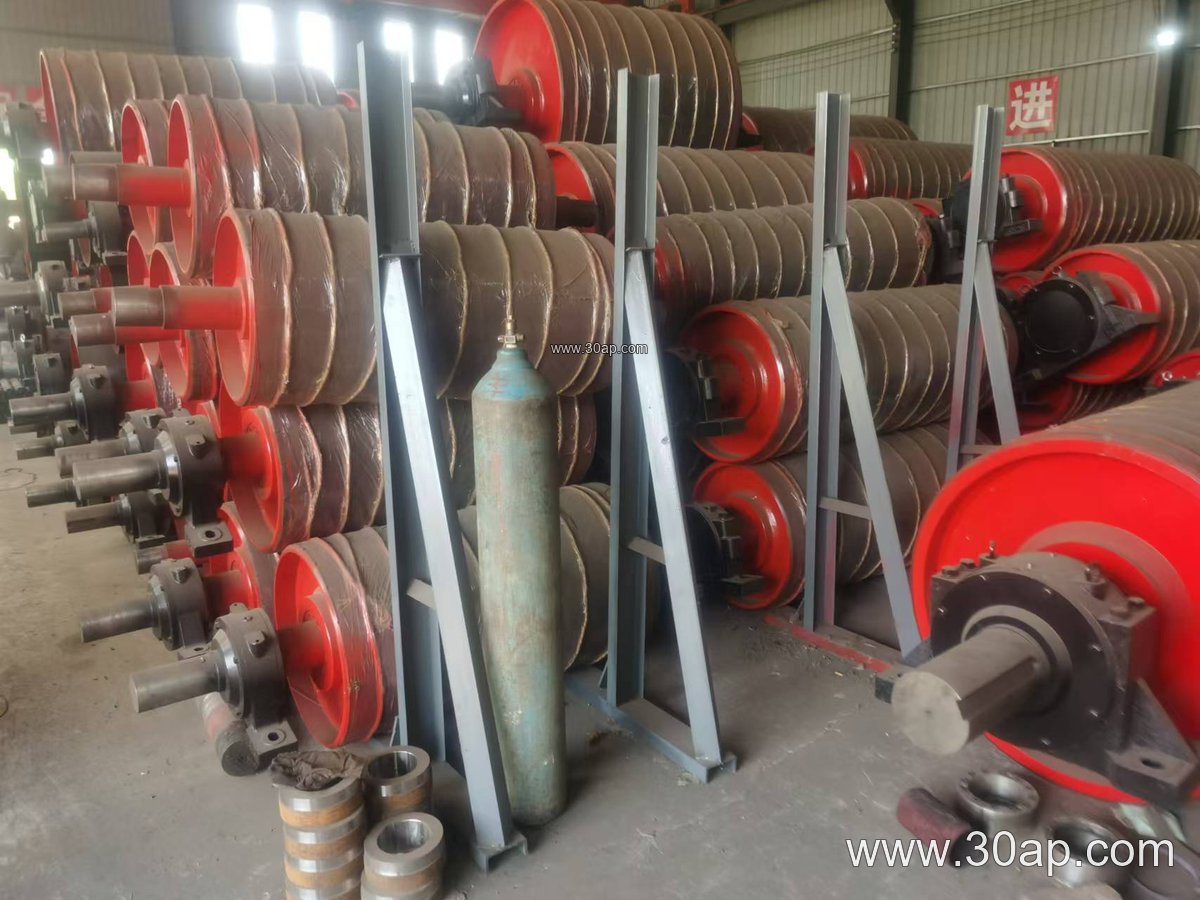
Where It Fits in the Plant
In a cement plant, an intermediate bend pulley helps route the clinker conveyor around a transfer tower without adding a second drive station. At a power plant coal yard, it may be used to increase the contact angle on a drive pulley or to guide the return belt away from a chute. Sand and aggregate operations use these pulleys to keep the conveyor profile low and to avoid interference with screening equipment. The same component appears in iron ore and copper ore handling, where abrasion-resistant conveyor belts and heavy-duty idler rollers are common. A properly placed bend pulley can reduce the number of conveyor brackets needed and simplify the structural steel layout.
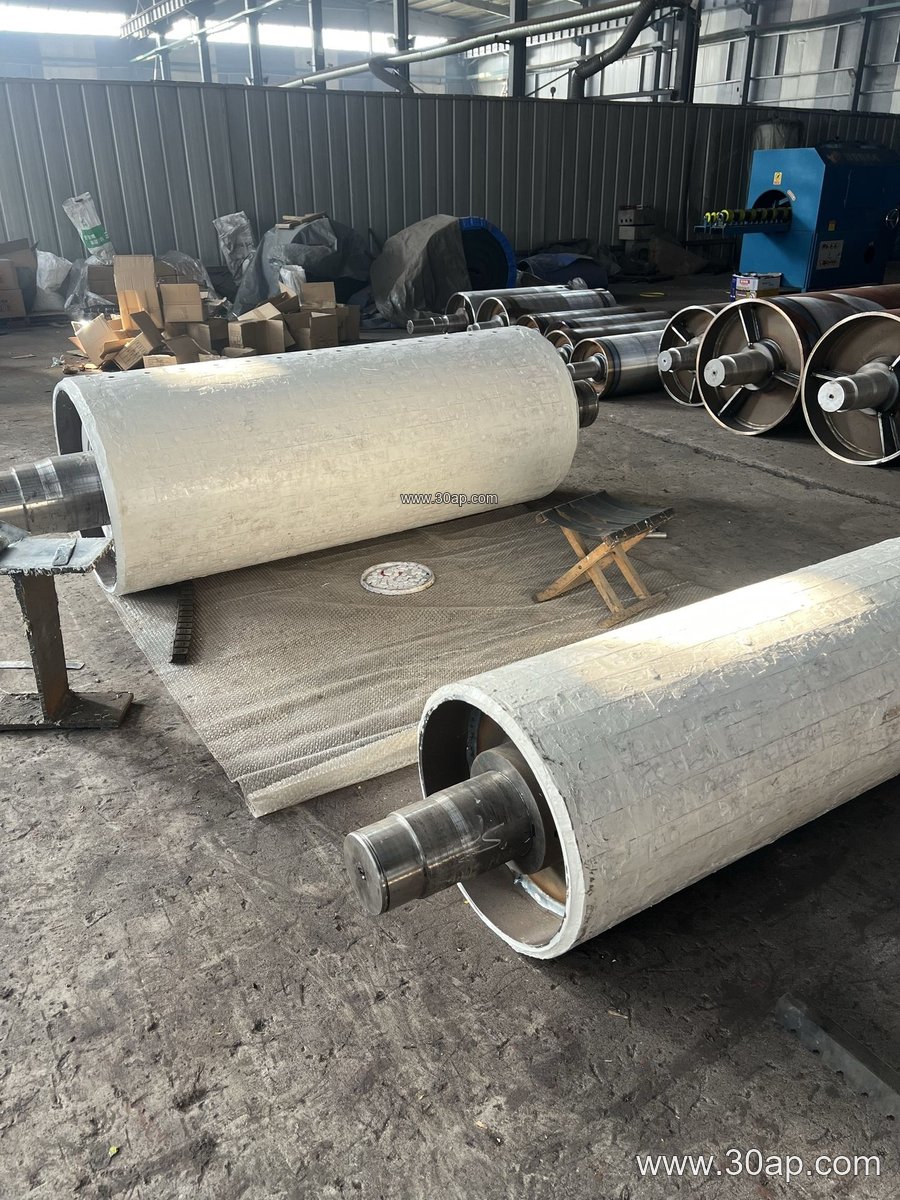
Matching the Pulley to the Belt and Load
Selection starts with the belt type and tension. A steel cord conveyor belt or a high-strength EP conveyor belt carries higher tension, so the pulley diameter and shaft size must be sized accordingly. For a multi-ply fabric core conveyor belt, a smaller diameter may be acceptable if the belt’s minimum pulley diameter allows it. Abrasion resistant conveyor belts in a crusher conveyor line may benefit from rubber lagging to protect the drum face, while a heat resistant conveyor belt near a kiln discharge may call for a plain or ceramic surface that tolerates temperature. Flame retardant conveyor belts used in underground coal mining conveyors require the pulley to be positioned so that belt misalignment does not create rubbing against fixed structures. Always check the belt manufacturer’s recommended minimum pulley diameter — do not assume that one belt width matches one fixed pulley diameter.
Buyer Checklist
- Confirm the belt width and the required pulley face width, e.g., B650 with a face around 750 mm or B1400 with a face around 1600 mm.
- Specify the belt type (EP, NN, steel cord, PVC/PVG) and its minimum pulley diameter requirement.
- State the wrap angle and whether the pulley is used for tensioning, redirecting, or increasing contact on a drive pulley.
- Choose a lagging surface based on material abrasion, oil exposure, and temperature — not every plant needs the same finish.
- Provide the shaft load and torque so the shaft diameter (Ø50 to Ø200 range) can be verified by calculation.
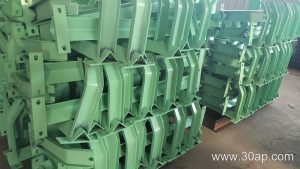
- Check bearing housing style and conveyor bracket compatibility before ordering.
For more information on conveyor pulleys and related components, visit our site at www.example.com/conveyor-pulley or www.example.com/bend-pulley. A well-matched intermediate bend pulley keeps the belt path clean and reduces wear on the conveyor belt and idler roller set.