What a Mining Ceramic Lagged Pulley Does
A mining ceramic lagged pulley is a conveyor pulley whose shell is covered with ceramic tiles set in a rubber matrix. It is used where the belt must keep grip on the drive pulley despite wet, dusty, or oily conditions. In a quarry, a limestone mine, or a coal preparation plant, slurry and fines often reach the pulley face, and a plain steel shell can begin to slip. The ceramic lagging restores friction and protects the shell from wear at the same time.
The same product is also called a ceramic lagging conveyor pulley or a ceramic rubber lagged pulley. These names describe the same assembly, not a different pulley type.
How the Lagging Is Built
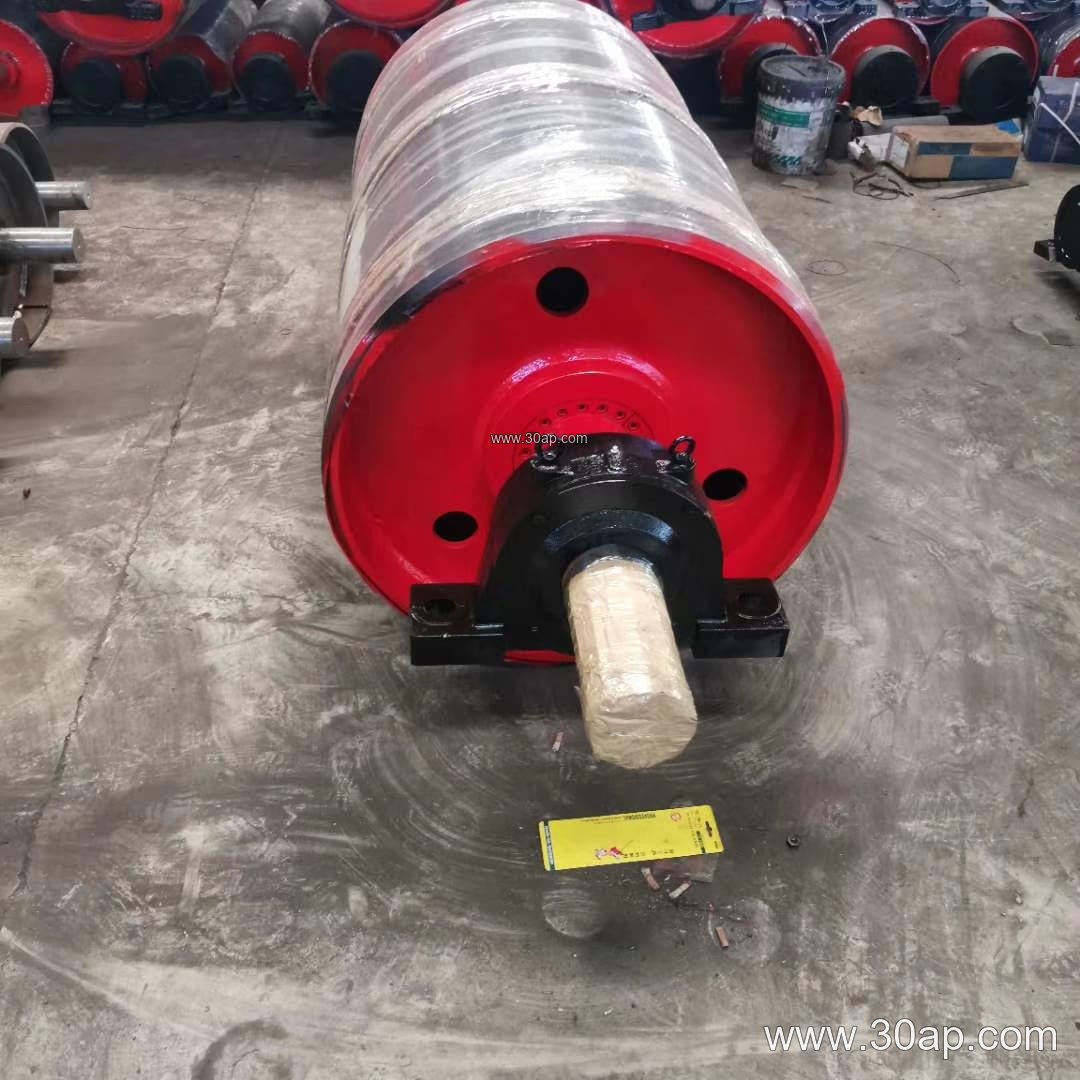
The pulley body is usually a welded steel drum with machined end discs and a shaft. Ceramic tiles, often with a raised dimple or stud pattern, are bonded into a rubber layer that is vulcanized or cold-bonded to the shell. The tile pattern creates local pressure points that press into the belt cover and help displace water and dirt. Common lagging thicknesses are 8, 10, 12, 15, and 20 mm, chosen according to belt tension and the severity of the duty.
- Ceramic tile pattern: dimpled, studded, or plain tile faces
- Rubber matrix: natural rubber or abrasion resistant compound
- Bonding: hot vulcanized or cold bonded, depending on workshop capability
- Shell: welded steel drum, sometimes with a sacrificial wear sleeve
Where It Fits on the Conveyor
This lagging is most often specified for the drive pulley, because that is where torque is transferred to the belt. It can also be applied to a bend pulley in a high-tension path where belt wrap is limited. A tail pulley usually only needs plain or lightly rubber lagged surface, so ceramic is rarely the first choice there. Drive, tail, and bend pulleys are not interchangeable, and each position has its own load and wrap conditions.
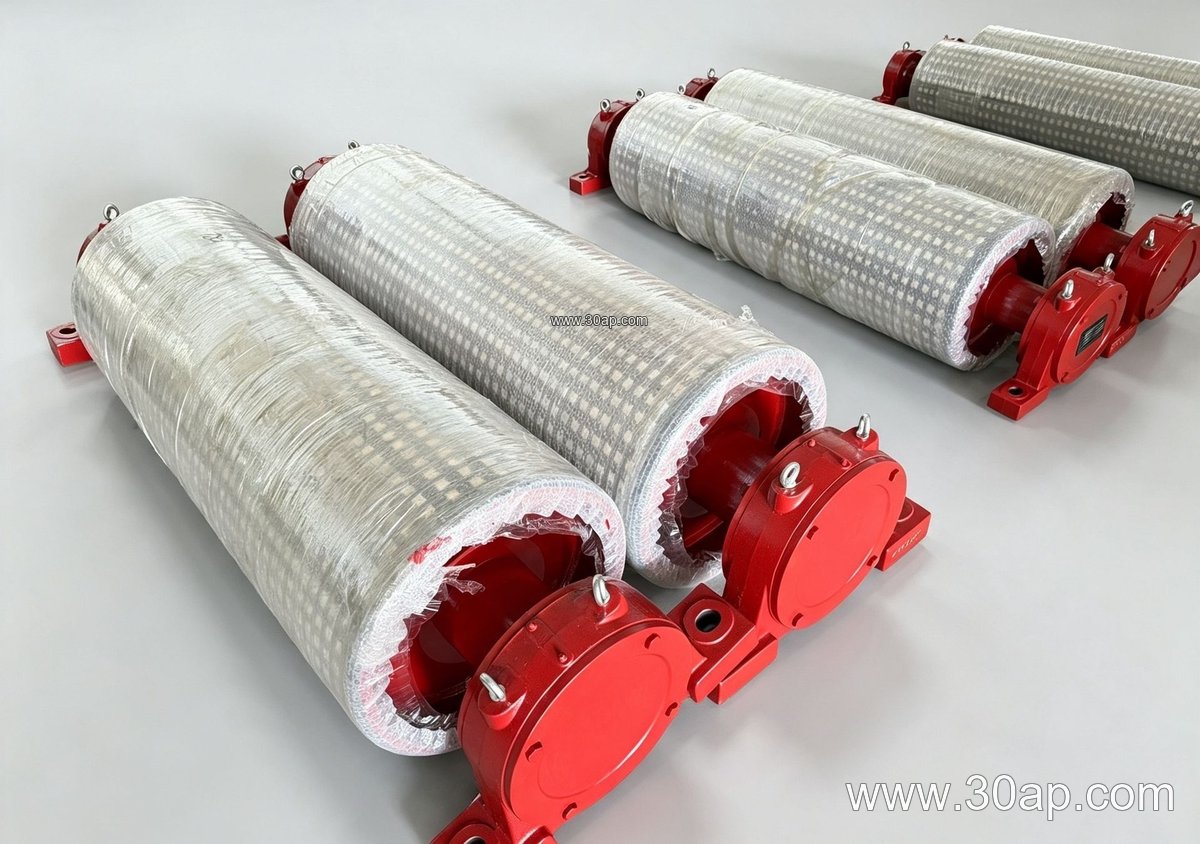
Ceramic lagging is also seen on a tension pulley in a take-up system and on a snub pulley where the belt changes direction under load. In a copper ore or iron ore line, the head pulley may carry ceramic lagging while the return idler rollers stay plain steel, because the two components solve different problems.
Typical Sizes and Combinations
Pulley dimensions are selected from belt width, belt tension, shaft torque, and the space available in the conveyor frame. The table below shows reference combinations, not fixed rules. A given belt width can match more than one pulley diameter.
| Belt width | Shell face width (approx.) | Reference diameter |
|---|---|---|
| B650 | 750 mm | Ø400, Ø500 |
| B800 | 950 mm | Ø500, Ø630 |
| B1000 | 1150 mm | Ø630, Ø800 |
| B1200 | 1400 mm | Ø800, Ø1000 |
| B1400 | 1600 mm | Ø1000, Ø1250 |
| B1600 | 1800 mm | Ø1250, Ø1400 |
| B1800 | 2000 mm | Ø1400, Ø1600 |
Shaft diameters commonly range from Ø50 to Ø200 mm, but the final size follows torque and bending load calculations. Do not assume a shaft size from belt width alone. A B1200 × Ø1000 pulley and a B800 × Ø500 pulley are both realistic references, yet neither is a universal pairing.
Matching the Pulley to the Belt
The belt cover and the lagging work as a pair. A heavy-duty mining conveyor belt with a thick abrasion resistant cover grips well on dimpled ceramic, while a thin cover may wear faster under the same tile pattern. In a coal mining conveyor belt installation, flame retardant conveyor belt properties must be preserved, so the lagging compound should be selected with the same fire safety intent. For long overland lines, a steel cord conveyor belt carries high tension and usually calls for a larger pulley diameter to limit bending stress.
Where the belt carries wet aggregate, a chevron conveyor belt or corrugated sidewall conveyor belt may run on the same drive pulley, but the cleat height must be checked against the pulley face and any cleaner. Belt cleaners and ceramic lagging should be positioned so the scraper does not ride directly on the tile edges.
Buyer Checklist
- Confirm the pulley position: drive, bend, tension, or snub
- State belt width, belt type, and measured belt tension
- Specify lagging thickness and tile pattern if slip is a known issue
- Provide shaft diameter, bearing centers, and keyway details
- Check that conveyor bracket and frame dimensions allow the chosen diameter
- Ask how the tiles are bonded and whether spare tiles are available
Inspect the lagging at each shutdown. Loose tiles, cut rubber, and polished tile faces are signs that the pulley is losing grip. Replacing a worn ceramic lagged pulley before the shell is damaged is usually cheaper than rebuilding the drum. For a plant running several conveyors, keeping one spare ceramic lagged pulley in the warehouse can shorten downtime after a belt slip event.