What a Belt Conveyor Bracket Does on the Line
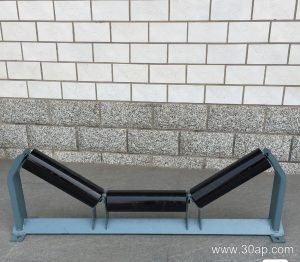
A belt conveyor bracket is the structural support that holds the idler roller in position and sets the trough profile of the conveyor belt. In a quarry, a cement plant, or a power plant coal yard, the bracket is the quiet component that decides whether the belt tracks straight, whether the idler roller turns freely, and whether spillage stays inside the chute. The bracket itself carries little glamour, but its geometry, material, and mounting accuracy influence the life of every belt and roller above it.
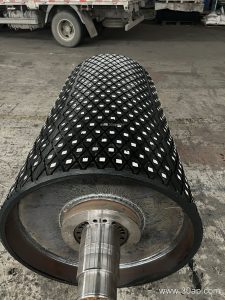
In practice, buyers describe this component in several accurate ways. The term belt conveyor bracket, conveyor bracket, and idler support bracket all refer to the same fabricated steel part that is bolted to the conveyor stringer and receives the idler shaft. The subtype still matters. A troughing bracket for the carrying side is not the same as a return bracket under the belt, and neither one should be confused with a drive pulley, tail pulley, or bend pulley, which are separate drum components.
Construction and Common Forms
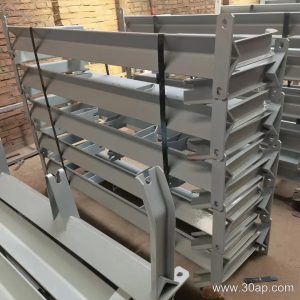
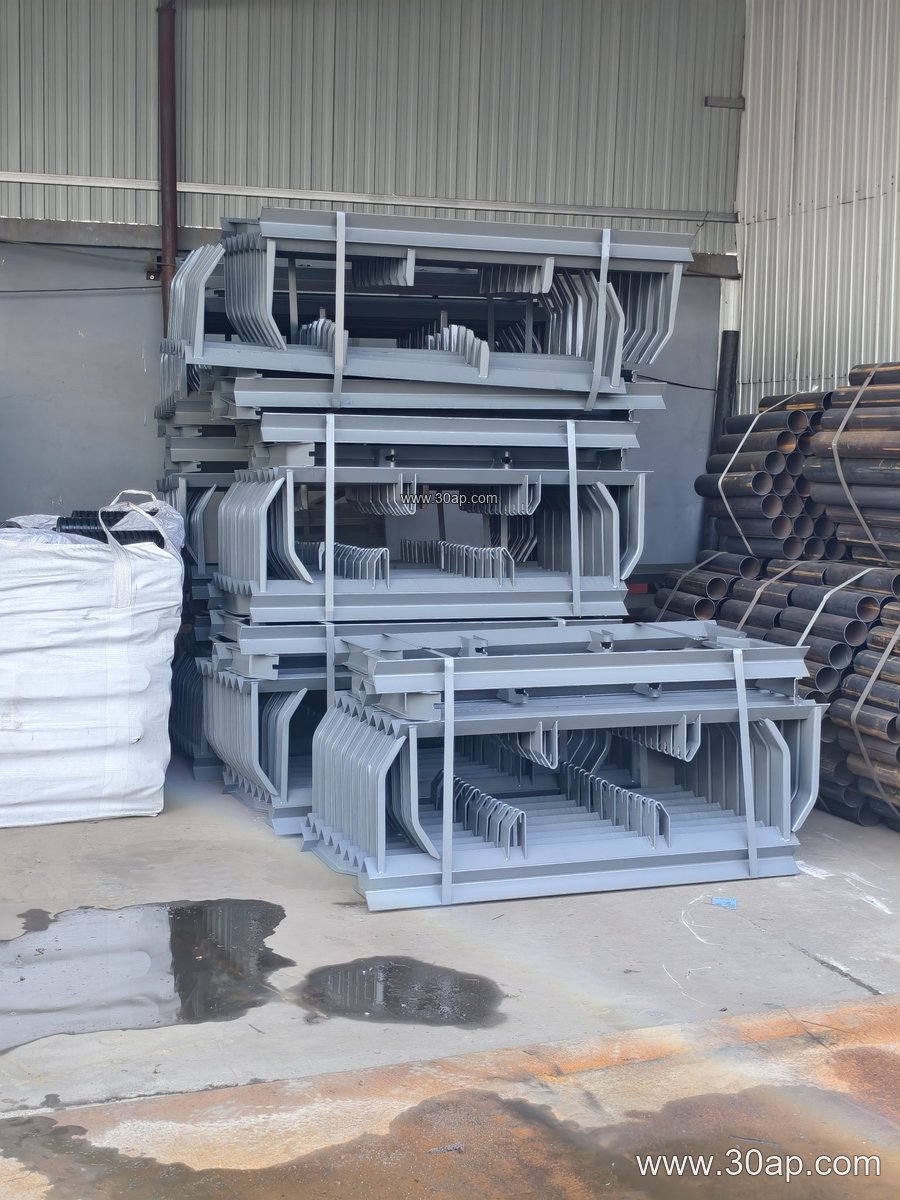
Most brackets are made from angle steel, channel steel, or folded steel plate. The fabrication should keep the mounting holes aligned so the idler roller sits square to the belt centerline. Powder coating or galvanizing is common where dust and moisture are present, though the right finish depends on the site and should be agreed with the supplier.
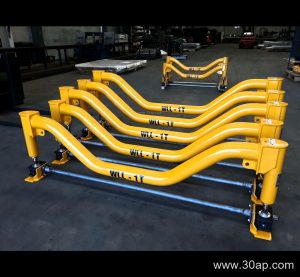
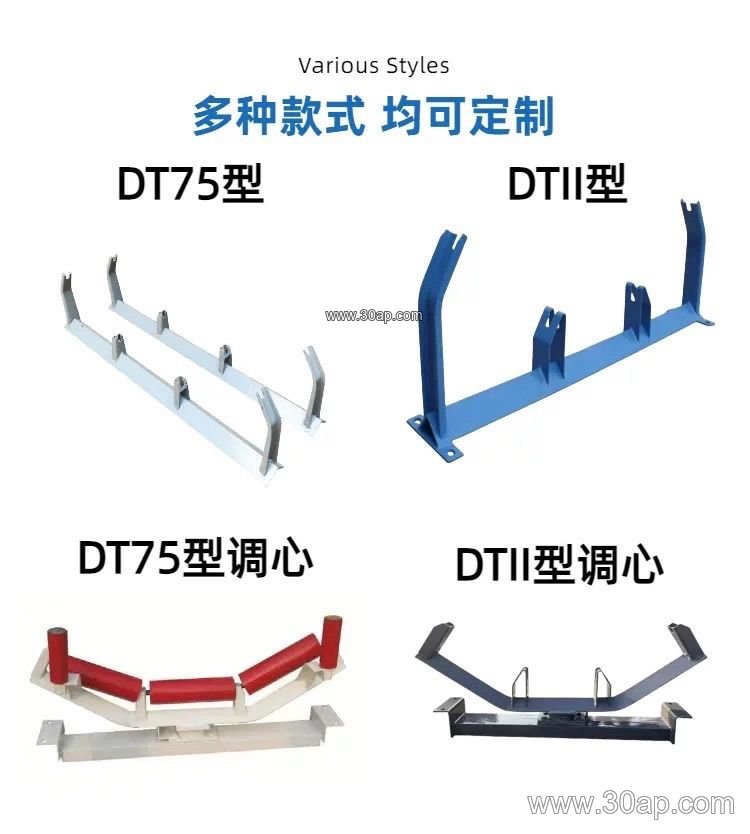
The main functional forms include troughing brackets on the carrying side, transition brackets near pulleys, return brackets such as the V-type return bracket, impact brackets at loading points, and self-aligning brackets used where belt tracking is difficult. Adjustable brackets allow the trough angle to be changed within a range, which is useful during commissioning or when a line handles products with different flow characteristics.
Reference data for early planning
The values below are common reference ranges, not fixed rules. Actual hole spacing and beam length follow the belt width, trough angle, and roller diameter chosen by the conveyor designer.
- Belt width: B500, B650, B800, B1000, B1200, B1400, B1600, B1800, B2000, B2200
- Trough angle: 20, 30, 35, 45 degrees; adjustable types can be set between these angles
- Forward tilt of the troughing roll: typically about 1.5 to 2 degrees
- Idler diameter: Ø89, Ø108, Ø133, Ø159, Ø194
Combinations such as B800 with 35 degrees and Ø108, or B1200 with 45 degrees and Ø133, are common examples. A narrower B650 line with 30 degrees and Ø89 is equally normal. No single belt width is tied to one trough angle or one roller diameter.
Where the Bracket Fits in Different Industries
In a limestone quarry or a stone crushing line, troughing brackets are exposed to sharp aggregate and heavy impact, so a robust frame and well-aligned idler roller matter more than a light profile. In a coal preparation plant or a power plant coal handling system, the bracket works with flame retardant conveyor belt and anti-static belting, and the return brackets often carry a V configuration to help center the belt.
In cement plants and clinker lines, heat resistant conveyor belt and abrasion resistant conveyor belt are common, and the brackets near the kiln discharge need to tolerate vibration and dust. In iron ore and copper ore terminals, steel cord conveyor belt and heavy-duty EP conveyor belt run over larger rollers, so the bracket design must match the higher loads. Ports and ship loading systems often use wide belts and long spans, where a stable bracket frame reduces belt wander.
Food and grain silo operations tend to use lighter brackets in clean environments, while fertilizer and chemical plants may specify a finish that resists corrosion. In each case the bracket supports, but does not replace, the conveyor pulley at the head and tail.
Buyer Checklist Before Ordering
Start with the belt width and the trough angle, then confirm the idler diameter and the mounting hole spacing on the stringer. Ask whether the bracket is fixed or adjustable, and whether a forward tilt is required for training. For impact zones, check that the bracket can accept impact rollers or cushioning. For return runs, confirm whether a flat or V-type return bracket is intended.
Material thickness, welding quality, and hole alignment are practical inspection points. On site, keep brackets square during installation, recheck bolt tightness after the first weeks, and replace bent brackets promptly to protect the conveyor belt and idler roller from misalignment. A bracket that is slightly out of line can wear a belt far faster than expected.
For coordinated supply of conveyor brackets, conveyor pulleys, and idler rollers, buyers can review matching options at www.beltconveyorspare.com and www.idler-roller.com. Matching the bracket to the actual belt width, trough angle, and roller size is the simplest way to keep a line running steady.