What a Heavy-Duty Conveyor Bracket Does on a Tough Line
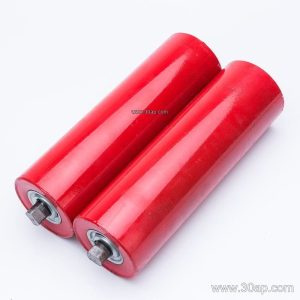
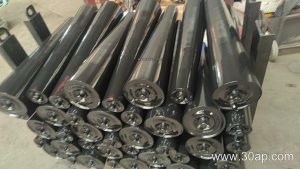
A heavy-duty conveyor bracket is the structural support that holds idler rollers in the correct position along a conveyor frame. On a quarry conveyor belt line or a power plant coal yard, the bracket carries the troughing rollers that shape the belt, plus the return rollers underneath. Because every roller load passes through this part, bracket stiffness and mounting accuracy directly affect belt tracking and roller life. A poorly built bracket flexes, changes the trough angle under load, and lets material spill at transfer points.
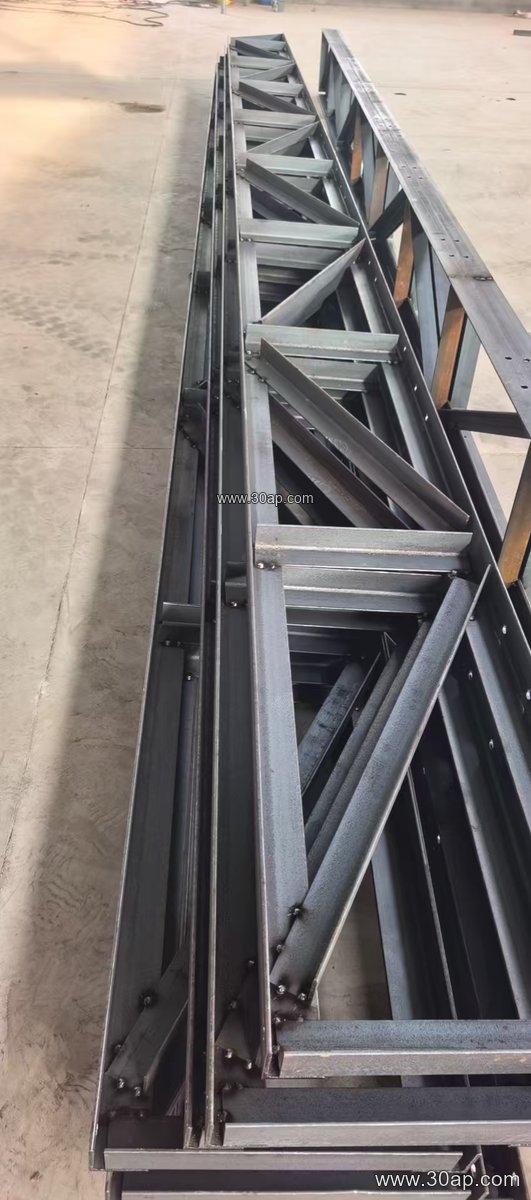
In practice the bracket is a fabricated steel assembly, usually made from angle, channel, or folded plate. It may be bolted to the stringer or welded to a cross beam, depending on frame design. For abrasive duty such as an iron ore or copper ore conveyor, the bracket should be stiff enough that the roller seats stay square after years of vibration.
Construction and Mounting Positions
Most heavy-duty brackets are welded fabrications with slotted or drilled roller seats. Slots allow field adjustment so the roller axis stays perpendicular to the belt centerline. Hot-dip galvanizing or a heavy paint system is common in port and fertilizer terminals where humidity and dust attack bare steel.
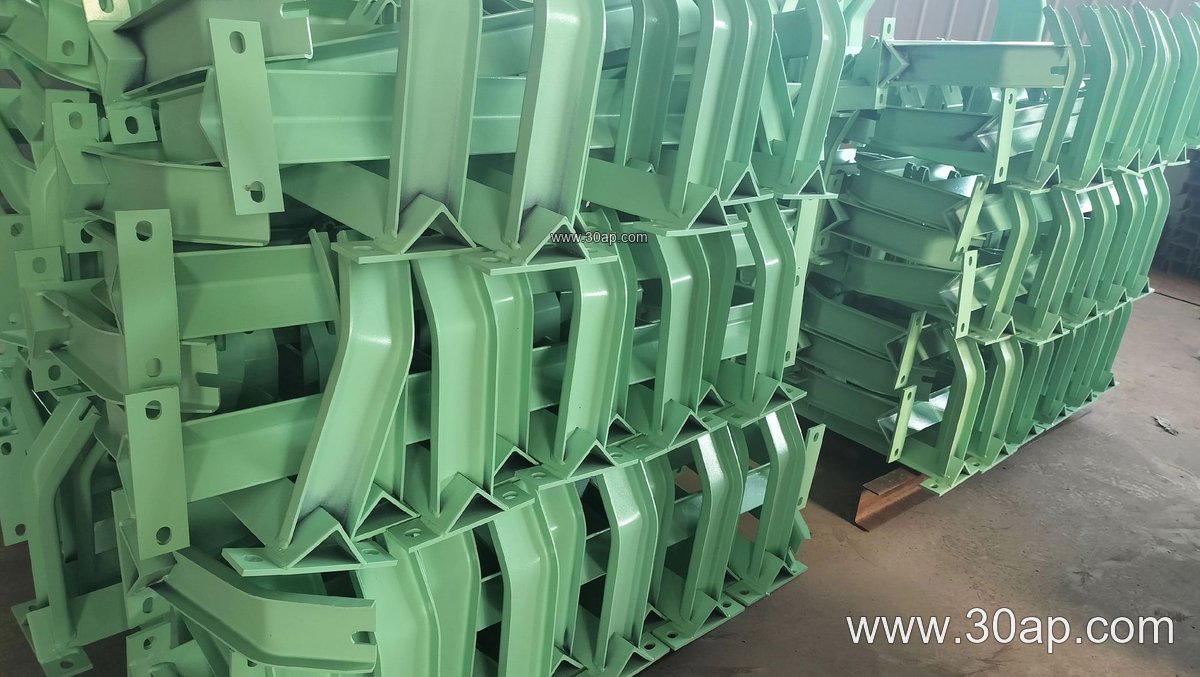
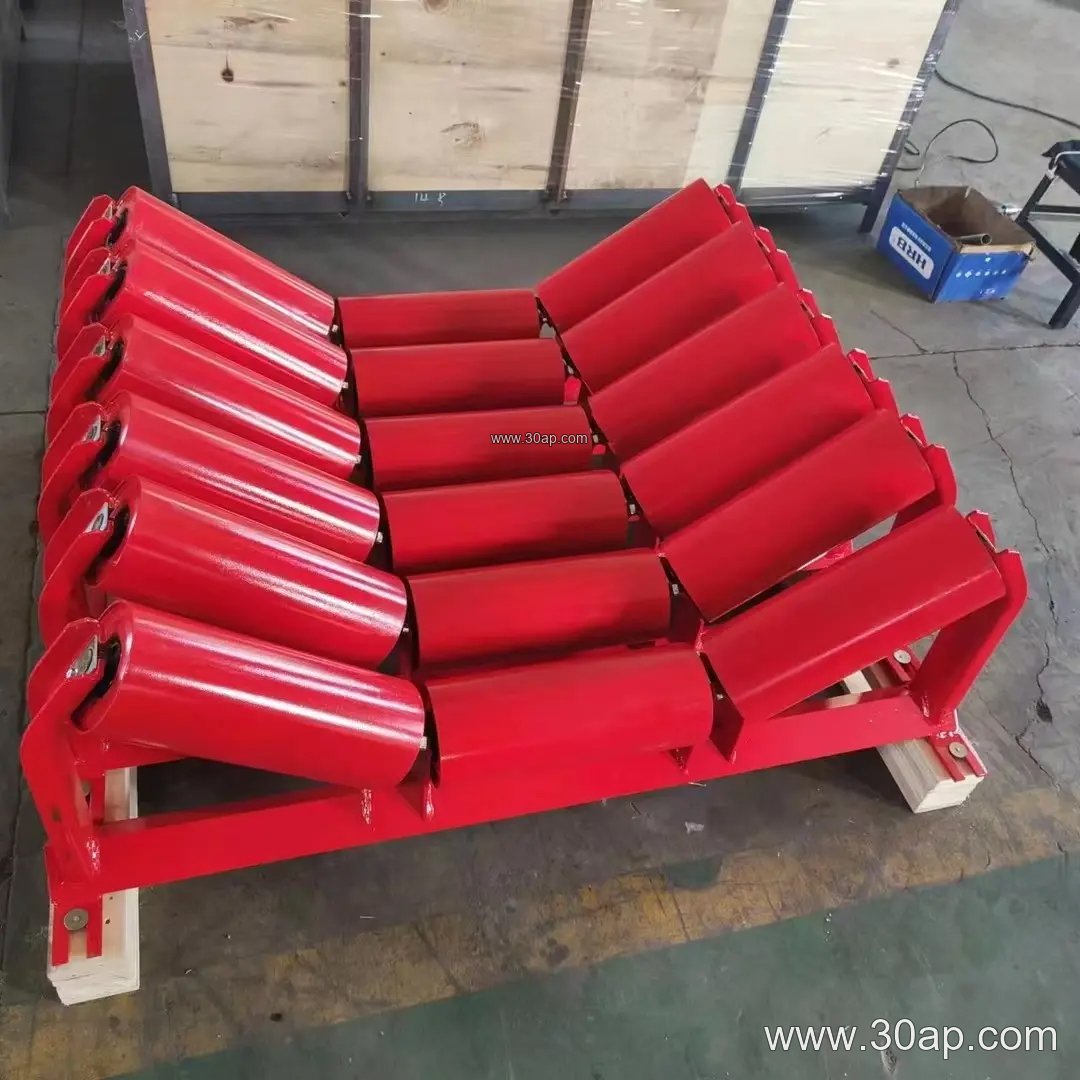
Mounting position defines the type. Troughing brackets sit on the carrying side and set the trough angle. Transition brackets near the head and tail ease the belt from flat to troughed. Return brackets and V-return brackets support the empty strand. Impact brackets with rubber cushions go under loading points, while self-aligning brackets correct minor mistracking.
Common Bracket Types and Their Role
- Troughing bracket — carries the loaded strand and sets the trough angle
- Transition bracket — smooths the change in profile near pulleys
- Return bracket and V-return bracket — support the empty belt
- Impact bracket — absorbs shock below chutes and hoppers
- Self-aligning bracket — helps correct belt drift
- Adjustable bracket — allows trough angle changes on site
Matching Belt Width, Trough Angle, and Roller Diameter
Bracket geometry follows belt width. A B650 frame uses shorter cross members than a B1800 frame, and the roller seats are spaced accordingly. Trough angles of 20, 30, 35, and 45 degrees are all used; the right choice depends on material flow and belt flexibility, not on a fixed rule. Roller diameters such as Ø89, Ø108, Ø133, Ø159, and Ø194 appear across these frames. A B800 line might run 35 degrees with Ø108 rollers, while a B1200 line could use 45 degrees and Ø133. Neither combination is mandatory, and no belt width is locked to one angle or one roller size.
Adjustable brackets let maintenance teams change the trough angle between these common values without replacing the whole frame. Forward-leaning brackets, usually around 1.5 to 2 degrees, are used where tracking needs extra help.
Where These Brackets Earn Their Keep
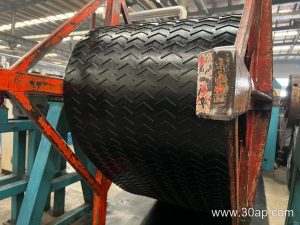
Mining and quarry duty is the classic case. A heavy-duty mining conveyor belt moving crushed rock puts continuous load on every troughing station. In a coal preparation plant or underground coal mining conveyor belt, flame retardant and anti-static properties matter for the belt itself, while the bracket must resist corrosion from wash water. Cement plants and clinker lines combine heat and abrasion, so brackets near kiln discharge need robust construction.
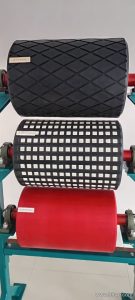
Other users include sand and gravel plants, crusher discharge lines, steel plant sinter conveyors, and port ship loading systems. In each case the bracket works with the conveyor pulley, idler roller, and belt as one system. Buyers should also check whether the line uses a steel cord conveyor belt or an EP conveyor belt, since heavier belts increase roller and bracket loads.
Buyer Checklist
Confirm belt width, trough angle, roller diameter, and mounting hole spacing before ordering. Ask for material thickness and surface treatment. Check that the bracket suits the actual belt construction, whether that is a multi-ply fabric core, a heat resistant conveyor belt, or an abrasion resistant conveyor belt. Spare parts should match existing frames so that a single bracket can be swapped without modifying the stringer.
For project enquiries covering conveyor brackets, idlers, and rubber conveyor belts, the site www.beltconveyors.com lists typical configurations. Related pages at www.beltconveyors.com cover conveyor pulley options and www.beltconveyors.com covers roller selection. A quick check of www.beltconveyors.com can help confirm frame compatibility before a bulk order.