What a Friction-Type Self-Aligning Idler Does
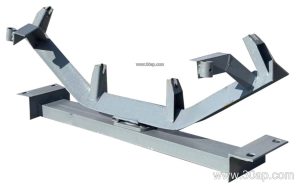
A friction-type self-aligning idler is a special carrying or return roller assembly that uses the friction between the rotating roller and the moving conveyor belt to correct belt misalignment. Unlike fixed troughing idlers, this idler is mounted on a pivoting frame or bracket that allows the whole idler set to swing slightly when the belt drifts to one side. The friction drive from the belt surface creates a small turning force that steers the idler in the direction needed to bring the belt back to center. It is a common choice for longer conveyors where belt wander can cause spillage, edge damage, or uneven wear.
How the Friction Self-Aligning Roller Is Built
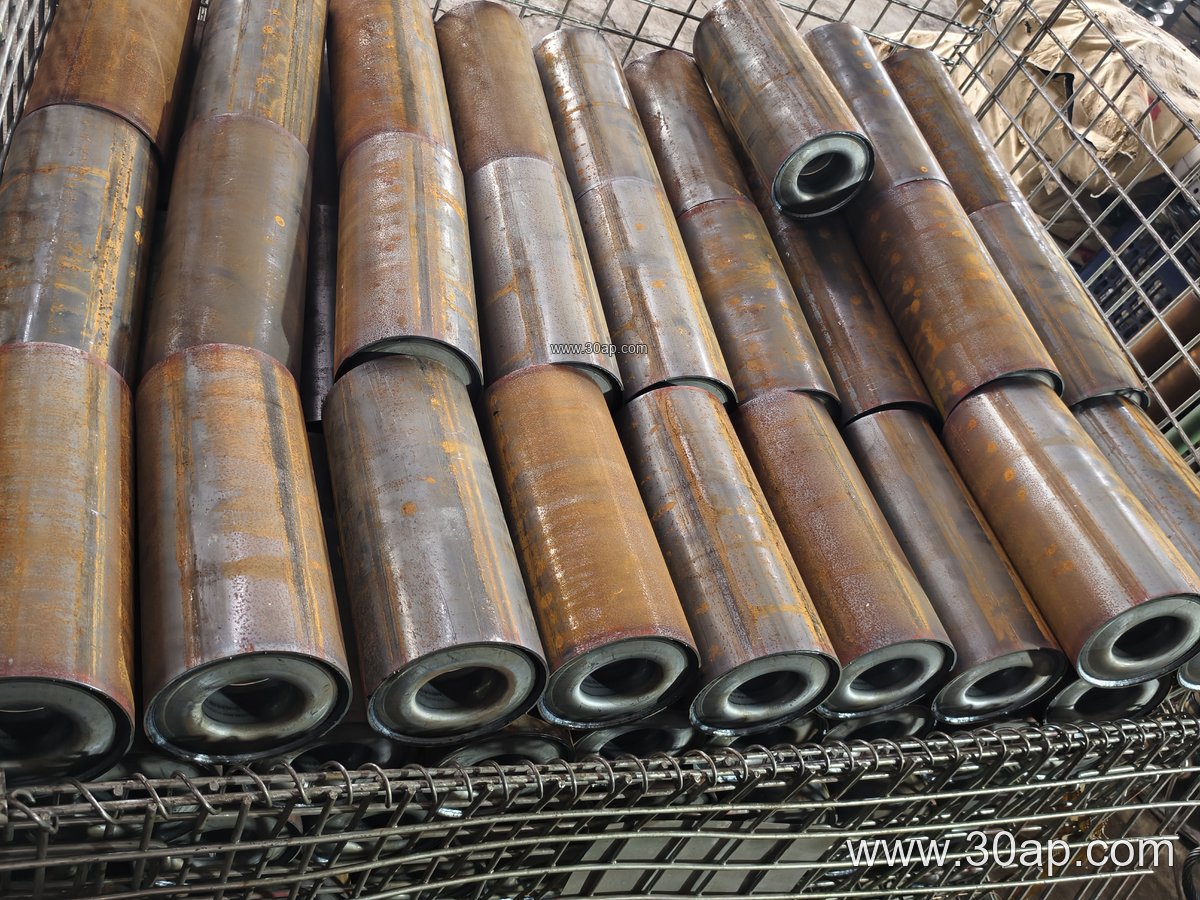
The assembly typically includes a set of carrying rollers mounted on a pivot base, with a friction ring or friction disc arrangement that engages the belt edge or surface. When the belt contacts the friction element, the resulting torque rotates the idler frame around its vertical pivot. The roller shell is often made of steel tube, and the surface may be plain, rubber-covered, or fitted with rubber rings for better grip. Bearings such as 6205, 6305, or 6306 are common in medium-duty sizes, while larger diameters may use 6308 or 6310. The pivot mechanism must be robust enough to handle dust, moisture, and continuous vibration without seizing.
Where It Fits on the Conveyor
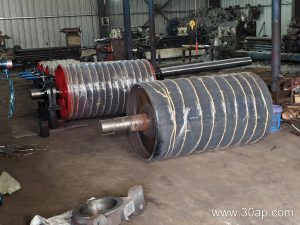
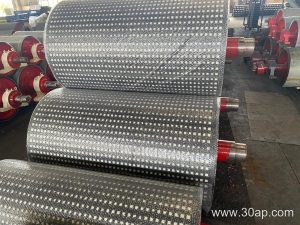
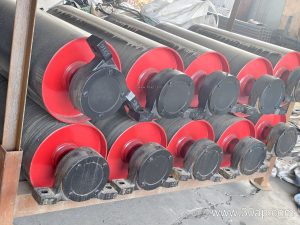
Friction self-aligning idlers are usually installed on the carrying side at intervals along the conveyor, especially after curves, transfer points, or long straight runs where the belt is prone to wander. They can also be used on the return side in a V-return or flat-return arrangement. In a quarry conveyor or aggregate belt, they help keep the belt centered under the load. In a coal mining conveyor or power plant coal handling line, they reduce the risk of belt edge rubbing against the structure. They are not a substitute for a bend pulley or a tail pulley; those are different components with different functions. A bend pulley changes belt direction, while a self-aligning idler corrects tracking.
Common Sizes and Configurations
Friction self-aligning idlers are available in roller diameters such as Ø89, Ø108, Ø127, Ø133, and Ø159 mm, with larger sizes like Ø178 or Ø194 mm for heavy-duty applications. Belt widths commonly range from B500 to B2000, and the idler set may be two-roll or three-roll troughing type with trough angles of 20, 30, 35, or 45 degrees. Roll length varies with belt width and trough angle; for example, a three-roll set for B800 may use roughly 315 mm rolls, while B1200 may use about 465 mm. These are reference examples, not fixed rules. The correct combination depends on belt speed, load, and the conveyor design.
Selection and Maintenance Notes
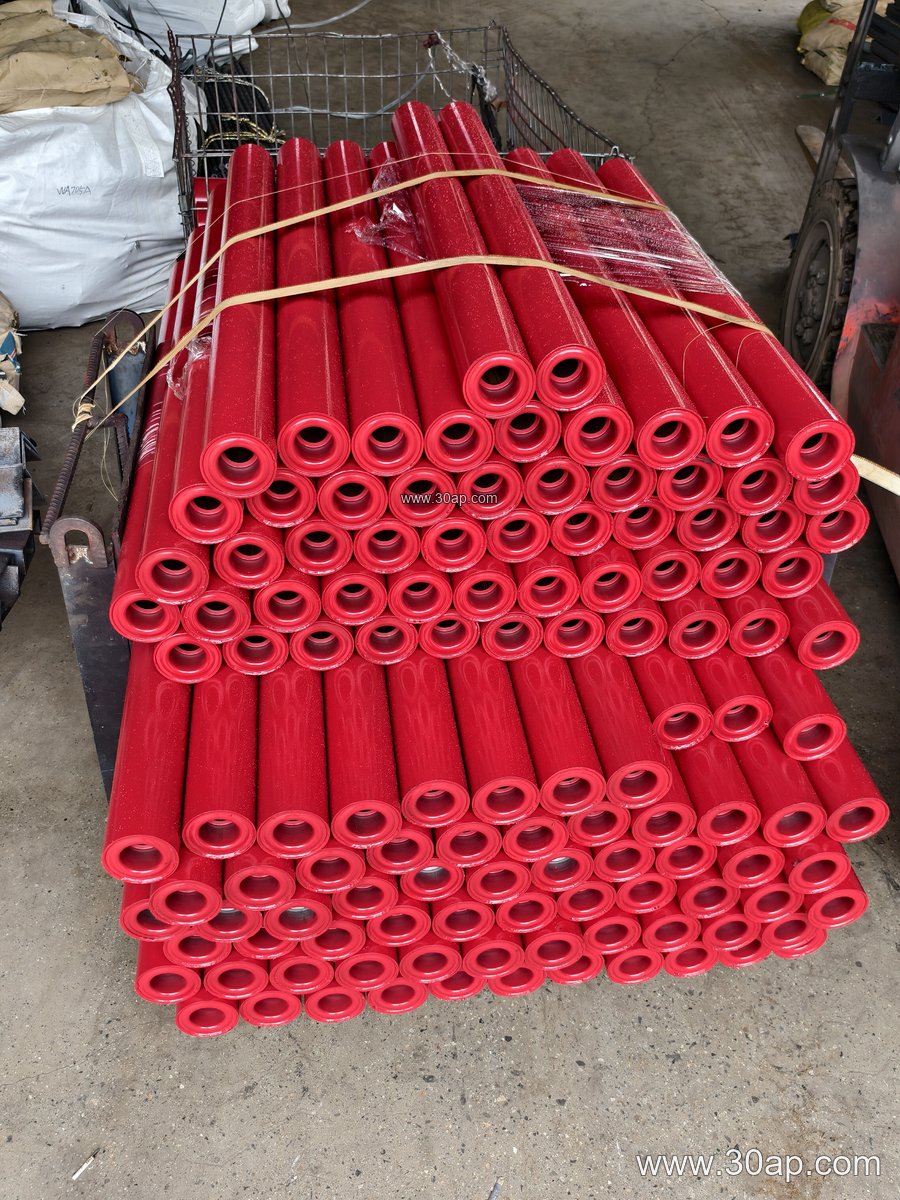
When choosing a friction-type self-aligning idler, consider the belt width, the trough angle, the roller diameter, and the bearing size that matches the load. The pivot should be sealed against dust and water, and the friction element should be replaceable. Regular inspection of the pivot movement and roller rotation helps prevent belt misalignment from developing into a bigger problem. For abrasive materials, a rubber-covered roller surface can improve friction and reduce wear. In cold climates, low-temperature grease may be needed. Always verify the idler’s compatibility with the conveyor bracket and the belt speed before installation.
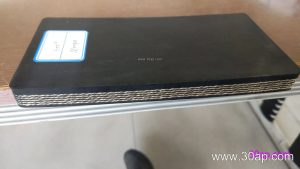
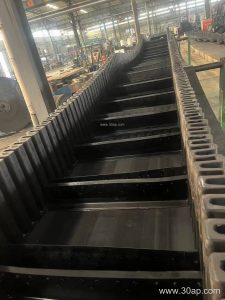
Related equipment often used in the same conveyor system includes the conveyor belt, idler roller, conveyor pulley, and conveyor bracket. For heavy-duty mining conveyor belt applications, a robust self-aligning idler helps protect the belt from edge damage and extends service life. Whether the conveyor handles coal, cement, ore, or aggregate, proper belt tracking is essential for efficient operation.