What a Rubber-Lined Pulley Does on a Conveyor
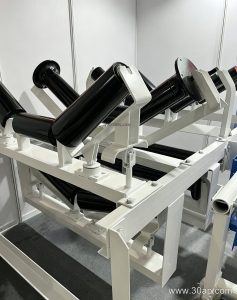
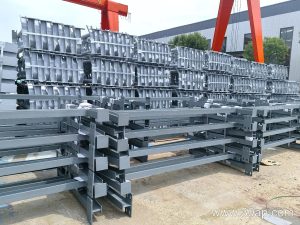
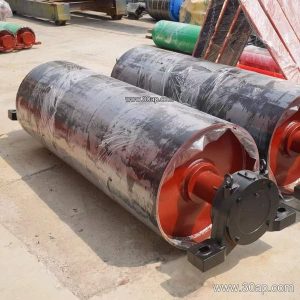
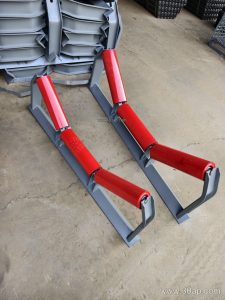
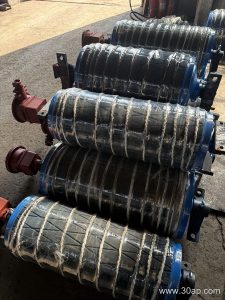
A rubber-lined pulley is a conveyor pulley whose shell is covered with a rubber layer, usually applied by hot vulcanization or cold bonding. The rubber lagging raises friction between the pulley face and the conveyor belt, which reduces slip under load and helps protect both surfaces from wear. In a typical bulk handling line, this component works alongside the conveyor belt, idler roller and conveyor bracket to keep material moving reliably.
The lining is not cosmetic. On a drive pulley, the rubber layer improves torque transmission; on a bend or tail pulley, it limits belt damage and helps shed fines. Buyers often meet this product as a lagged conveyor pulley, rubber lagged drum or rubber-covered pulley — all accurate names for the same item.
Construction Details That Affect Performance
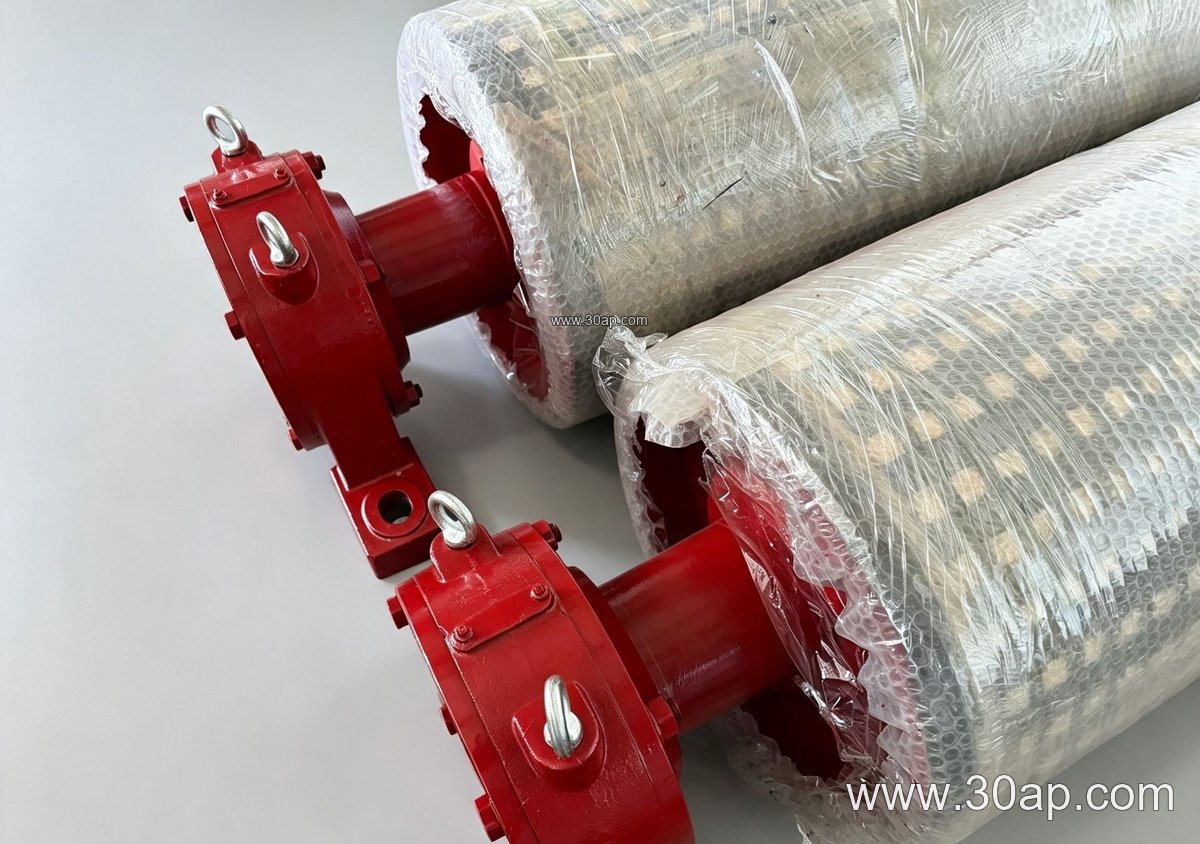
A rubber-lined pulley usually consists of a steel shell, end discs, a shaft, bearing housings and the rubber cover. The cover may be plain, diamond-grooved or herringbone-patterned, and thickness commonly ranges from 8 mm to 20 mm depending on duty. The shell width is normally slightly larger than the belt width, for example B800 belt with roughly 950 mm face width, or B1200 belt with about 1400 mm face width.
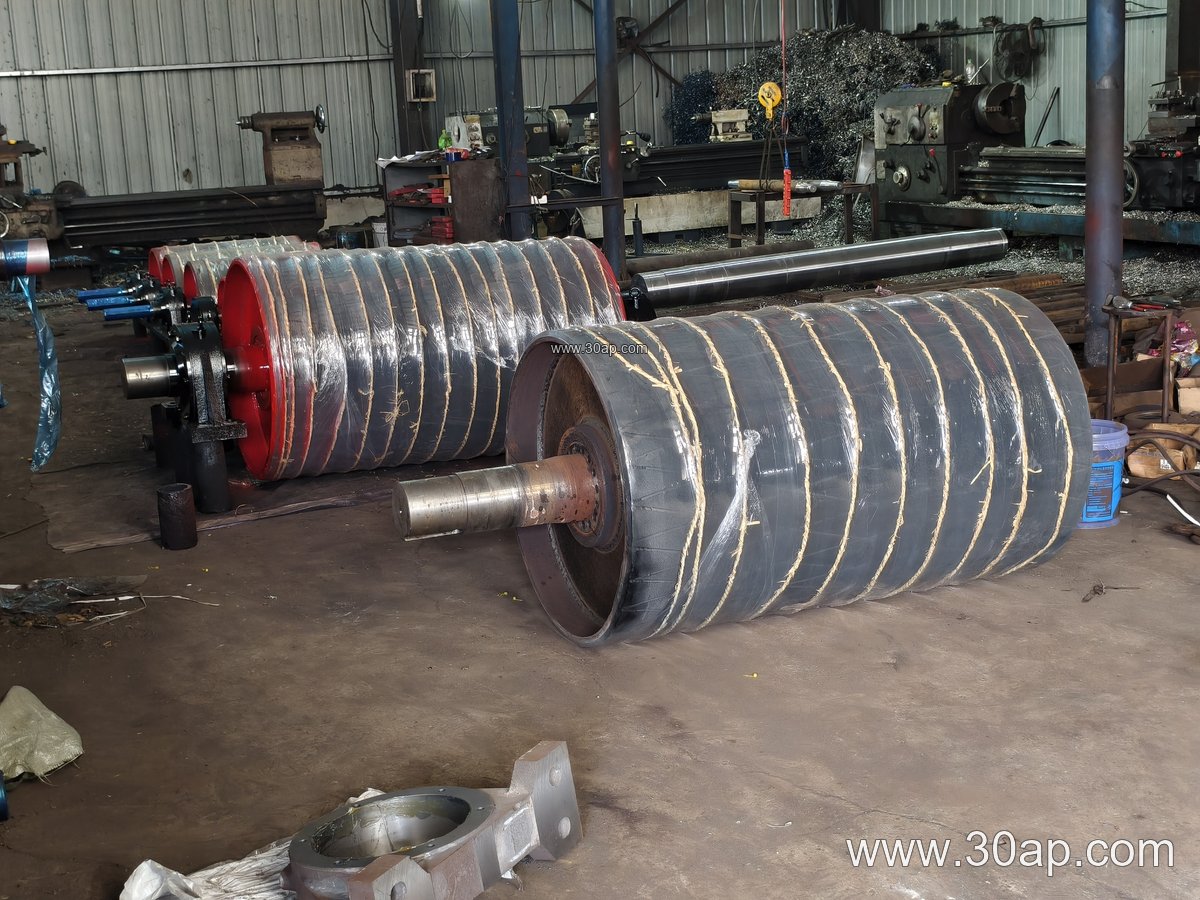
Diameter and shaft size are design choices, not fixed pairings. A B800 pulley might be built as B800 × Ø500, while a B1400 unit could be B1400 × Ø800; other combinations are common. Shaft diameters such as Ø80, Ø100, Ø120 or Ø160 are selected from torque and load calculations, never from belt width alone.
| Parameter | Common Range |
|---|---|
| Belt width | B400 to B2400 |
| Pulley diameter | Ø200 to Ø1800 |
| Lagging thickness | 8, 10, 12, 15, 20 mm |
| Surface form | Plain, diamond, herringbone, ceramic |
| Shaft diameter | Ø50 to Ø200 |
Patterned rubber is often chosen where water, dust or fine slurry could reduce grip. Plain rubber suits cleaner duty and is easier to clean. Ceramic lagging may be considered for very high-traction drive positions, but it is a different surface option, not the same as rubber lining.
Where the Rubber-Lined Pulley Fits
In a limestone quarry or aggregate line, a rubber-lined pulley is often the head pulley that discharges onto a stockpile belt. In a coal washing plant or power station coal yard, lagged pulleys help maintain grip on belts carrying damp fines. The same component appears in cement clinker handling, iron ore terminals and port bulk systems.
Position matters. A drive pulley needs reliable friction; a tail pulley benefits from a wear-resistant face; a bend pulley guides the belt without changing its path. These are different roles, and a drive pulley should not be swapped for a bend or tail pulley in a specification. A rubber-lined pulley can be supplied in each role, but the duty and design loads differ.
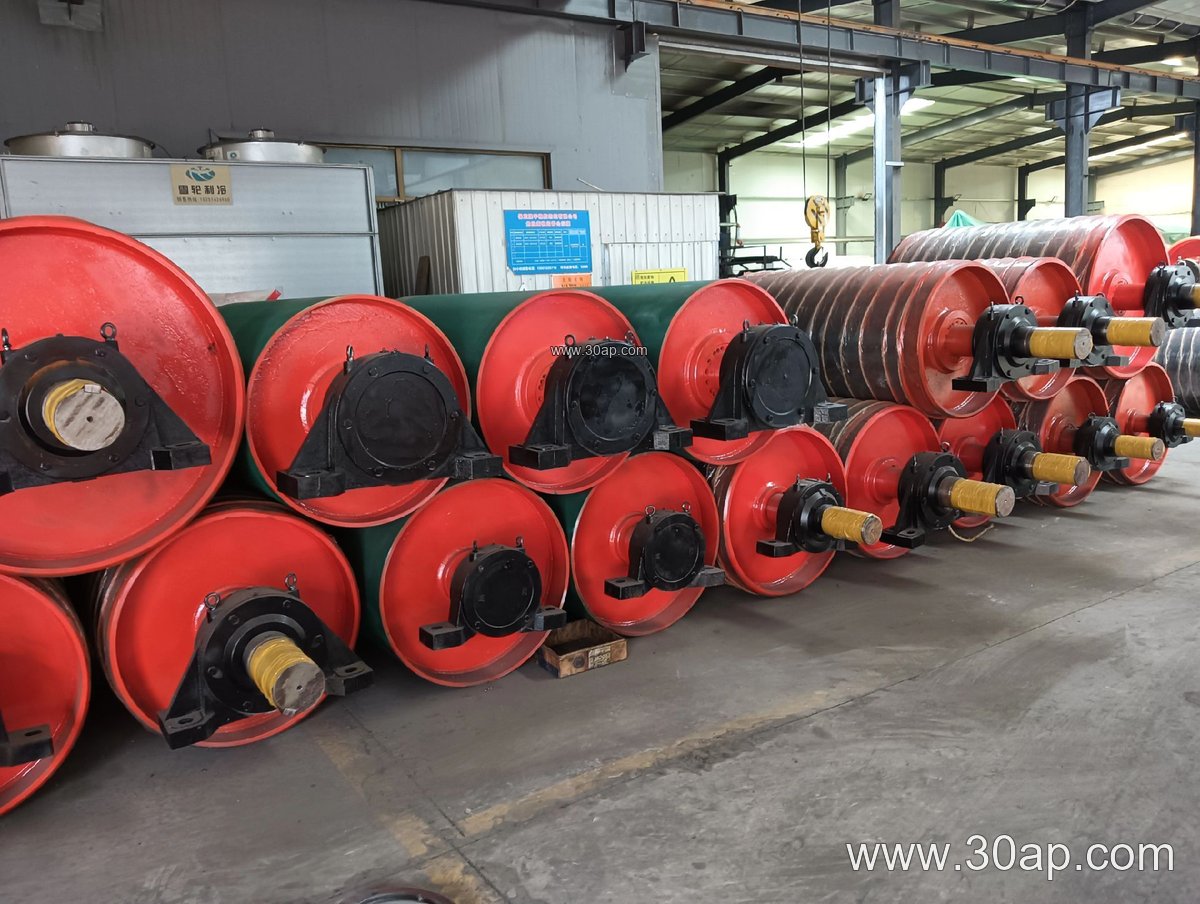
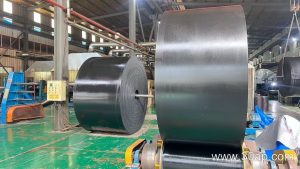
Related equipment choices also influence performance. A heavy-duty mining conveyor belt paired with a properly lagged drive pulley will transfer power more predictably than a smooth drum. Where the belt is an EP conveyor belt or steel cord conveyor belt, the pulley face should match the belt’s load and speed. Abrasion resistant conveyor belt grades are common in quarry and crusher circuits, while flame retardant conveyor belt grades appear in underground coal mining conveyors.
Buyer Checklist Before Ordering
- Confirm the pulley role: drive, tail, bend, take-up or snub.
- State belt width, pulley face width and required diameter.
- Specify lagging thickness and surface pattern.
- Provide shaft diameter, bearing type and mounting details.
- Describe the material handled and operating environment.
- Check compatibility with the conveyor belt and idler roller layout.
It also helps to review the conveyor bracket and bearing housing dimensions early, because a larger pulley diameter may require more clearance. For high-abrasion service, a rubber-lined pulley with 12 mm to 15 mm lagging is often requested, but final selection should follow the conveyor design.
Maintenance is straightforward when the lining is inspected regularly. Look for grooving, cuts, debonding or embedded material, and check that the belt tracks centrally. Re-lagging is possible in many cases, which can extend service life compared with replacing the whole drum. Whether the line handles ore, clinker or grain, a correctly specified rubber-lined pulley supports smoother starts, less slip and longer belt life.