What a Heavy-Duty Lagged Pulley Does on a Conveyor
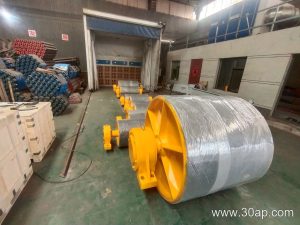
A heavy-duty lagged pulley is a conveyor pulley whose shell carries a bonded rubber or ceramic lagging layer, built for high belt tensions and abrasive bulk materials. It is typically the drive pulley at the head of the conveyor, although lagging is also applied to tail, tension and bend positions where grip or wear protection matters. The lagging raises the coefficient of friction between the pulley face and the conveyor belt, reducing slip under starting torque and keeping the belt tracking more predictably when the load is uneven. On a quarry conveyor belt or a crusher conveyor belt handling sharp rock, the same rubber layer also shields the shell from abrasion and impact.
Construction Details That Matter
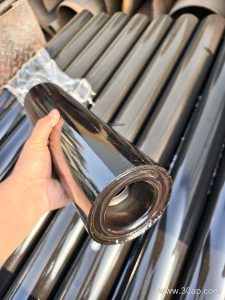
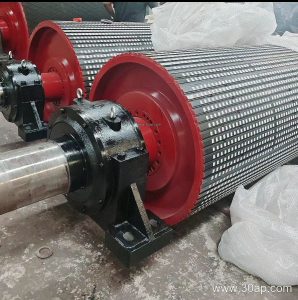
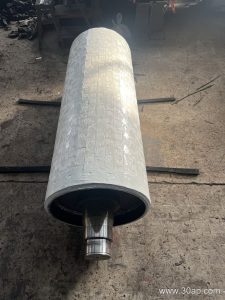
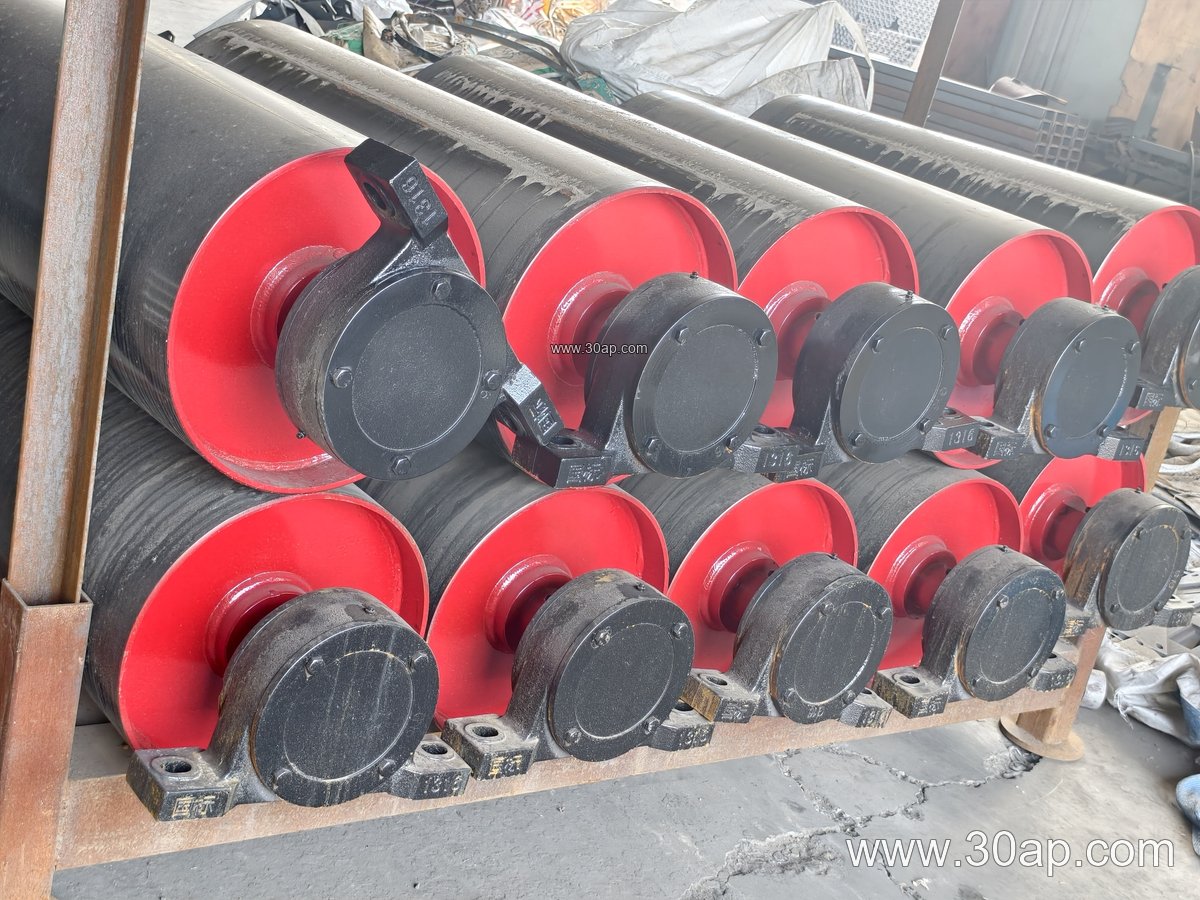
The core is normally a welded steel shell with dished or flat end plates, keyed or shrink-fitted to a shaft. Lagging is applied in one of several ways: hot vulcanized rubber, cold-bonded rubber, cast rubber, diamond grooved rubber, herringbone rubber or ceramic tiles set in a rubber matrix. Thickness commonly falls between 8 mm and 20 mm, chosen according to torque demand and the abrasiveness of the material. Grooved patterns help water and fine dust escape from the contact zone, which is useful in wash plants and in humid underground mining conveyor installations. Plain lagging is a reasonable choice when the priority is even contact pressure rather than drainage.
Shaft diameter is not a function of belt width. It follows from the torque, the bearing span and the load case, and is usually confirmed by the pulley manufacturer after the drive duty is known. Common shaft sizes range from about Ø50 to Ø200, but the correct value for a given conveyor must be calculated, not copied from a table.
Typical Duty Points in Mining and Heavy Industry
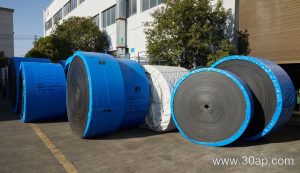
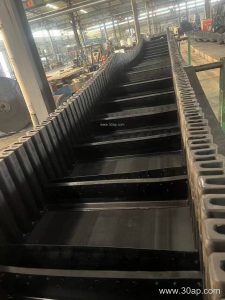
Heavy-duty lagged pulleys appear wherever a conveyor has to start under load. In an iron ore or copper ore operation, the head pulley may be paired with a steel cord conveyor belt carrying high tension over long distances. In a coal preparation plant, flame retardant conveyor belt grades are common, and the lagging must be selected with the same fire-safety thinking. Cement plants use them on clinker and limestone lines, while power plant coal handling and port bulk terminals rely on them at the transfer points where belts are heavily loaded.
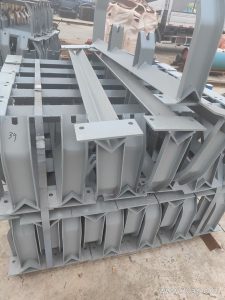
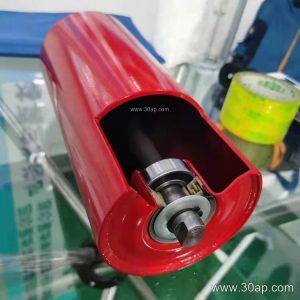
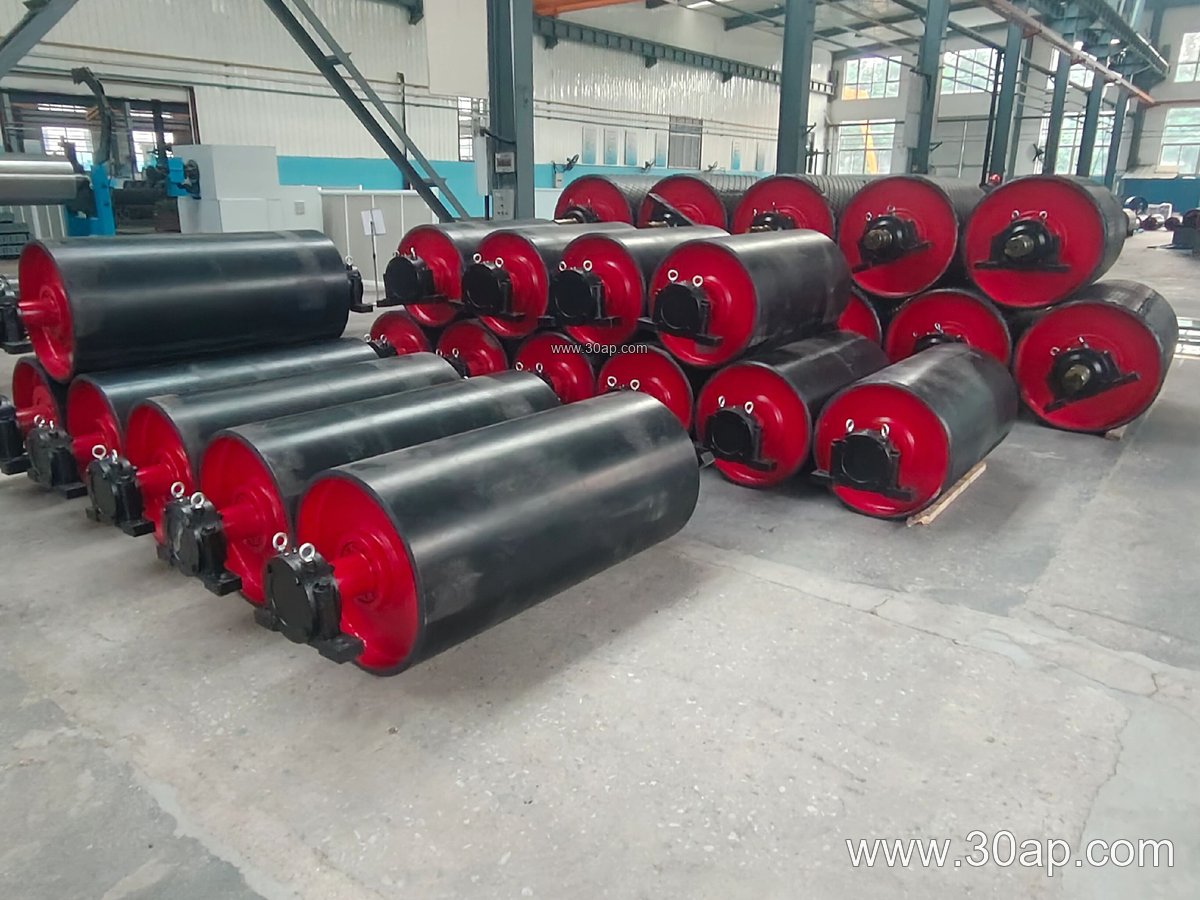
The pulley does not work alone. A conveyor belt, idler roller sets and conveyor brackets all share the load path, and misalignment at any of them shows up as edge wear on the lagging. Matching the pulley face width to the belt is straightforward: shell width is normally slightly greater than the belt width. For example, a B800 belt usually runs on a shell of roughly 950 mm, and a B1200 belt on about 1400 mm. Diameter is a separate design decision. B800 × Ø500 and B1200 × Ø1000 are both realistic combinations, but neither is fixed, and a larger diameter may be selected to reduce belt bend stress or to extend lagging life.
Reference Dimensions for Early Planning
The figures below are typical planning references, not verified specifications for any particular project. Final values depend on the conveyor design.
- Belt width B400: shell around 500 mm
- Belt width B650: shell around 750 mm
- Belt width B1000: shell around 1150 mm
- Belt width B1400: shell around 1600 mm
- Belt width B1800: shell around 2000 mm
- Belt width B2000: shell around 2200 mm
Diameter options commonly discussed include Ø200, Ø315, Ø400, Ø500, Ø630, Ø800, Ø1000, Ø1250 and Ø1400, with larger sizes for high-tension drives. Lagging thickness of 10 mm or 12 mm suits many medium-duty head pulleys, while 15 mm or 20 mm is more typical where abrasion is severe.
Choosing the Lagging Surface
Diamond and herringbone patterns improve wet grip and shed fines. Ceramic lagging is chosen where abrasive rock or sinter quickly wears plain rubber, though it costs more and needs careful bonding. Hot vulcanized rubber generally outperforms cold-bonded material in heavy duty service because the bond is stronger and more uniform. Buyers should ask for the lagging hardness, the bond method and the pattern, and should confirm that the pulley will be balanced for the intended belt speed.
Buyer Checklist Before Ordering
Provide the belt width, the belt type and tension, the drive power, the shaft size required by the gearbox, the bearing centres and the mounting position. State whether the pulley is a drive, tail, tension or bend unit, because the load case differs. Ask how the lagging is bonded and whether it can be re-lagged later. Confirm the corrosion protection for outdoor or wet service, and check that the pulley will accept the conveyor bracket and bearing housing supplied with the frame. A well-specified heavy-duty lagged pulley is a long-life component; a poorly specified one becomes a repeated downtime cost.