What a Port Conveyor Pulley Does
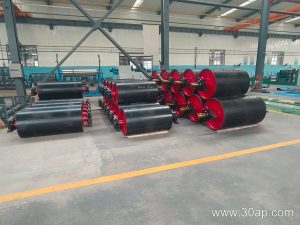
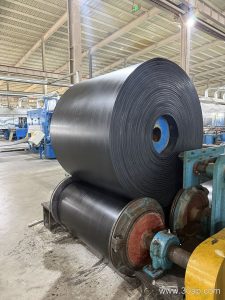
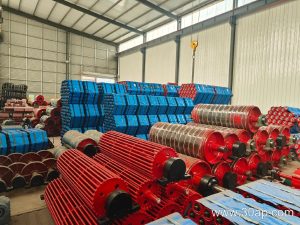
A port conveyor pulley is the rotating drum that drives, tensions, or redirects the belt on a bulk terminal conveyor. At a berth, a ship loader, or a stacker-reclaimer stockyard, one belt line may run several hundred metres, so each drum has a clear job: the drive pulley transmits torque, the tail pulley returns the belt, and bend pulleys guide it around curves and tension stations. In short, the port conveyor pulley is the mechanical heart of the belt loop, and its condition decides how smoothly ore, coal, grain, or fertiliser moves from quay to silo.
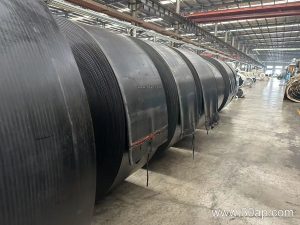
Because the whole line depends on it, the drum is matched to the belt it carries. A heavy steel cord conveyor belt on an iron ore berth puts far more tension on the shell than a fabric belt on a grain terminal, and the pulley design follows that load.
How the Drum Is Built
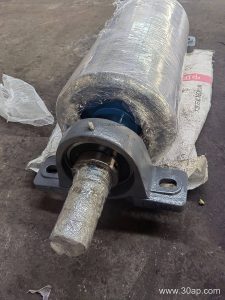
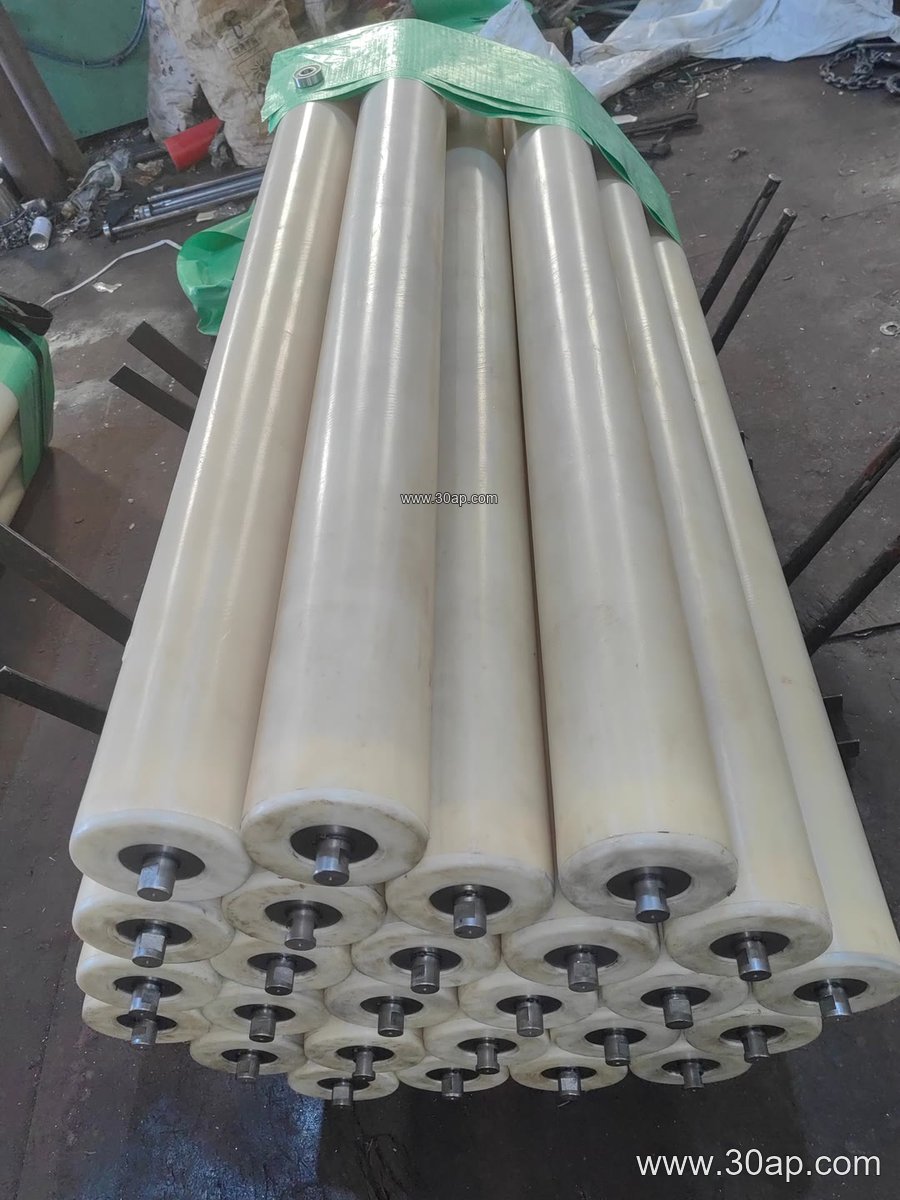
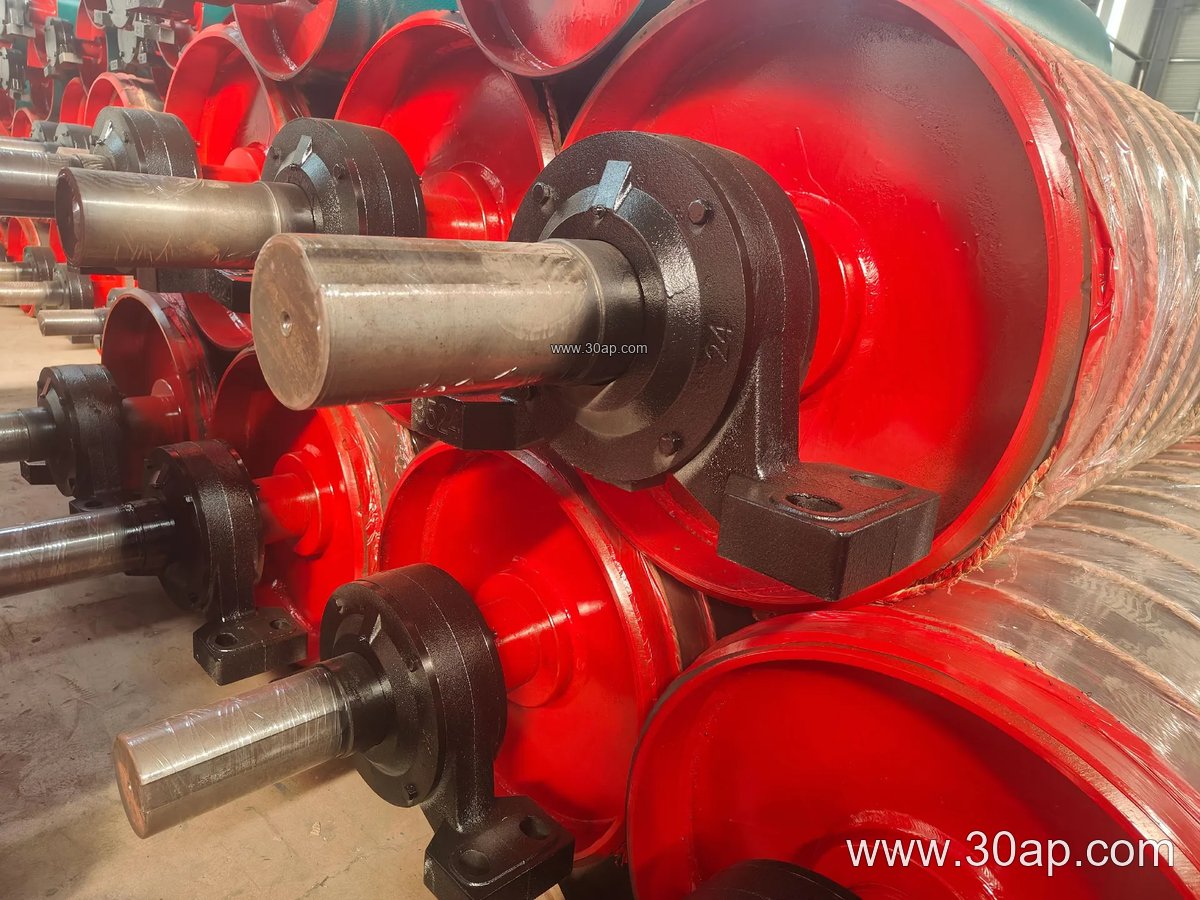
Most units combine a rolled steel shell, two end discs, a shaft, and bearing housings that sit in the conveyor bracket. The shell is machined so the belt tracks true, and the lagging is bonded to the face to raise friction. Key construction points include:
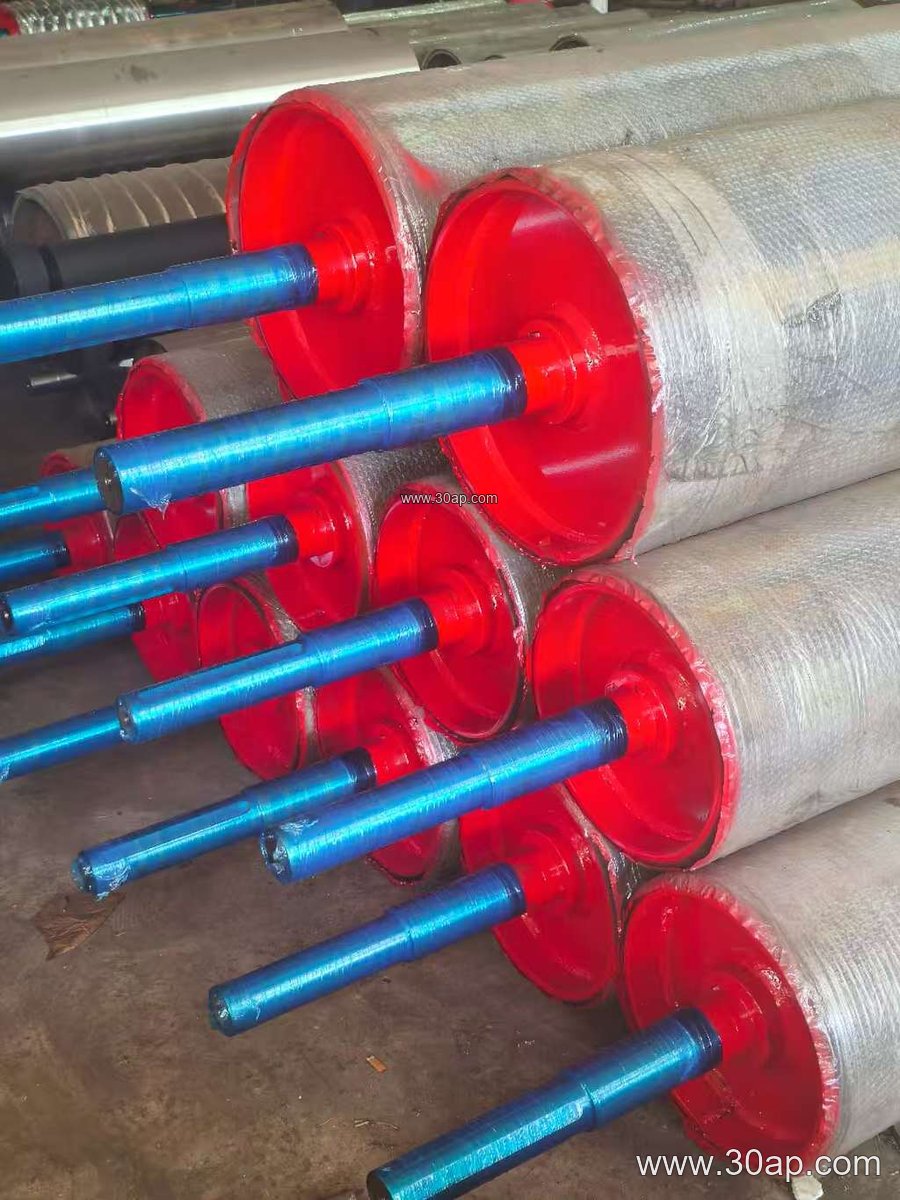
- Shell thickness and disc welding sized to the belt tension and shaft load.
- Shaft diameter set by torque and bending load, not by belt width alone.
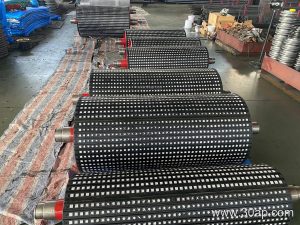
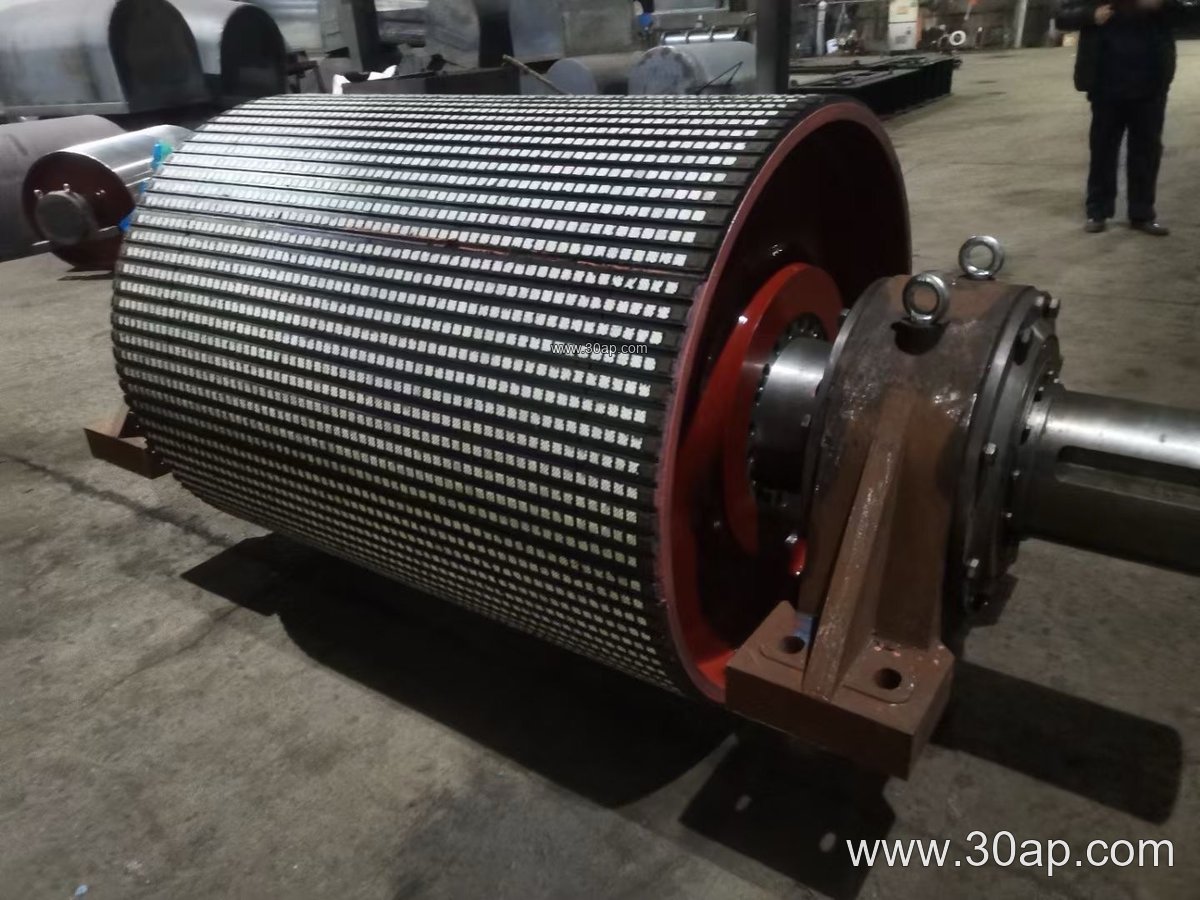
- Lagging in plain rubber, diamond grooved, herringbone, or ceramic tile form.
- Bearing type chosen for the duty cycle, dust level, and ambient conditions at the port.
Lagging thickness commonly ranges from 8 mm to 20 mm depending on grip and wear requirements. A drive drum on a wet coal berth usually needs more grip than a bend pulley working in dry conditions.
Where It Sits on the Line
On a ship loading conveyor, the head or drive drum pulls the belt over the boom, while the tail drum at the receiving end keeps the belt centred. Bend pulleys at the tension tower change belt direction and set wrap angle. In a stockyard feeding a cement plant or power plant, the same layout repeats with different duty. The differences matter: a drive pulley must grip without slip, a tail pulley must shed sticky material, and a bend pulley mainly needs low rotating resistance. These are not interchangeable roles, even when the shell dimensions look similar.
Matching Drum to Belt and Tonnage
Belt width and pulley diameter are a design pair, not a fixed rule. A wide belt such as a 1800 mm or 2000 mm steel cord conveyor belt needs a large face and adequate diameter to limit bending stress, but the same width may appear with different diameters on different conveyors. Common face widths sit slightly above the belt width, for example about 1400 mm of face for a 1200 mm belt, or about 1800 mm for a 1600 mm belt. Typical diameter series include Ø500, Ø630, Ø800, Ø1000, and Ø1250, with larger sizes for high-tension drives.
| Belt width | Typical face width | Example diameter range | Typical duty |
|---|---|---|---|
| B800 | about 950 mm | Ø400 – Ø630 | yard feed, aggregate |
| B1200 | about 1400 mm | Ø500 – Ø1000 | quay transfer, coal |
| B1400 | about 1600 mm | Ø630 – Ø1250 | ship loader boom |
| B1800 | about 2000 mm | Ø800 – Ø1400 | iron ore, heavy bulk |
These figures are reference points only. Shaft size is determined by torque and load; a B1200 drum might use Ø120 or Ø140 shaft depending on the drive, and no width dictates one shaft diameter.
Surface Choices That Affect Grip
The lagging is where the drum meets the belt. Plain rubber suits clean, dry service; diamond grooved lagging helps water and fines escape on a wet berth; ceramic lagging resists abrasion where a high abrasion resistant conveyor belt carries sinter or coke. For a chevron conveyor belt or a corrugated sidewall conveyor belt, the pulley face and the belt profile must be checked together so cleats do not foul the drum. A skirted conveyor belt with raised edges also needs clearance at the pulley.
What a Buyer Should Check
- Confirm the drum role, since drive, tail, and bend pulleys are specified differently.
- Give the belt data: width, type, tension, and whether it is an EP conveyor belt, NN conveyor belt, or steel cord conveyor belt.
- State the environment, such as salt air, coal dust, or high temperature near a sinter plant.
- Ask for the lagging form and thickness, shaft diameter, bearing type, and balancing grade.
- Plan inspection of lagging wear, bearing temperature, and shell cracks during shutdowns.
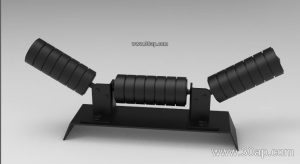
At port terminals, uptime is money. A well-specified port conveyor pulley, checked against the actual belt and load, keeps the ship loader working through the tide window. For related belt, roller, and drum data, see www.example.com/port-conveyor-pulley and the equipment notes on conveyor belt, idler roller, and conveyor bracket selection.