What a Metallurgical Conveyor Pulley Does
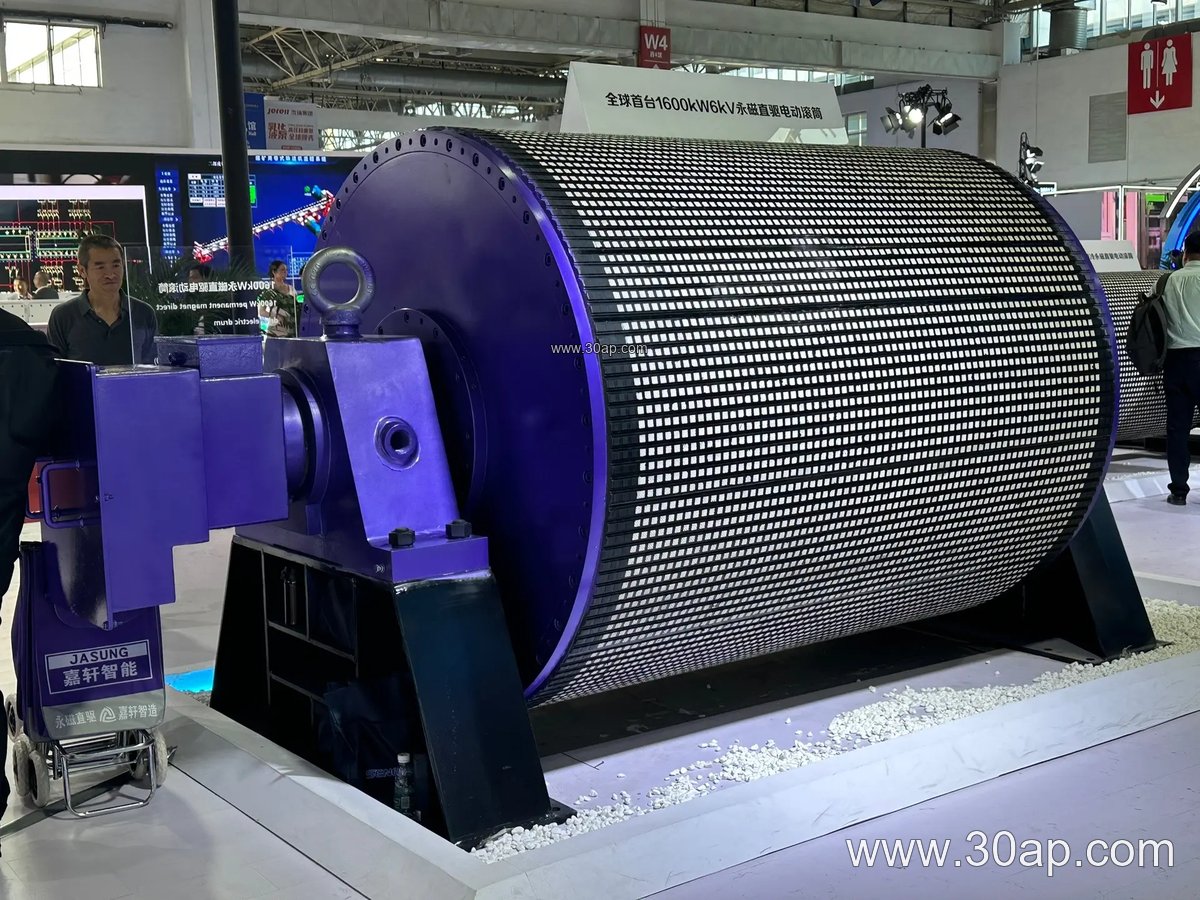
A metallurgical conveyor pulley is the rotating drum that turns a conveyor belt, sets its tension, and shapes its path through a metallurgical plant. In iron and copper ore circuits, sinter plants, and smelting material handling, this drum works under abrasive dust, heat, and heavy loads. It is the same family as a standard conveyor pulley, but the duty class, lagging, and bearing design are chosen for metallurgical service rather than light bulk handling.
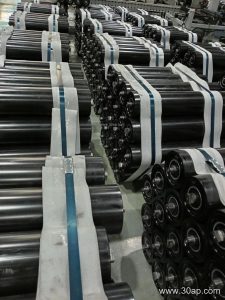
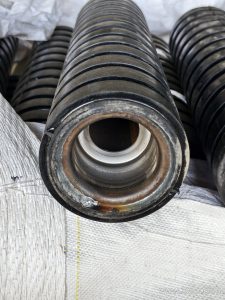
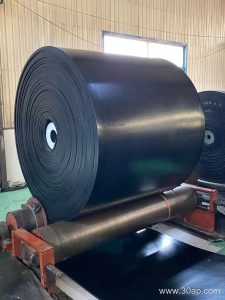
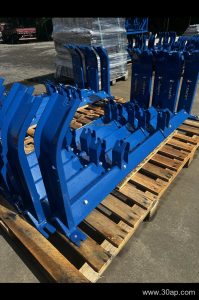
The drum does not work alone. It depends on the conveyor belt, idler roller, conveyor bracket, and frame alignment to keep the belt tracking. A well-matched drum protects the belt splice, while a poorly specified one causes edge wear, slip, and early belt failure.
Main Parts and Construction
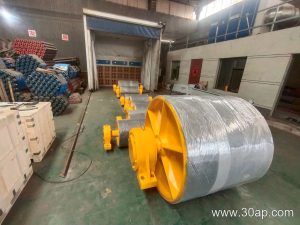
Most metallurgical pulleys are built from a rolled steel shell, welded end discs, a shaft, bearing housings, and a lagging layer. The shell thickness and weld detail follow the calculated load, not a single rule of thumb. Common shaft diameters include Ø80, Ø100, Ø120, Ø140, Ø160, and Ø180, but the final value depends on torque and bearing life. Shaft size should never be guessed from belt width alone.
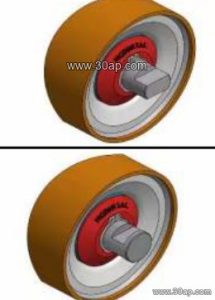
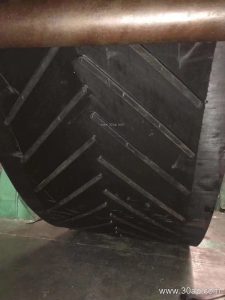
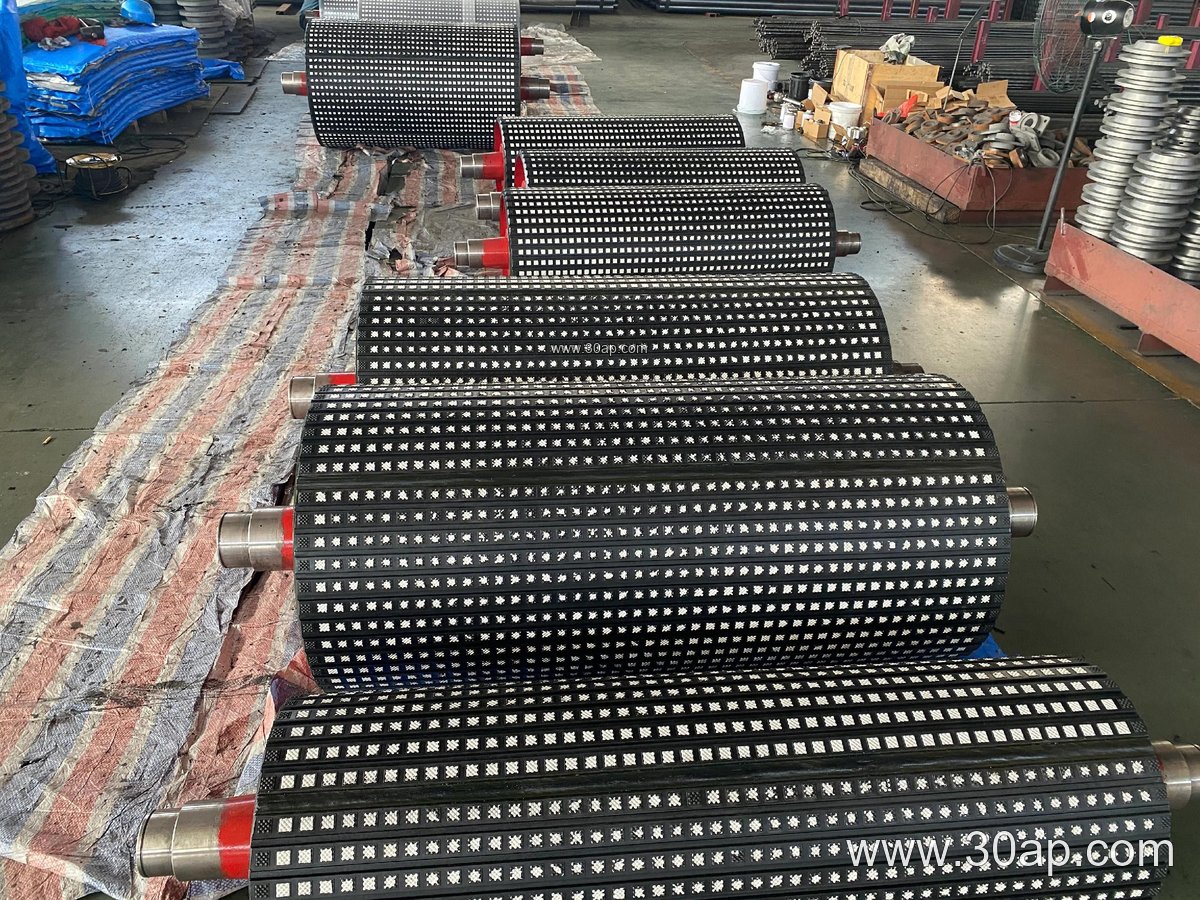
Lagging is often the first wear item. Plain, cold-bonded rubber, hot-vulcanized rubber, diamond, herringbone, and ceramic lagging are all used. Common lagging thicknesses are 8, 10, 12, 15, and 20 mm. Diamond or herringbone rubber helps grip in wet or dusty ore handling, while ceramic lagging suits high-abrasion zones.
Drive, Tail, and Bend Duties
The duty position changes the design. A drive pulley transmits torque and usually carries the thickest lagging and the strongest shaft. A tail pulley at the loading point may need impact-tolerant lagging and a sturdy bearing arrangement. A bend pulley redirects the belt and is not a substitute for either of them. A snub or take-up pulley may appear in the same line, but each position has its own load case.
In a copper concentrator or sinter plant, the head or discharge pulley often faces hot or gritty material, so a heat-resistant or abrasion-resistant belt may run alongside it. The pulley specification and the belt specification should be reviewed together.
Common Combinations and Reference Data
The table below shows typical reference combinations. They are examples for discussion, not fixed matches; final selection follows belt tension, wrap angle, and duty.
| Belt width | Typical pulley face width | Reference diameter examples |
|---|---|---|
| B500 | about 600 mm | Ø315, Ø400 |
| B650 | about 750 mm | Ø400, Ø500 |
| B800 | about 950 mm | Ø500, Ø630 |
| B1000 | about 1150 mm | Ø630, Ø800 |
| B1200 | about 1400 mm | Ø800, Ø1000 |
| B1400 | about 1600 mm | Ø1000, Ø1250 |
| B1600 | about 1800 mm | Ø1250, Ø1400 |
| B1800 | about 2000 mm | Ø1400, Ø1600 |
Diameter values such as Ø200, Ø250, Ø320, Ø1600, and Ø1800 also exist across the range. A B1200 × Ø1000 drum and a B800 × Ø500 drum are both realistic, but one belt width can pair with more than one diameter. The face width is usually a little wider than the belt to allow tracking tolerance.
Where It Fits in the Plant
Metallurgical pulleys appear in ore receiving, crushing, screening, and concentrate transfer. In a pellet plant or sintering line, they move hot returns and fine ore. In a steel plant, they handle scale, slag, and additives. In a quarry or aggregate line feeding a crusher, the same drum family handles stone and sand. The belt may be an EP conveyor belt, a steel cord conveyor belt, or a flame retardant conveyor belt in enclosed areas.
For more on matching drums with belts and frames, see the conveyor pulley and conveyor bracket notes at www.metallurgicalconveyorpulley.com, and compare lagging options with idler roller data from the same source.
Buyer Checklist
- State the duty position: drive, tail, bend, take-up, or snub.
- Give belt width, belt type, and belt tension range, not just a size.
- Specify lagging form and thickness, for example 12 mm diamond rubber or 15 mm ceramic.
- Confirm shaft diameter from torque and bearing load.
- Confirm face width, bearing centers, and mounting bracket interface.
- Match the belt: an abrasion resistant conveyor belt, heat resistant conveyor belt, or oil resistant conveyor belt changes the friction and temperature case.
A metallurgical conveyor pulley is a wear part and a drive component at the same time. Buyers who supply full duty data, belt details, and lagging requirements get a drum that tracks well and lasts through the ore, sinter, or slag it was built for.