What a Mining Conveyor Bracket Does
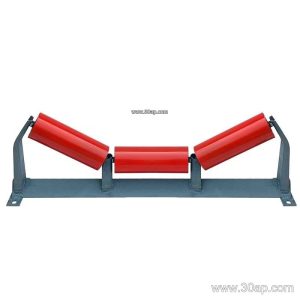
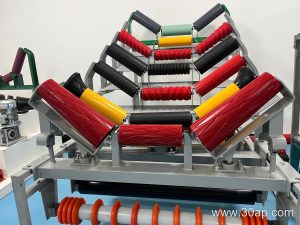
A mining conveyor bracket is the structural element that holds idler rollers in the correct position under and along a conveyor belt. It carries the roller load, keeps the belt profile steady and helps the belt track properly on the conveyor frame. In harsh duty, this mounting frame is often called a conveyor idler bracket or roller support bracket, but it is the same product. The bracket does not move the belt itself; it provides the rigid or adjustable base that lets a conveyor pulley, idler roller and conveyor belt work together as a system.
On a coal mining conveyor belt line or a quarry conveyor belt line, a loose or misaligned bracket quickly leads to belt wander, edge wear and spillage. That is why the bracket is treated as a wear part and a precision part at the same time.
How the Bracket Is Built
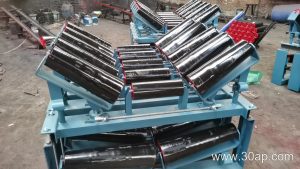
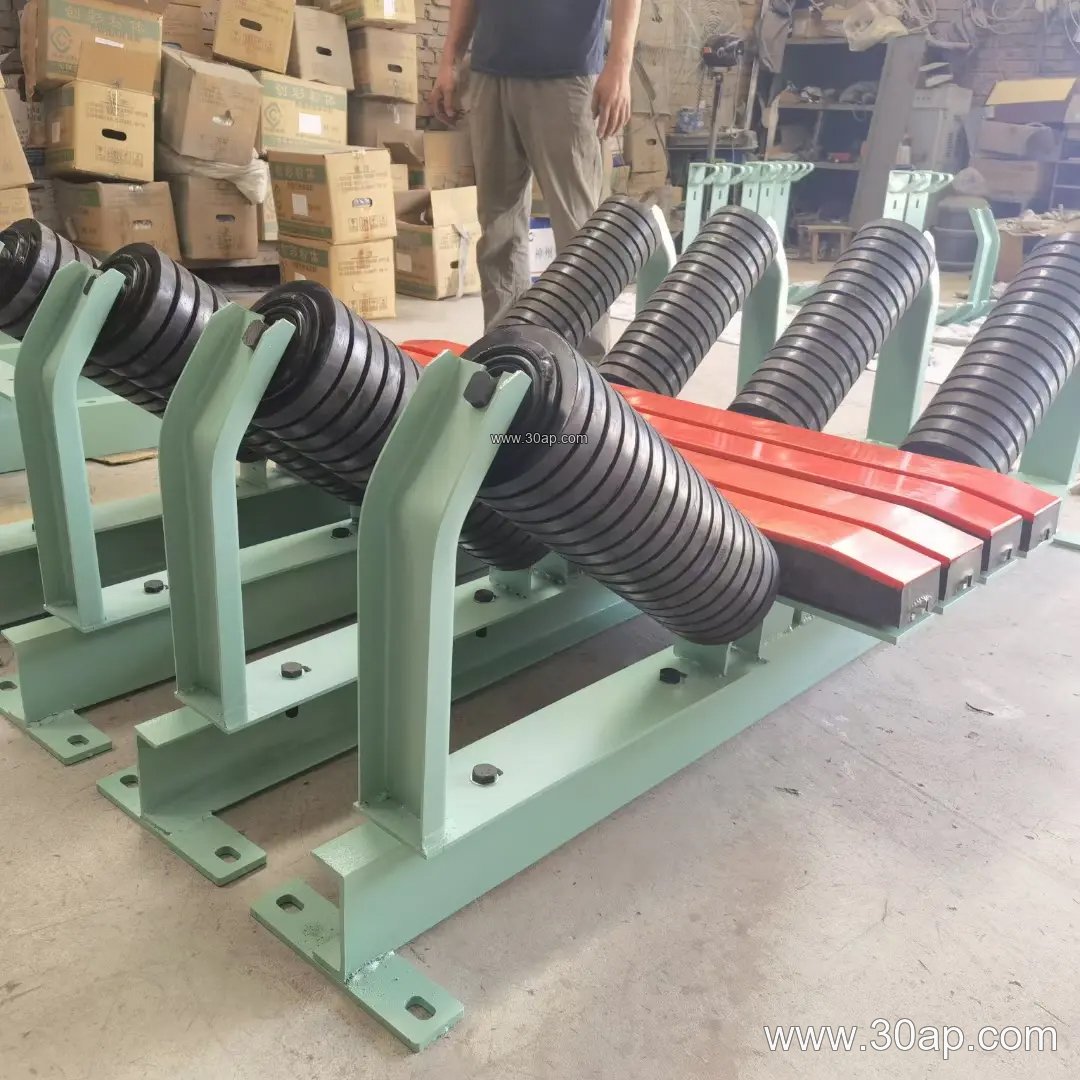
Most brackets are fabricated from angle steel, channel steel or bent steel plate. The frame may be a single bent plate or a welded assembly with mounting slots for the roller shaft. Surface treatment is usually painting or galvanizing, depending on the environment. In a coal preparation plant or underground mine, flame retardant conveyor belt and anti-static conveyor belt are common, and the bracket should suit the same dusty, damp conditions.
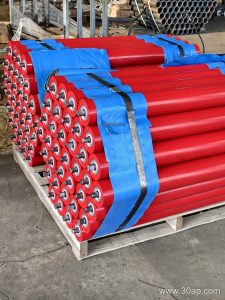
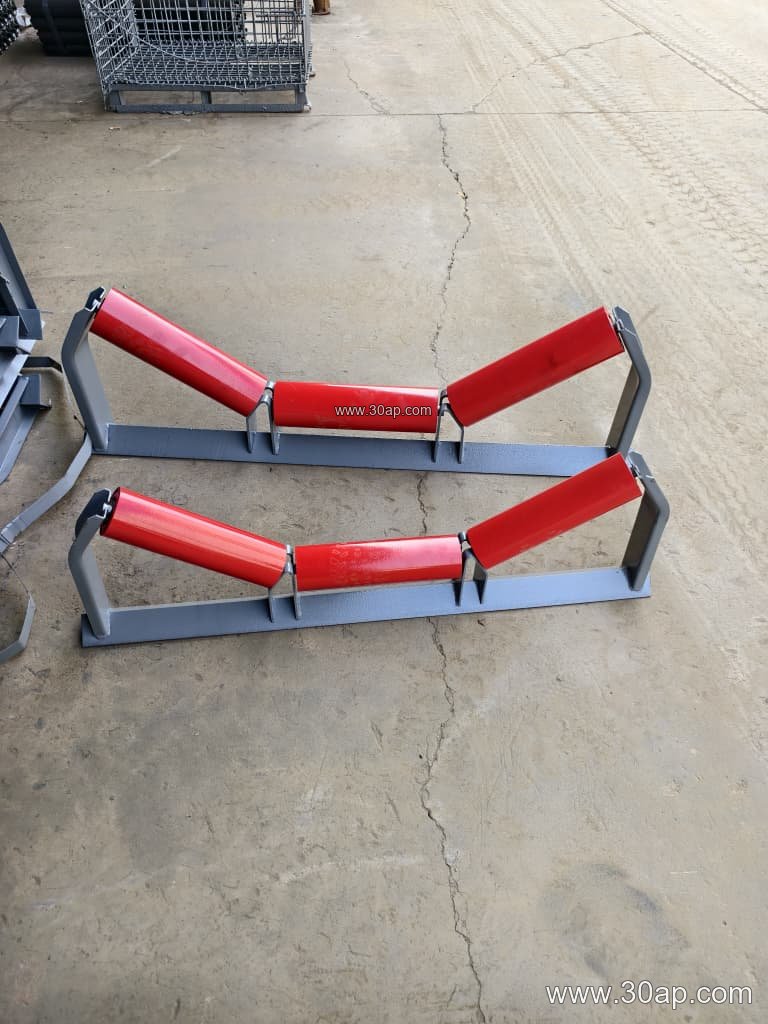
Common bracket forms include trough brackets, transition brackets, return brackets, V-return brackets, impact brackets, self-aligning brackets and adjustable brackets. Trough angle is a key detail. Typical trough angles are 20, 30, 35 and 45 degrees, and an adjustable bracket can be set between these values during installation. Forward tilt of about 1.5 to 2 degrees is sometimes used to help belt training. A bracket for a B800 belt may use a 35 degree trough angle with Ø108 rollers, while a wider B1200 line might run 45 degrees with Ø133 rollers. These are common combinations, not fixed rules; the final match depends on belt width, load and design.
Where It Fits in the Plant
Brackets appear at the load zone, along the carrying run, at the transition from the tail pulley, and on the return run. In a limestone mine or iron ore plant, impact brackets under the loading point protect the belt from lump impact. In a power plant coal handling system, trough brackets keep the coal mining conveyor belt in a stable trough. In a sand and gravel line, V-return brackets support the belt on the return side and reduce sag.
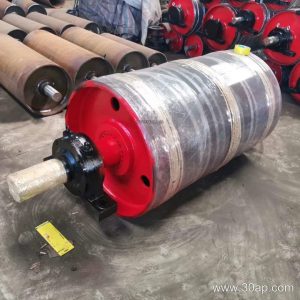
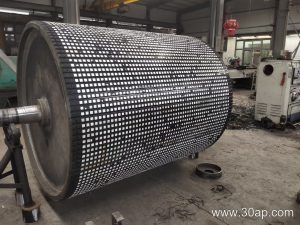
Brackets also work beside conveyor pulleys. The drive pulley pulls the belt, the tail pulley returns it, and the bend pulley changes its direction; the bracket only supports the rollers. Belt cleaners, skirt rubber and corrugated sidewall conveyor belt edges all depend on a stable roller line, so bracket alignment matters beyond the roller itself.
Matching Bracket to Belt and Roller
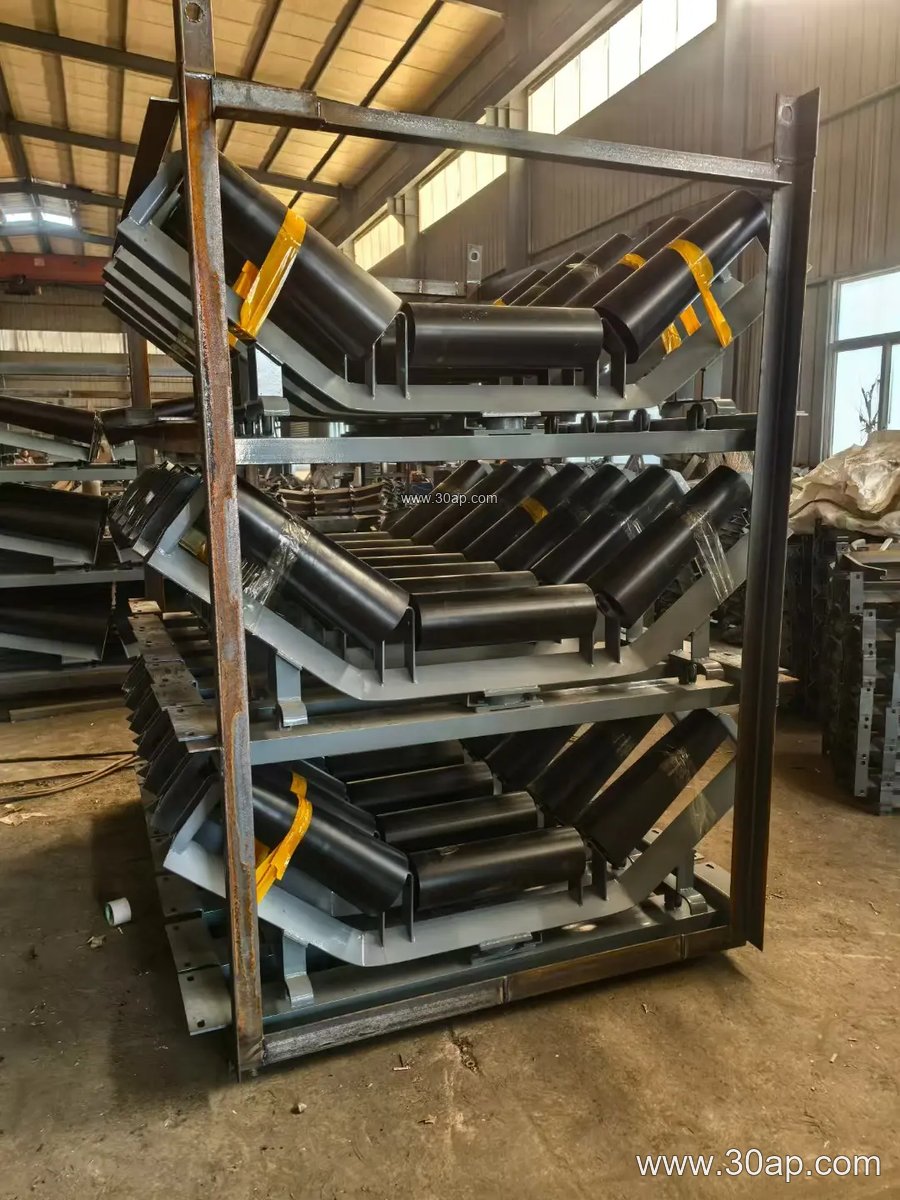
Buyers should confirm belt width, trough angle, roller diameter, mounting hole spacing and frame width before ordering. The table below gives common reference values; actual dimensions follow the conveyor design.
- Belt width examples: B500, B650, B800, B1000, B1200, B1400, B1600, B1800
- Trough angles: 20, 30, 35, 45 degrees
- Roller diameters: Ø89, Ø108, Ø133, Ø159, Ø194
- Materials: angle steel, channel steel, bent steel plate
- Forms: trough, transition, return, V-return, impact, self-aligning, adjustable
Heavy-duty mining conveyor belt lines with steel cord conveyor belt or thick EP conveyor belt need stronger brackets and larger rollers. A high abrasion resistant conveyor belt in a crusher discharge area also benefits from impact brackets and well-secured rollers. Do not assume one belt width matches only one roller diameter; the bracket design should be checked against the actual load case.
Buyer Checklist
Ask for the bracket drawing, material grade, hole pattern and surface finish. Check whether the bracket is fixed or adjustable, and whether it is for the carrying or return side. Confirm that the roller shaft fits the slot and that the bracket suits the conveyor frame. For a coal mining conveyor belt or underground coal mining conveyor belt installation, flame retardant and anti-static properties of nearby components are worth reviewing. A small bracket is easy to overlook, but it is central to steady belt support across mines, cement plants, ports and aggregate yards.