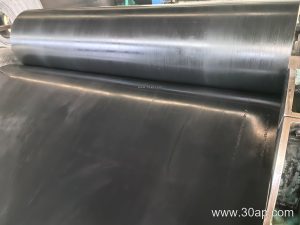
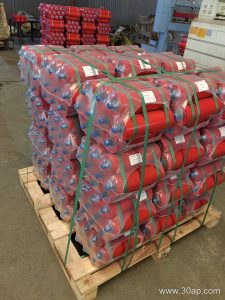
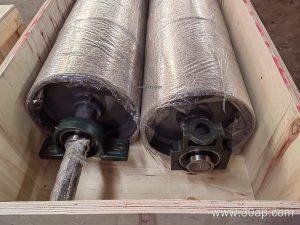
What a Belt Conveyor Bend Pulley Does
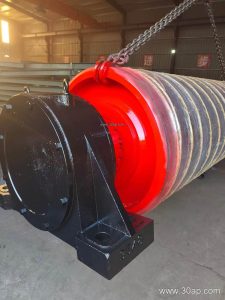
A belt conveyor bend pulley is the drum that changes the direction of the conveyor belt without driving it. It is often called a snub pulley or direction-changing pulley, and it sits where the belt needs to be routed around a corner, usually near the take-up system or between the head and tail of the conveyor. Unlike the drive pulley, which transmits torque, or the tail pulley, which returns the belt, the bend pulley mainly guides the belt and helps maintain wrap angle on other pulleys.
In a typical mining conveyor or quarry conveyor line, you may find several bend pulleys working together, especially where the belt leaves the head pulley and returns along the lower run. They also appear in cement plants, power plant coal handling systems, and aggregate crushing circuits, where the conveyor path is rarely a straight line.
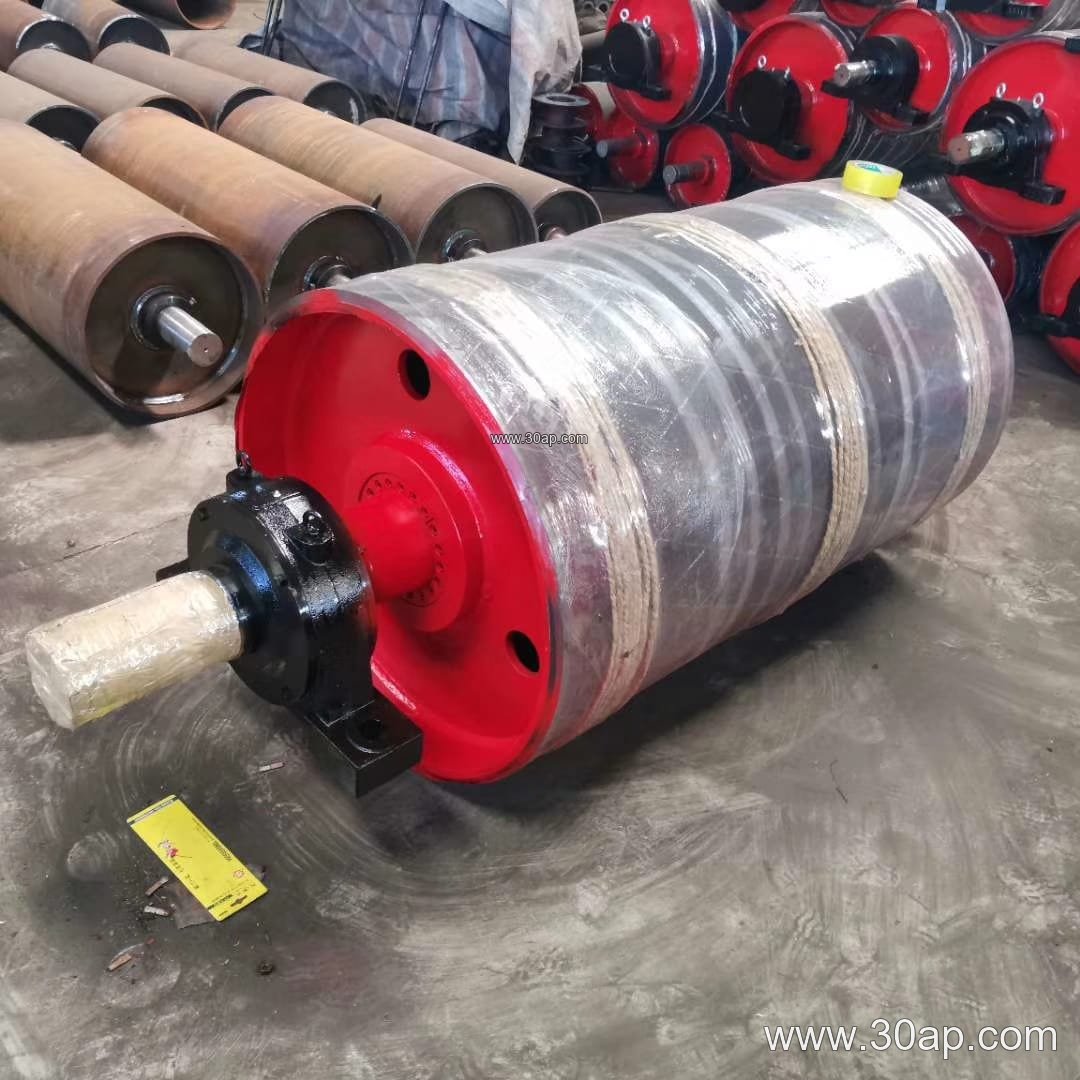
How the Bend Pulley Is Built
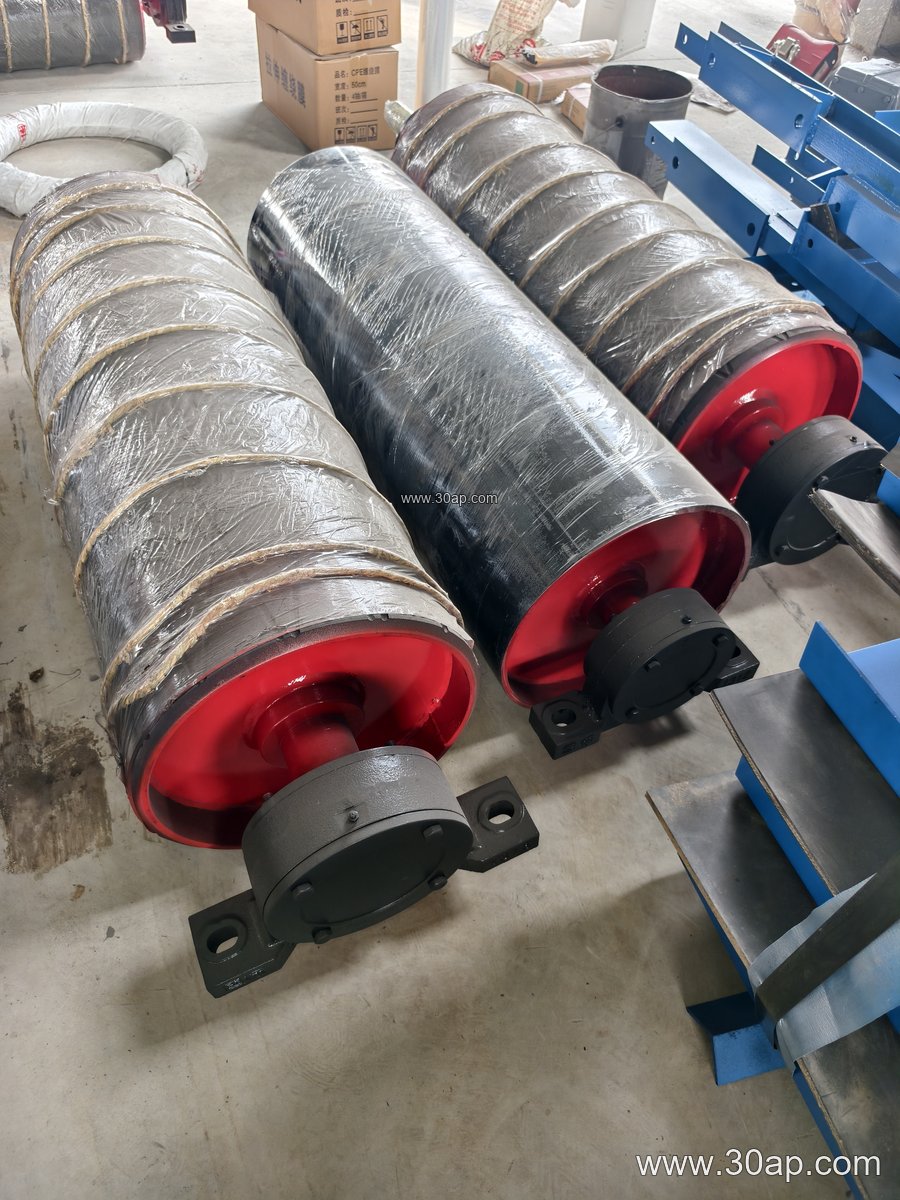
The construction is similar to other conveyor pulleys but tuned for guiding duty. The main parts include the cylindrical shell, the shaft, the bearing housings, and the end discs or hubs. The shell is usually made from rolled steel, and the surface may be plain or covered with rubber lagging. Common surface options include plain, cold-bonded rubber, hot vulcanized rubber, diamond lagging, and ceramic lagging. Lagging thickness is often 8, 10, 12, 15, or 20 mm, depending on belt tension and environmental conditions.
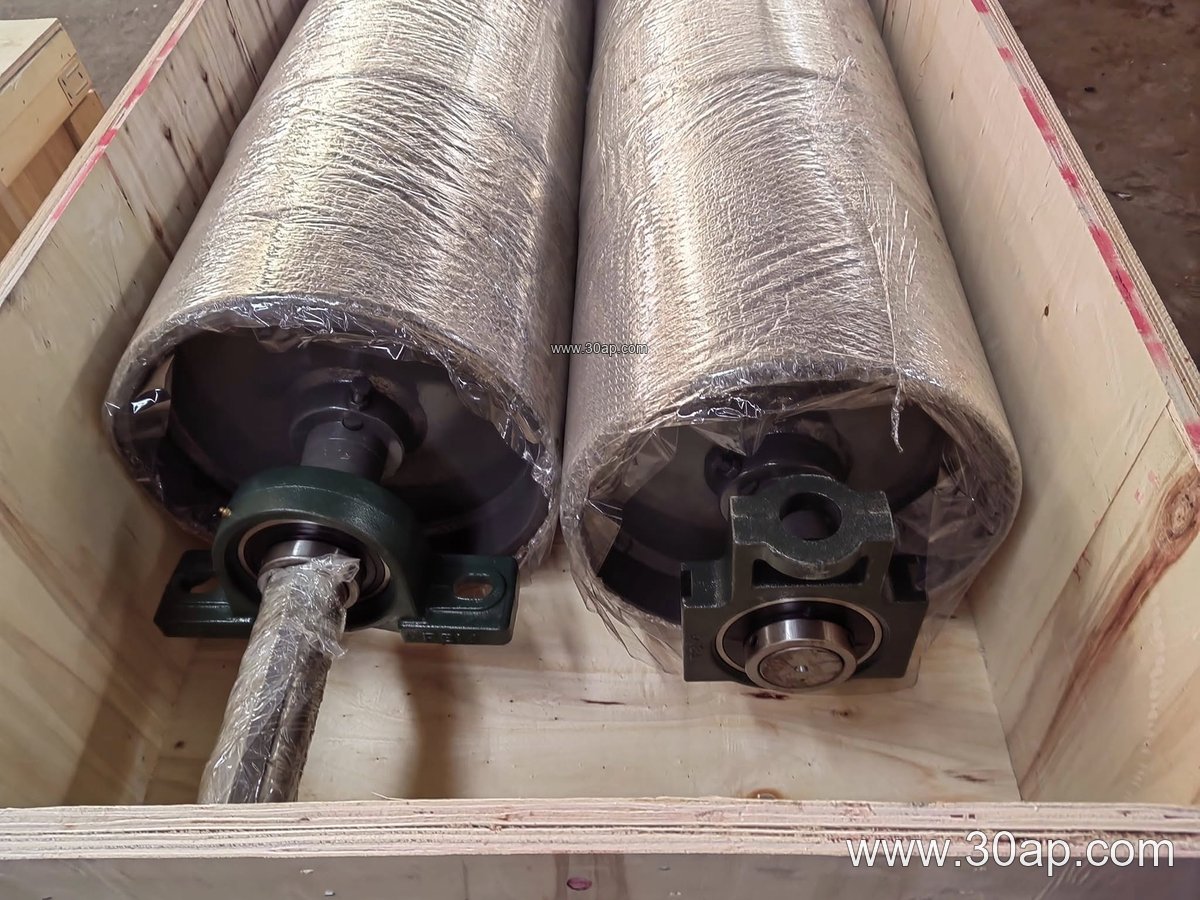
Bearings are selected according to the radial load and the belt pull. The shaft diameter is determined by torque and load, not by belt width alone. Common shaft sizes range from Ø50 to Ø200 mm, but the final value should always come from the conveyor design. The pulley face width is usually slightly wider than the belt, for example about 1,400 mm for a 1,200 mm belt, or about 950 mm for an 800 mm belt.
Where It Fits on the Conveyor
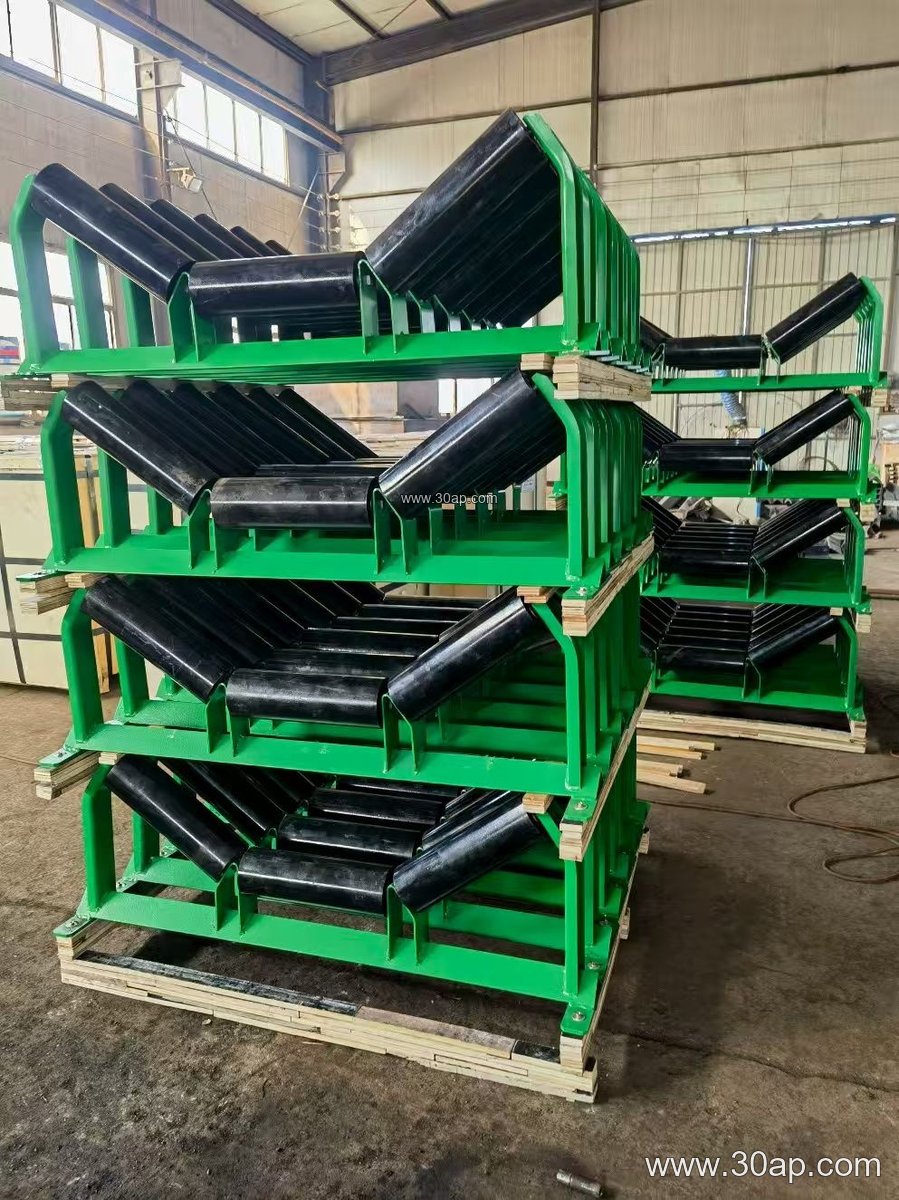
A bend pulley is often installed in the take-up section, where it helps route the belt to the tensioning device. It can also be placed before or after the drive pulley to increase the contact angle, which improves grip without changing the drive itself. In a coal mining conveyor or underground mining conveyor, space is tight, so a well-placed bend pulley can keep the belt path compact and reduce the number of idler roller sets needed.
On a long overland conveyor in a port or power plant, the return belt may pass over two or three bend pulleys to clear structures and walkways. For a steep stockyard conveyor using a chevron conveyor belt or corrugated sidewall conveyor belt, the bend pulley must be sized to clear the cleats and sidewalls, so the face width and the gap between the pulley and the belt edges matter.
Matching the Pulley to the Belt and the Job
The bend pulley works with the conveyor belt, not in isolation. A heavy-duty mining conveyor belt such as an EP conveyor belt or steel cord conveyor belt carries high tension, and the bend pulley must handle that tension without excessive deflection. For abrasive materials like iron ore or copper ore, a rubber-lagged bend pulley can reduce belt slip and protect the belt cover. In a cement plant handling hot clinker, a heat resistant conveyor belt may be used, and the pulley surface should be chosen to suit the temperature.
For a food grade conveyor belt or a lightweight PVC conveyor belt, a plain or lightly lagged bend pulley is often enough. For a flame retardant conveyor belt in a coal mining conveyor, the lagging material should also be considered for fire safety. The table below shows typical reference combinations, but these are examples, not fixed rules.
Reference Dimensions
| Belt Width | Typical Pulley Face Width | Example Diameter | Common Shaft Range |
|---|---|---|---|
| B500 | About 600 mm | Ø250 to Ø400 | Ø60 to Ø90 |
| B650 | About 750 mm | Ø315 to Ø500 | Ø70 to Ø100 |
| B800 | About 950 mm | Ø400 to Ø630 | Ø80 to Ø120 |
| B1000 | About 1,150 mm | Ø500 to Ø800 | Ø90 to Ø140 |
| B1200 | About 1,400 mm | Ø630 to Ø1,000 | Ø100 to Ø160 |
| B1400 | About 1,600 mm | Ø800 to Ø1,250 | Ø120 to Ø180 |
One belt width can match several pulley diameters. A B1200 conveyor might use a Ø630 bend pulley in a short transfer or a Ø1,000 drum in a high-tension main line. The correct choice depends on belt tension, wrap angle, shaft load, and the space available.
Buyer Checklist
- Confirm the belt width and the pulley face width, and check clearance for cleats or sidewalls.
- Specify the belt type, such as EP conveyor belt, NN conveyor belt, or steel cord conveyor belt, so the pulley load can be calculated.
- State the environment: coal mining conveyor, quarry conveyor, cement plant, or port bulk material conveyor.
- Choose the lagging surface based on slip risk and material abrasion; plain, diamond, and ceramic are common options.
- Provide the shaft diameter from the conveyor design, not from belt width alone.
- Check that the conveyor bracket and bearing housing match the pulley shaft and mounting position.
For more conveyor pulley and idler roller information, visit www.example.com/conveyor-pulley or www.example.com/belt-conveyor-bend-pulley. A well-matched bend pulley keeps the belt tracking smoothly and extends the service life of the whole conveyor system.