What a Five-Roll Idler Bracket Does
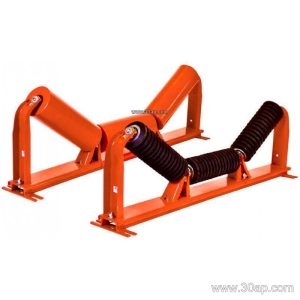
A five-roll idler bracket is the steel support assembly that carries five idler rollers in a troughed arrangement across the carrying side of a conveyor. Instead of the familiar three-roll trough, the five-roll layout spreads the belt load over more contact points, which suits wide belts and heavy bulk streams where a deeper, smoother trough profile is wanted. The bracket keeps the rolls at the correct angles, holds the spacing between them, and ties the whole set to the conveyor stringer or frame.
In practice, the five-roll idler bracket is often called a five-roll troughing bracket or five-roll idler frame. It is a support component, not a pulley, and it should not be confused with drive, tail or bend pulleys, which transmit power and change belt direction. The bracket simply positions the idler rollers so the conveyor belt forms a stable trough.
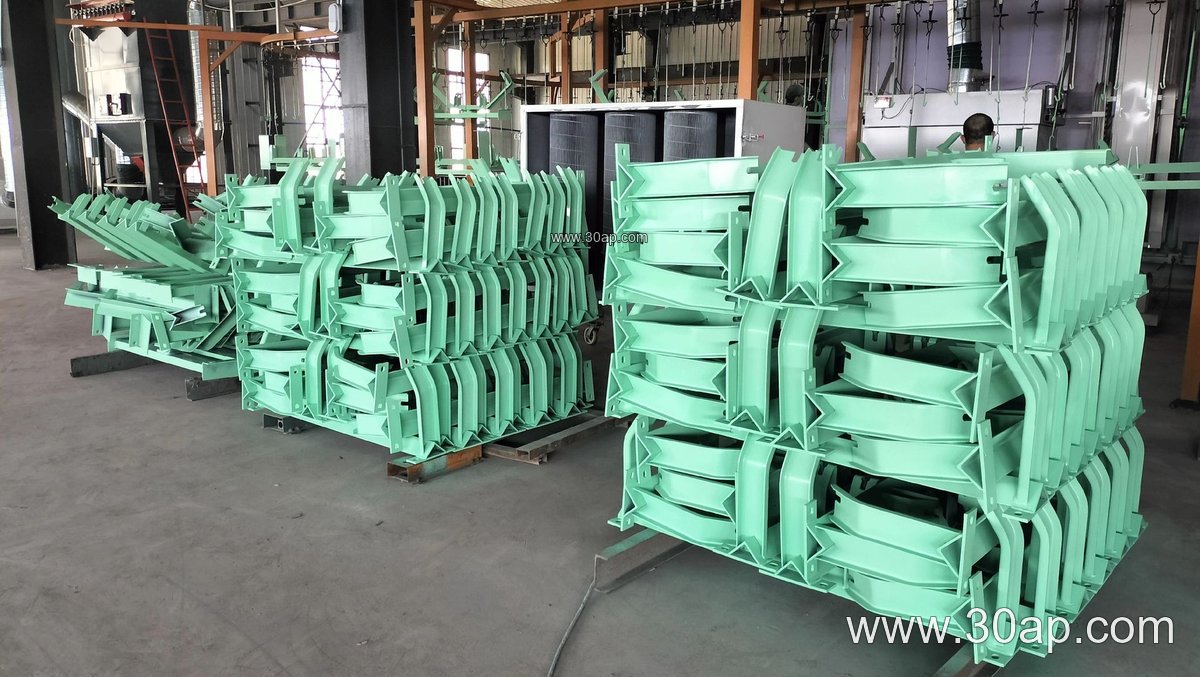
How the Assembly Is Built
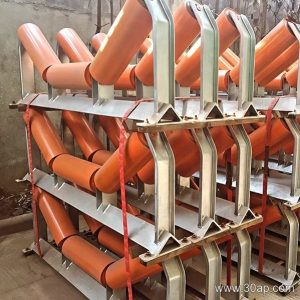
Most five-roll brackets are fabricated from angle steel, channel steel or folded steel plate, then drilled or slotted for the idler shaft ends. A typical layout uses one or two centre rolls sitting nearly flat, flanked by angled side rolls on each side. The wing angles determine the trough shape, and the crossbeam length follows the belt width and the chosen trough angle rather than a single fixed number.
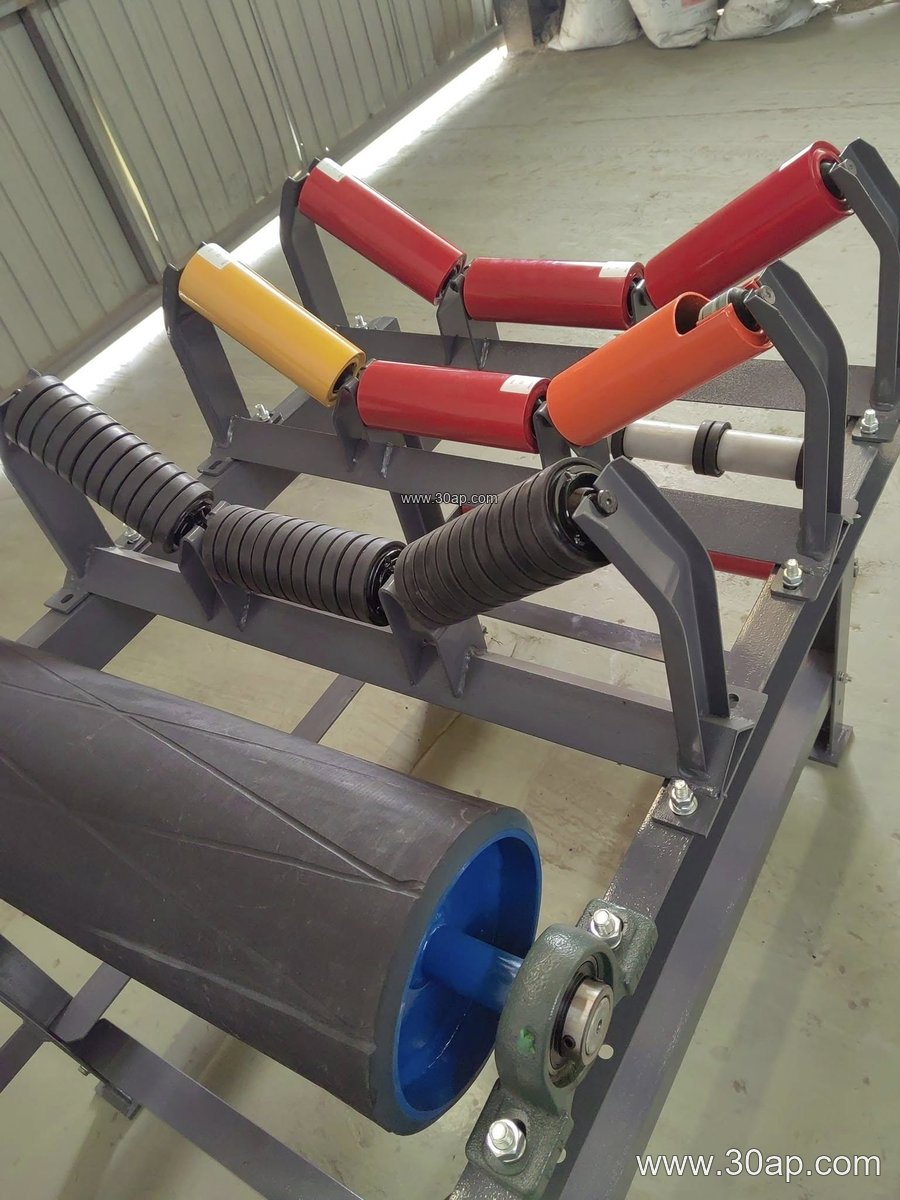
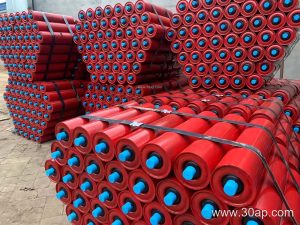
Common trough angles for this style are 20, 30, 35 and 45 degrees, and adjustable versions let maintenance crews fine-tune the wing position between those settings. Some designs add a slight forward tilt of about 1.5 to 2 degrees on the side rolls to help centre the belt. Roller diameters usually follow the conveyor duty, with Ø89, Ø108, Ø133, Ø159 and Ø194 appearing across light to heavy applications.
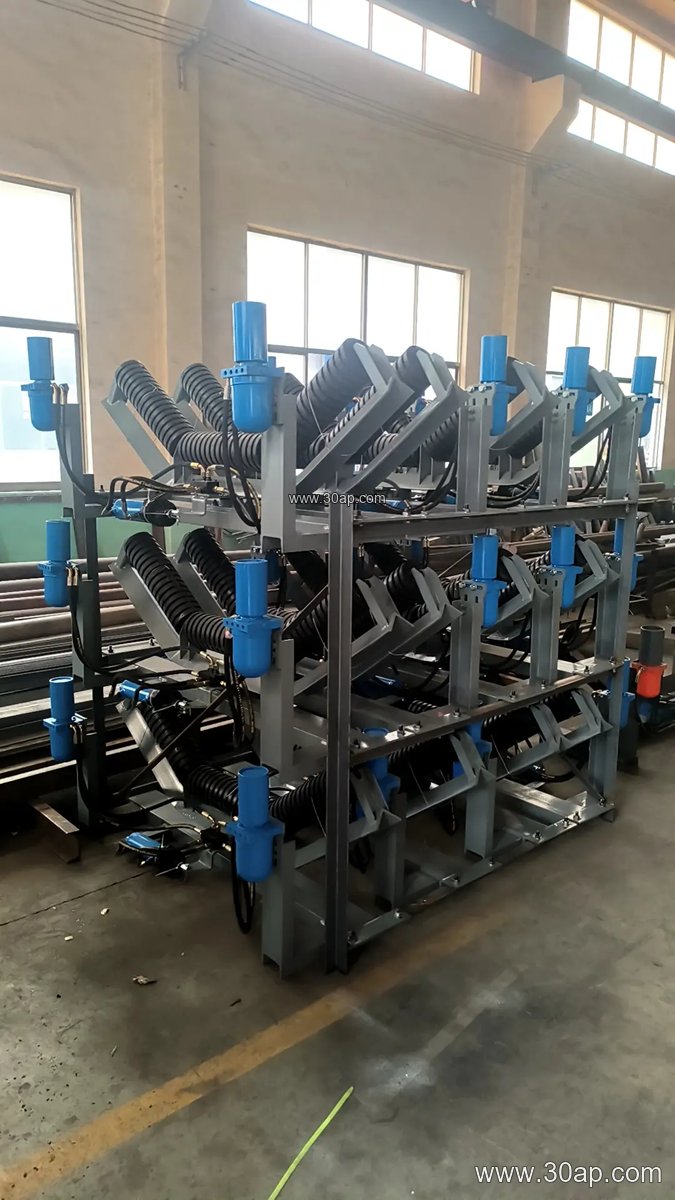
Typical Reference Combinations
The table below shows indicative pairings only. Actual mounting hole spacing and beam length are determined by design, so buyers should confirm dimensions against the conveyor drawing.
| Belt Width | Trough Angle | Roller Diameter | Bracket Style |
|---|---|---|---|
| B650 | 30 degrees | Ø89 | Fixed five-roll |
| B800 | 35 degrees | Ø108 | Fixed or adjustable |
| B1000 | 35 degrees | Ø133 | Adjustable five-roll |
| B1200 | 45 degrees | Ø133 | Adjustable five-roll |
| B1400 | 45 degrees | Ø159 | Heavy-duty five-roll |
| B1600 | 45 degrees | Ø159 | Heavy-duty five-roll |
| B1800 | 45 degrees | Ø194 | Heavy-duty five-roll |
These figures are reference data, not universal specifications. A wide belt does not lock the user into one angle or one roller size, and the final choice should match the belt, the load and the frame.
Where It Fits on the Conveyor
The five-roll idler bracket belongs on the carrying run, usually in the loading and transport zones of a wide belt conveyor. It is common in limestone quarries and aggregate crushing lines, where a broad, well-supported trough helps contain coarse rock. It also appears in cement plants handling clinker and raw meal, and in power plant coal handling systems where steady belt tracking matters.
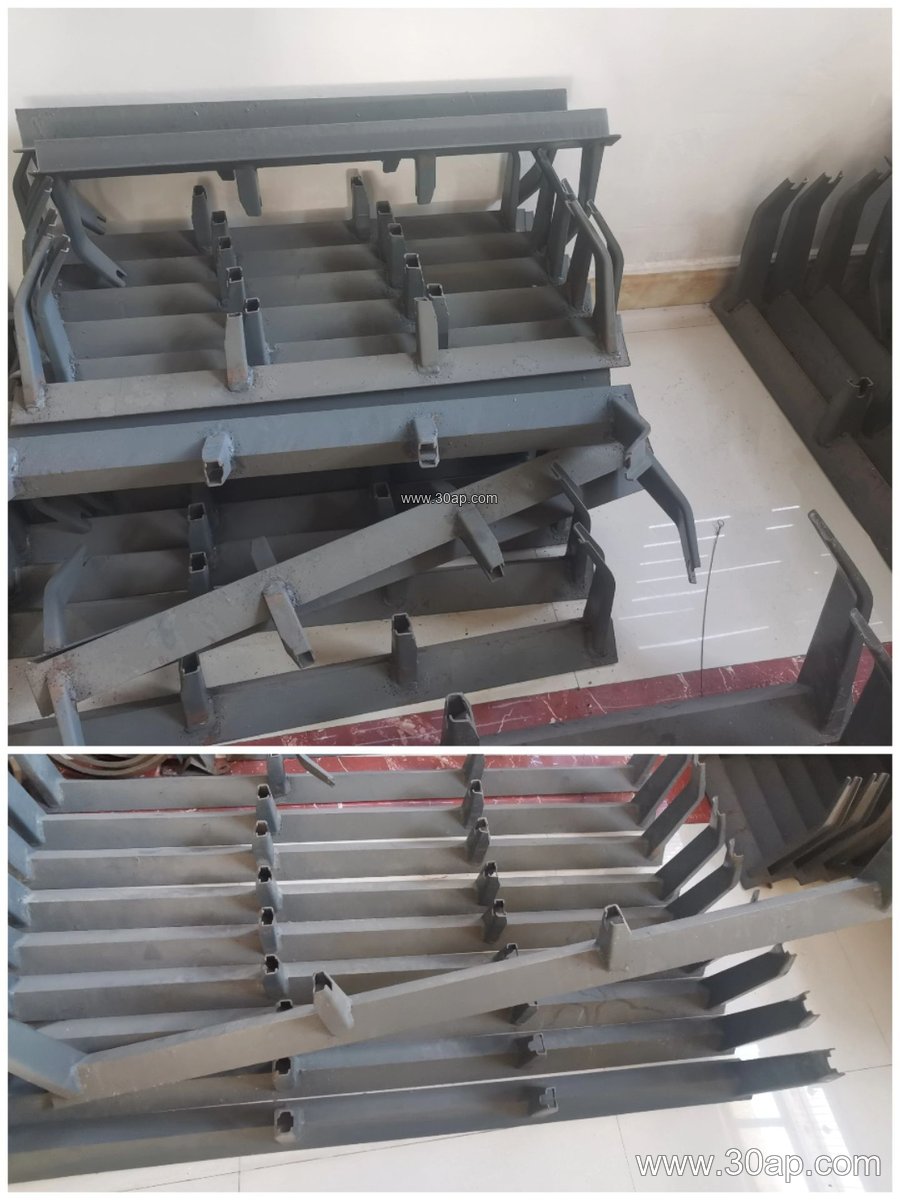
Because the extra rolls spread the load, the bracket pairs naturally with a heavy-duty conveyor belt, an abrasion resistant conveyor belt, or a heat resistant conveyor belt in hot clinker service. On long overland lines, a steel cord conveyor belt may run over five-roll troughs where belt stiffness and width call for more support. In dusty or wet conditions, a flame retardant conveyor belt or anti-static conveyor belt is often specified alongside.
Buyer Checklist
- Confirm belt width, trough angle and roller diameter before ordering, and check the mounting hole spacing against the existing frame.
- Decide between fixed and adjustable brackets; adjustable units cost more but simplify alignment and belt training.
- Match the bracket material and finish to the environment, especially in washdown, coastal or underground mining service.
- Check that the bracket accepts the idler roller shaft ends already in use, so spare rolls remain interchangeable.
- Review the transition zone near the tail and the loading point, where impact and belt wander are highest.
For a complete carrying assembly, the five-roll idler bracket works together with the idler roller set, the conveyor belt and the conveyor bracket that anchors the frame. Buyers comparing suppliers should ask for drawings, material grades and tolerance data rather than relying on a single size label.