What a Conveyor Carrying Bracket Does on the Load Side
A conveyor carrying bracket is the structural support that holds the load-carrying idlers in position along the upper run of a belt conveyor. In many workshops and drawing sets it is also called a troughing idler bracket or carrying idler frame. Its job is simple to describe but important in practice: keep the idler rollers at the correct trough angle, at the right spacing, and at a height that lets the conveyor belt form a stable trough for the material being moved. Drive pulleys, tail pulleys and bend pulleys are separate components with different duties, so they should not be confused with this support frame.
How the Carrying Bracket Is Built
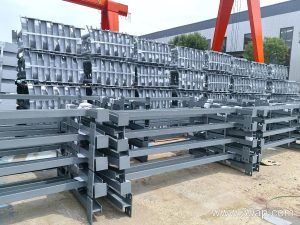
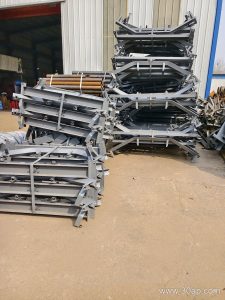
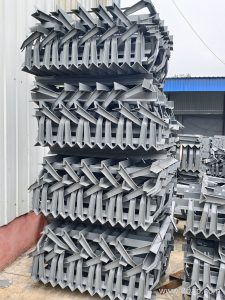
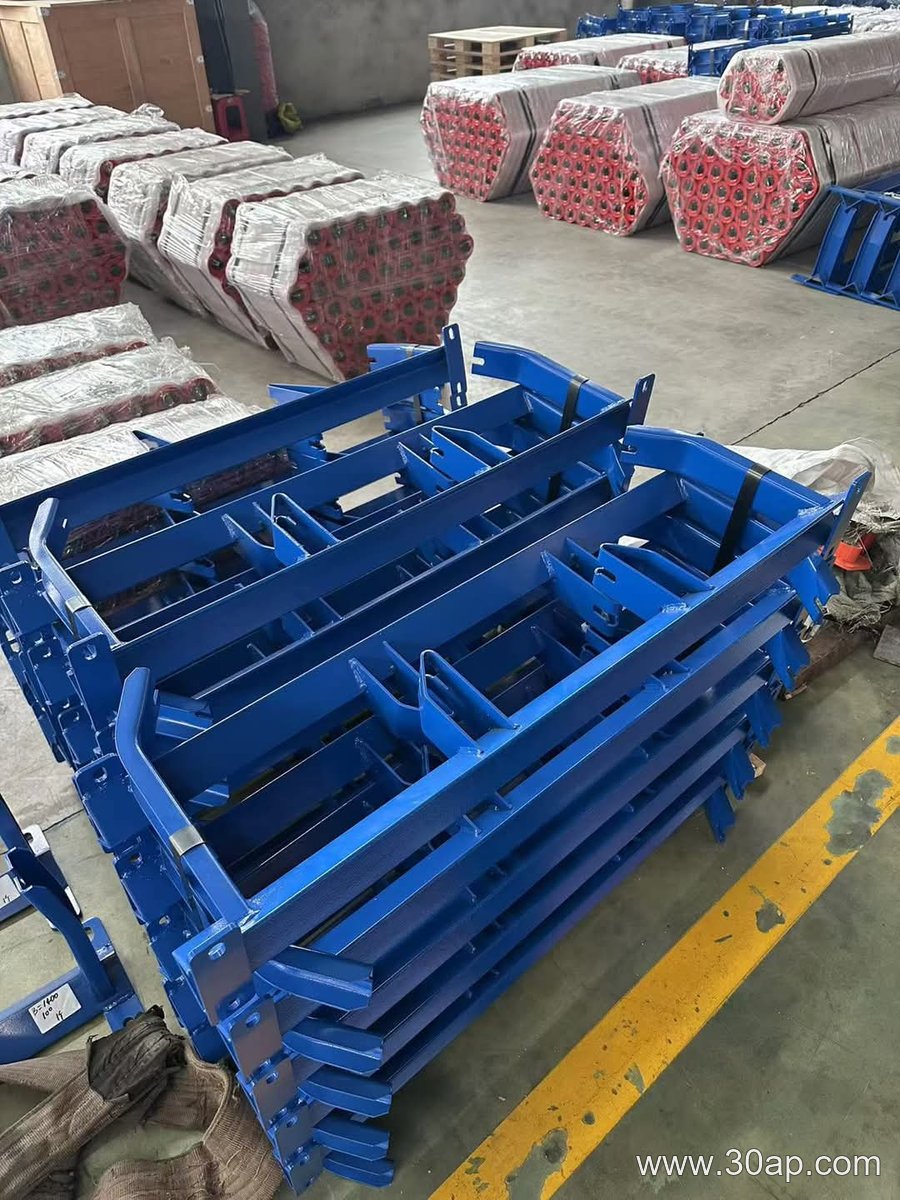
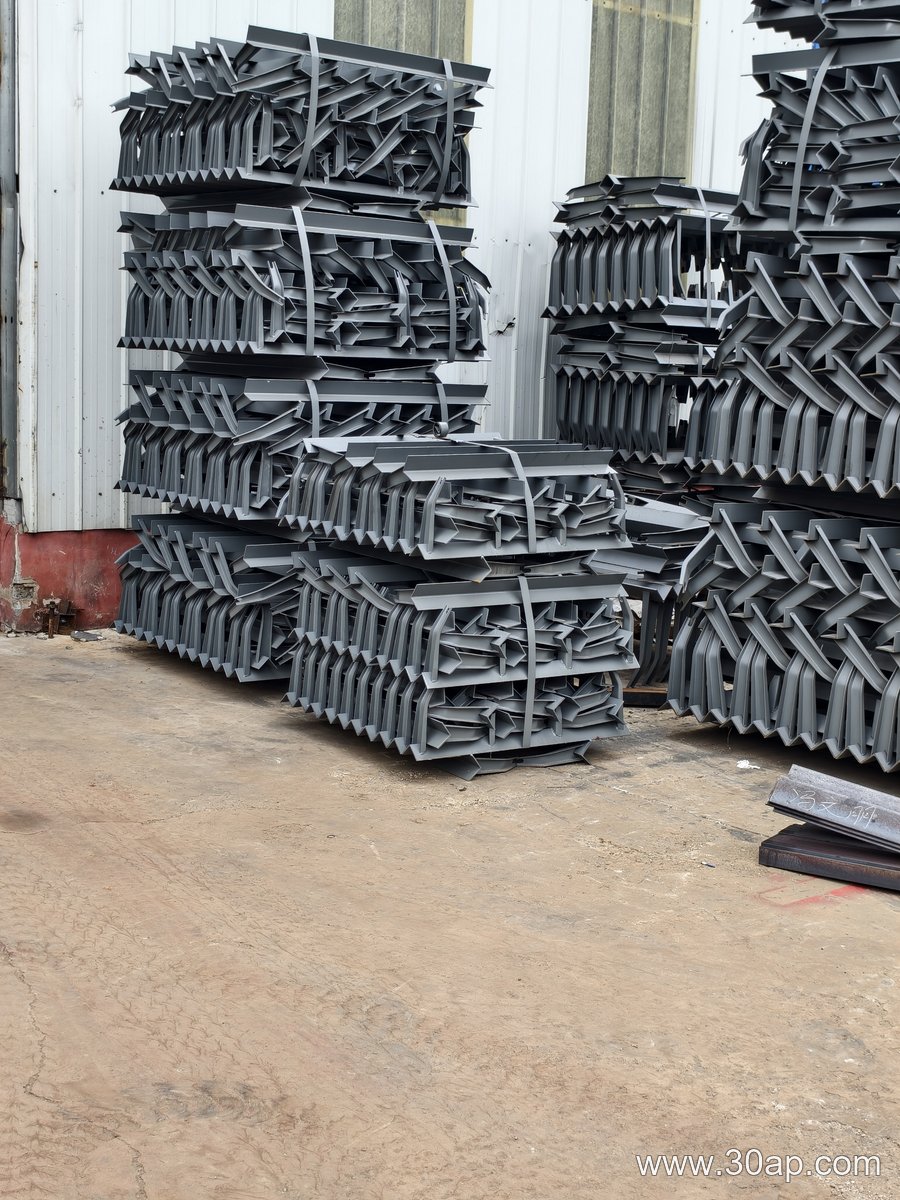
Most carrying brackets are fabricated from angle steel, channel steel or folded steel plate. The frame may be a single-piece troughing bracket or a multi-part assembly with slots that allow the side rollers to sit at a chosen angle. A typical bracket includes mounting holes for the idler shafts, a cross beam that spans the conveyor width, and fixing points for bolting to the conveyor stringer or frame.
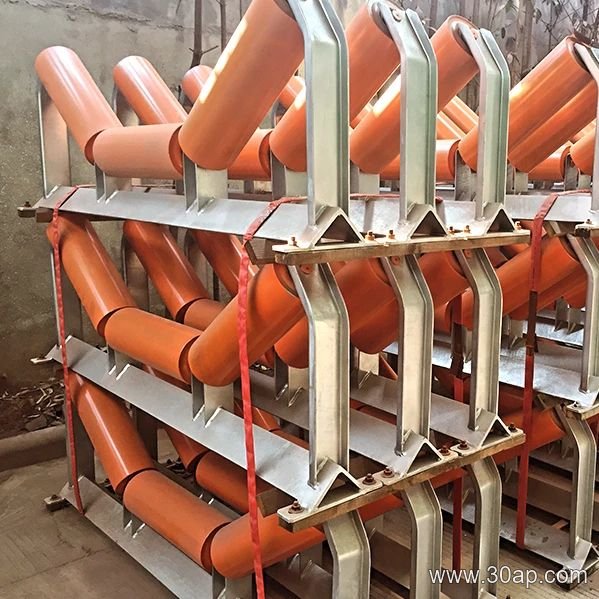
Common surface treatments include painting or galvanizing, depending on the working environment. In dusty or wet conditions, such as a coal preparation plant or a limestone quarry, the bracket should be selected with corrosion protection and easy cleaning in mind.
Typical Reference Data for Carrying Brackets
| Item | Common Options |
|---|---|
| Bracket type | Troughing bracket, transition bracket, adjustable bracket, impact bracket |
| Belt width | B500, B650, B800, B1000, B1200, B1400, B1600, B1800, B2000 |
| Trough angle | 20 degrees, 30 degrees, 35 degrees, 45 degrees |
| Idler diameter | Ø89, Ø108, Ø133, Ø159, Ø194 |
| Material | Angle steel, channel steel, folded steel plate |
These values are reference data only. Actual mounting hole spacing and cross beam length are determined by belt width, trough angle and the specific conveyor design. A given belt width does not have only one possible idler diameter or trough angle.
Where Carrying Brackets Are Used
Load-side support brackets appear wherever a conveyor belt carries bulk material. In a sand and gravel line, they hold the troughing idlers that support the belt under crushed stone. In a cement plant, they carry clinker or raw material on long inclined conveyors. In a power plant coal handling system, they support the belt through transfer points and along the main run. The same basic bracket design also appears in iron ore mines, fertilizer plants, grain silos and tunnel muck removal systems.
In each case, the bracket works together with the conveyor belt, the idler roller and, where needed, the transition bracket that guides the belt from the pulley into the trough. The carrying bracket does not replace the pulley; it supports the belt between pulleys.
Fixed and Adjustable Carrying Brackets
A fixed troughing bracket is welded or bolted at one preset angle, such as 35 degrees. An adjustable carrying bracket allows the side idler position to be changed between common trough angles, for example 20, 30, 35 or 45 degrees. Adjustment is useful during commissioning or when a conveyor is modified to handle a different material. Some designs also include a small forward tilt of about 1.5 to 2 degrees on the side rollers to help center the belt.
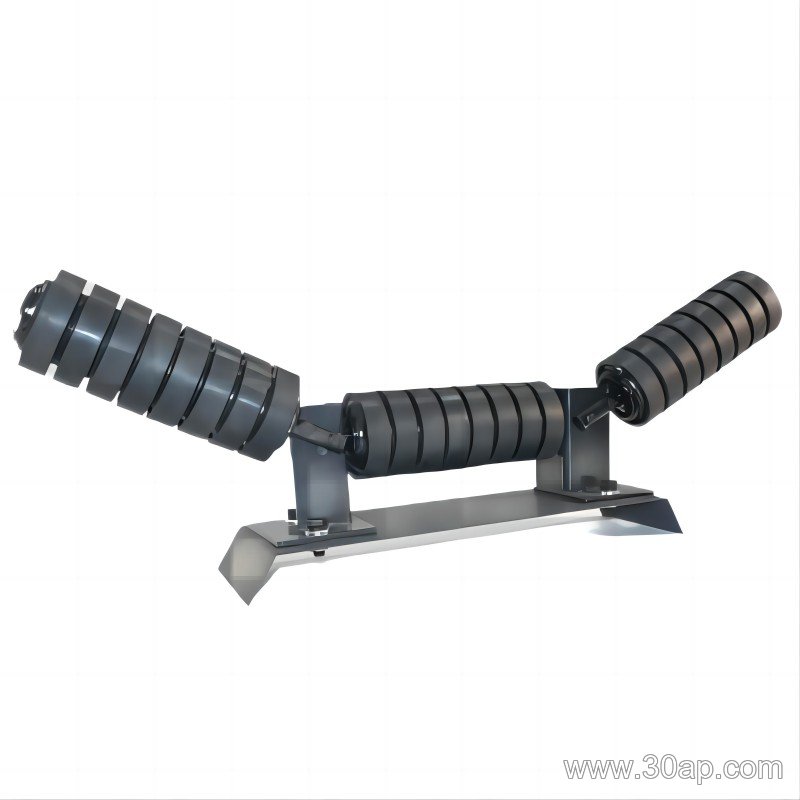
For impact zones under a crusher or transfer chute, an impact bracket with rubber or spring cushioning may be used instead of a standard carrying bracket. This is a subtype choice, not a replacement for the normal load-side support frame.
Selection Points for Buyers
- Match the bracket to the belt width and the chosen trough angle.
- Confirm the idler shaft diameter and mounting hole spacing before ordering.
- Choose a material and finish that suit the site conditions, such as dust, moisture or temperature.
- Decide between fixed and adjustable brackets based on how often the trough angle may change.
- Check that the bracket fits the existing conveyor stringer and bolt pattern.
A well-matched carrying bracket keeps the belt profile stable, reduces material spillage and helps the idlers run smoothly. For any project, the final dimensions should follow the conveyor design drawing rather than a general table.