What an EP200 Conveyor Belt Is
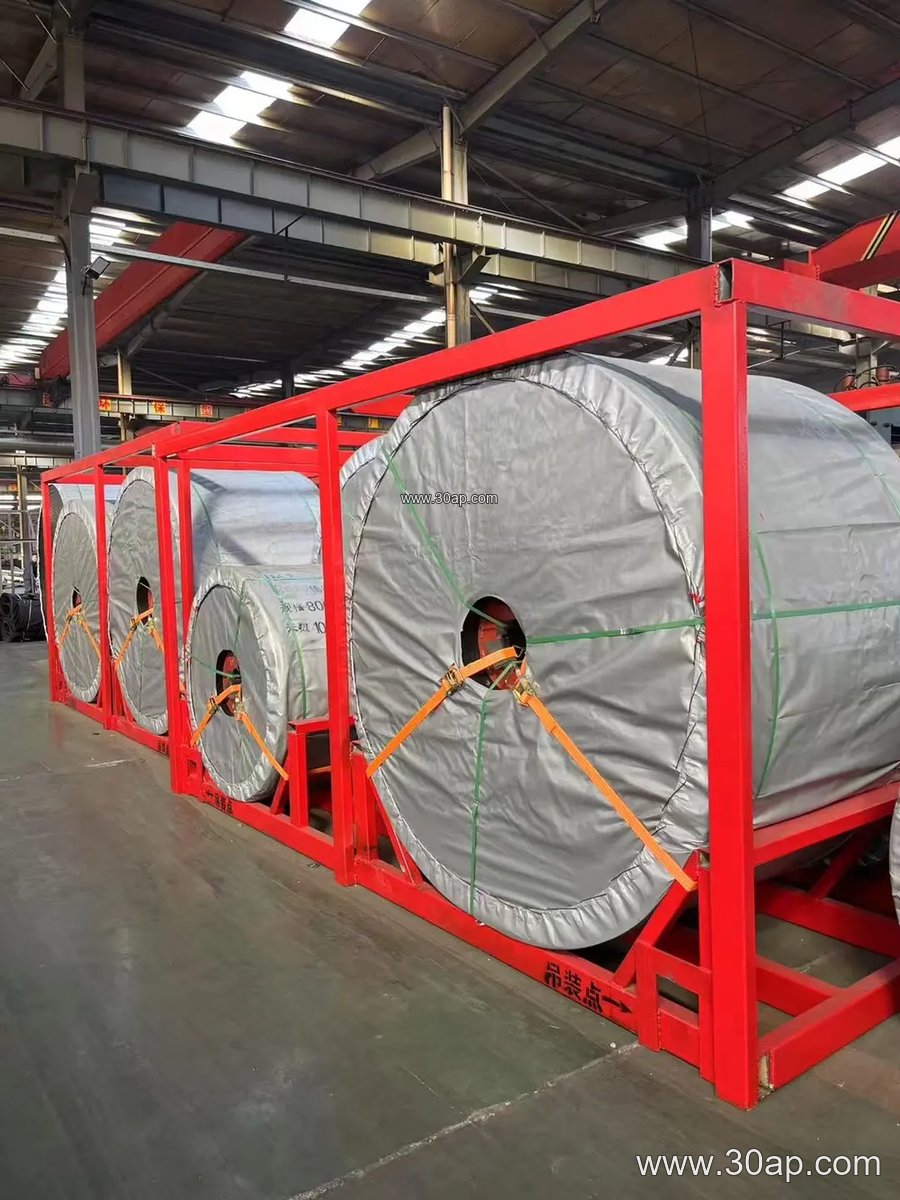
An EP200 Conveyor Belt is a fabric core conveyor belt built on polyester-polyamide (EP) carcass plies, with a nominal breaking strength of 200 N/mm per ply. It belongs to the EP Conveyor Belt family, also described as an EP Fabric Core Conveyor Belt, and it sits below higher-rated grades such as EP315, EP400 and EP500 in the same range. Where users need a lighter-duty carcass they may look at an NN Conveyor Belt, but EP plies typically offer lower elongation and better resistance to moisture creep, which matters on long runs in quarries, cement plants and power stations.
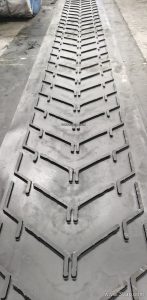
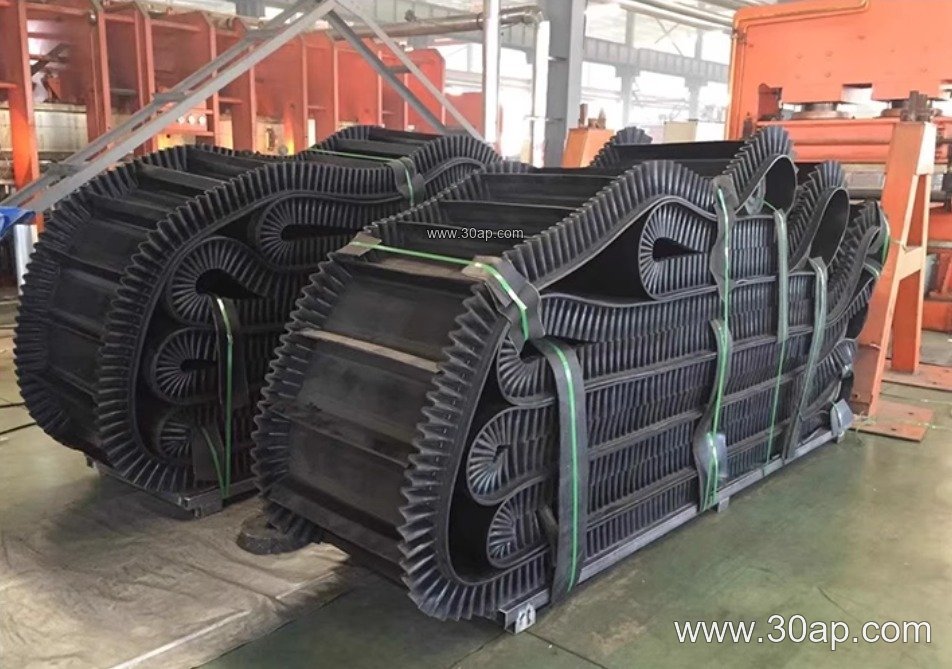
The belt is supplied as a flat rubber belt with rubber covers on both faces. It is not a pipe belt, not a chevron style and not a corrugated sidewall design; those are separate constructions used when material containment or incline grip is the main requirement.
Construction and Typical Specifications
The carcass is made from several EP fabric plies bonded with rubber skim, then covered top and bottom with abrasion resistant rubber compounds. Buyers commonly ask for 2 to 6 plies depending on load and pulley spacing. Cover thickness is usually quoted as a top plus bottom pair, for example 4+2 mm or 6+2 mm, and the total belt thickness follows from that combination.
| Item | Common Range |
|---|---|
| Strength grade | EP200 (200 N/mm per ply) |
| Carcass plies | 2 to 6 |
| Belt width | B500, B650, B800, B1000, B1200, B1400, B1600 |
| Top and bottom cover | 3+1.5, 4+2, 5+2, 6+2, 8+3 mm |
| Edge type | Cut edge or moulded edge |
| Joint | Vulcanized splice or mechanical fastener |
These values are typical references. Actual cover grade, ply count and width are fixed by the conveyor design, the material carried and the duty cycle, so they should be confirmed on the drawing rather than assumed.
Where It Fits in the Plant
EP200 is a middle-class fabric belt and appears in many bulk handling circuits. In a sand and gravel yard it may run from a crusher conveyor to a screening station, carrying aggregate at moderate tension. In a cement plant it can feed clinker or raw meal along transfer lines. Power plants use it on coal handling and ash lines where flame retardant conveyor belt grades are specified. Underground coal mining often requires anti-static and fire resistant conveyor belt compounds, and a mine may prefer PVG or PVC constructions for that duty, while EP remains common in surface operations and ore transport.
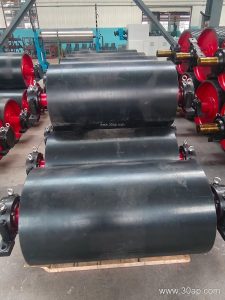
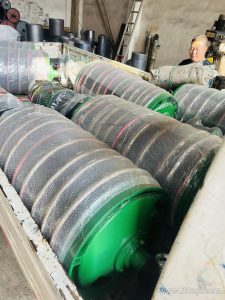
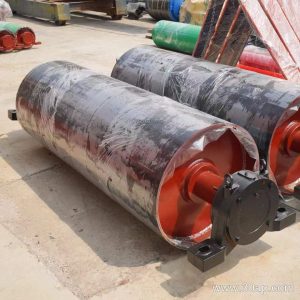
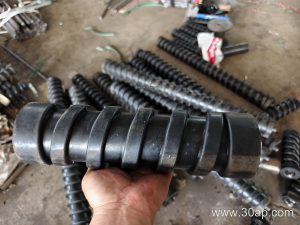
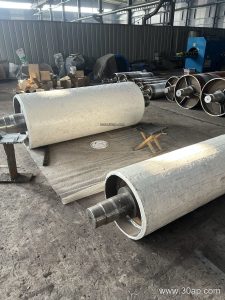
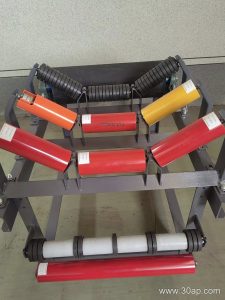
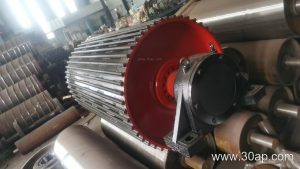
It also appears in ports and ship loading systems, recycling plants and construction material yards. A typical conveyor around the belt includes an idler roller set on the carrying side, a conveyor pulley at the drive and tail positions, and a conveyor bracket holding the frame. Drive, tail and bend pulleys each do a different job and are not interchangeable, so belt tension and pulley lagging should be reviewed together with the belt rating.
How to Select the Right Grade
- Check the calculated maximum belt tension and confirm that the ply count and EP200 rating give a safe working factor.
- Match the cover compound to the cargo: abrasion resistant conveyor belt covers for sharp rock, heat resistant conveyor belt grades for hot clinker, oil resistant conveyor belt rubber for oily scrap, and cold resistant compounds for freezing sites.
- Confirm whether flame retardant and anti-static properties are required, especially in coal mining conveyor belt and underground mining conveyor belt applications.
- Review minimum pulley diameters and transition distances with the conveyor designer; belt width alone does not determine pulley or shaft size.
- Decide the splice method early, because vulcanized joints affect take-up travel and belt length.
Installation and Maintenance Notes
Correct tracking starts with square frames, aligned idler roller stations and properly lagged pulleys. A belt that mistracks on the tail pulley is often a frame or loading problem rather than a belt defect. Keep the skirt rubber and chute clear so material does not wedge along the edges, and inspect the splice for ply separation during scheduled stops. Store spare rolls in a dry, shaded place and rotate long-stored stock to avoid set in the carcass.
When replacing a belt, record the width, ply count, cover thickness and splice type of the removed item. That record makes the next enquiry straightforward and helps avoid ordering a belt that is stronger or heavier than the conveyor was designed for.
For fabric belt enquiries, including EP200 Conveyor Belt and related rubber conveyor belt options, specify the conveyor layout, material, capacity and required cover grade so the supplier can propose a suitable construction.