What a Guide Idler Bracket Does
A guide idler bracket is the mounting component that holds a guide idler — often a vertical or angled roller — in position along a conveyor so the belt edge stays where it should. In a quarry, a coal preparation plant, or a cement kiln feed line, belt misalignment is one of the quiet causes of edge damage, spillage, and premature wear. The guide idler bracket gives that corrective roller a stable, correctly oriented home on the conveyor frame.
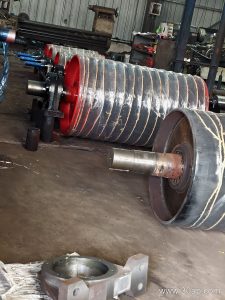
It is not a drive pulley, tail pulley, or bend pulley, and it should not be confused with them. Those are the large rotating drums that transmit power and change belt direction. The guide idler bracket is a structural support item, usually bolted or welded to the conveyor stringer, and its job is positioning, not power transmission.
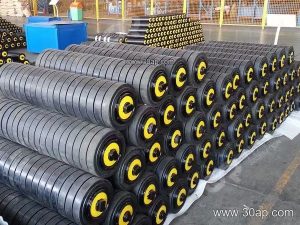
Related components such as the conveyor bracket, idler roller, and conveyor pulley all work together, but each has a distinct role. For example, you can buy a heavy-duty conveyor idler set for the carrying side, yet the guide bracket still determines whether the training roller contacts the belt edge at the right angle.
Construction and Mounting
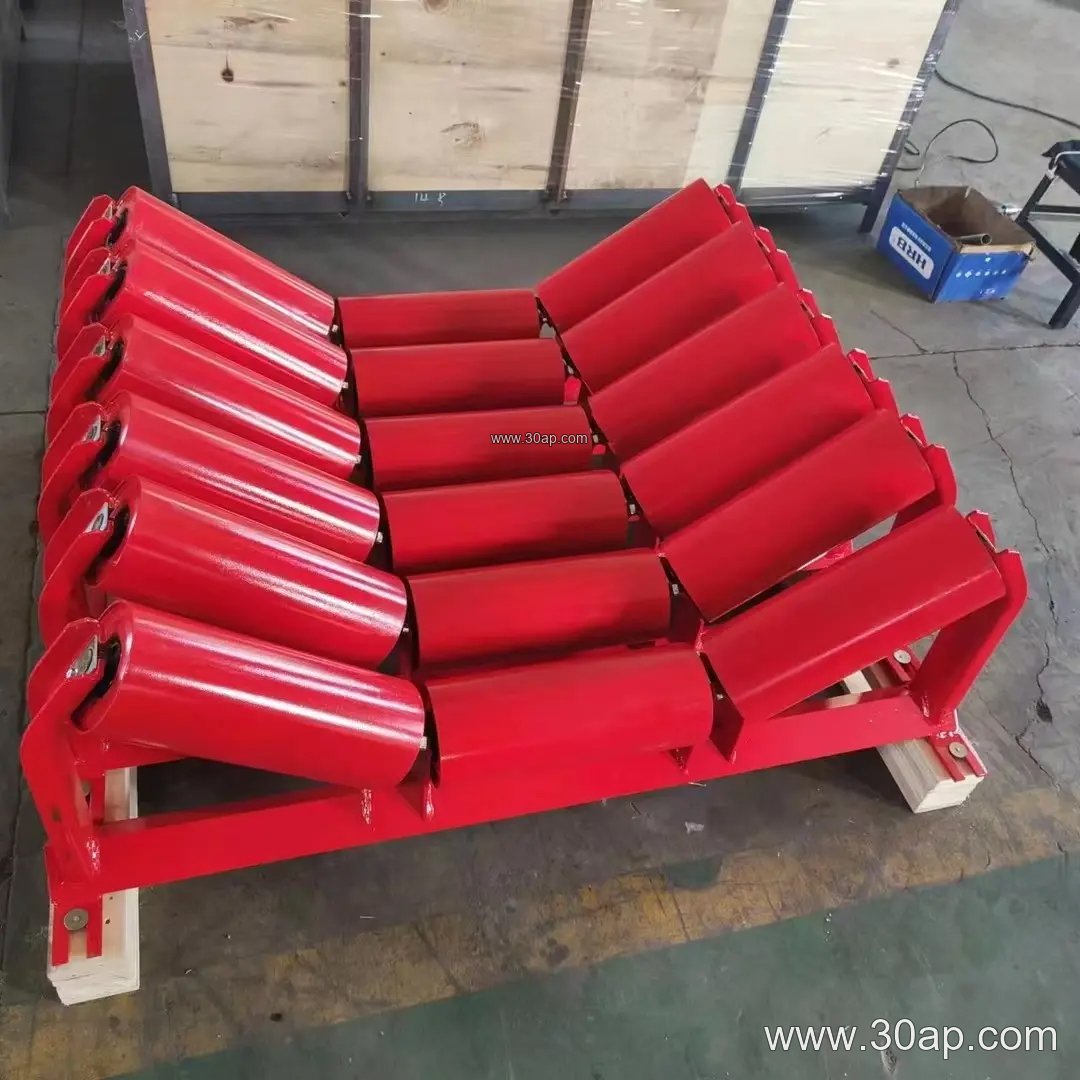
Most guide idler brackets are fabricated from angle steel, channel steel, or folded steel plate. The fabrication method matters because the bracket must resist vibration and occasional side loads without flexing. A stamped or folded design is common for lighter conveyors, while welded channel construction suits wider, heavier belts.
Typical features include:
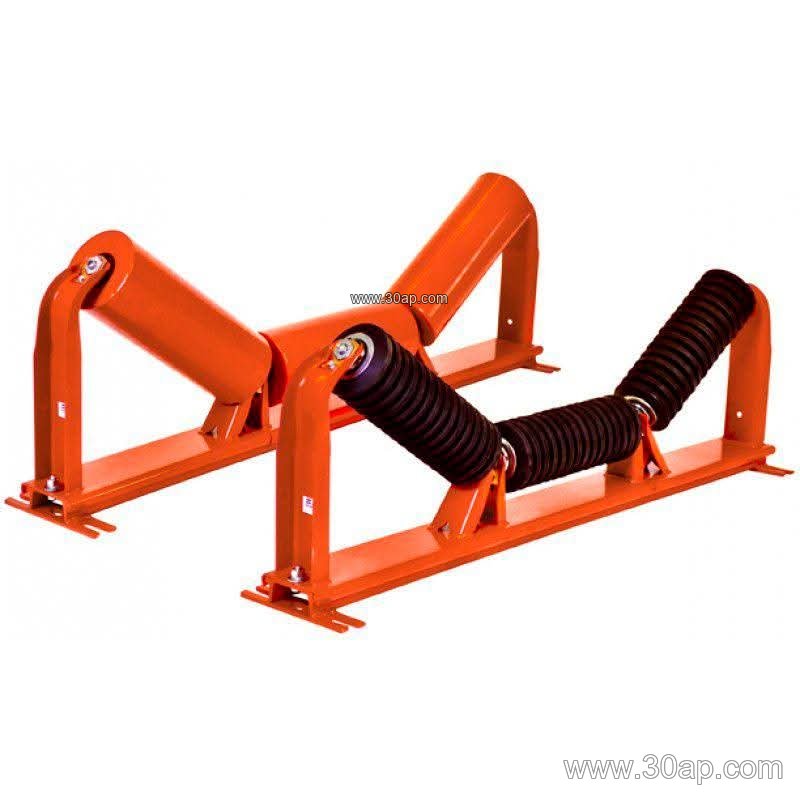
- Slotted or drilled mounting holes for adjustment during installation
- A vertical spindle or stub shaft that carries the guide idler
- Reinforcing gussets where the bracket meets the frame
- Provision for shimming or lateral adjustment
Mounting hole spacing and crossbeam length are not fixed values. They change with belt width, frame design, and the angle at which the guide roller is set. A buyer should expect to confirm these dimensions against the actual conveyor drawing rather than assume a standard.
Where It Fits in the Conveyor System
Guide idler brackets are found wherever belt tracking needs help: near the loading point, ahead of a transfer chute, on long overland runs, and on the return strand. In a sand and gravel line, a misaligned belt on a crusher discharge conveyor can throw material off the edge within minutes; a properly placed guide bracket and roller pair corrects the drift before it becomes a cleanup problem.
They are also used in power plant coal handling, steel plant sinter lines, port ship loaders, and tunnel spoil conveyors. The bracket itself is small, but its position relative to the belt edge and the troughing idlers determines how effectively the guide roller steers the belt back to center.
Choosing the Right Bracket
Selection starts with the conveyor frame and the belt width. Common belt widths include B500, B650, B800, B1000, B1200, B1400, B1600, B1800, B2000, B2200, and the bracket must match the frame geometry for that width. Roller diameters commonly used alongside guide brackets include Ø89, Ø108, Ø133, Ø159, and Ø194. Trough angles of 20, 30, 35, and 45 degrees are typical on the carrying side, and adjustable brackets can be set within that range.
| Reference item | Common values | Notes |
|---|---|---|
| Belt width | B500 to B2200 | Match frame and crossbeam design |
| Roller diameter | Ø89, Ø108, Ø133, Ø159, Ø194 | Depends on belt speed and load |
| Trough angle | 20°, 30°, 35°, 45° | Adjustable brackets cover a range |
| Forward tilt | About 1.5° to 2° | Common on training idlers |
Do not assume that one belt width pairs with only one trough angle or roller diameter. A B800 conveyor may run 30 degrees with Ø108 rollers in one plant and 35 degrees with Ø133 in another. The correct combination comes from the conveyor design, belt speed, and material load.
An adjustable bracket is useful where field tuning is expected; a fixed bracket is simpler and adequate when the geometry is already proven. Neither is universally better.
Buyer Checklist
Before ordering, confirm the frame type, belt width, mounting hole pattern, roller diameter, and required guide angle. Check whether the bracket will be welded or bolted, and whether the environment calls for galvanizing or a protective coating. In a coal mining or underground application, flame retardant conveyor belt and anti-static conveyor belt are separate belt specifications, but the bracket material and coating still need to suit damp or corrosive conditions.
Also consider maintenance access. A guide idler bracket that is buried behind a chute or guard is difficult to adjust. For high-abrasion duty such as iron ore or aggregate handling, pair the bracket with suitable abrasion resistant conveyor belt and inspect the guide roller regularly for flat spots. On systems carrying hot material, a heat resistant conveyor belt may be specified, but the bracket itself should be checked for thermal expansion at the mounting points.
Finally, keep spare brackets and guide rollers on hand for critical conveyors. Small components like these rarely make headlines, yet they keep the belt centered, reduce edge damage, and protect the more expensive pulleys and belting downstream.