What an Iron Ore Conveyor Pulley Does
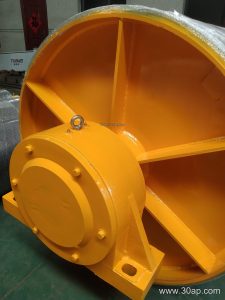
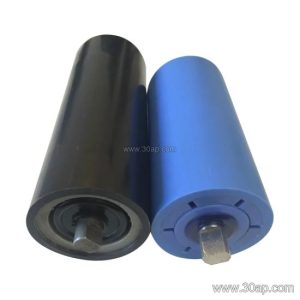
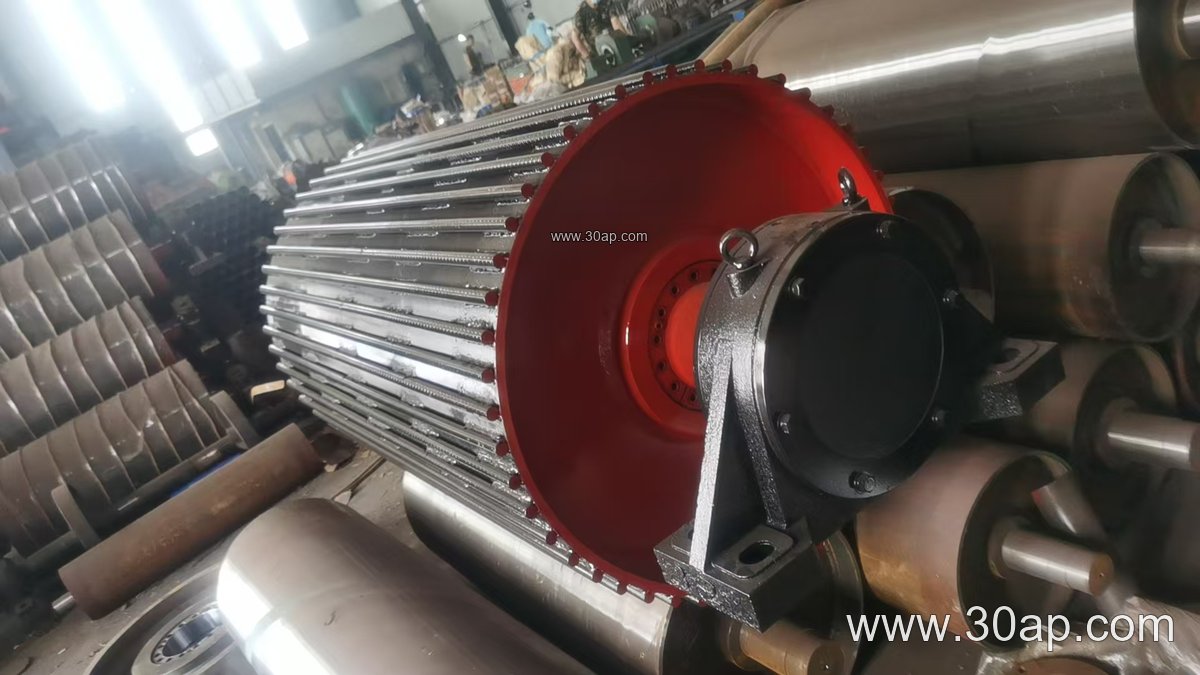
An iron ore conveyor pulley is the rotating drum that carries and drives the belt on a bulk handling conveyor in an iron ore mine, pellet plant, or steel works stockyard. It transmits torque to the conveyor belt, maintains belt tension, and controls the belt path along the run. In a typical iron ore conveyor pulley, the shell is welded from rolled steel plate, the shaft is machined and keyed, and the end discs or hubs connect the shell to the shaft. The assembly is balanced for the belt speed, and the surface may be plain, lagged, or profiled depending on the duty.
This drum is often called a conveyor pulley in general plant language, but the iron ore duty places extra demands on it: high belt tension, abrasive dust, and impact from lump ore. The pulley must hold its shape under load and keep the belt tracking without slip.
Construction Details That Matter
The shell thickness, hub design, and shaft diameter are chosen from the torque and radial load, not simply from belt width. A wider belt does not fix a single shaft size; the shaft is sized by the drive load, the belt tension, and the bearing span. Common shaft diameters range from Ø50 to Ø200, while shell diameters commonly run from Ø200 up to Ø1800 for large installations.
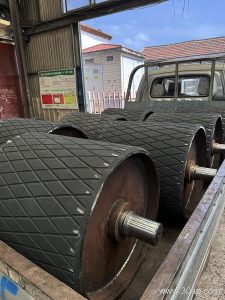
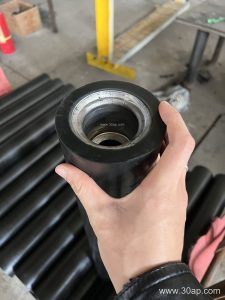
Lagging protects the shell and improves grip. Plain, cast rubber, cold-bonded rubber, hot-vulcanized rubber, diamond, herringbone, and ceramic lagging are all used, with common lagging thicknesses of 8, 10, 12, 15, and 20 mm. In iron ore service, abrasive dust and fines make a wear-resistant lagging a practical choice, and the surface pattern should match the drive duty rather than the mine’s tradition.
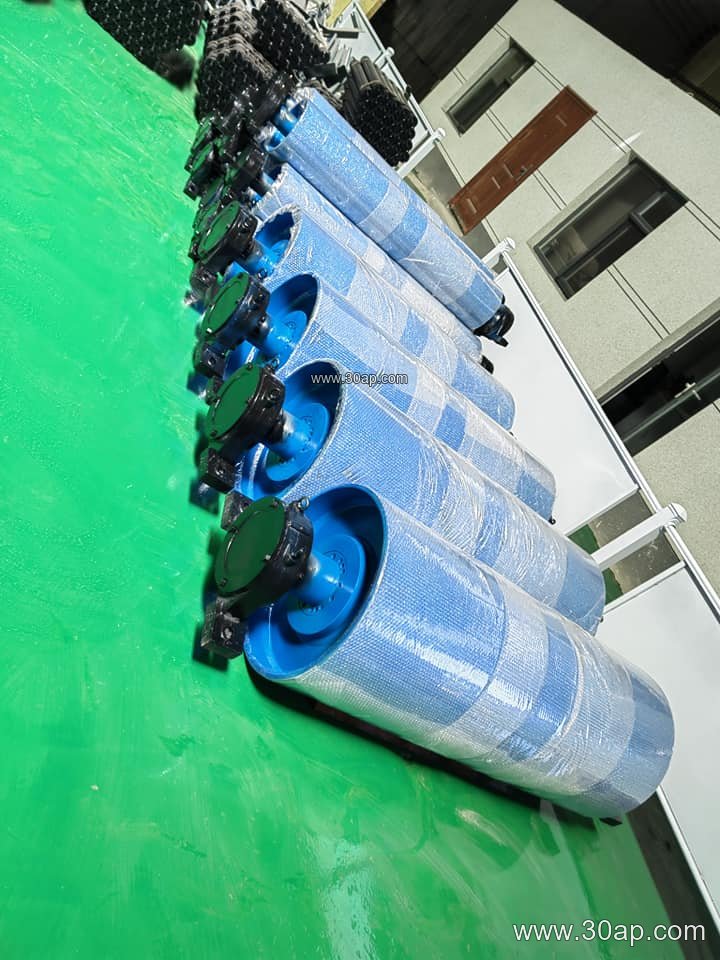
Face width is usually a little wider than the belt. For example, a B800 belt commonly uses a face around 950 mm, a B1200 belt around 1400 mm, and a B1600 belt around 1800 mm. Combinations such as B1200 × Ø1000 or B1400 × Ø800 are common in design tables, but each project still confirms the diameter against belt tension and wrap angle.
Where It Sits on the Conveyor
Position changes the job. A drive pulley or head pulley delivers power and is usually lagged; a tail pulley at the loading end turns the belt back and may be plain or lagged; a bend pulley or take-up pulley redirects the belt and sets tension. These are different functions and are not interchangeable, even though all are conveyor pulleys. A snub pulley increases wrap angle on the drive, while a winged pulley is used where sticky material must be shed.
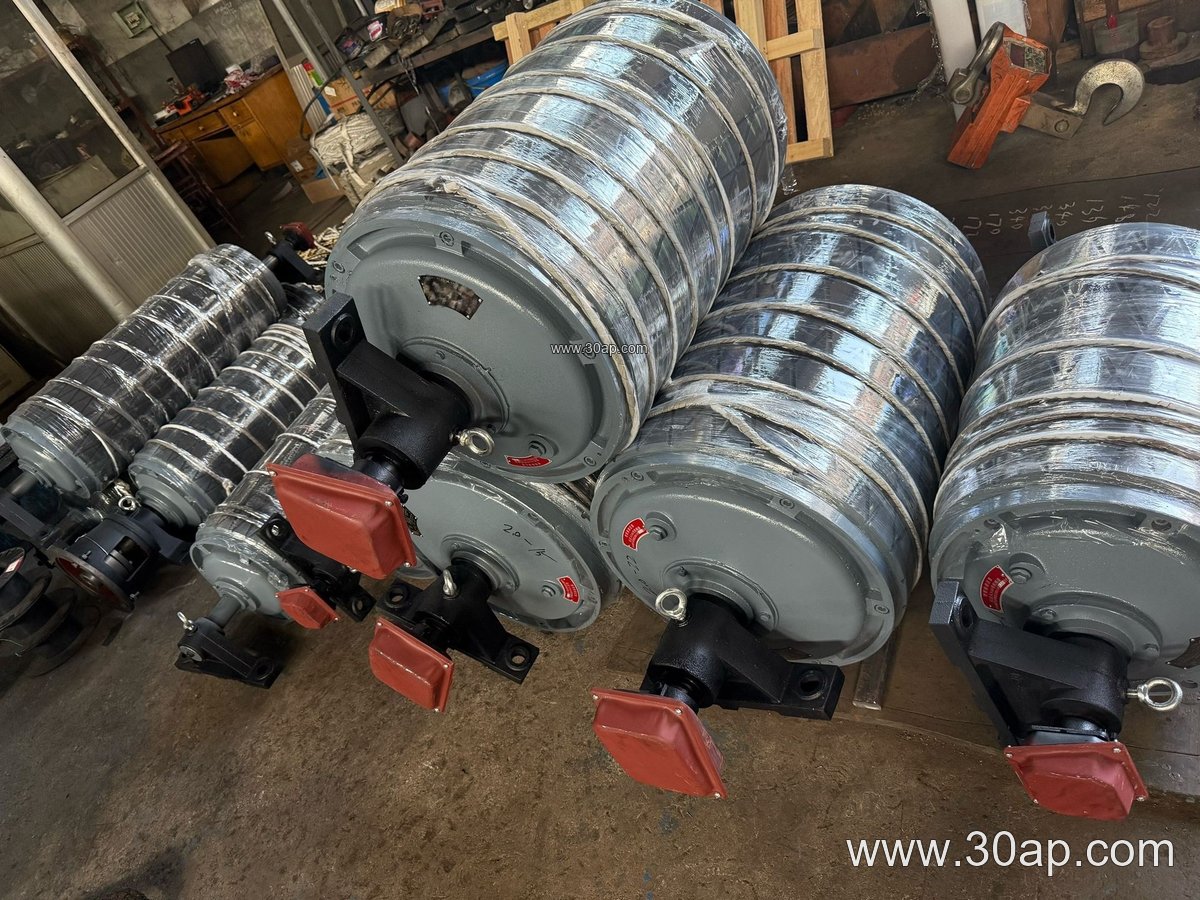
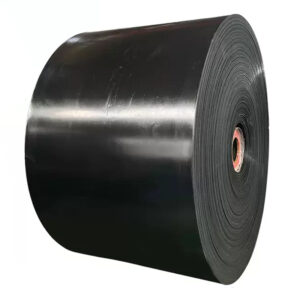
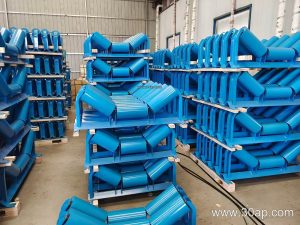
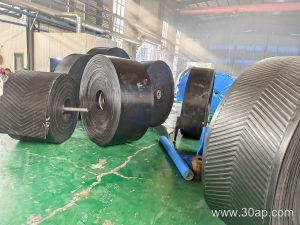
In an iron ore plant, the drive pulley often works with a heavy-duty conveyor belt carrying lump ore, so the lagging and the shell must tolerate impact and abrasion. On the return side, conveyor idler rollers support the belt, and the pulley must match the belt line so the belt does not wander. The conveyor bracket and bearing housing should be checked for alignment at installation.
Typical Reference Dimensions
| Belt width (reference) | Typical pulley face width | Common shell diameter range |
|---|---|---|
| B400 | about 500 mm | Ø200 to Ø400 |
| B650 | about 750 mm | Ø250 to Ø500 |
| B800 | about 950 mm | Ø315 to Ø630 |
| B1000 | about 1150 mm | Ø400 to Ø800 |
| B1200 | about 1400 mm | Ø500 to Ø1000 |
| B1400 | about 1600 mm | Ø630 to Ø1250 |
| B1600 | about 1800 mm | Ø800 to Ø1400 |
| B1800 | about 2000 mm | Ø1000 to Ø1600 |
These are reference values for discussion, not fixed matches. A B1200 conveyor may use a larger or smaller diameter depending on belt speed, tension, and the space available.
Buyer Checklist
- Confirm the pulley position: drive, tail, bend, take-up, or snub.
- State the belt width and the required face width, plus the belt type, such as an EP conveyor belt or steel cord conveyor belt, because belt tension affects the drum.
- Give the operating conditions: iron ore dust, moisture, temperature, and whether washdown is used.
- Specify lagging type and thickness if grip or wear protection is needed.
- Provide the shaft diameter required by the drive, not a guess from belt width.
- Check bearing size, keyway, and balance grade with the pulley maker.
Maintenance is mostly inspection: check lagging wear, shell cracks, and bearing temperature, and confirm that the belt tracks centrally. A worn iron ore conveyor pulley can damage an expensive conveyor belt, so early replacement of lagging is cheaper than a belt failure. For related bulk handling equipment, see the range at www.example.com/conveyor-pulley and match the drum to the belt and the duty.