What a Rubber Ring Impact Idler Does
A rubber ring impact idler is a buffer roller built with stacked rubber rings around a steel core, installed at conveyor loading and transfer points where falling material hits the belt. Its job is to absorb that impact before it reaches the conveyor belt, the frame, and the bearings. In a quarry, a coal washing plant, or a crushing and screening line, the drop height at the feed chute is often the harshest spot on the whole conveyor, and this is exactly where the rubber ring buffer idler earns its place.
The same product is also called a rubber disc impact roller or rubber ring buffer idler. These are accurate equivalent names for the same item; they do not describe a different roller type. Drive pulleys, tail pulleys, and bend pulleys are separate components and are not interchangeable with any idler.
How the Roller Is Built
The structure is simple but carefully put together. A steel tube or shaft forms the body, and a series of rubber rings is pressed onto it, separated by steel spacers or held by end discs. The rings are usually made of wear-resistant rubber with good elasticity, so they deform under impact and spring back. Bearings sit inside sealed housings at both ends, and the whole roller is mounted on a conveyor bracket in the same way as a standard idler.
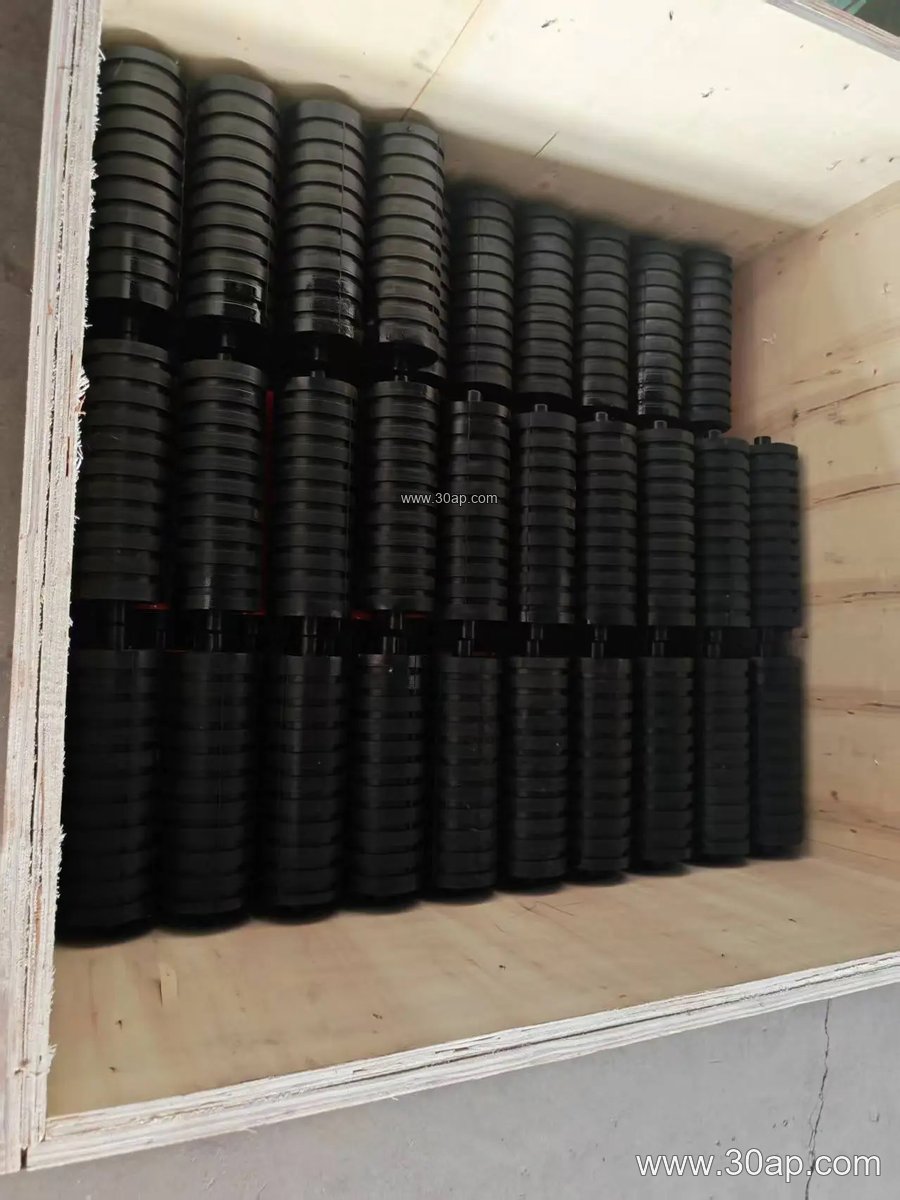
- Rubber rings: absorb shock and reduce spillage bounce
- Steel core and shaft: carry the belt load
- Sealed bearings: keep dust and water out
- End caps and spacers: hold the ring stack in position
Because the rubber surface is softer than steel, it also gives better grip at the loading zone and helps center the belt as material lands. The ring spacing and hardness can be adjusted by the manufacturer for different duty levels, but the basic principle stays the same.
Where It Fits on the Conveyor
The rubber ring impact idler belongs to the buffer idler family and is normally placed in the impact section directly under the chute. A typical impact station may use three rollers in a trough arrangement, or a single wide roller on smaller belts. Downstream, standard trough idlers take over, and on the return side a plain return roller or V-type return roller supports the belt.
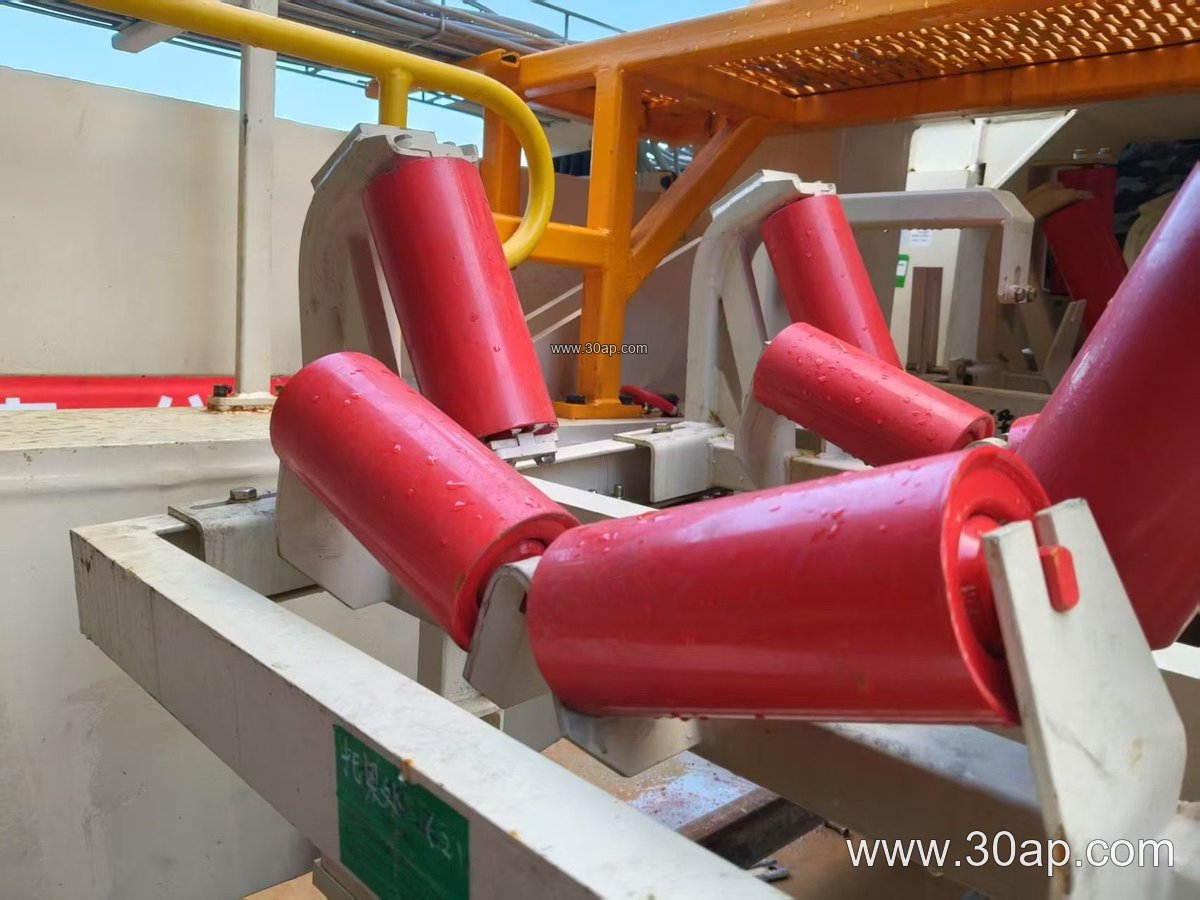
Common industries include:
- Sand and aggregate plants, where crushed stone drops onto the belt
- Coal handling and washing plants
- Cement plants and power plant coal yards
- Iron ore, copper ore, and other mineral processing lines
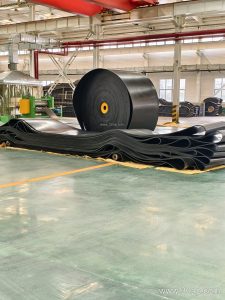
In these places, the conveyor belt itself is often a heavy-duty rubber conveyor belt, an EP conveyor belt, or a steel cord conveyor belt. The impact idler protects whichever belt is running above it, and the choice of belt and roller should be made together.
Common Sizes and Reference Data
Roller diameter and belt width are selected by design, not by a fixed rule. The table below gives common reference values only; actual sizes depend on the conveyor layout, load, and manufacturer.
| Item | Common reference values |
|---|---|
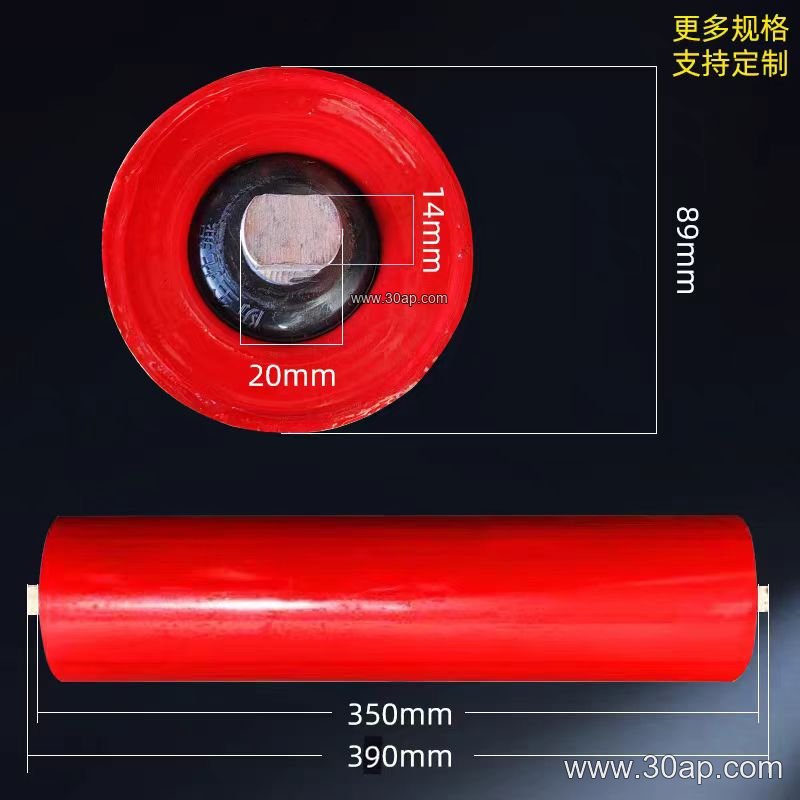
| Roller diameter | Ø89, Ø102, Ø108, Ø127, Ø133, Ø159, Ø178 mm |
| Belt width | B500, B650, B800, B1000, B1200, B1400, B1600 mm |
| Trough angle | 20°, 30°, 35°, 45° |
| Bearing | 6204, 6205, 6305, 6306, 6308, 6310 |
| Roller length (three-roll trough, example) | about 200 mm at B500, 250 mm at B650, 315 mm at B800, 380 mm at B1000, 465 mm at B1200 |
These figures are examples, not fixed matches. A given belt width can work with more than one roller diameter, and the side rollers of a trough set may differ from the center roller. Buyers should confirm roller length, ring hardness, and bearing size with the supplier before ordering.
Choosing and Maintaining the Right Unit
Start with the drop height and the lump size at the loading point. High drops and large lumps call for thicker rings and a larger roller diameter. Check that the bearing seal suits the dust level; in a coal yard or a stone crushing plant, fine abrasive dust is constant. Confirm that the mounting dimensions match the existing conveyor bracket so the roller drops into place without frame modification.
During operation, inspect the rings for cracks, flattening, or missing pieces, and check that the roller turns freely. A seized bearing will wear the belt quickly, so early replacement is cheaper than a belt failure. Keep the impact section aligned with the chute so material lands centrally. When the belt is a flame retardant conveyor belt or an abrasion resistant conveyor belt, the roller should be chosen with the same duty level in mind. For more on matching rollers with belts and pulleys, visit chinaconveyorbelt.com and review the idler roller range alongside conveyor pulley options.
Used correctly, a rubber ring impact idler is a low-cost part that protects expensive belt and structure. It is not a substitute for a drive pulley or a bend pulley, but at the loading zone it is one of the most useful rollers on the line.