What a Conveyor Parts Pulley Does on the Line
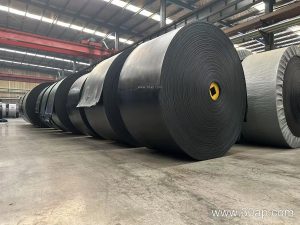
A conveyor parts pulley is the rotating drum that carries and guides the belt at the ends and along the route of a conveyor. It transfers drive force, sets belt tension, and changes belt direction. Because it works directly with the belt, the pulley and the conveyor belt must be matched in width, load capacity, and surface friction. A pulley that is too small in diameter or too smooth on the face can cause belt slip, tracking problems, and early wear. In a stone crushing line or a coal preparation plant, a single poorly chosen drum can stop the whole flow.
Main Subtypes and Where They Sit
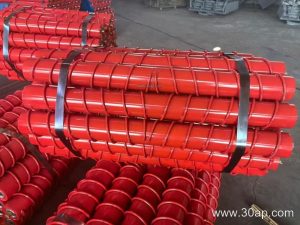
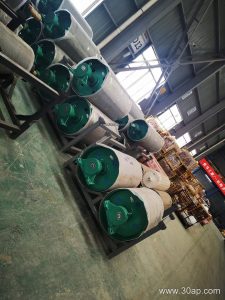
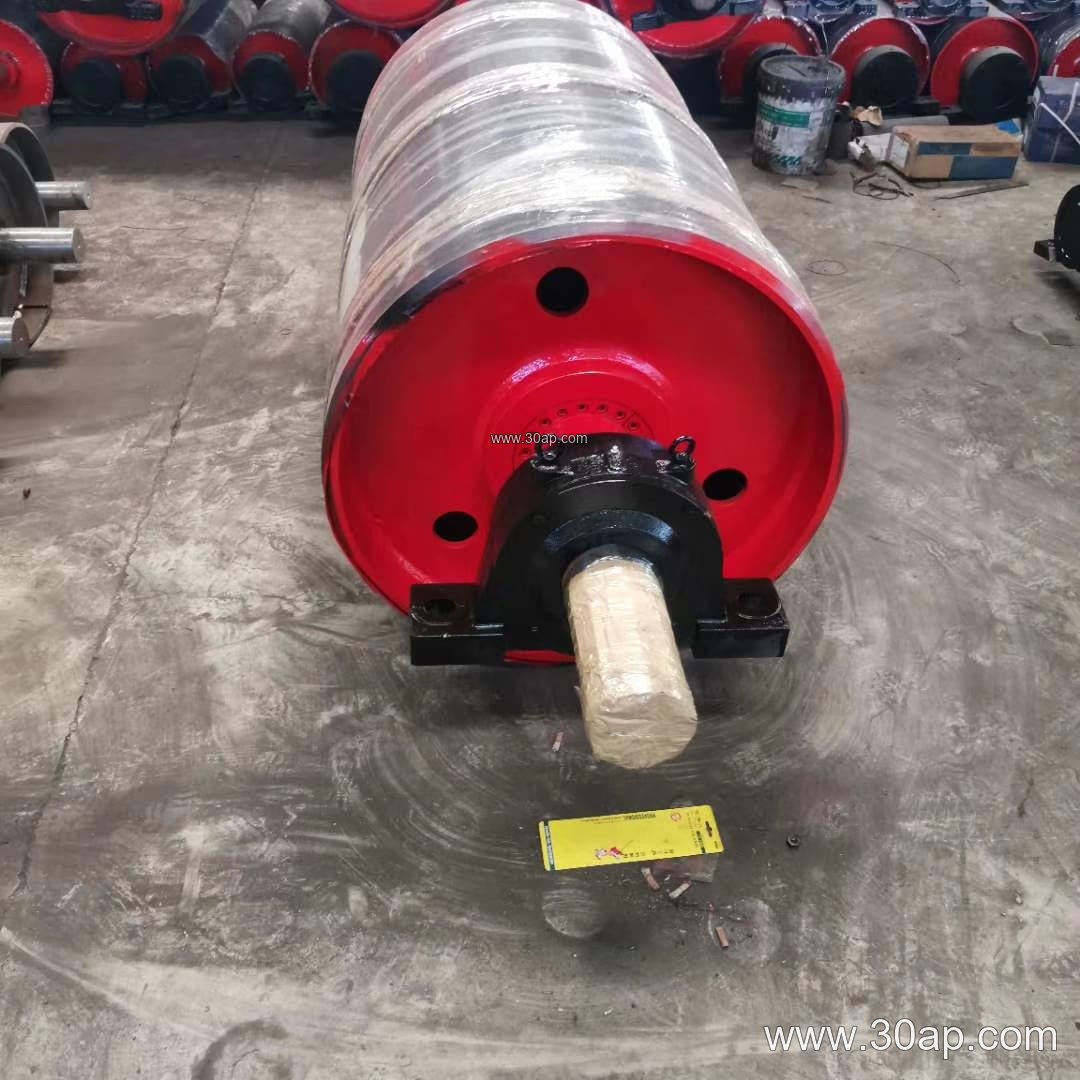
Pulleys are not interchangeable, and the position on the conveyor decides the job. Drive pulleys, also called head pulleys, transmit motor torque to the belt at the discharge end. Tail pulleys support the belt at the loading end. Bend pulleys change belt direction, usually around a tensioning system, and take-up or tension pulleys maintain belt tension. Snub pulleys increase wrap angle on the drive pulley. Wing pulleys are used in rough bulk service where sticky material would build up on a smooth drum.
- Drive pulley: transmits power, often lagged for grip
- Tail pulley: supports the return side at the feed point
- Bend pulley: redirects the belt near the take-up
- Tension pulley: keeps tension stable during load changes
- Snub pulley: raises belt wrap on the drive drum
A drive pulley and a bend pulley look similar, but their loads and surface treatment differ. Do not replace one with the other without checking the design.
Construction and Surface Options
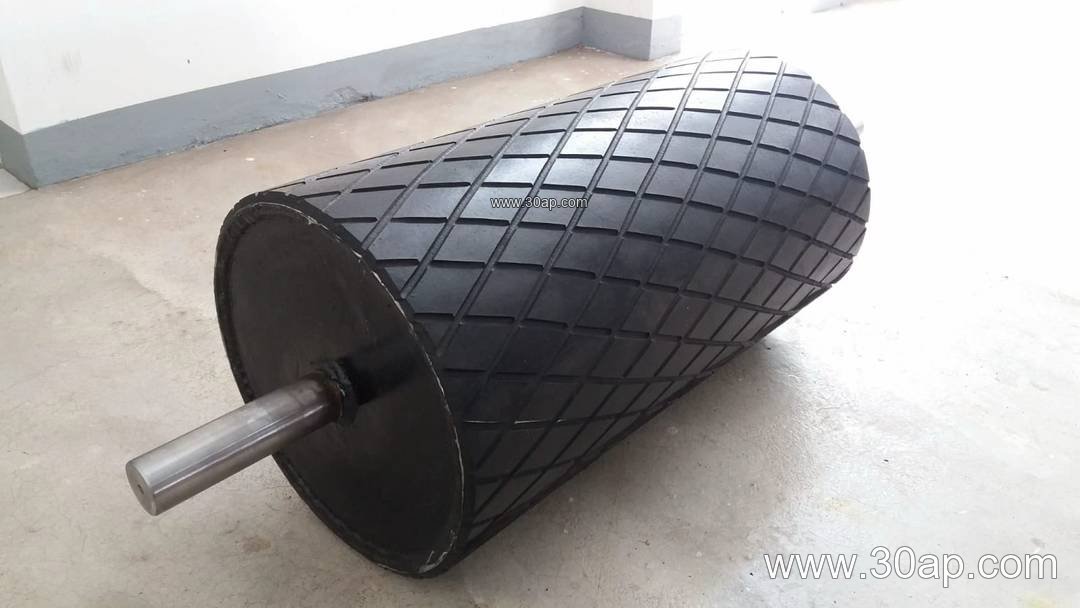
The body is usually a welded steel shell with shafts, hubs, and bearing housings. Surface form matters as much as shell thickness. Plain face is common for light duty; rubber lagging improves grip and protects the shell. Common lagging types include cold-bonded rubber, hot vulcanized rubber, diamond pattern, herringbone pattern, and ceramic lagging for high abrasion. Lagging thickness is often 8, 10, 12, 15, or 20 mm, chosen by duty. In a cement plant or power plant coal handling system, diamond lagging helps shed fine dust and water. For a quarry conveyor belt carrying sharp rock, ceramic lagging may last longer. See more drum options at cnshengrun.com.
Matching Width, Diameter, and Shaft
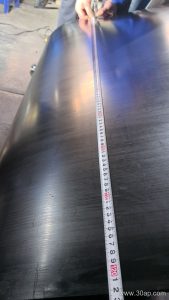
Pulley face width is usually wider than the belt. Common reference values include B400 with about 500 mm face, B800 with about 950 mm, B1200 with about 1400 mm, and B1800 with about 2000 mm. Diameter is selected by belt tension, wrap angle, belt thickness, and space. Typical diameters range from Ø200 to Ø1800, with combinations such as B800 × Ø500 or B1200 × Ø1000. One belt width can work with several pulley diameters, so never assume a fixed pair. Shaft diameter is set by torque and load, with common sizes from Ø50 to Ø200, not by belt width alone.
| Belt width | Approx. face width | Common diameter range |
|---|---|---|
| B400 | 500 mm | Ø200 – Ø400 |
| B650 | 750 mm | Ø250 – Ø500 |
| B800 | 950 mm | Ø315 – Ø630 |
| B1000 | 1150 mm | Ø400 – Ø800 |
| B1200 | 1400 mm | Ø500 – Ø1000 |
| B1400 | 1600 mm | Ø630 – Ø1250 |
| B1600 | 1800 mm | Ø800 – Ø1400 |
| B1800 | 2000 mm | Ø1000 – Ø1600 |
These are reference ranges only; final selection follows the conveyor design.
Applications Across Bulk Industries
In an iron ore or copper ore operation, heavy-duty pulleys handle abrasive loads and high tension. In a coal mining conveyor, flame retardant and anti-static belt grades are common, and the pulley lagging must resist dust and moisture. Aggregate and sand making plants use smaller drums with abrasion resistant conveyor belt. Port ship loading systems use wide belts and large diameter pulleys. A food grade line needs clean, non-marking surfaces, and a fertilizer plant may need chemical resistant belt and corrosion protection on the drum. Where the belt is an EP conveyor belt or a steel cord conveyor belt, the pulley diameter must respect the belt’s minimum bend radius.
Buyer Checklist
- Confirm position: drive, tail, bend, or tension
- Check belt width, belt type, and minimum pulley diameter
- Specify lagging type and thickness for grip and wear
- Review shaft size, bearing type, and keyway
- Confirm balance and runout for high-speed lines
- Plan inspection of lagging wear and bearing condition
Pulleys work with idler rollers, conveyor brackets, and the belt itself. Keep spare lagging and bearings on hand, and check tracking after installation. For related drum and roller data, visit cnshengrun.com.