What a Trough Idler Bracket Does on a Belt Conveyor
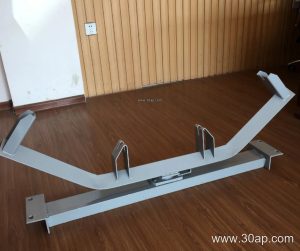
A trough idler bracket is the steel support that holds the carrying-side idler rollers in a troughed arrangement. It sits between the conveyor frame and the rollers, fixing the trough angle and keeping the belt profile stable under load. In a quarry, a cement plant, or a power plant coal yard, this bracket is one of the quiet components that decides how well the belt tracks and how long the rollers last.
The same item is also called a troughing idler bracket or troughing bracket. It is a distinct part from the return bracket, the transition bracket, and the self-aligning bracket, and it should not be confused with conveyor pulleys such as the drive pulley or the bend pulley, which do different work at the ends of the conveyor.
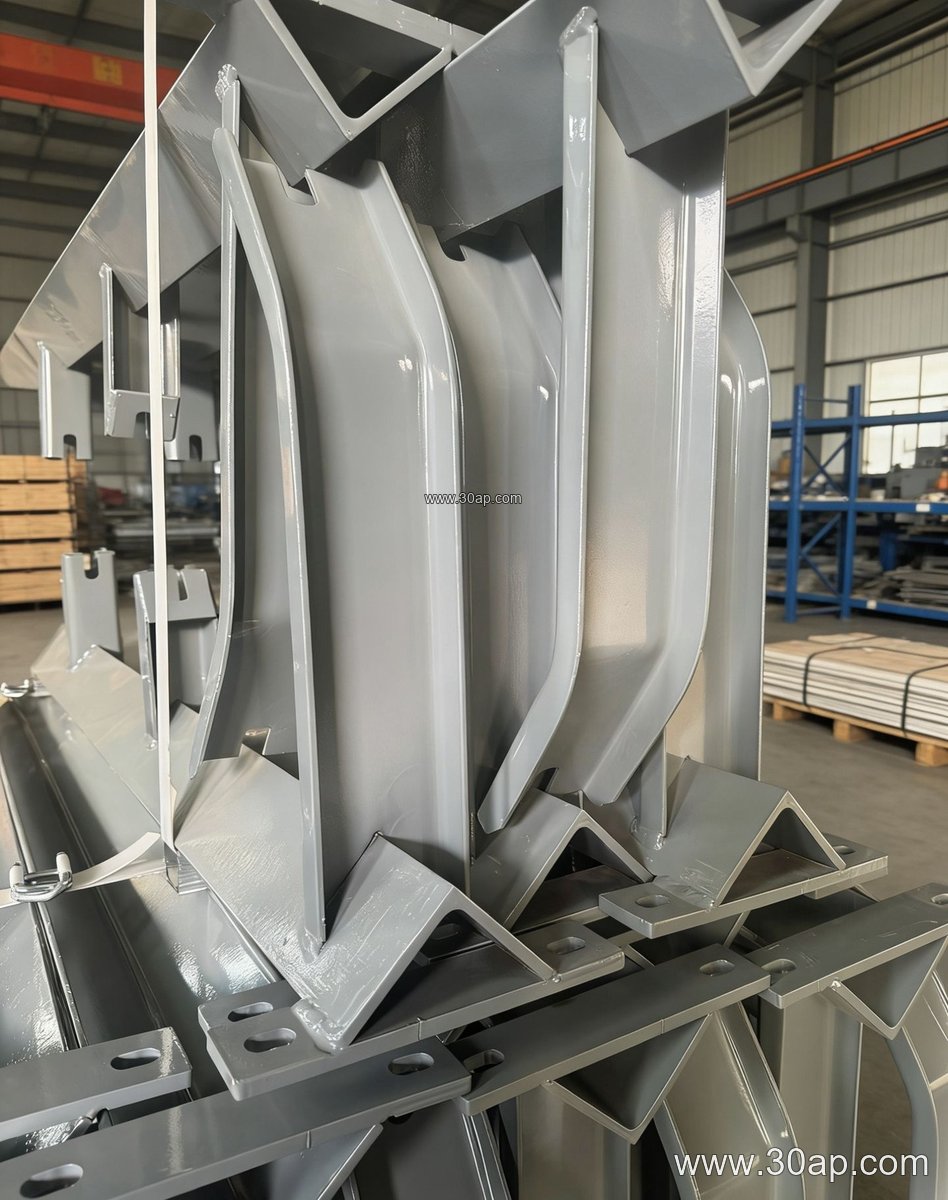
How the Bracket Is Built
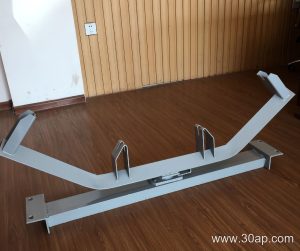
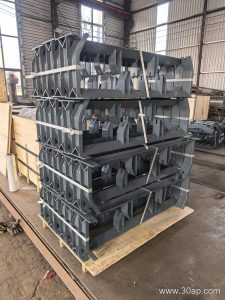
Most trough brackets are fabricated from angle steel, channel steel, or folded steel plate, then drilled for idler mounting. A three-roller bracket usually has two inclined arms and a horizontal base, so the two side rollers sit at the chosen trough angle while the centre roller stays flat. The bracket may be fixed or adjustable; an adjustable design lets maintenance staff change the trough angle within a range instead of replacing the whole assembly.
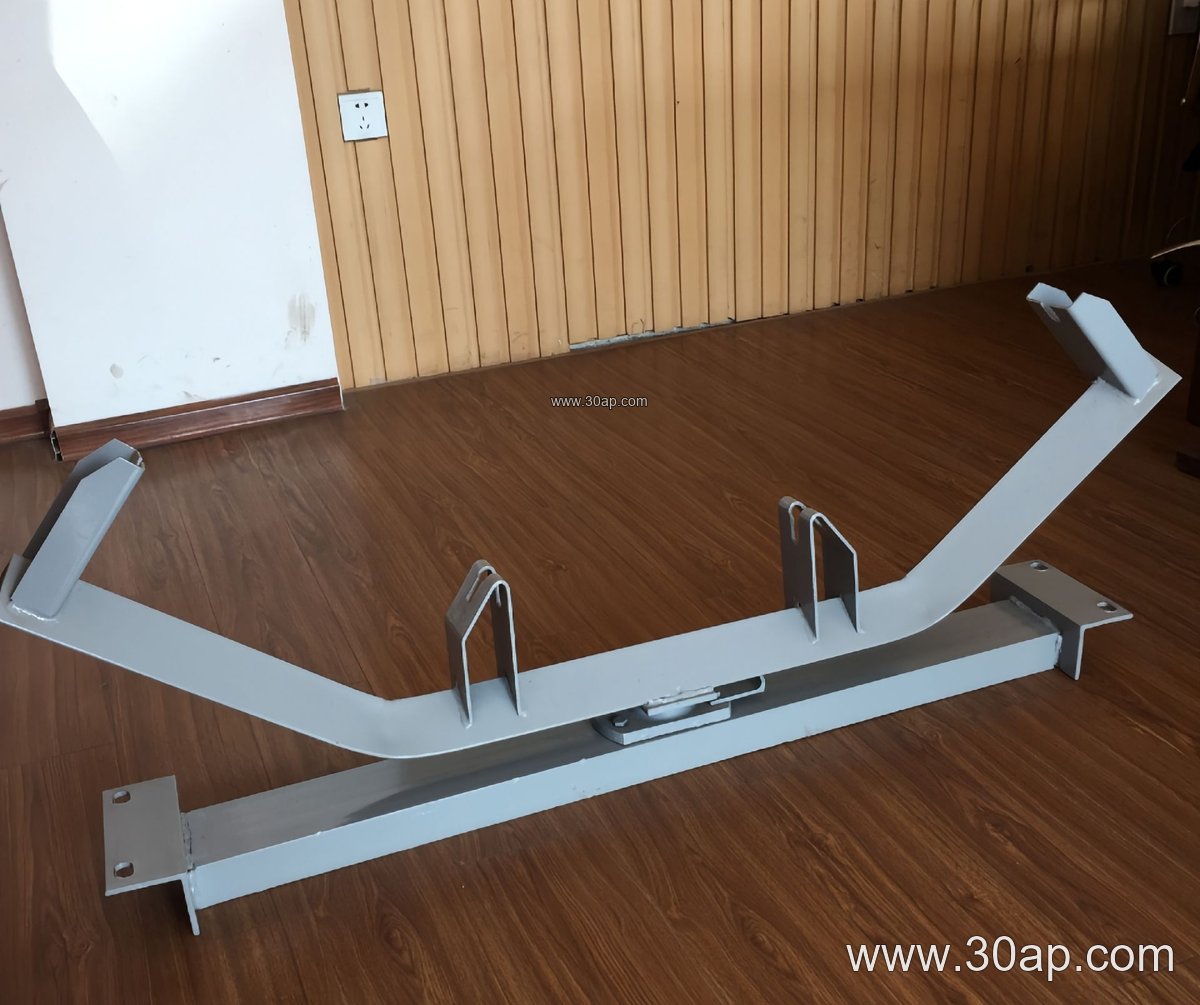
Welding quality, hole position, and coating matter more than the raw steel thickness alone. On a conveyor carrying abrasive bulk material, a poorly aligned bracket will wear the idler roller and the conveyor belt faster than expected, even if the rollers themselves are correct.
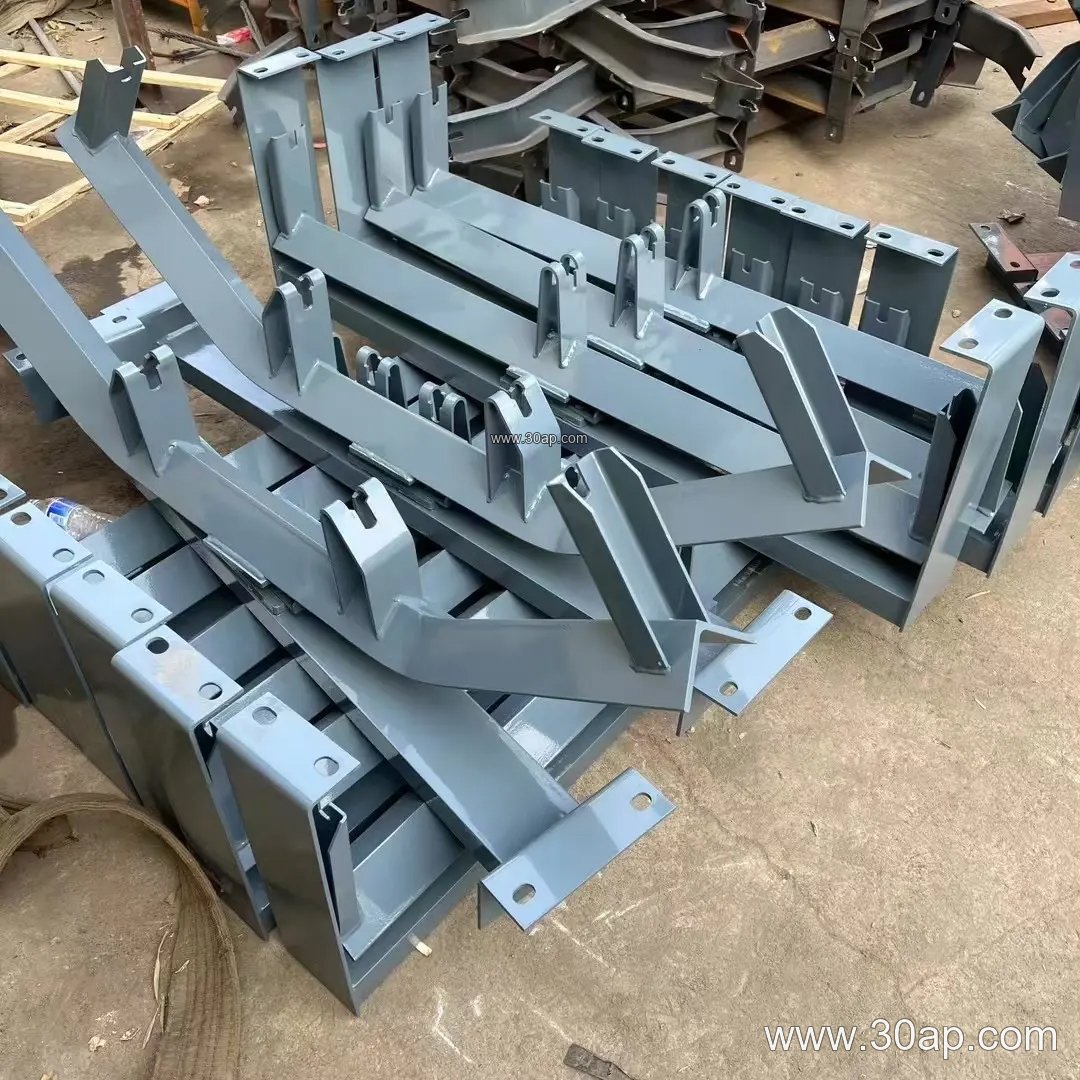
Typical Size and Angle Combinations
Bracket dimensions follow belt width and trough angle. The table below shows common reference combinations; the final hole spacing and crossbeam length are confirmed by design, not fixed by these values.
| Belt width | Trough angle | Roller diameter (common) | Typical application |
|---|---|---|---|
| B500 / B650 | 20° / 30° | Ø89 | Small aggregate lines, sand making plant |
| B800 | 30° / 35° | Ø89 / Ø108 | Crusher discharge, cement plant |
| B1000 | 35° / 45° | Ø108 / Ø133 | Coal mining conveyor, power plant coal handling |
| B1200 | 35° / 45° | Ø133 / Ø159 | Iron ore, port bulk terminals |
| B1400 / B1600 | 35° / 45° | Ø159 / Ø194 | Heavy-duty mining and steel plant lines |
| B1800 / B2000 | 35° / 45° | Ø159 / Ø194 | Large ore and coal trunk conveyors |
Wider belts usually carry more material and therefore need larger rollers and stronger brackets. However, no single belt width is tied to one angle or one roller diameter; a B1200 conveyor can be set at 35° or 45° depending on the material, capacity, and belt stiffness.
Where It Fits in the Conveyor Line
Trough brackets appear along the carrying run, from the loading point to the head end. On a limestone quarry line, they support the belt under coarse rock; in a coal preparation plant, they keep a flame retardant conveyor belt or an anti-static conveyor belt in a steady trough so spillage stays low. In a cement plant, an abrasion resistant conveyor belt running over well-aligned trough brackets lasts longer between roller changes.
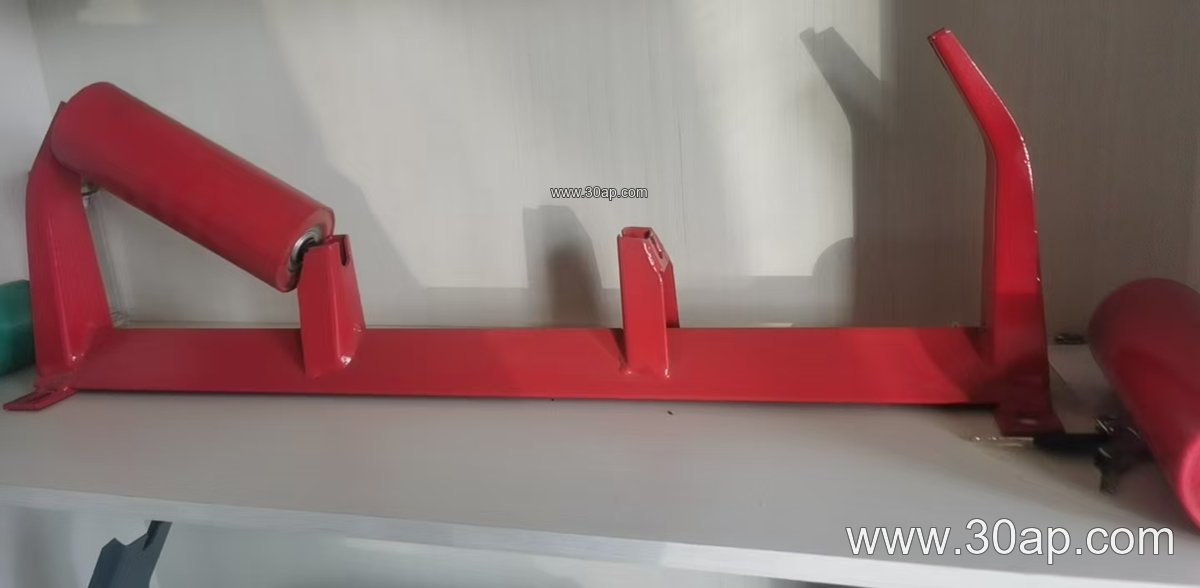
Transition brackets are used near the tail and head where the belt changes from flat to troughed, but they are not a substitute for the standard trough bracket in the main run. Likewise, a V-type return bracket handles the return strand and should not be swapped into the carrying side.
Buyer Checklist
- Confirm belt width, trough angle, and roller diameter before ordering; these three values drive the bracket geometry.
- State whether a fixed or adjustable bracket is required, especially where the trough angle may change with material.
- Check mounting hole spacing and crossbeam length against the existing frame, since these vary with design.
- Match the bracket finish to the environment: dusty quarry air, wet coal yards, or hot cement kiln areas each call for different attention.
- Ask how the bracket works with the idler roller and conveyor belt, and request drawings rather than assuming standard sizes.
For coordinated supply of trough idler brackets, idler rollers, and pulleys, buyers can review options at www.conveyorbeltidler.com and match components before installation. A correctly chosen troughing bracket keeps the belt seated, reduces spillage, and protects the rollers in mines, quarries, power plants, and bulk terminals alike.