What a Driving Pulley Does
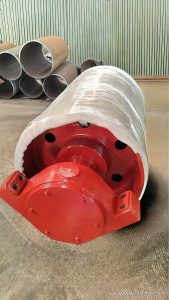
The driving pulley, often called the head pulley or drive pulley, is the heart of a conveyor’s power transmission. It grips the conveyor belt and transfers torque from the drive unit to move the belt and its load. Unlike a tail pulley or bend pulley, which guide or tension the belt, the driving pulley is the active component that propels the system. Its design must match the belt width, the required traction, and the operating environment—whether in a quarry, a coal washing plant, or a cement kiln feed line.
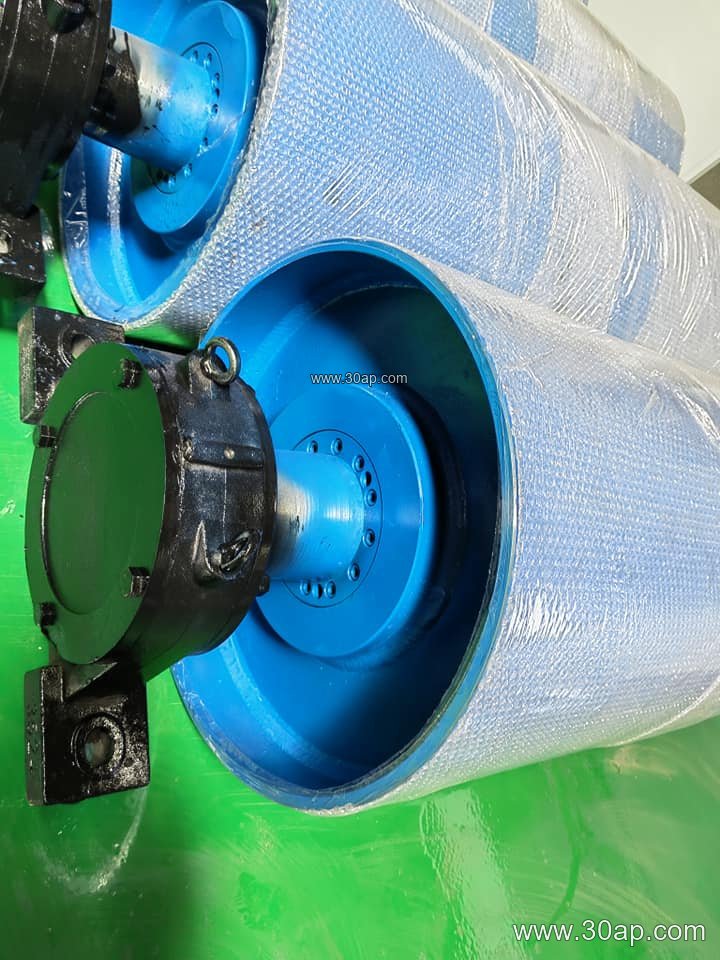
Construction and Key Components
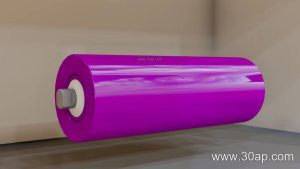
A typical driving pulley consists of a cylindrical shell, end discs, a shaft, and a lagging surface. The shell is usually made from steel pipe or rolled plate, machined for balance. The shaft is sized by torque and bending loads, not simply by belt width; common shaft diameters range from Ø50 to Ø200 mm depending on the drive power and pulley diameter. Lagging—rubber, ceramic, or diamond-pattern—improves friction between the pulley and the belt. For high-traction applications, hot-vulcanized rubber lagging with a thickness of 10 to 15 mm is often chosen, while ceramic lagging suits wet or oily conditions.
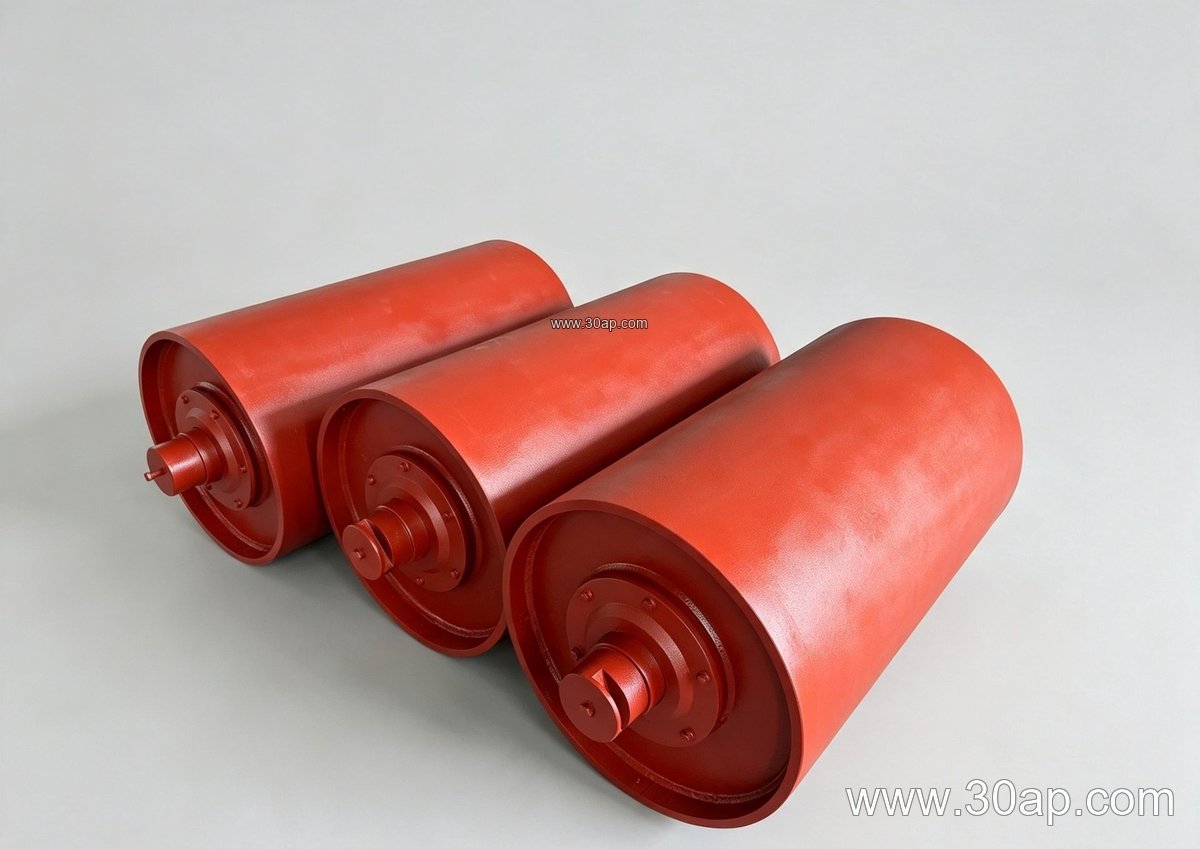
Where It Is Used
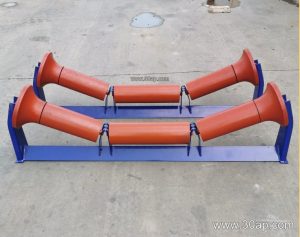
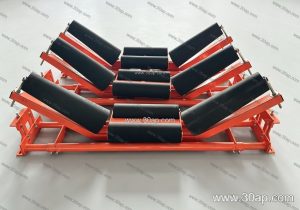
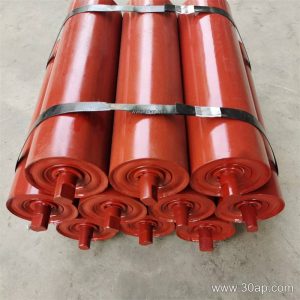
Driving pulleys appear in a wide range of bulk handling operations. In a limestone mine, a heavy-duty driving pulley on the main haulage conveyor must cope with abrasive dust and continuous operation. In a coal-fired power plant, the coal handling system relies on a robust head pulley to keep the belt moving through transfer points. Aggregate plants use them on primary and secondary crusher discharge conveyors, often paired with impact-resistant belts and troughing idler rollers. The driving pulley is not interchangeable with a bend pulley or a take-up pulley; each has a distinct role in the conveyor layout.
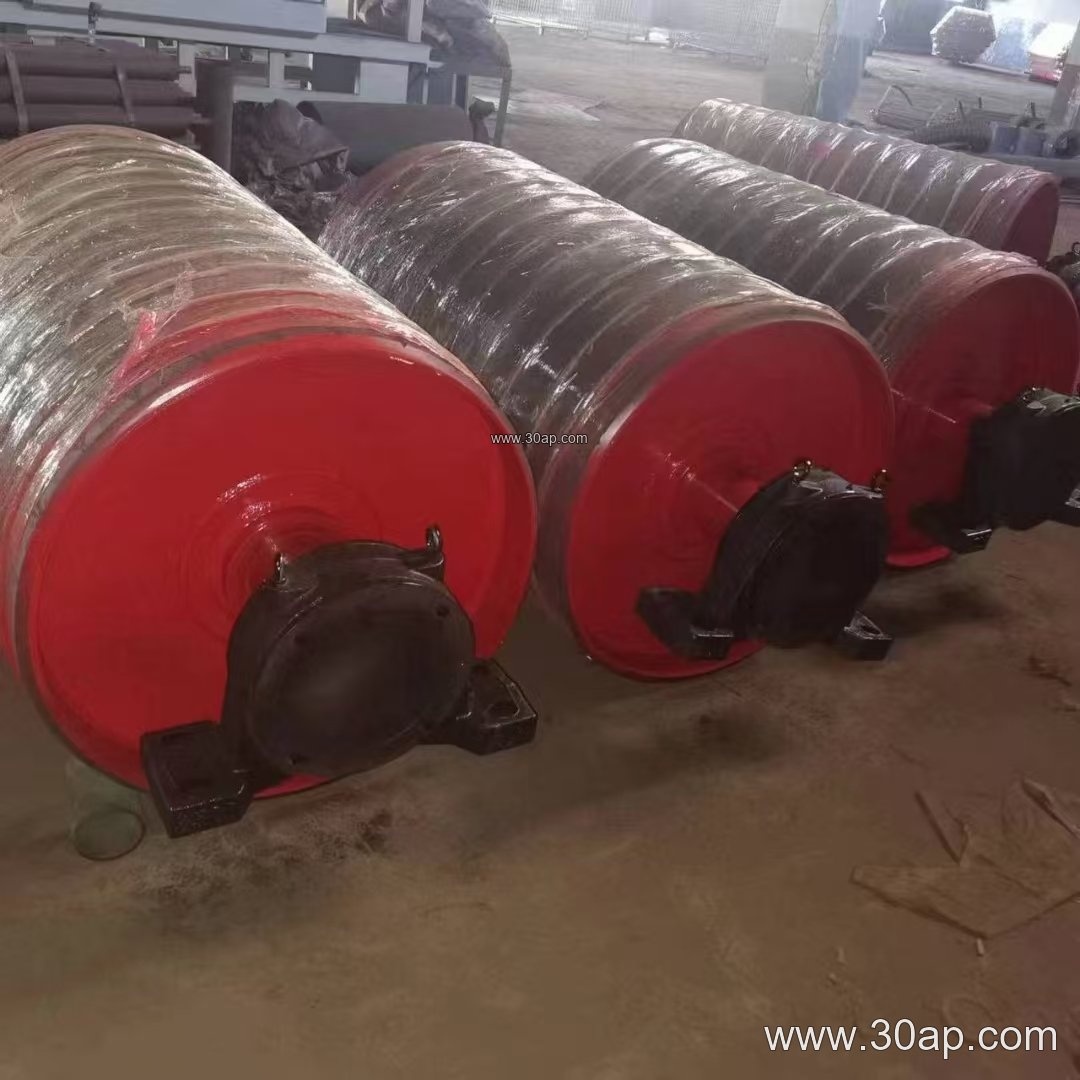
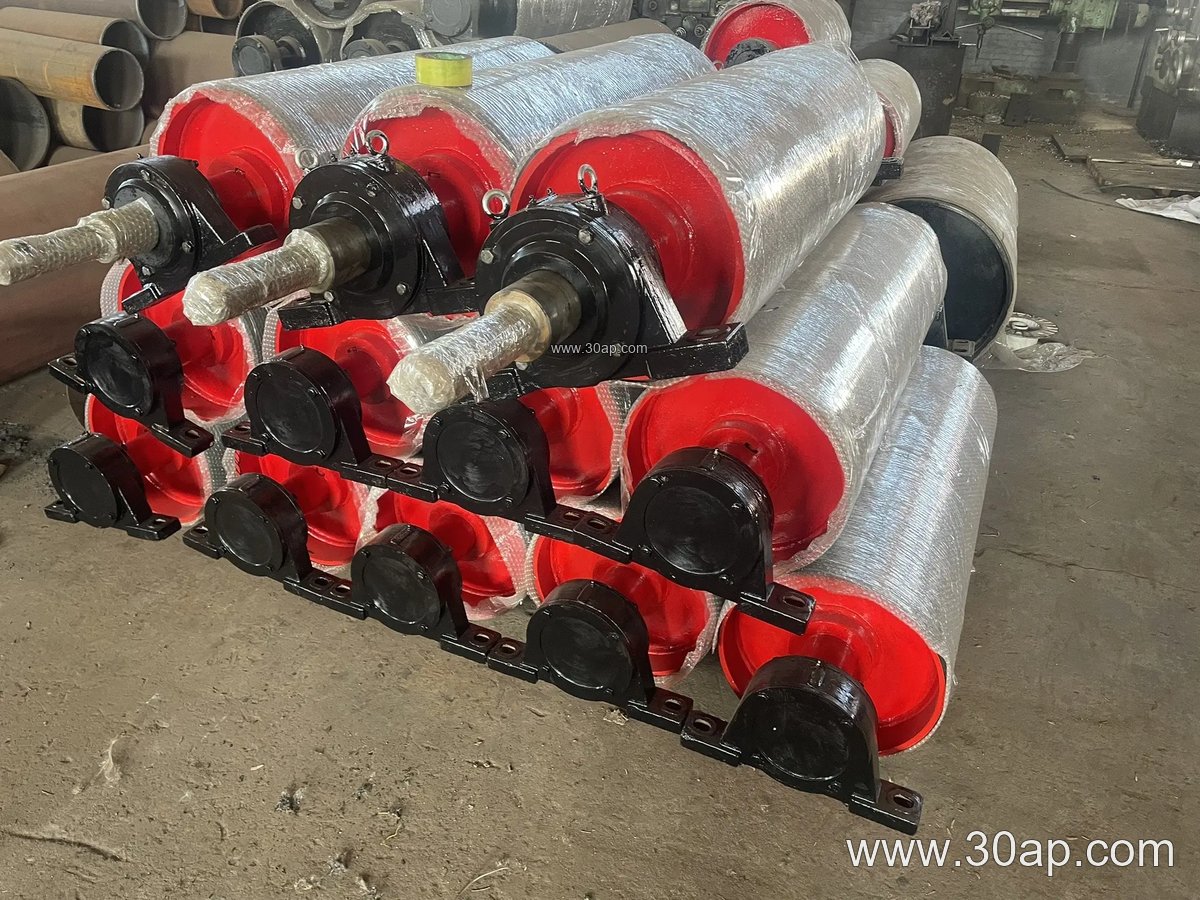
Matching the Pulley to the Belt and Load
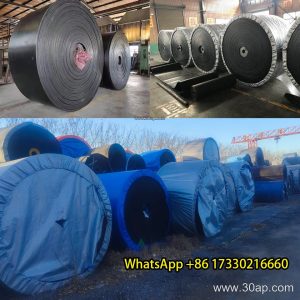
Successful conveyor operation depends on the driving pulley working in harmony with the conveyor belt. The pulley face width is normally slightly wider than the belt—for example, a B800 belt typically runs on a pulley with about 950 mm face width, and a B1200 belt on roughly 1400 mm. However, there is no fixed rule that one belt width must use one specific pulley diameter. A B800 system might use a Ø500 mm pulley in a compact installation or a Ø630 mm pulley where wrap angle and belt stress require a larger diameter. The belt type also matters: an EP conveyor belt or a steel cord conveyor belt has different tension and elongation characteristics, influencing the required pulley diameter and lagging.
Common Surface Options and Their Applications
Lagging selection is critical for traction and belt life. Plain steel surfaces are used in light-duty, clean conditions. Rubber lagging (cold-bonded or hot-vulcanized) offers general-purpose grip. Diamond-pattern lagging improves water drainage in wet environments such as sand and gravel washing. Ceramic lagging provides the highest friction for high-torque drives, often seen in underground coal mining conveyors and heavy-duty ore transport. Chevron or herringbone patterns are sometimes applied, but they are not a substitute for the driving pulley’s primary function—they merely enhance grip.
Buyer’s Checklist
- Confirm the belt width (e.g., B650, B1000, B1400) and the required pulley face width.
- Determine the drive power and starting torque to select shaft diameter and lagging type.
- Consider the environment: abrasive dust, moisture, oil, or extreme temperatures may call for specific lagging and sealing.
- Check compatibility with the conveyor belt—an endless conveyor belt or a steel cord belt may require a larger pulley diameter to reduce bending stress.
- Verify mounting dimensions and bracket interfaces with the existing conveyor structure.
For assistance in selecting a driving pulley that matches your conveyor belt and idler roller system, please visit our website at www.example.com/driving-pulley for technical data and support.