What Conveyor Pulley Lagging Actually Does
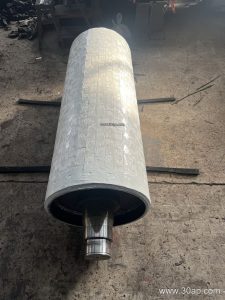
Conveyor pulley lagging is the rubber or ceramic layer bonded to the shell of a conveyor pulley to change how that shell meets the belt. Without it, a bare steel drum in a damp coal handling plant or a dusty limestone quarry quickly loses grip, and the belt starts to slip under load. The lagging restores friction, protects the pulley shell from wear, and in many cases helps the belt track straighter because the surface can be profiled to shed water and fines.
The product is also called pulley lagging rubber or drum lagging, and those names describe the same component. It is not a belt and it is not an idler roller; it is a wear part fitted to the pulley itself.
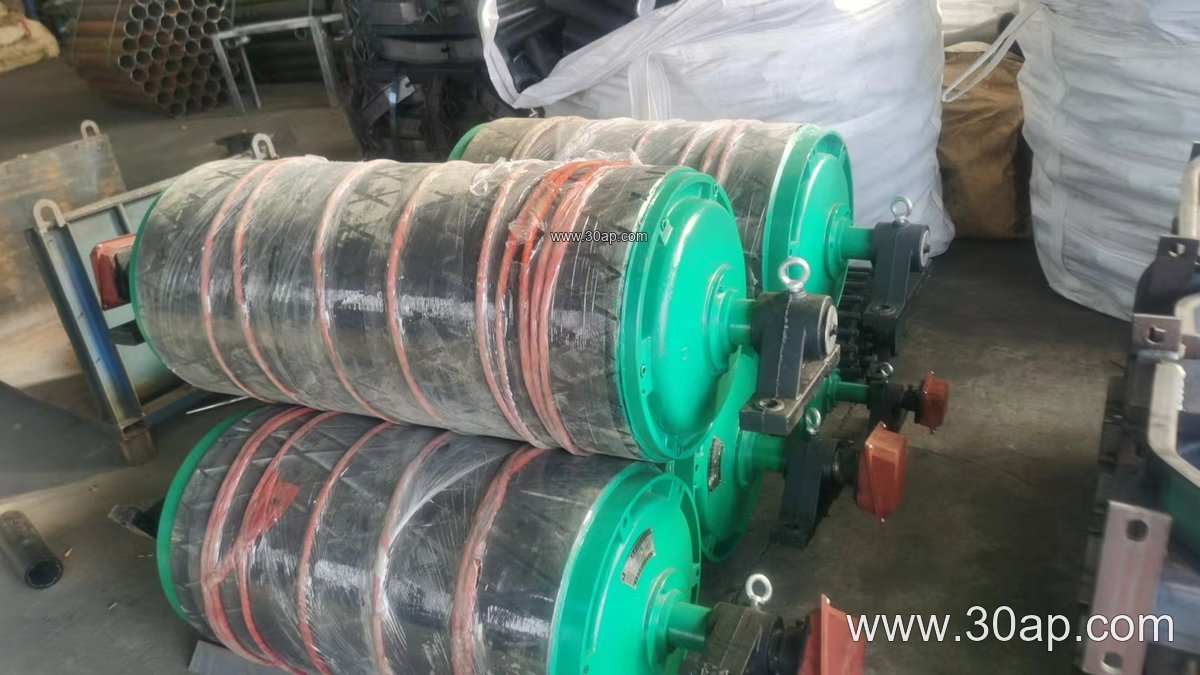
How the Lagging Is Built and Fitted
Most lagging starts as a rubber sheet, often with a fabric or cord reinforcement inside, and is applied in one of three ways. Cold-bonded lagging uses an adhesive system and can be installed on site. Hot-vulcanized lagging is cured under heat and pressure, giving a stronger bond and is common on drive pulleys in heavy-duty mining conveyor systems. Replaceable lagging bars or strips bolt into grooves machined into the shell, which suits maintenance teams who need fast turnarounds.
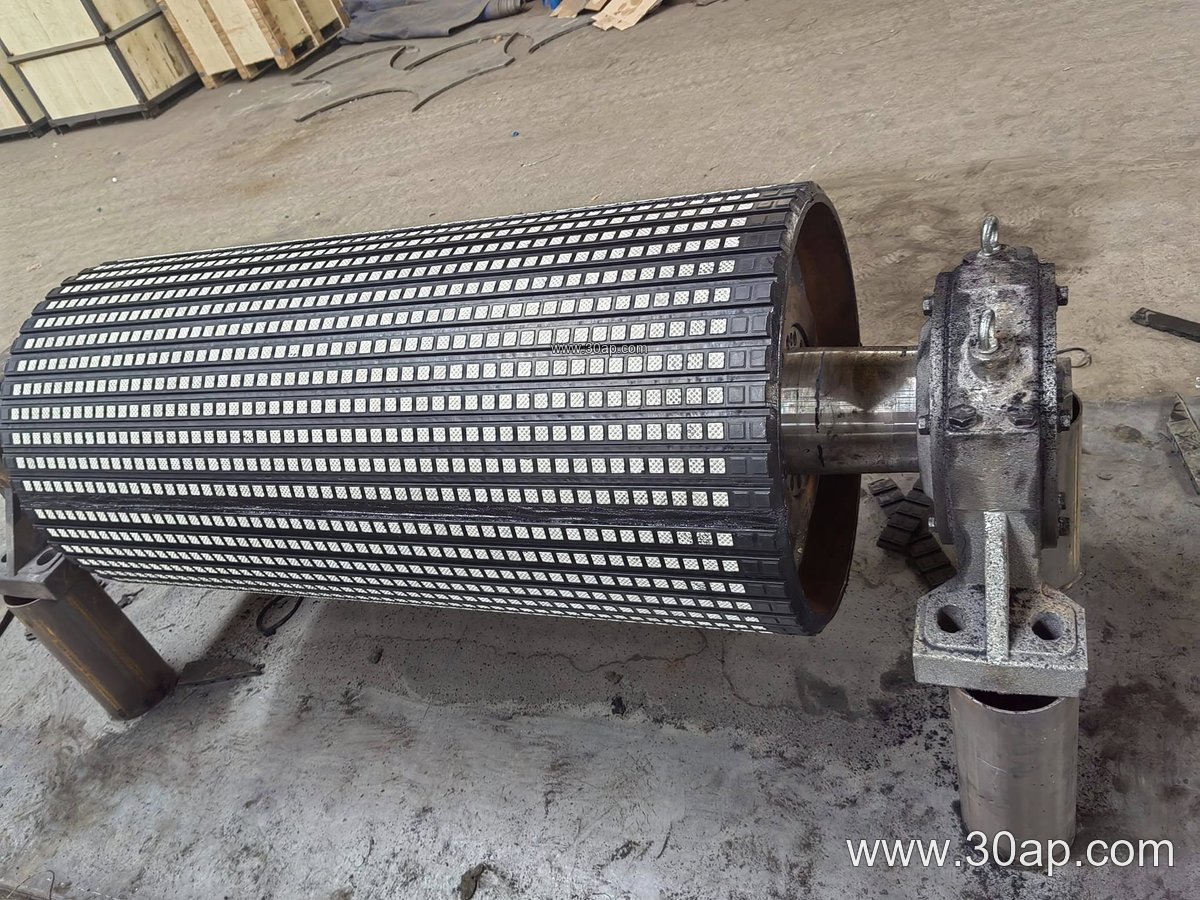
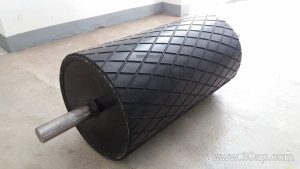
Surface form matters as much as compound. Plain sheet is fine for dry, clean duty. Diamond or herringbone profiles improve grip and water evacuation. Ceramic tiles embedded in rubber are chosen where abrasive ore and sinter carry a high wear risk. Typical thicknesses run from 8 mm to 20 mm, and the right figure depends on pulley diameter, belt tension and the abrasive load, not on a single rule.
- Plain surface: general duty, easy cleaning
- Diamond or herringbone: wet or slippery conditions
- Ceramic embedded: high abrasion, iron ore and sinter
- Bolt-on strips: replaceable, maintenance-friendly
Matching Lagging to Pulley Position
A drive pulley does the pulling, so it usually carries the most demanding lagging. A tail pulley at the loading point faces impact and fines, and a bend pulley only redirects the belt, so a thinner plain or lightly profiled cover is often enough. A tension pulley may need a smoother surface so it does not fight the take-up movement. Treating these positions as interchangeable is a common buying mistake.
Diameter and face width are set by the conveyor design. A B800 pulley might run with a Ø500 shell, while a B1200 unit could use Ø1000 or larger, but no belt width locks a pulley to one diameter. Face width is normally a little wider than the belt, for example about 950 mm for B800 and about 1400 mm for B1200. Shaft size is calculated from torque and load, with common values such as Ø80, Ø100 or Ø120 appearing across many installations. None of these should be copied blindly.
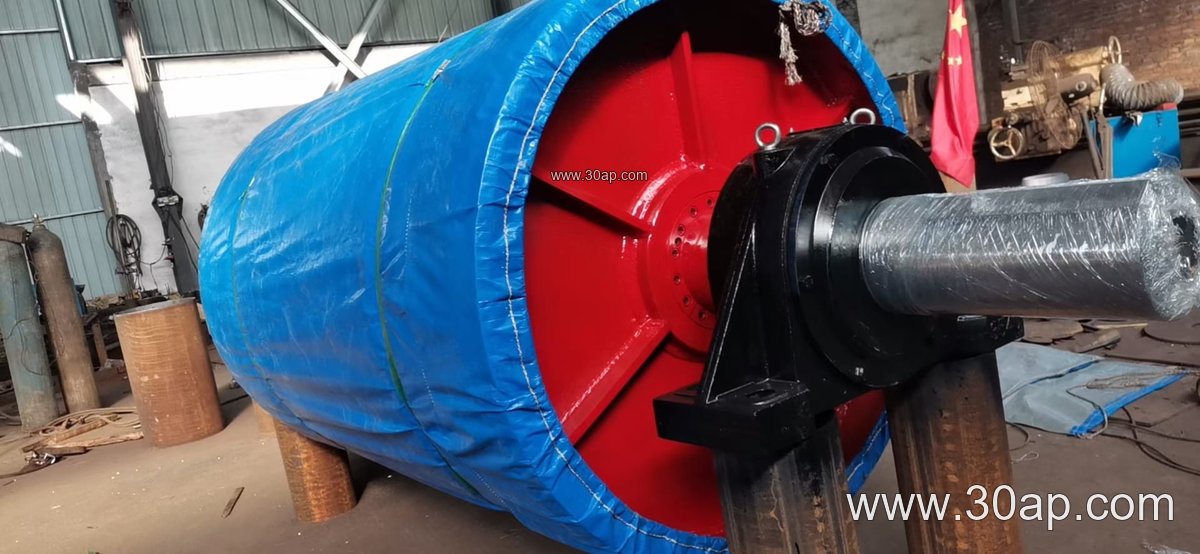
Where It Is Used
Any plant that moves bulk material on a conveyor belt is a candidate. In a coal preparation plant, flame retardant conveyor belt and anti-static properties are often specified alongside lagging, and the pulley surface must cope with wet fines. In a cement plant, clinker dust and heat put pressure on both the cover compound and the bond. Port bulk terminals handling iron ore or copper ore concentrate lean toward ceramic lagging because the abrasive load is severe. Sand and aggregate lines in a quarry typically use diamond-pattern rubber for grip in wet weather.
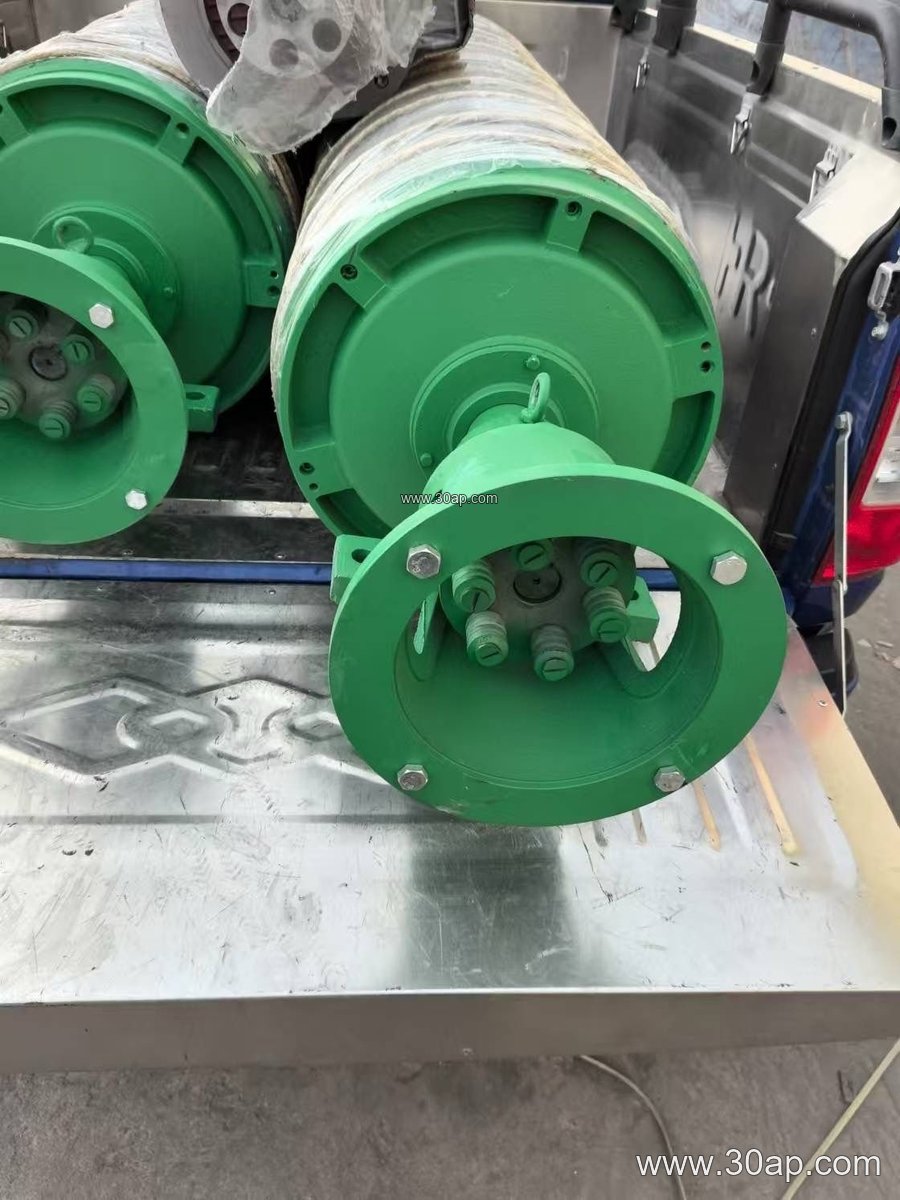
The lagging also works together with the rest of the conveyor. A well-lagged drive pulley reduces the belt tension needed, which can ease demands on the conveyor pulley, conveyor bracket and idler roller frames downstream. It is a small part of the system, but it influences belt life and energy use.
Buyer Checklist
Before ordering, confirm the pulley position, shell diameter, face width, shaft diameter and the material being carried. Ask for the compound hardness, the surface pattern and the thickness in millimetres. Check whether the supplier recommends cold bond, hot vulcanization or bolt-on fixing for your maintenance capability. If the conveyor runs an EP conveyor belt or a steel cord conveyor belt at high tension, say so, because the lagging friction requirement changes with belt type and wrap angle. Finally, confirm the delivery form: cut-to-width sheet, pre-cut strips, or tiles with adhesive.
Inspect lagging during scheduled shutdowns. Look for glazing, chunking, groove wear and lifted edges. Replacing a worn cover early protects the pulley shell and avoids belt slip that can damage a full conveyor belt line.