What a Terminal Conveyor Idler Does
A terminal conveyor idler sits at the end of a belt run, usually close to the head pulley or the discharge point, where the belt leaves the last full carrying frame and hands its load to the next stage. At that spot the belt is often under its most uneven loading, and any misalignment shows up quickly. The terminal idler is a carrying idler in the troughing set family, not a drive pulley, tail pulley or bend pulley, and it should never be confused with those components. Its job is to keep the belt supported, centered and stable in the final metres before discharge.
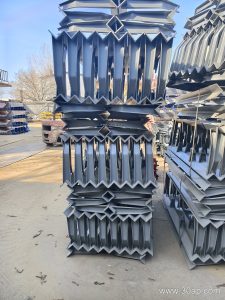
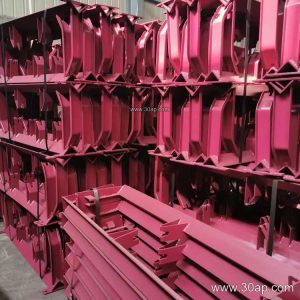
Because the terminal position is a transition zone, many plants use a transition idler or a slightly modified troughing roll here rather than a standard mid-run roll. The same frame may also carry a conveyor bracket that ties the rolls to the stringer, and the choice of bracket affects how easy the roll is to change during a shutdown.
How the Roll Is Built
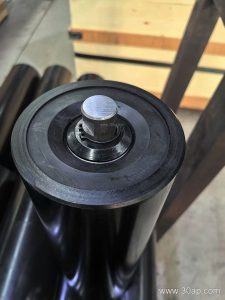
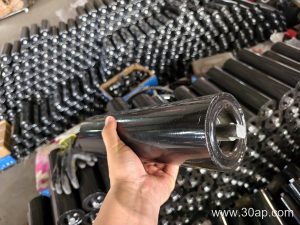
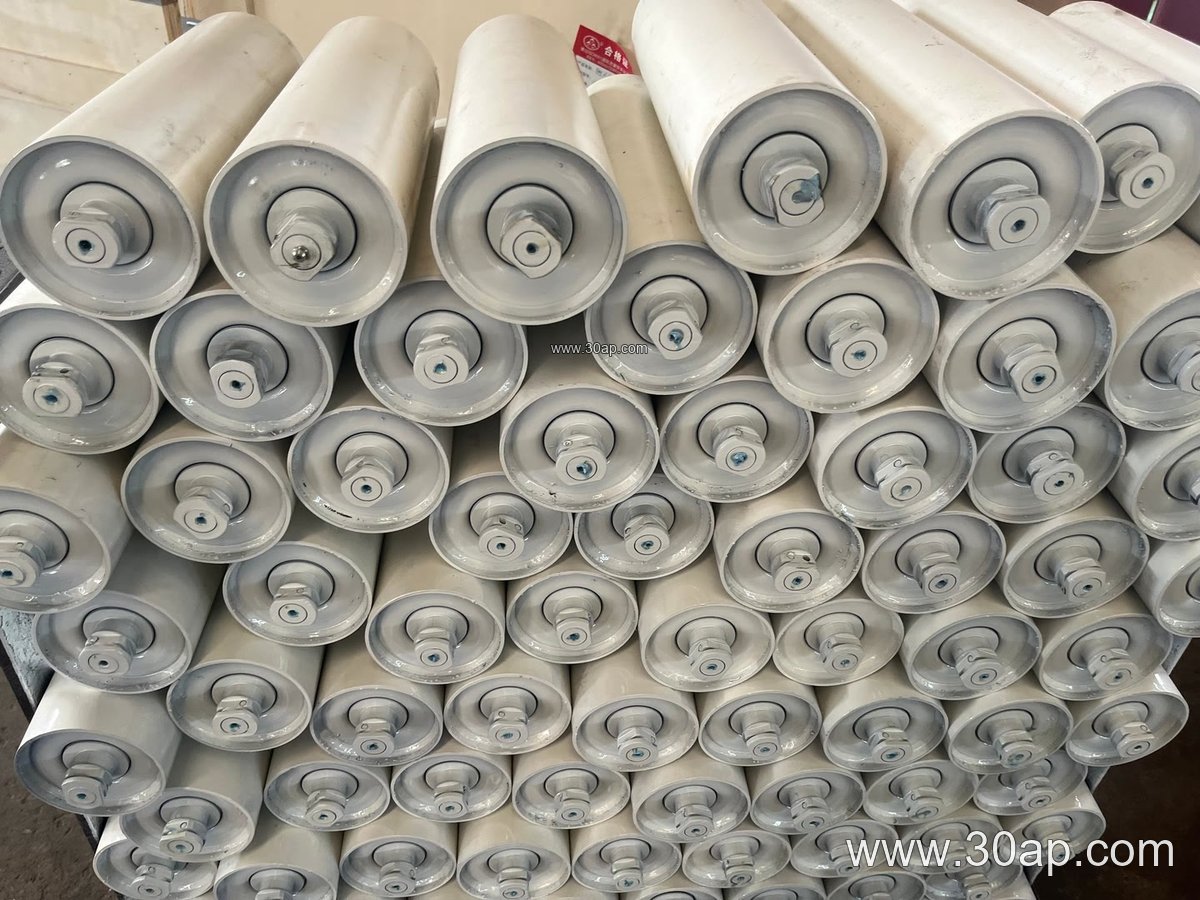
A terminal conveyor idler is usually a steel tube shell with pressed bearing housings at each end, fitted with a shaft, sealed bearings and a labyrinth or contact seal. The shell may be plain steel, nylon coated, ceramic lined or fitted with rubber rings when impact is expected. Sealing quality matters more than most buyers expect, because fine dust from a transfer point finds its way into bearings quickly.
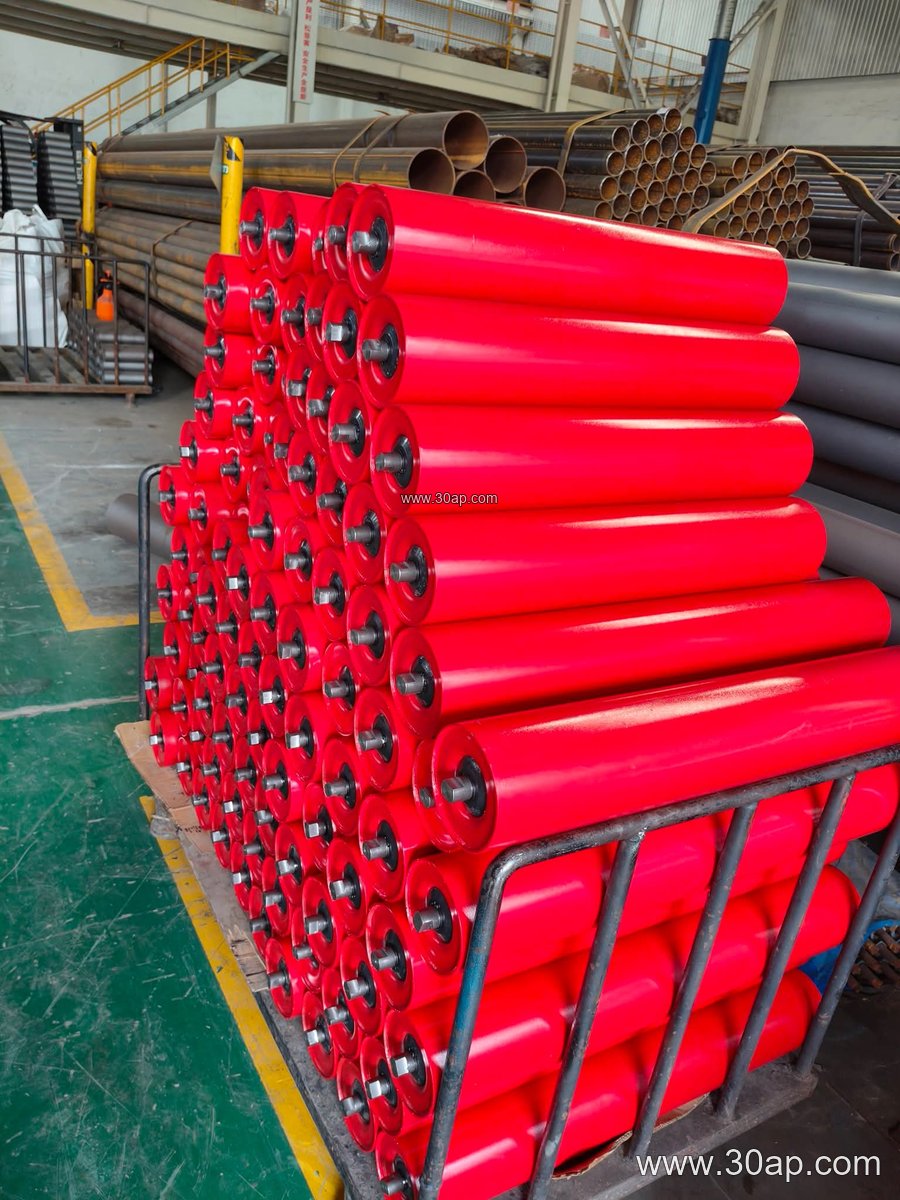
Common roll diameters include Ø89, Ø108, Ø127, Ø133 and Ø159 mm, with larger sizes such as Ø178 and Ø194 mm used on heavier frames. Bearings are typically 6204, 6205, 6305, 6306 or 6308 depending on load and roll size, and there is no fixed rule that one bearing must pair with one diameter.
Matching the Idler to Belt Width and Trough Angle
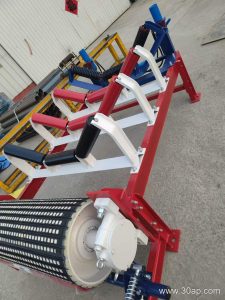
The roll length is set by belt width, trough angle and the number of rolls in the set. A three-roll troughing set is the most common form at the terminal position, and the side rolls are usually shorter than the centre roll. Trough angles of 20, 30, 35 and 45 degrees are all in use; a steeper angle deepens the trough and helps contain a full load, but it also increases the side load on the belt edge.
Typical roll lengths for three-roll troughing sets are shown below as general reference, not as fixed supply combinations:
- B500 belt: centre roll about 200 mm
- B650 belt: centre roll about 250 mm
- B800 belt: centre roll about 315 mm
- B1000 belt: centre roll about 380 mm
- B1200 belt: centre roll about 465 mm
- B1400 belt: centre roll about 530 mm
- B1600 belt: centre roll about 600 mm
- B1800 belt: centre roll about 670 mm
- B2000 belt: centre roll about 750 mm
Side roll lengths differ from the centre roll, and the final figure should always come from the conveyor design drawing. A belt width does not dictate a single pulley diameter, and a shaft diameter should not be guessed from belt width alone.
Where Terminal Idlers Are Used
These idlers appear in quarry and aggregate lines, at the discharge of a crusher conveyor, in cement plant clinker handling, in power plant coal feeding and in port shiploading systems. In a coal mining or underground coal mining application the terminal roll is often specified with a flame retardant conveyor belt and anti-static components nearby, while in an iron ore or copper ore circuit the priority shifts to abrasion resistance. The belt itself may be an EP conveyor belt, a steel cord conveyor belt or a multi-ply fabric core conveyor belt, and each places a different load pattern on the last idler before the head.
At a transfer tower the roll may also work alongside a skirted conveyor belt or a corrugated sidewall conveyor belt, where the belt profile limits how close the roll can sit to the chute. In dusty food or fertiliser plants a sealed idler roller with smooth end caps is easier to clean.
Buyer Checklist
- Confirm the frame type and roll length from the drawing, not from the belt width alone.
- Check the trough angle and whether a transition or impact roll is needed at this position.
- Match the seal and bearing grade to dust, moisture and temperature at the discharge.
- Decide between steel, nylon, ceramic or rubber ring surfaces based on wear and impact.
- Verify bracket and fixing dimensions so the roll fits the existing stringer.
- Ask for the shaft and bearing arrangement as a drawing, not as an assumed size.
For related equipment such as a conveyor pulley, idler roller or conveyor bracket, keep the terminal idler as a separate line item so that replacements stay simple. A well chosen terminal conveyor idler protects the belt edge, reduces spillage at the discharge and keeps the last section of the run tracking true.