What a Ceramic Lagged Bend Pulley Does on a Conveyor
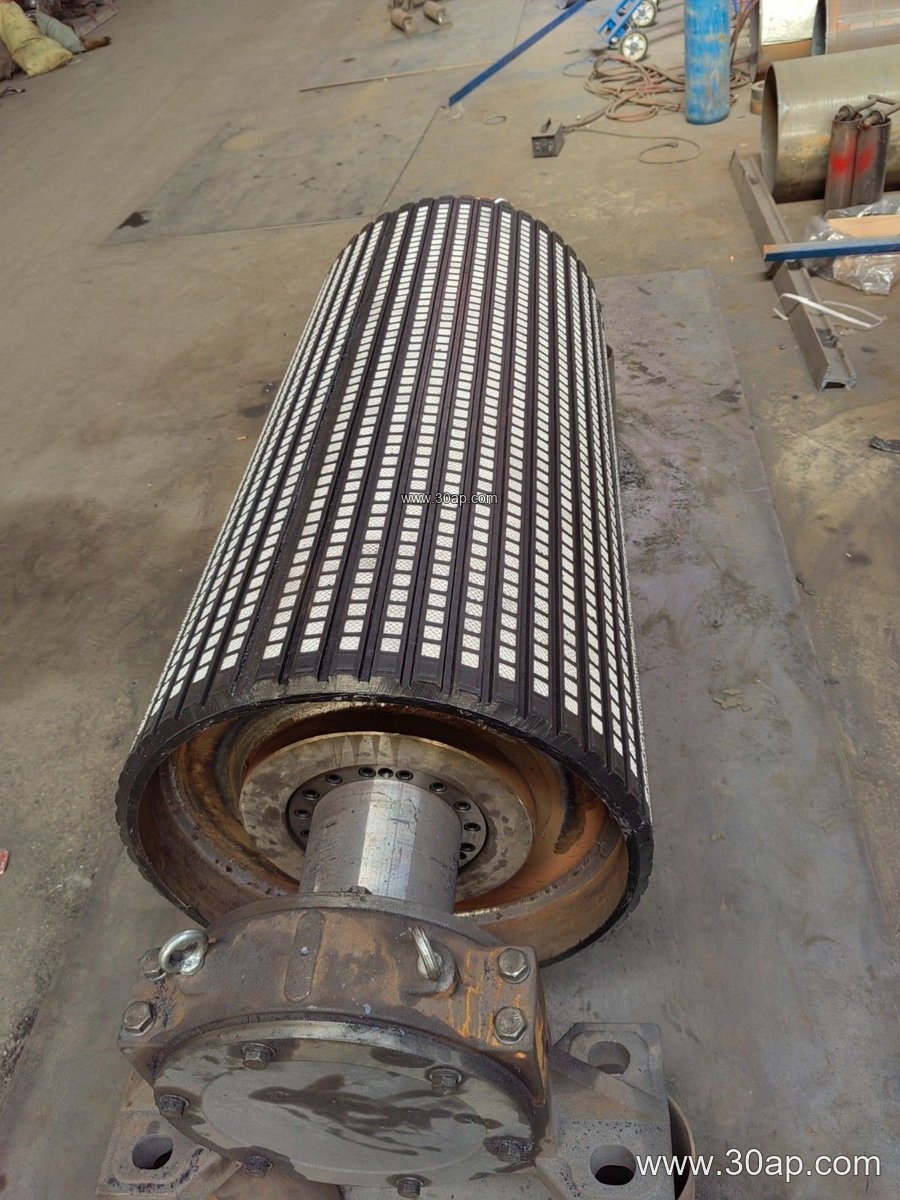
A ceramic lagged bend pulley is a direction-changing conveyor pulley whose shell is covered with ceramic tiles set in a rubber or polymer backing. It sits where the belt needs to change direction without driving the system, for example ahead of a drive pulley or between a head pulley and a take-up. Its job is simple to state and hard to do well: keep the conveyor belt wrapped around a curved path with minimal slip, minimal wear, and minimal build-up of carried material.
Because it is a bend pulley, it should not be confused with the drive pulley that transmits torque, the tail pulley at the loading end, or a snub pulley used only to increase wrap angle. Each of these is a different subtype with its own design brief. A ceramic lagged bend pulley is judged on how well it guides the belt and how long its surface lasts under abrasive conditions.
Construction and Surface Details
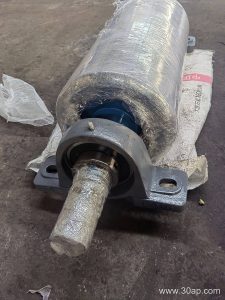
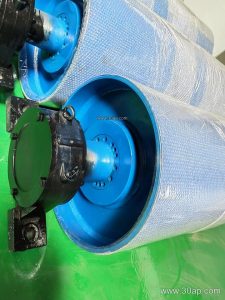
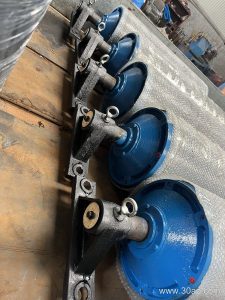
The core is usually a welded steel drum with machined end discs and a shaft sized by torque and bearing load rather than by belt width alone. Around the shell, ceramic tiles are bonded in a staggered pattern, often with raised dimples or grooves that give the belt somewhere to seat. The lagging thickness commonly runs from 8 mm to 20 mm depending on duty, and the ceramic grade is chosen for hardness and resistance to chipping.
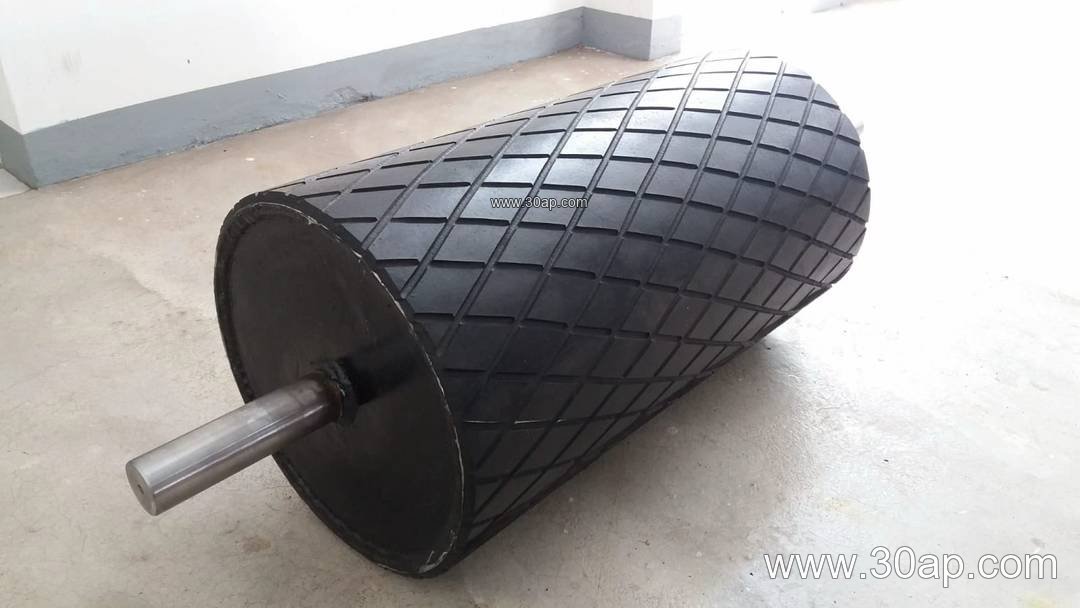
- Shell: rolled and welded steel, sometimes with a machined face for bonding
- Lagging: ceramic tiles in rubber or polymer matrix, plain or patterned
- Bearings: spherical roller or tapered roller types in sealed housings
- Shaft: stepped or straight, with keyways and locking assemblies
Common reference sizes include B800 with a pulley face around 950 mm and a diameter of Ø500, or B1200 with a face near 1400 mm and Ø1000. Shaft diameters such as Ø80, Ø100, or Ø120 mm appear in these ranges, but the correct value depends on the actual belt tension and load case. Buyers should treat such figures as typical starting points, not as fixed rules.
Where It Fits in the Plant
Aggregate and quarry lines use ceramic lagged bend pulleys where dust and sharp stone particles attack rubber surfaces. A crusher conveyor belt often runs in a short, tight loop where any slippage shows up quickly, so a hard ceramic face is practical. In cement plants, clinker dust and heat make surface choice important, and a ceramic lagging can outlast plain rubber in the same position.
Coal handling and power plant coal yards also use this pulley in take-up and return bends, where a flame retardant conveyor belt may be running alongside. Port bulk terminals handling iron ore or copper ore concentrate benefit from the reduced polishing effect that ceramic lagging gives compared with smooth steel. The same logic applies where a heavy-duty mining conveyor belt carries wet, sticky material that would otherwise coat a plain shell.
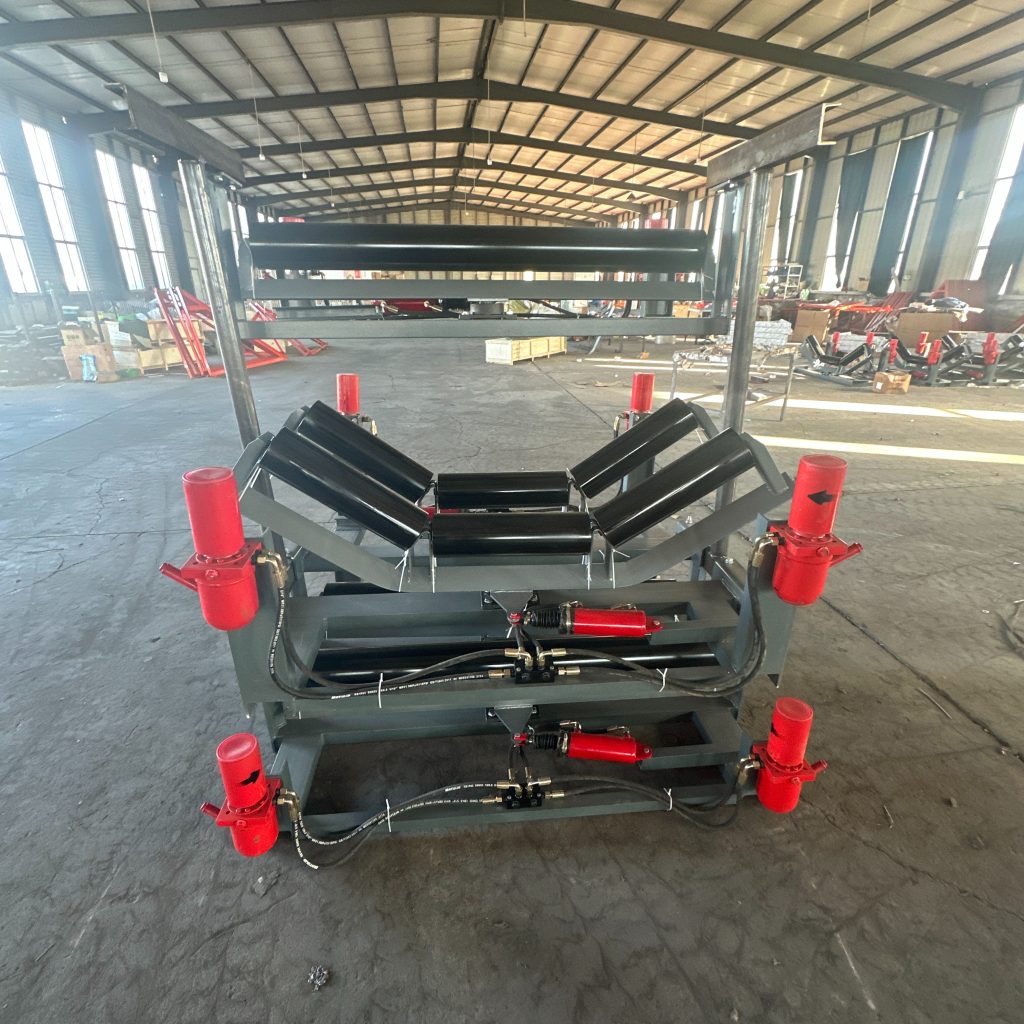
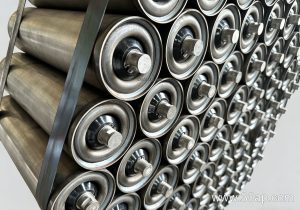
Related hardware matters too: the conveyor bracket that carries the pulley, the idler roller set on the return strand, and the belt itself all influence how the bend behaves. Matching a ceramic lagged bend pulley with a suitable EP conveyor belt or steel cord conveyor belt is part of getting the wrap and tracking right.
Selection Notes for Buyers
Start with the belt path. The belt width, wrap angle, belt tension, and the amount of material carried on the return side all shape the choice. A wider belt does not automatically mean a larger diameter; the pulley diameter is set by belt stiffness, splice type, and the minimum bend radius the belt can tolerate.
Ask for the shaft diameter to be confirmed by calculation, not copied from a belt-width table. Check bearing life against the actual radial load, and confirm the lagging pattern suits the belt cover. A chevron conveyor belt or a corrugated sidewall conveyor belt may need special attention at the pulley face because of its profile. For abrasive ore duties, an abrasion resistant conveyor belt and a ceramic face work well together; for hot clinker, a heat resistant conveyor belt should be paired with a lagging that can take the temperature.
Finally, confirm the interface dimensions: face width, hub type, keyway, and mounting hole pattern. A bend pulley that fits the conveyor bracket correctly will track better and last longer than one that is merely close in size.
Maintenance and Longevity
Inspect the ceramic tiles for cracks or missing pieces at each shutdown. A chipped tile can expose the bonding layer and allow the belt to slip. Clean the face if material builds up, check bearing temperature and lubrication, and verify that the pulley remains square to the belt centerline. Small alignment corrections early prevent edge damage and extend the life of both the pulley and the belt.