What a Dual Drive Pulley Does
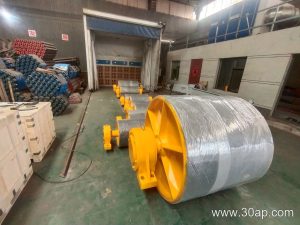
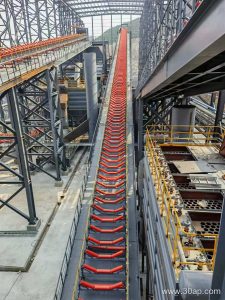
A dual drive pulley is a conveyor pulley that receives torque from two drive units, one at each end of its shaft. Instead of relying on a single motor and gearbox, the conveyor designer splits the driving power between two sides. This arrangement is common on long, heavily loaded conveyors where a single drive would demand an oversized gearbox, a very large shaft, or a belt with more tension than the structure can reasonably carry. In a quarry, a coal preparation plant, or a power station coal yard, the dual drive pulley often sits at the head of the conveyor and pulls the loaded belt toward the discharge point.
The same component may be called a twin-drive pulley or a double-drive head pulley. These are accurate equivalents for the same product, while tail pulleys, bend pulleys, and take-up pulleys remain separate functions and should not be confused with it.
How the Assembly Is Built
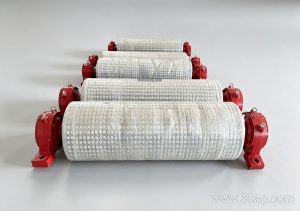
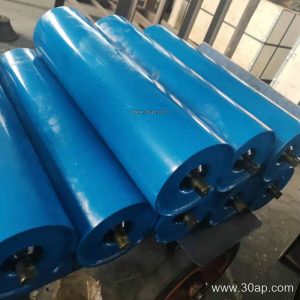
The core is a welded steel shell with end discs and a through shaft. Because two drives act on the same shaft, the shaft is usually designed with generous diameter and careful fillet details at the hubs. Bearings sit in housings mounted on a sturdy conveyor bracket or base frame, and the two gearbox outputs connect through couplings, sometimes with a fluid coupling on one side to balance load sharing.
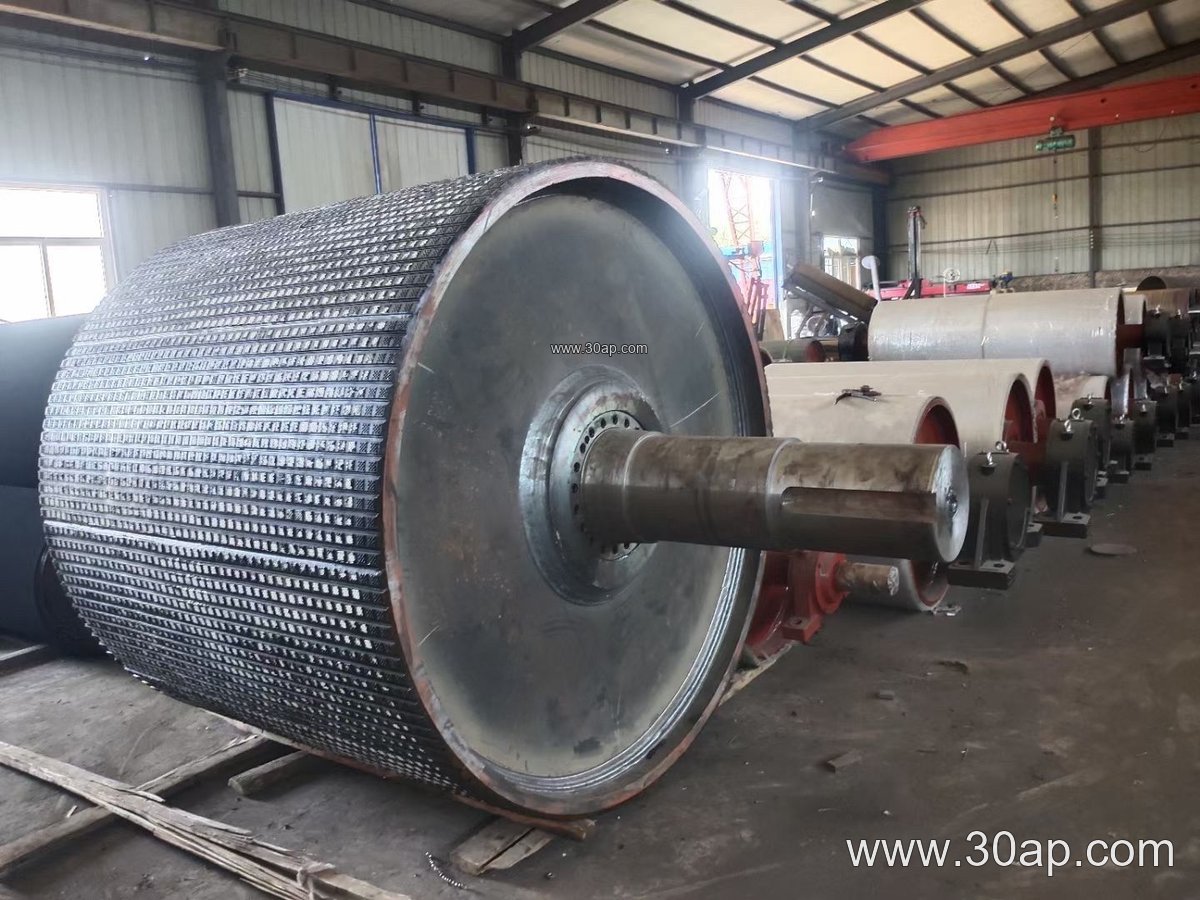
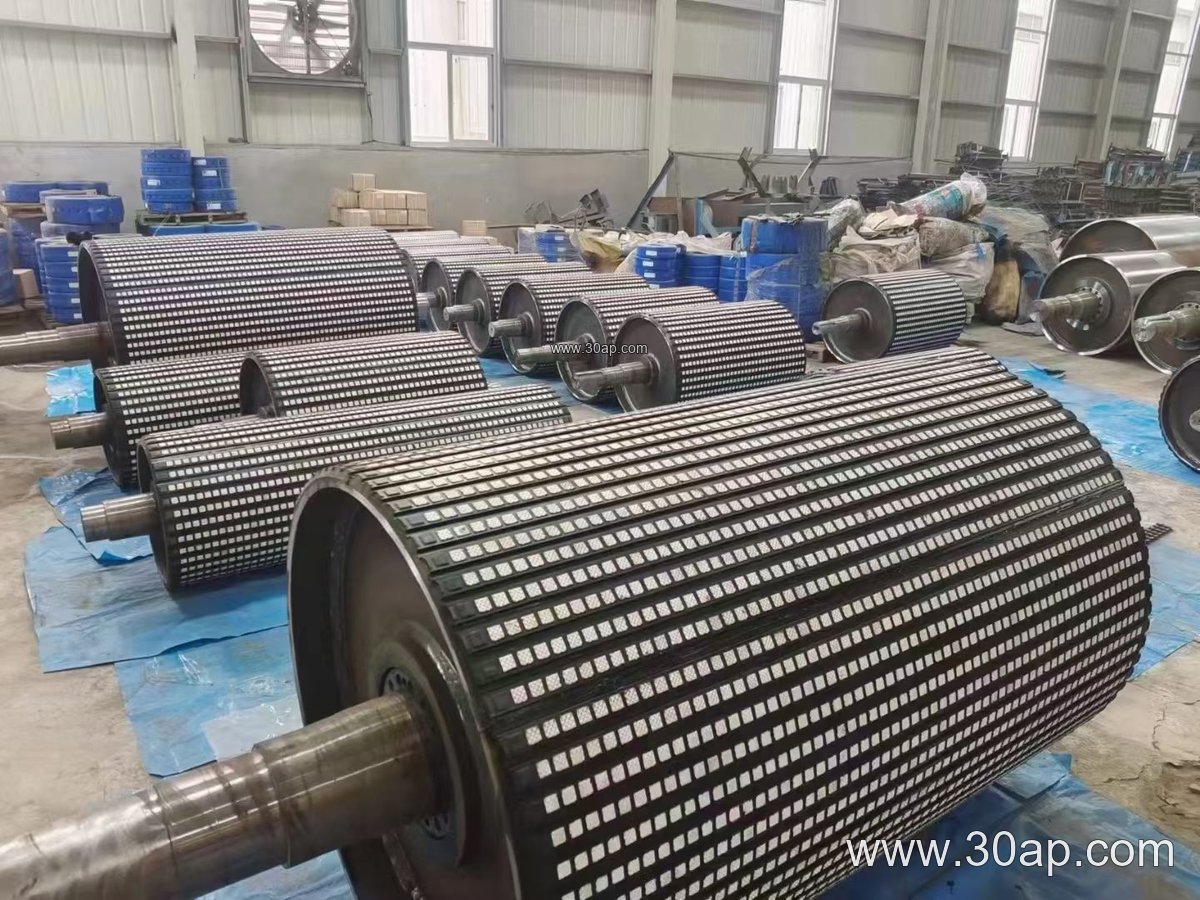
Surface treatment matters as much as the structure. Common shell coverings include plain finish, hot-vulcanized rubber, cold-bonded rubber, diamond grooving, herringbone grooving, and ceramic lagging. Lagging thickness is frequently 8, 10, 12, 15, or 20 mm, selected according to the torque to be transmitted and the abrasiveness of the bulk material.
Typical Sizes and Reference Data
The following values are common reference points rather than fixed rules. Diameter and shaft size are determined by torque, belt tension, and the load profile of the whole conveyor, never by belt width alone.
| Reference Item | Common Range |
|---|---|
| Belt width | B800, B1000, B1200, B1400, B1600 |
| Pulley diameter | Ø500, Ø630, Ø800, Ø1000, Ø1250 |
| Shell face width | B1200 belt about 1400 mm, B1400 belt about 1600 mm |
| Shaft diameter | Ø100, Ø120, Ø140, Ø160, Ø180 |
| Lagging thickness | 8, 10, 12, 15, 20 mm |
For example, a B1200 x Ø1000 unit with 15 mm diamond lagging is a realistic combination for a medium-length aggregate conveyor, while a B1600 x Ø1250 unit may appear in an iron ore or copper ore transfer line. A smaller B800 x Ø500 arrangement can suit a shorter crusher feed conveyor.
Where It Fits in the Plant
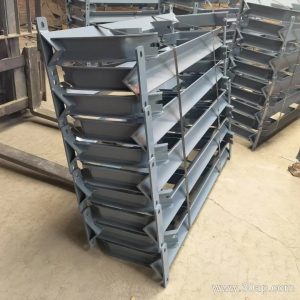
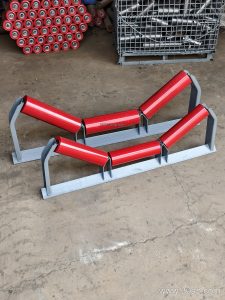
The dual drive pulley is most at home where starting torque is high and space for a single large drive is limited. In a limestone mine, two medium gearboxes on opposite sides can be easier to install and service than one very large unit. In a cement plant clinker line or a steel plant sinter feed, the same logic applies. The pulley works together with the conveyor belt, idler rollers, and conveyor brackets, so alignment across the full frame matters.
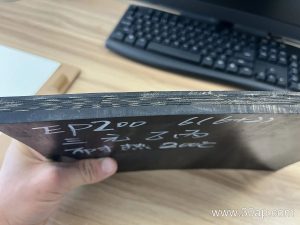
Belt choice is part of the picture. A heavy-duty mining conveyor belt, an abrasion resistant conveyor belt, or a flame retardant conveyor belt for underground coal mining all impose different demands on traction and lagging. Where the belt carries hot material, a heat resistant conveyor belt reduces the risk of cover hardening, and a steel cord conveyor belt may be needed for long center distances. Matching lagging hardness and groove pattern to the belt cover helps limit slip and wear.
Buyer Checklist
- Confirm the actual torque split between the two drives and whether load sharing is mechanical or electrical.
- State belt width, belt type, and expected belt tension so the supplier can size the shell and shaft correctly.
- Choose lagging by material: diamond or herringbone rubber for wet or dusty conditions, ceramic for severe abrasion.
- Check bearing housing position and conveyor bracket dimensions against the existing frame before ordering.
- Plan lifting points and maintenance access, since a dual drive pulley is heavier than a single-drive equivalent.
For more conveyor component data, visit www.bossgoo.com for conveyor pulley and idler roller references.