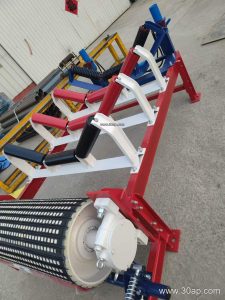
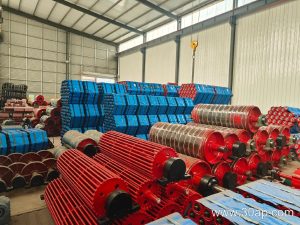
What a High Wear-Resistant Lagged Pulley Does
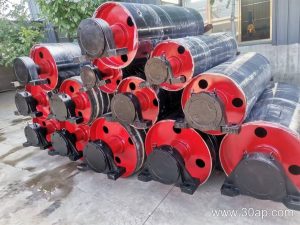
A high wear-resistant lagged pulley is a conveyor pulley whose shell is covered with a durable rubber or ceramic layer to protect both the pulley face and the conveyor belt. In abrasive service—such as a quarry conveyor belt line, a cement plant clinker route, or an iron ore transfer point—the lagging raises friction between drum and belt while shielding the shell from grit, sharp edges, and fine dust. The result is less belt slip, longer pulley life, and steadier operation.
This pulley is not a drive, tail, or bend pulley by default. The term describes the surface treatment and wear resistance. A high wear-resistant lagged pulley can be supplied as a head pulley, tail pulley, tension pulley, or snub pulley, depending on where the conveyor layout needs grip and protection. Drive pulleys, tail pulleys, and bend pulleys are separate functional positions, not interchangeable names.
How the Lagging Is Built
The core is a welded steel shell with end discs and a shaft sized by torque and load, not by belt width alone. Common shaft diameters include Ø80, Ø100, Ø120, Ø140, Ø160, and Ø180, but the final value follows the drive design. Lagging is applied in several ways:
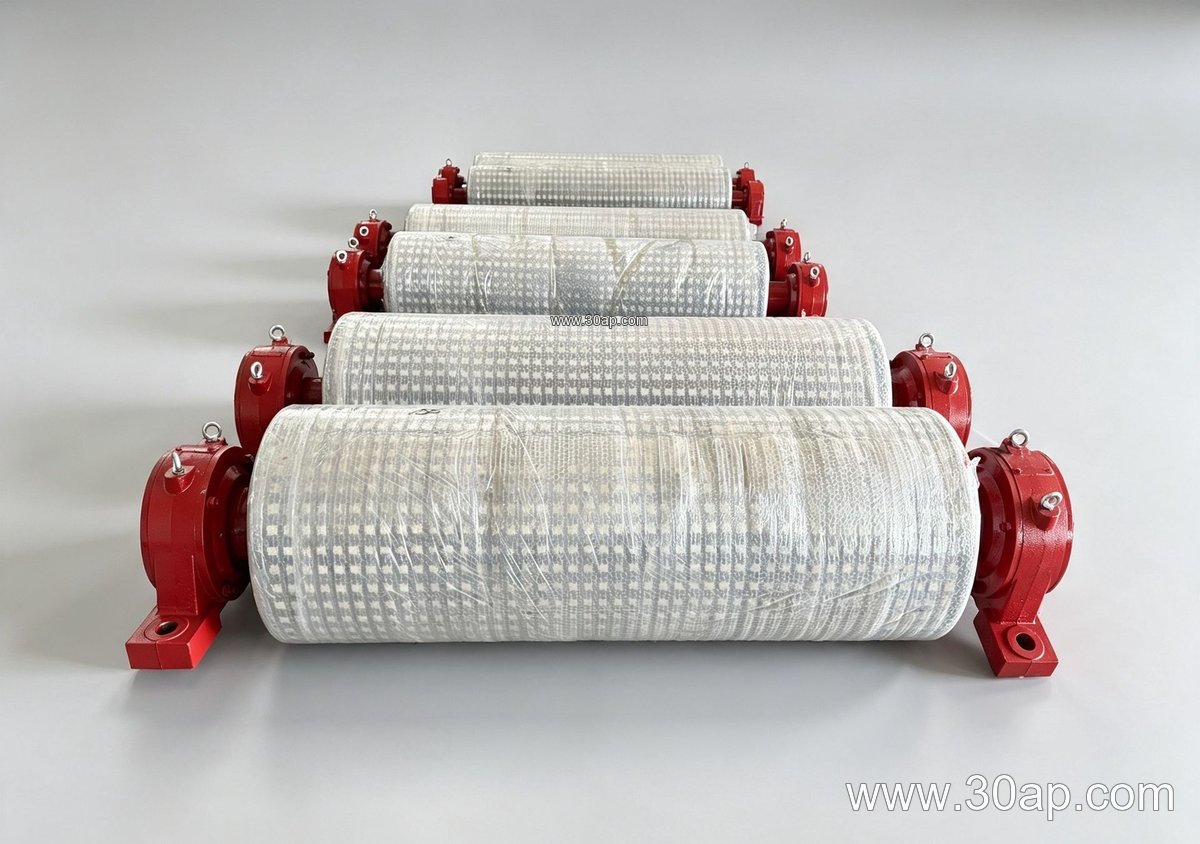
- Hot-sulfurized rubber, bonded under heat and pressure for a strong, seamless cover.
- Cold-bonded rubber, often chosen for field replacement or smaller pulleys.
- Diamond or herringbone grooved rubber, which helps shed water and fines in wet or dusty conditions.
- Ceramic lagging, where hard ceramic tiles are embedded in rubber for very high abrasion resistance.
Typical lagging thicknesses are 8, 10, 12, 15, and 20 mm. Thicker covers suit harsh abrasive duty, while thinner covers may be enough for cleaner bulk material handling. The pulley face width is usually a little wider than the belt; for example, a B800 belt may run on a pulley face around 950 mm, and a B1200 belt on roughly 1400 mm. These are reference relationships, not fixed rules, and pulley diameter is selected separately.
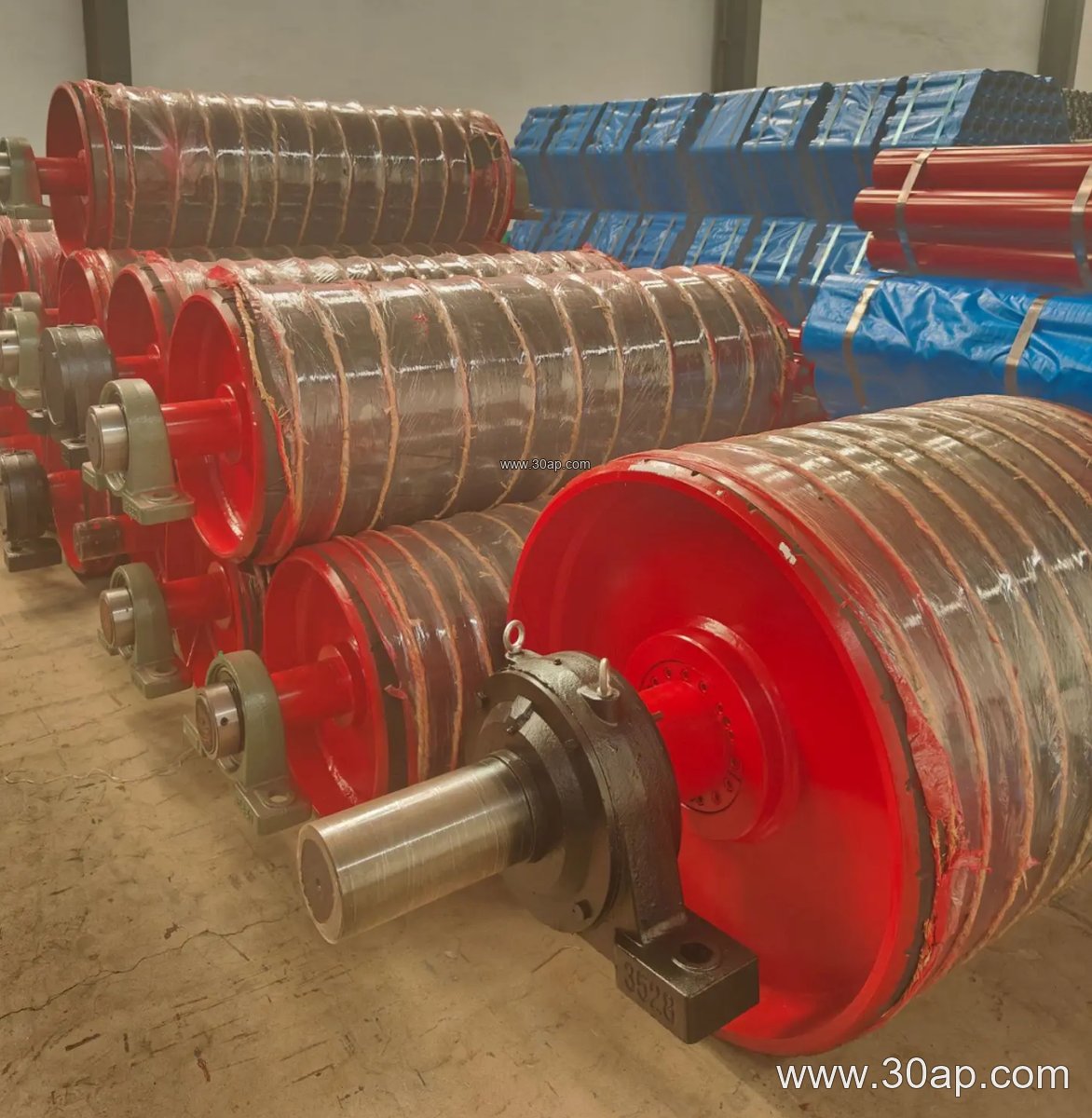
Where It Fits in the Conveyor System
High wear-resistant lagged pulleys are common in sand and gravel plants, limestone mines, coal preparation plants, power plant coal handling, and steel plant sinter lines. At a crusher discharge, a lagged head pulley must grip a heavy conveyor belt carrying sharp rock. At a tail position, the lagging protects the shell from impact and grit. In a cement plant, a lagged bend pulley may help maintain belt wrap while resisting fine clinker dust.
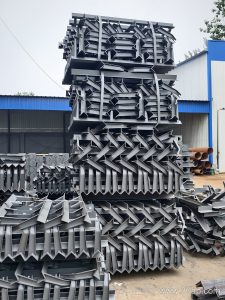
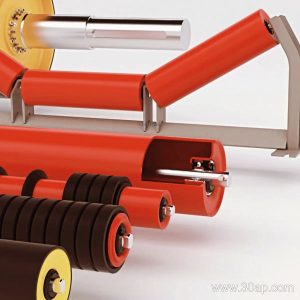
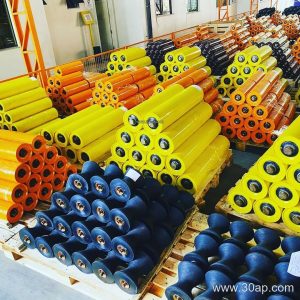
The pulley works with the conveyor belt, conveyor idler rollers, and conveyor brackets to keep the belt tracking and tensioned. A wear-resistant lagged pulley is often paired with an abrasion resistant conveyor belt, a heavy-duty mining conveyor belt, or a heat resistant conveyor belt when temperature is also a factor. In underground coal mining, flame retardant conveyor belt and anti-static conveyor belt are chosen for safety, and the lagging material should be compatible with that environment.
Matching Pulley Size and Lagging to the Duty
Buyers should treat pulley diameter, face width, shaft diameter, and lagging type as a set of design choices. Common combinations include B800 × Ø500, B1200 × Ø1000, and B1400 × Ø800, but no single belt width requires one fixed diameter. A high wear-resistant lagged pulley with a larger diameter can reduce belt bending stress, while a smaller diameter may fit a tight conveyor structure.
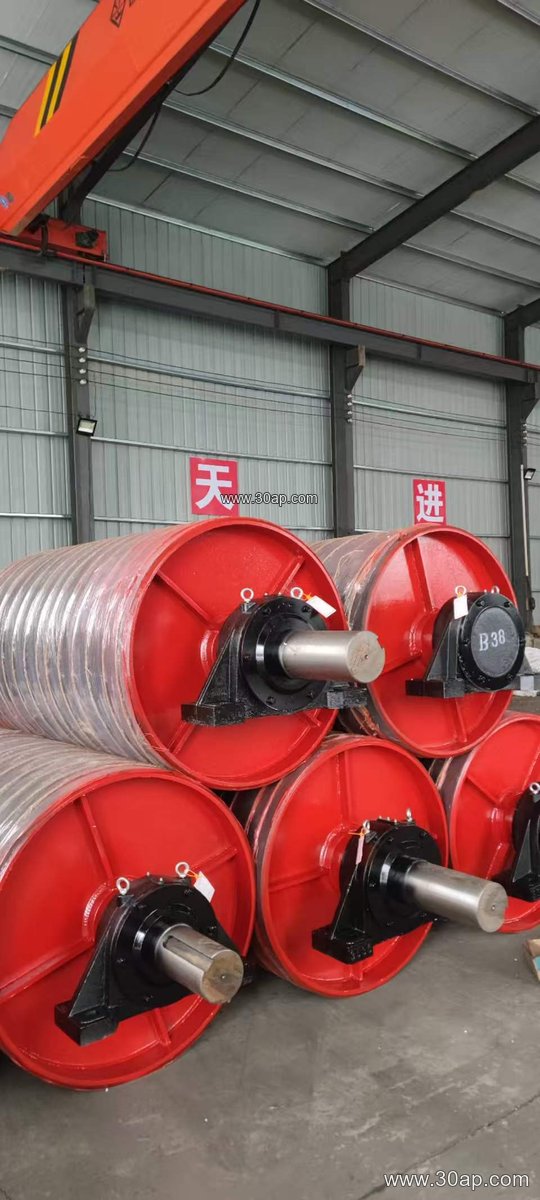
The table below lists typical reference dimensions; final values should be confirmed against the conveyor tension, speed, and available space.
| Reference item | Common range or example |
|---|---|
| Belt width | B400, B500, B650, B800, B1000, B1200, B1400, B1600, B1800, B2000 |
| Pulley diameter | Ø200, Ø250, Ø315, Ø400, Ø500, Ø630, Ø800, Ø1000, Ø1250, Ø1400 |
| Lagging thickness | 8 mm, 10 mm, 12 mm, 15 mm, 20 mm |
| Surface form | Plain rubber, diamond grooved, herringbone, ceramic |
| Shaft diameter | Ø50 to Ø200, determined by torque and load |
For a quarry conveyor belt or aggregate conveyor belt handling sharp stone, ceramic or thick grooved rubber lagging is often considered. For a coal mining conveyor belt where flame resistance matters, the lagging compound should be checked for compatibility. A high wear-resistant lagged pulley is not a substitute for proper belt tension or alignment; it is one part of a reliable conveyor pulley assembly.
Buyer Checklist
- Confirm the pulley position: head, tail, tension, bend, or snub. Each has different load and wrap requirements.
- State the conveyor belt type and width, such as EP conveyor belt or steel cord conveyor belt, along with the belt speed.
- Specify the lagging thickness and surface pattern for the actual material—wet, dry, abrasive, or oily.
- Provide the shaft diameter required by the drive or bearing assembly; do not assume it from belt width.
- Check that the pulley face width and conveyor bracket spacing match the conveyor frame.
For abrasive bulk material lines, a high wear-resistant lagged pulley helps protect the belt and keep traction stable. Selection should follow the conveyor design, not a single catalog number.