What a High-Strength Conveyor Idler Actually Does
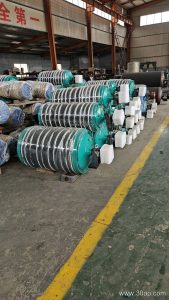
On a loaded conveyor, the idler roller carries most of the weight. A high-strength conveyor idler is built for the shifts where standard rollers would wear out early: continuous tonnage, sharp or hot material, and long spans between maintenance windows. In practice, this idler is usually a heavy-gauge steel tube fitted with reinforced bearing housings and a multi-stage seal, mounted in a frame that holds the belt in its trough or on its return run.
The keyword points to strength, but strength in a roller is a system property. Wall thickness, shaft diameter, bearing class, weld quality, and seal design all matter together. A thick tube on a light shaft still flexes; a strong shaft with a poor seal still fails once grit reaches the bearing. Buyers should compare the full assembly rather than one number.
Construction Details That Matter
Most high-strength idlers use a seamless or welded steel tube with machined end faces. The shaft is typically cold-drawn or turned, and the bearing housing is pressed and welded in place. Common bearing sizes include 6205, 6305, 6306, 6308, and 6310, with the exact choice depending on load, speed, and roller diameter rather than a fixed rule.
Seals are where service life is won or lost. Labyrinth seals, contact seals, and combined designs keep dust out while retaining grease. In a quarry or a cement plant, fine abrasive dust is the main enemy; in a washing plant, moisture and fines work together. A high-strength conveyor idler usually combines a labyrinth path with a grease barrier and a protective end cap.
Roller surfaces vary too. Plain steel suits general bulk material. Rubber rings add cushioning at transfer points, nylon covers reduce buildup in sticky service, and ceramic lagging can help in abrasive conditions. These are surface options, not different machine types.
Where These Idlers Fit on the Conveyor
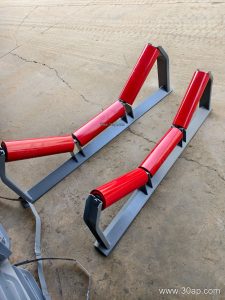
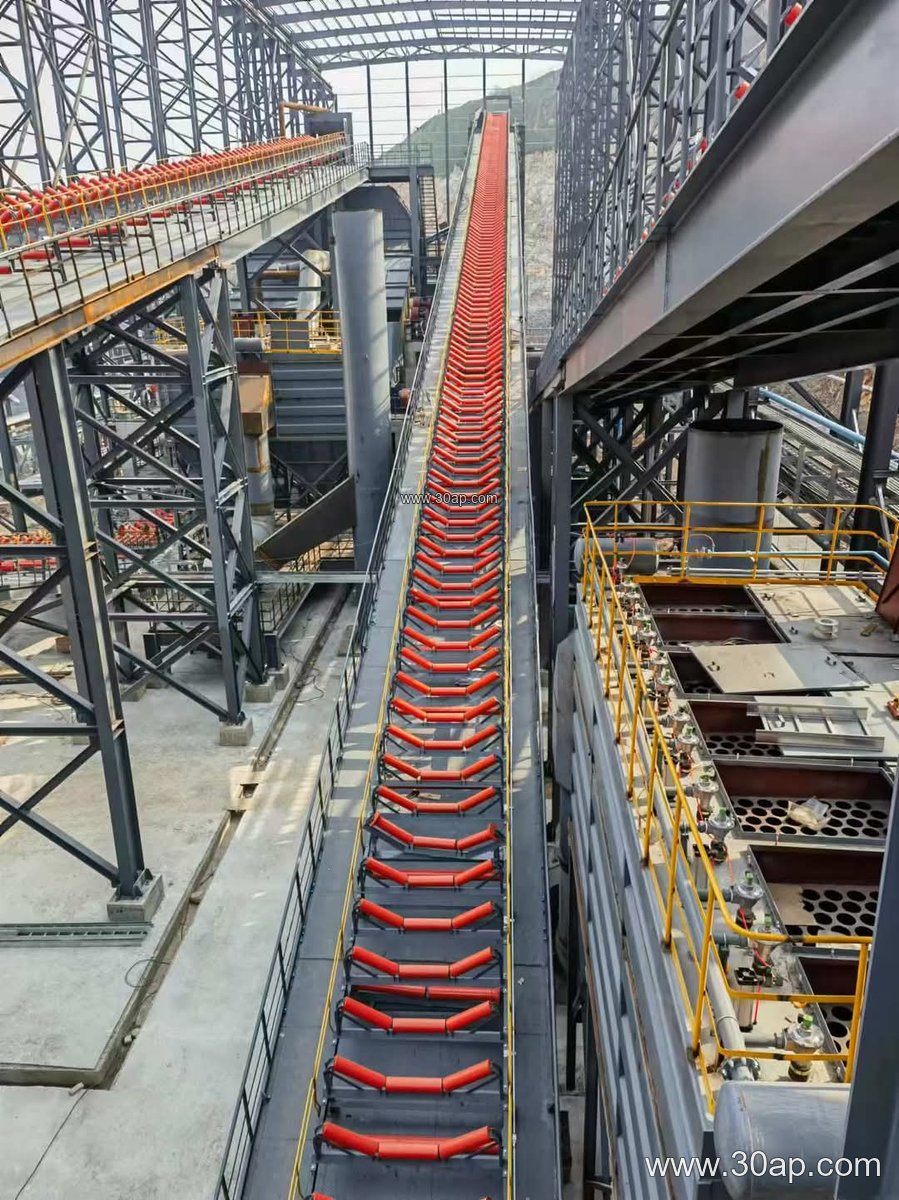
A high-strength idler may appear as a troughing roller on the carrying side, a return roller underneath, or an impact roller beneath a loading chute. Troughing sets are commonly single-roll, two-roll, or three-roll designs, with trough angles around 20, 30, 35, or 45 degrees. The angle affects how the belt seats and how the load is distributed, so it should be matched to the belt and material.
On the return side, a flat roller or a V-shaped return set keeps the belt tracking. At a crusher discharge or a ship loading point, impact idlers with rubber rings absorb shock that would otherwise shorten bearing life. A high-strength conveyor idler in these positions is selected for load and impact, not simply copied from the carry side.
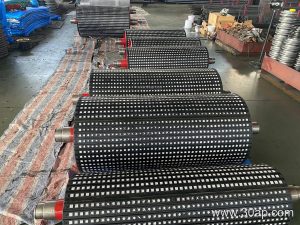
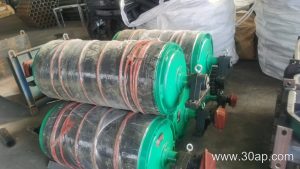
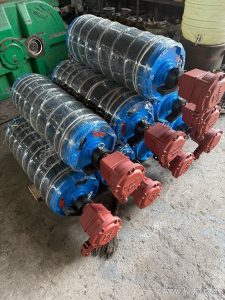
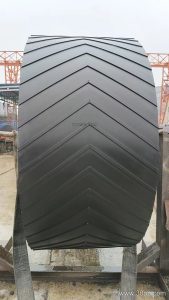
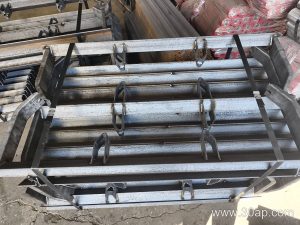
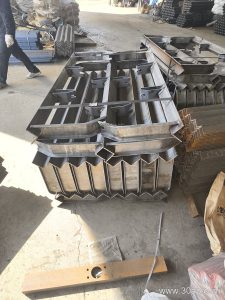
This is also where the rest of the line matters. A well-matched conveyor belt, a correctly sized conveyor pulley, and rigid conveyor brackets all influence roller life. A weak bracket lets the frame twist; a misaligned pulley pulls the belt to one side and loads the idler edges.
Common Duty Conditions and Sizing Notes
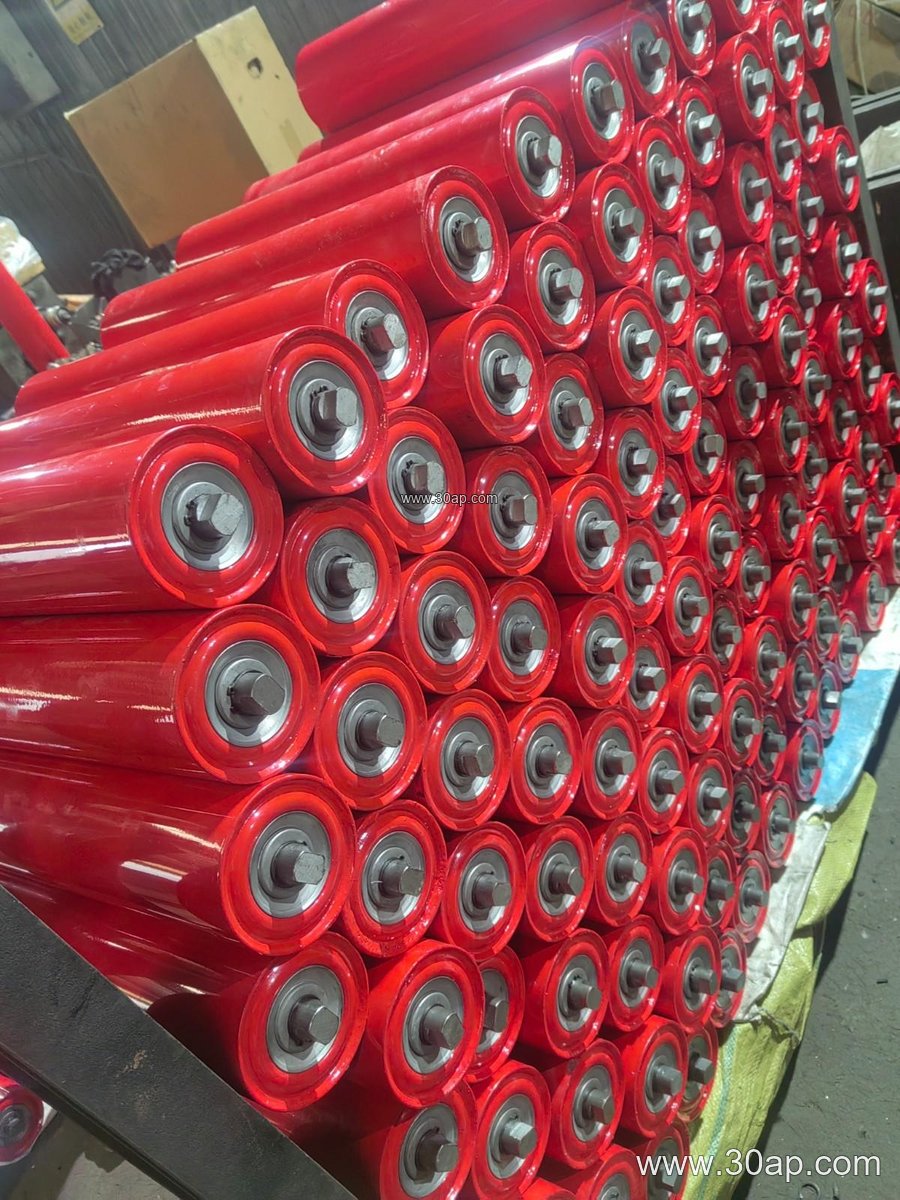
Belt width and roller diameter are related but not locked together. A B800 belt may run with Ø89, Ø102, or Ø108 rollers depending on load and speed; a B1200 line often uses Ø127 or Ø133, and wider belts or heavier ore may call for Ø159 or larger. Roller length changes with belt width, trough angle, and roll configuration. For a three-roll troughing set, common examples are about 200 mm rolls at B500, 250 mm at B650, 315 mm at B800, 380 mm at B1000, 465 mm at B1200, 530 mm at B1400, 600 mm at B1600, 670 mm at B1800, and 750 mm at B2000. Side rolls and center rolls can differ, and these are reference examples rather than universal matches.
The table below shows typical parameter ranges for planning discussions.
- Roller diameter: Ø63, Ø76, Ø89, Ø102, Ø108, Ø127, Ø133, Ø159, Ø178, Ø194, Ø219 mm
- Belt width: B400 to B2400 mm
- Trough angle: 20, 30, 35, 45 degrees
- Bearing: 6204, 6205, 6305, 6306, 6308, 6310
- Surface: steel tube, nylon, ceramic, rubber ring
For a coal mining conveyor belt or an iron ore line, the belt itself may be a Steel Cord Conveyor Belt or an EP Conveyor Belt, and the idler must suit the resulting load. In a cement plant, a Heat Resistant Conveyor Belt may carry clinker while the idler faces heat and dust together. In a coal preparation plant, a Flame Retardant Conveyor Belt is common, and the idler seal must resist fine coal dust.
What Buyers Should Check Before Ordering
Ask for the shaft diameter, bearing size, tube wall thickness, and seal type as separate line items. Confirm the roller length against the actual trough set and belt width. Check whether the duty is carrying, return, or impact, because a high-strength conveyor idler for impact service needs a different surface and bearing arrangement.
Also review the conveyor bracket and frame spacing, the pulley alignment, and the belt tracking history. A high-strength idler cannot correct a badly aligned line. For abrasive ore, a high abrasion resistant conveyor belt paired with well-sealed rollers reduces spillage and wear. For hot material, confirm the temperature at the roller, not just at the belt surface.
Finally, plan spares by position. Carry-side troughing idlers, return rollers, and impact rollers wear at different rates. Keeping the correct high-strength conveyor idler for each position avoids the common mistake of fitting one roller everywhere and shortening the life of the whole line. For more on matching belts and rollers, see our notes on conveyor belt and idler roller selection at www.example.com/high-strength-conveyor-idler.