What an Aggregate Conveyor Idler Does
In a sand and gravel line, the aggregate conveyor idler is the rotating support under the belt that carries crushed stone, sand, and screened material from the crusher to the stockpile. It is a simple component, but it sets the running line of the whole conveyor: if the idlers are out of alignment or the rollers seize, the belt starts to wander, the edges fray, and the drive has to work harder. The same idler roller design appears in a quarry conveyor belt line, a concrete batching plant, and a cement plant raw material section, simply scaled to the belt width and the load.
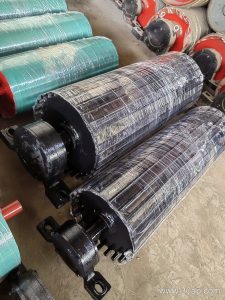
An idler is not a conveyor pulley. The drive pulley, tail pulley, and bend pulley transmit or redirect belt tension at the ends of the conveyor; the idlers only support the belt along the carrying and return runs. Mixing up these parts leads to the wrong spare being ordered.
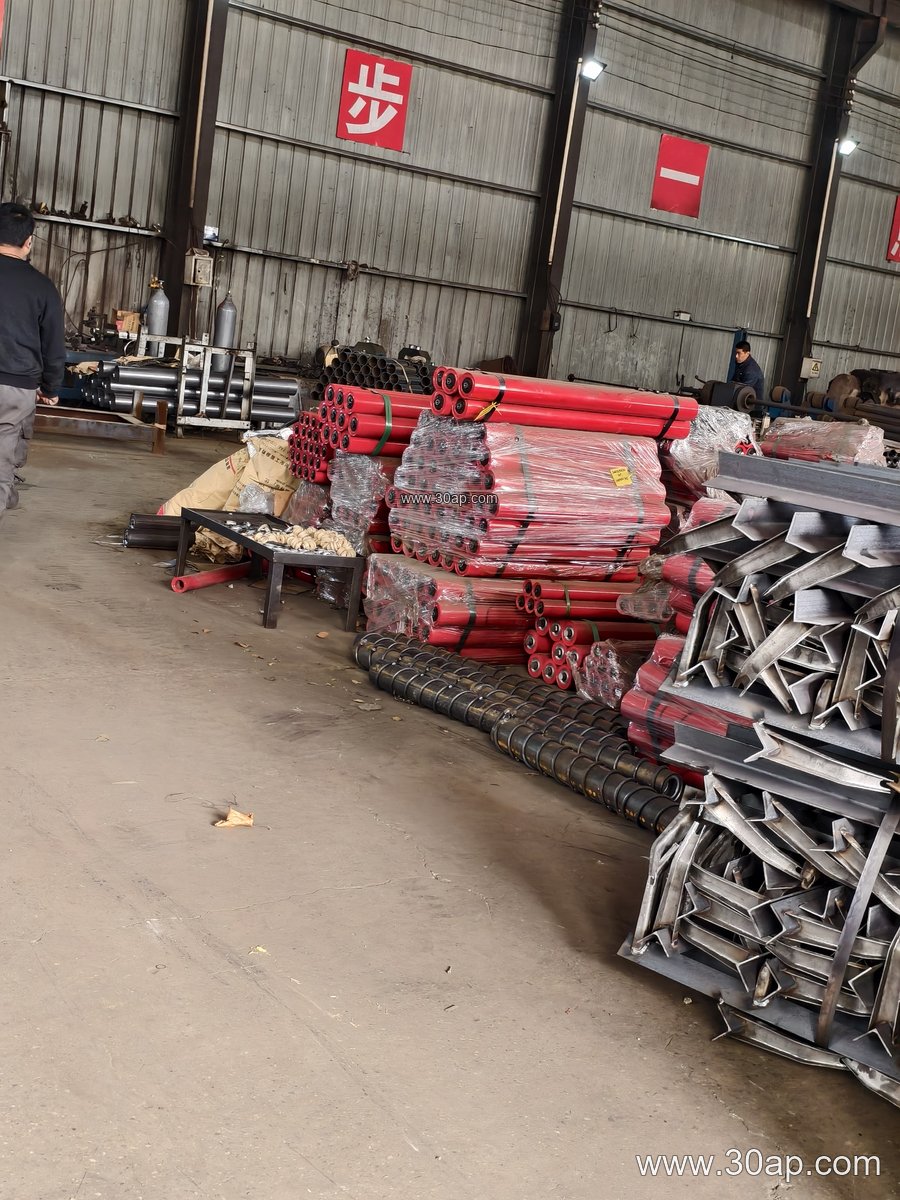
How the Roller Is Built
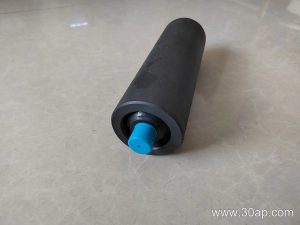
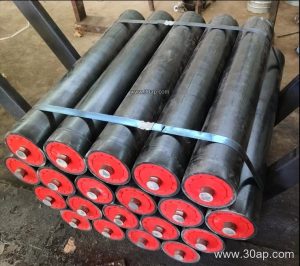
A typical unit is a steel tube with pressed end caps, a shaft, and a bearing housed in a sealed bearing block. Roller diameters commonly run from Ø63 up to Ø219 mm, and the bearing size is matched to the duty, not to the tube alone. Common bearing numbers include 6204, 6205, 6305, 6306, 6308, and 6310. The roller surface may be plain steel, nylon, ceramic, or rubber rings; rubber rings are usual on impact idlers under a crusher discharge, while ceramic or nylon covers help where sticky, abrasive material builds up.
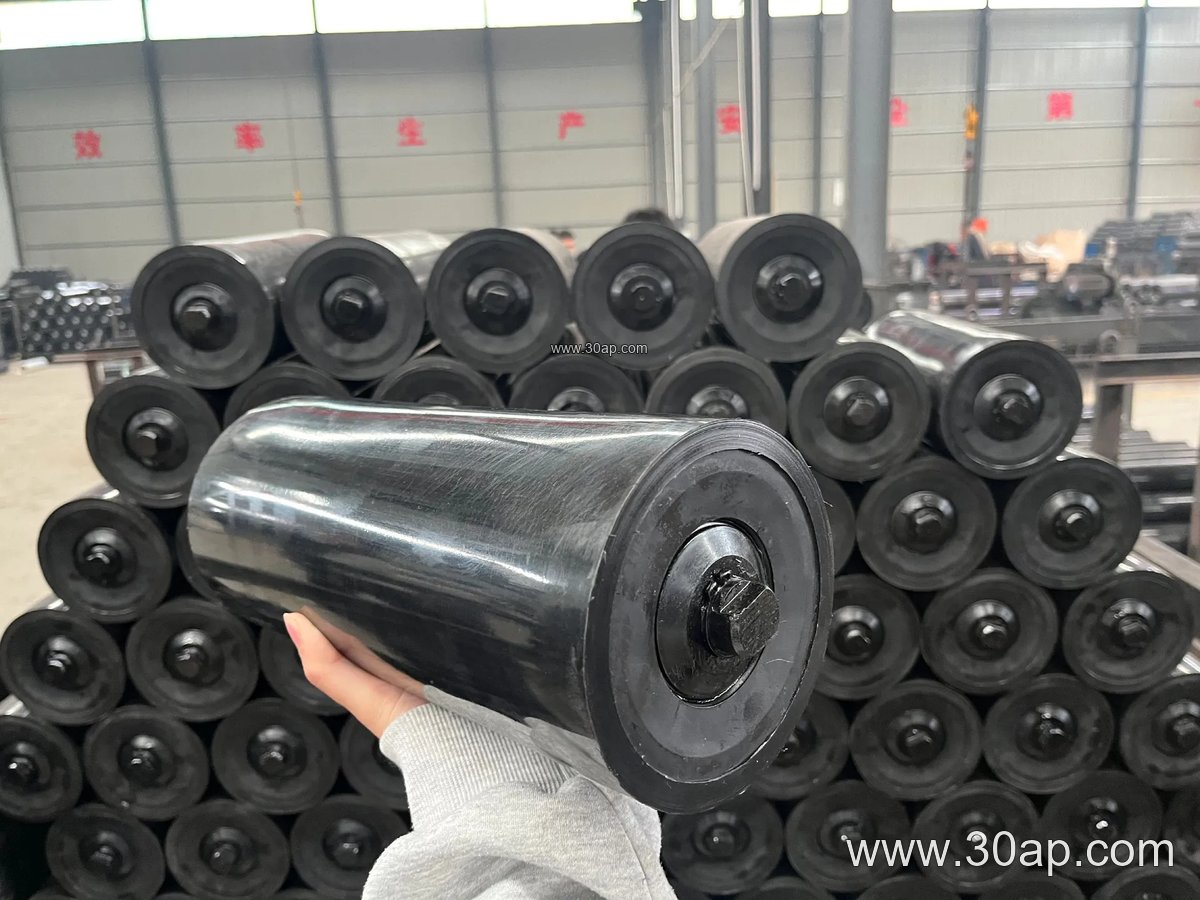
Types Used Along an Aggregate Conveyor
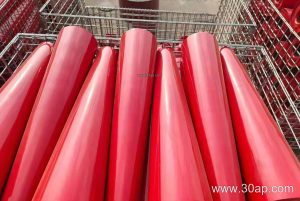
The carrying run normally uses three-roll troughing sets with a trough angle of 20, 30, 35, or 45 degrees. A 35-degree set is a common choice for aggregate, but the angle should follow the material, belt width, and capacity. Transition idlers sit near the pulleys to ease the belt from flat to troughed. On the return side, flat return idlers, V-return idlers, and spiral return rollers keep the belt clean and centered. Self-aligning idlers, including friction and tapered types, correct minor misalignment on long curves.
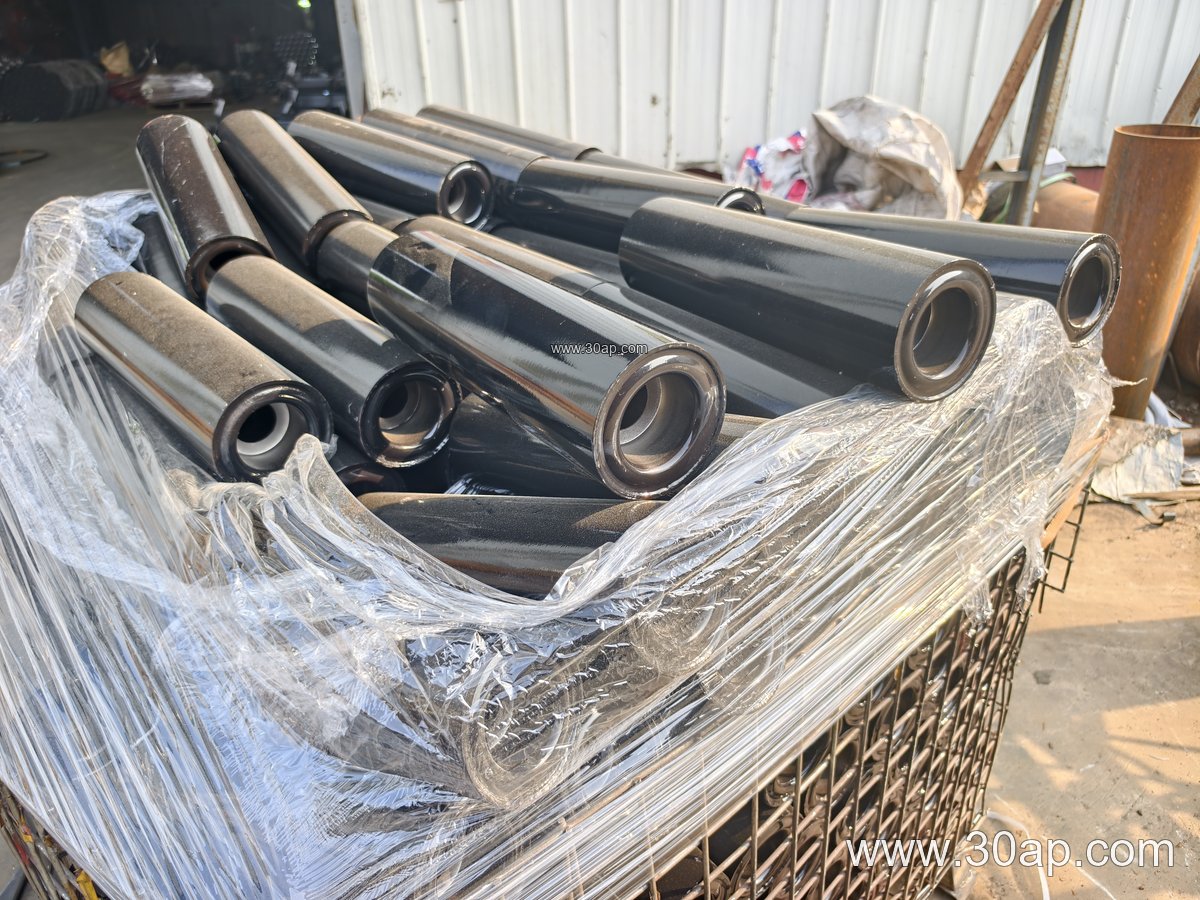
| Item | Common reference values |
|---|---|
| Roller diameter | Ø63, Ø76, Ø89, Ø102, Ø108, Ø127, Ø133, Ø159, Ø178, Ø194, Ø219 mm |
| Belt width | B400, B500, B650, B800, B1000, B1200, B1400, B1600, B1800, B2000, B2200, B2400 |
| Trough angle | 20°, 30°, 35°, 45° |
| Roller length, three-roll troughing (example) | B500 about 200 mm, B650 about 250 mm, B800 about 315 mm, B1000 about 380 mm, B1200 about 465 mm, B1400 about 530 mm |
Roller length is not fixed by belt width alone; it depends on the trough angle and the roll arrangement, and side rolls and center rolls can differ. For a given belt, several roller and shaft combinations are possible, so shaft size should come from the idler manufacturer’s drawing rather than from the belt width.
Where It Fits in the Plant
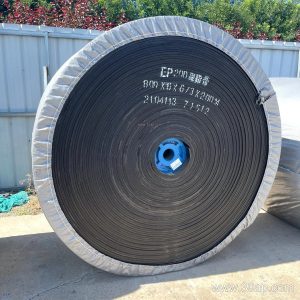
In a stone crushing and screening circuit, impact idlers are placed under the crusher outlet where lumps fall hardest, troughing idlers carry the screened aggregate, and return rollers protect the belt on the lower run. In a coal washing plant or power plant coal yard, flame retardant and anti-static belt grades are often specified, and the idlers must tolerate fine dust. In an iron ore or copper ore terminal, heavier rollers and frames are used because the material is dense and the belt is often an EP or steel cord type. Matching the idler to the belt matters: a heavy-duty mining conveyor belt with a thick cover runs differently from a lighter aggregate conveyor belt on a short yard conveyor.
Buyer Checklist
- Confirm belt width, trough angle, and whether the set is two-roll or three-roll.
- Check roller diameter, wall thickness, shaft diameter, and bearing number against the existing drawing.
- Ask about sealing: dust and water ingress are the main causes of early failure in a quarry.
- Match the roller surface to the duty: rubber rings for impact, ceramic or nylon where buildup occurs.
- Check frame and bracket dimensions so the new idler fits the existing conveyor bracket without modification.
- For coal or underground work, confirm the required fire resistant and anti-static properties of the belt and the suitability of the roller for the environment.
A well-chosen aggregate conveyor idler keeps the belt tracking straight, reduces spillage at transfer points, and extends the life of the conveyor belt itself. Buyers who compare the roller drawing, the belt specification, and the actual operating conditions before ordering usually avoid the most common replacement mistakes.