What the Conveyor Tail Pulley Does
The conveyor tail pulley sits at the rear of the belt loop, opposite the drive. Its main job is to guide the conveyor belt back into the carrying run while maintaining proper tension. In quarry and aggregate lines, this pulley often works in dusty, abrasive conditions, so the right specification matters. Unlike a drive pulley that transmits power, or a bend pulley that simply changes belt direction, the tail pulley is primarily a tension and tracking component. It may also be built as a self-cleaning wing pulley in sticky material, but that is a different subtype and not a direct replacement for a standard tail pulley.
Construction and Key Components
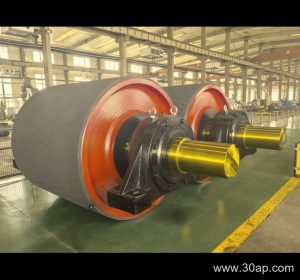
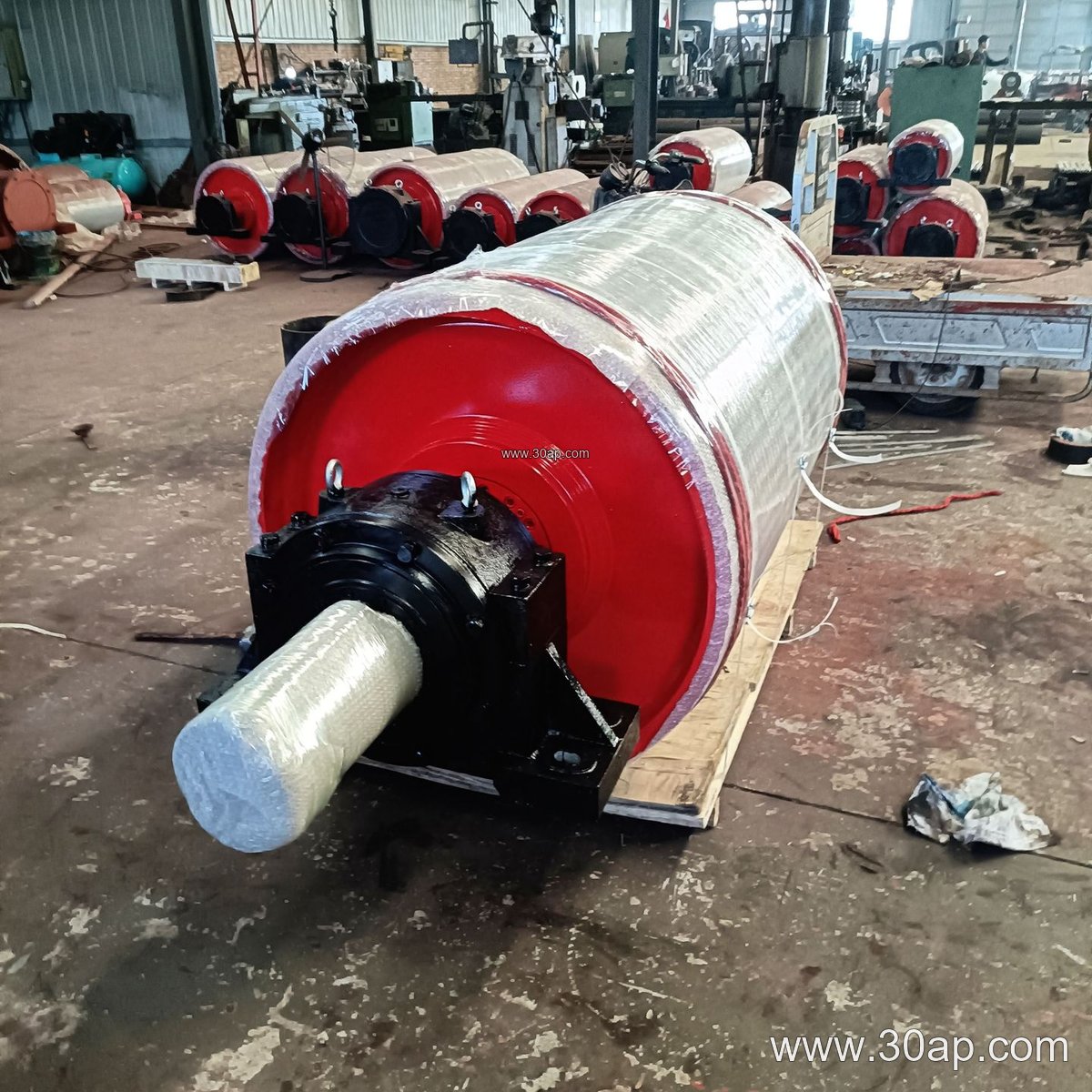
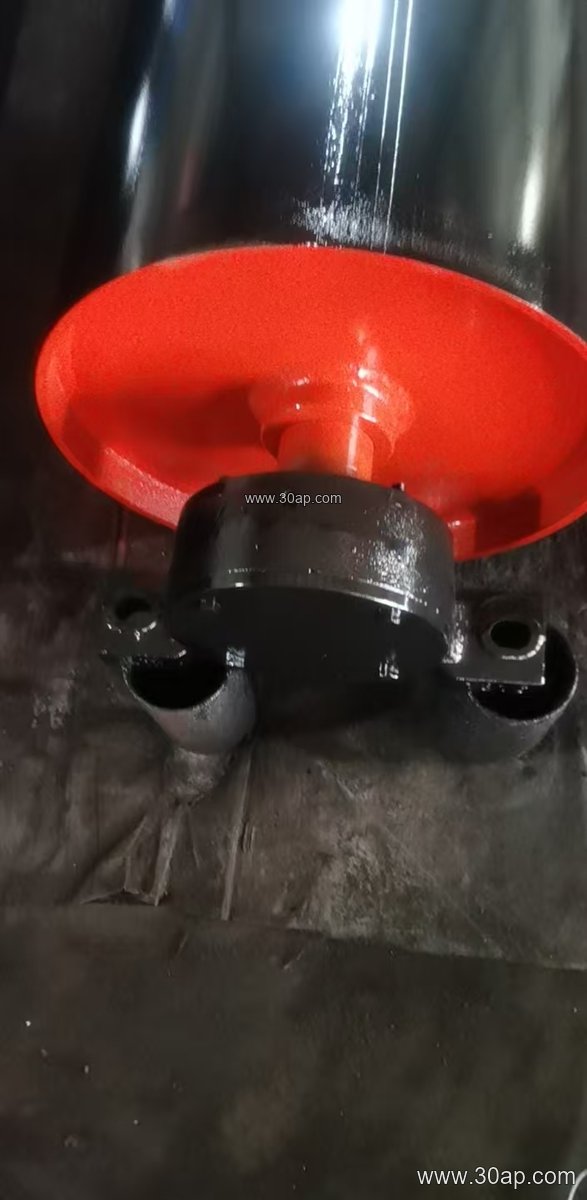
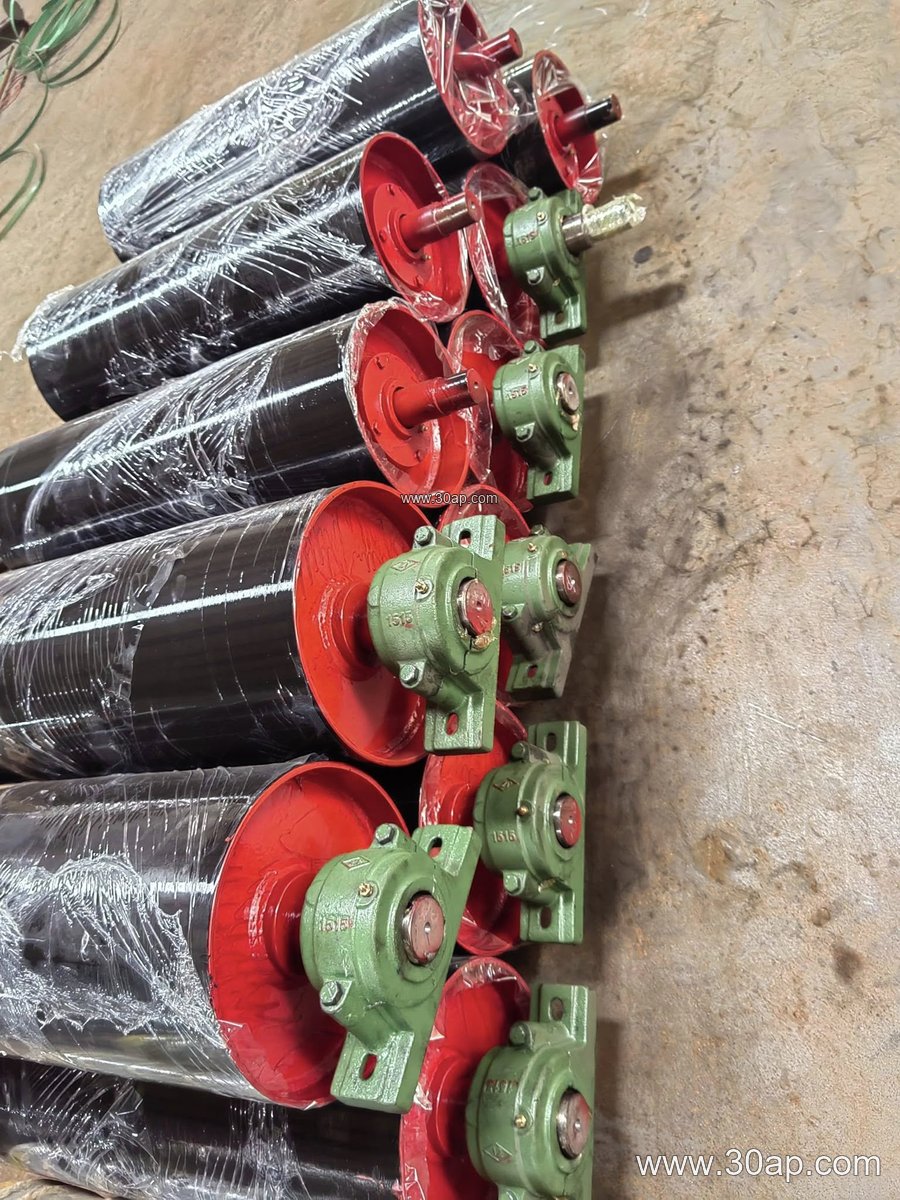
A typical tail pulley consists of a cylindrical shell, end discs, a shaft, and bearing housings. The shell is usually made from seamless steel tube or rolled plate. Shaft diameter is determined by torque and load, not by belt width alone. Common shaft sizes include Ø80, Ø100, Ø120, and Ø140, but final selection depends on the conveyor design. Bearing type and sealing are critical in dusty environments such as cement plants or coal handling. The pulley connects to the conveyor bracket through its bearing housings.
Surface Options and Lagging
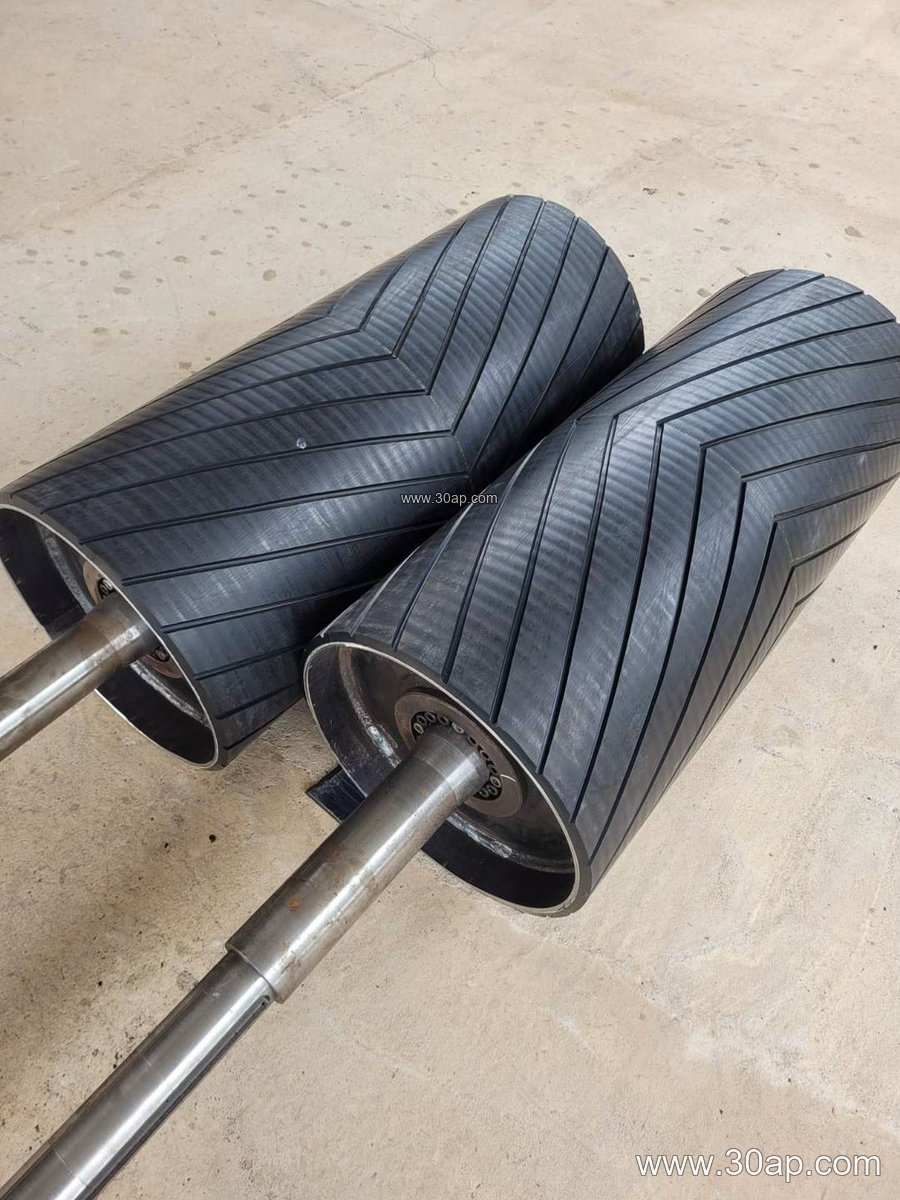
Tail pulleys are often supplied with a plain surface or with rubber lagging. Lagging helps protect the shell and improve belt tracking. Common lagging thicknesses are 8, 10, 12, and 15 mm. In abrasive conditions, such as a stone crushing line, a cold-bonded or vulcanized rubber lagging can extend service life. Diamond or herringbone patterns are more typical on drive pulleys, where grip is essential. For the tail position, a plain or flat rubber surface is often sufficient. Ceramic lagging is usually reserved for high-traction drive applications.
Matching the Pulley to the Belt
The pulley face width should be slightly wider than the belt. For example, a 650mm conveyor belt typically matches a pulley face of around 750 mm. A 1000mm belt may use a pulley face of about 1150 mm. Diameter selection depends on belt thickness, tension, and the space available. A B800 conveyor might use a Ø500 tail pulley, while a B1200 system could use a Ø1000 pulley. These are common examples, not fixed rules. The same belt width can work with different pulley diameters depending on the conveyor layout and belt type, whether it is an EP conveyor belt, a steel cord conveyor belt, or a flame retardant conveyor belt for underground mining.
Where It Is Used
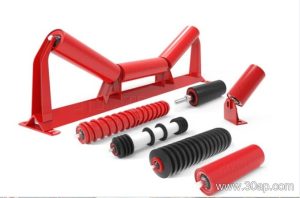
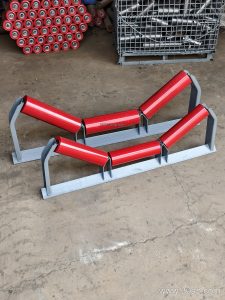
The tail pulley appears in nearly every belt conveyor, from a small aggregate conveyor to a heavy-duty mining conveyor. In a coal mining operation, it may be part of a flame retardant conveyor belt system. In a cement plant, it handles clinker and raw meal. In a port bulk terminal, it guides the return side of a long overland conveyor. The pulley also works with conveyor idler rollers and conveyor brackets to keep the belt aligned. In a sand and gravel plant, a tail pulley with adequate sealing prevents fine particles from damaging bearings. For high-abrasion service, an abrasion resistant conveyor belt combined with a well-protected tail pulley reduces downtime.
Buyer Checklist
- Belt width and pulley face: Confirm the belt width and required face width. A B1400 belt usually needs a pulley face around 1600 mm.
- Diameter: Check the recommended minimum diameter for the belt type. A thick steel cord belt may need a larger diameter than a thin fabric belt.
- Shaft and bearing: Shaft size must be calculated from torque and load. Do not assume a shaft diameter from belt width alone.
- Lagging: Decide between plain, rubber, or ceramic based on traction and wear. Rubber lagging of 10 or 12 mm is common for general service.
- Environmental protection: In coal, cement, or quarry dust, specify adequate bearing seals and consider a self-cleaning wing pulley only if sticky material causes build-up. Remember, a wing pulley is a different subtype, not a direct substitute.
- Compatibility: Ensure the pulley matches the conveyor bracket and the belt tracking requirements.
Choosing the right conveyor tail pulley is about matching the application, not just picking a size. Whether the conveyor handles iron ore, limestone, or grain, the tail pulley must be sized for the belt, the load, and the environment. For more information on conveyor pulleys and related components, visit our site at www.beltconveyorparts.com/conveyor-tail-pulley.