What a Conveyor Carrying Bracket Does on the Load Side
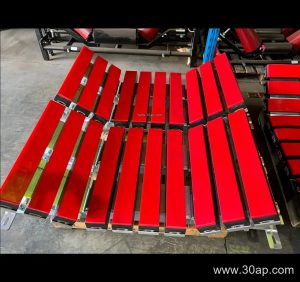
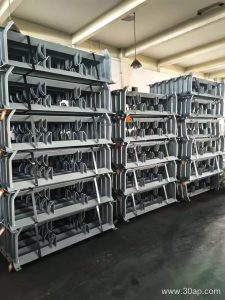
A conveyor carrying bracket is the frame that holds the load-carrying idlers in place along the upper run of a belt conveyor. It sits between the stringer or main frame and the idler roller, setting the trough angle that shapes the belt into a channel so bulk material stays centered. In plants handling coal, clinker, crushed stone, or sinter, this component is often called a troughing idler bracket or carrying idler frame, and the two names describe the same product. The bracket does not move; its job is to keep the rollers at the correct position, spacing, and angle under load.
How the Carrying Bracket Is Built
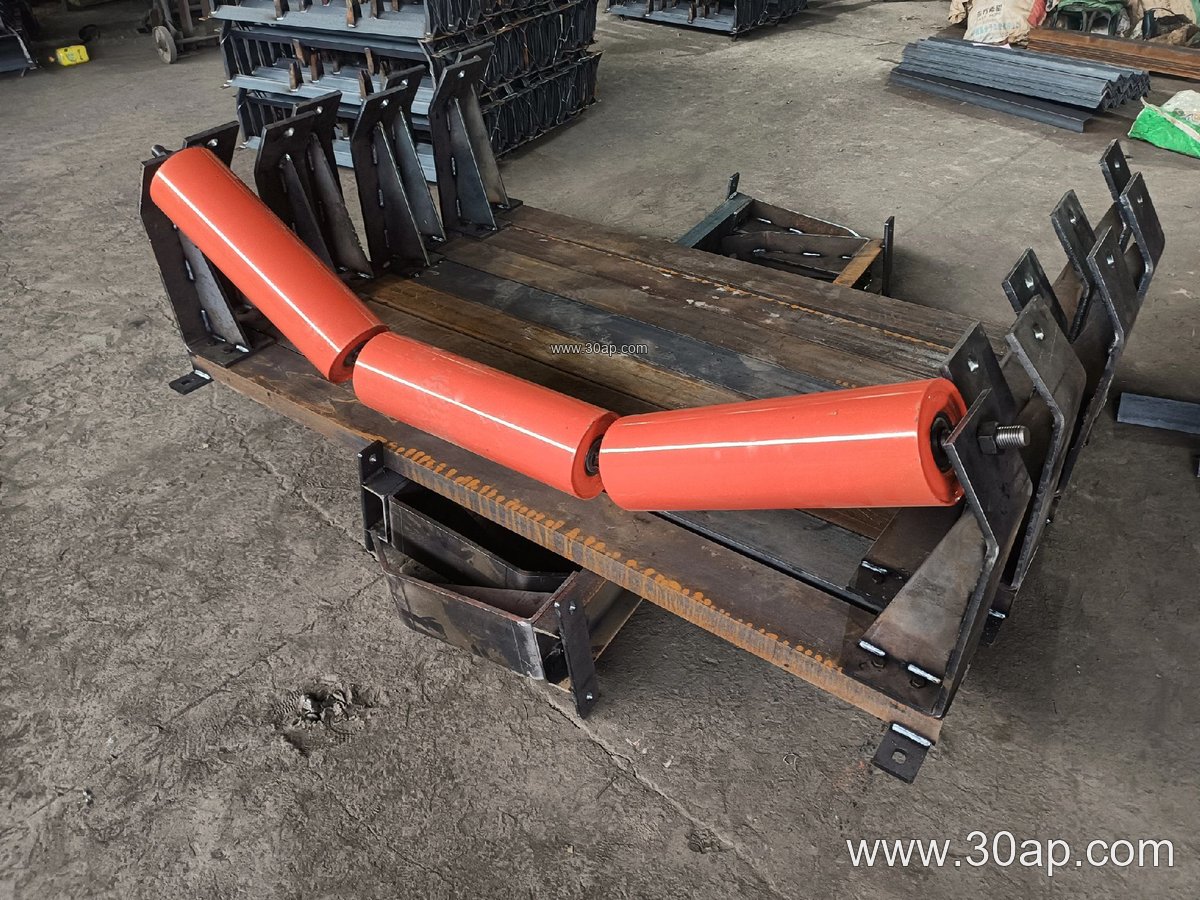
Most units are fabricated from angle steel, channel steel, or bent steel plate, then drilled or punched for idler mounting. A three-roller design is common, with two inclined wings and a flat center seat. The wings are bent or welded to match a chosen trough angle, and the mounting slots are positioned so the idler shafts sit square to the belt path. Surface treatment is usually painted or galvanized, depending on the environment.
Typical reference values for the main frame are shown below; actual hole spacing and beam length follow the belt width and trough angle instead of one fixed number.
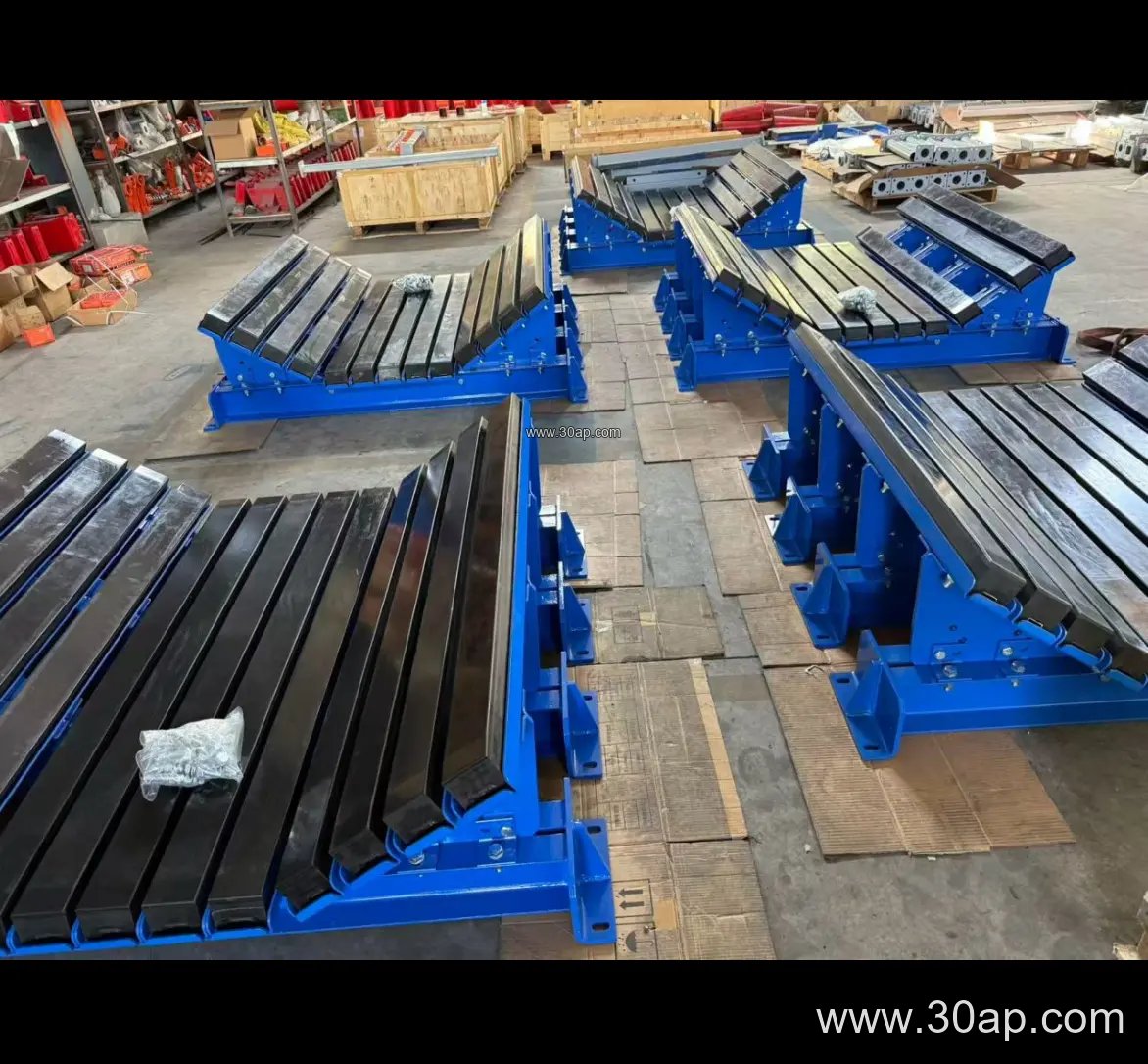
| Parameter | Common reference values |
|---|---|
| Belt width | B500, B650, B800, B1000, B1200, B1400, B1600, B1800, B2000 |
| Trough angle | 20°, 30°, 35°, 45° |
| Idler diameter | Ø89, Ø108, Ø133, Ø159, Ø194 |
| Material | Angle steel, channel steel, bent steel plate |
A combination such as B800 with 35° and Ø108 is a common arrangement, and B1200 with 45° and Ø133 also appears on heavy load lines. These are examples, not fixed pairings; the same belt width can work with more than one angle or roller diameter.
Mounting Position and Interaction with the Belt
The bracket is bolted to the conveyor frame at intervals along the carrying side. Its height and tilt determine how the conveyor belt seats on the rollers. If the wings are set too steep for the material, fine aggregate may spill; if too shallow, the belt can sag and track poorly. The bracket also works with the belt’s own stiffness, so a thick, heavy-duty belt may need a different frame setup than a lighter fabric core belt. On a long overland line, carrying brackets are usually spaced closer together near loading points to support impact, while the return side uses a separate return bracket or V-type return frame.
Where Carrying Brackets Are Used
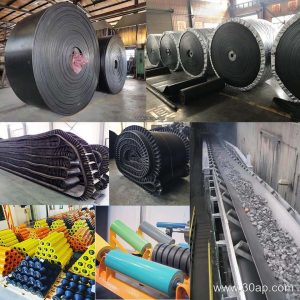
In a limestone quarry, troughing brackets support the belt that carries blasted rock from the primary crusher to the stockpile. In a coal-fired power plant, they hold idlers under the coal stream on the transfer conveyors. The same frame appears in cement plants feeding raw meal, in sand and gravel lines, and in port ship-loading systems. The working environment matters: dusty, wet, or corrosive sites may call for galvanized or well-painted frames, and hot material such as clinker may require heat-resistant idlers and a frame that keeps its shape at temperature.
Selection Points for Buyers
- Match the bracket to the belt width and the chosen trough angle before ordering; hole spacing is not universal.
- Confirm the idler diameter and shaft end type so the bracket seats fit the roller you plan to use.
- Decide between fixed and adjustable designs. An adjustable bracket lets maintenance staff tune the trough angle between common settings, while a fixed bracket is simpler and stiffer.
- Check material thickness and coating against the site conditions, especially in wash plants and coastal ports.
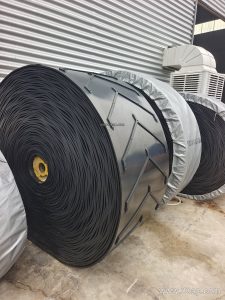
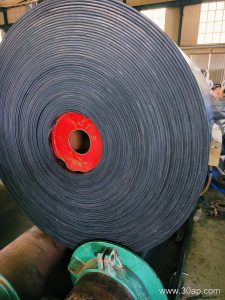
- Consider the belt type on the line, since a steel cord belt, an EP belt, or a chevron belt may need different roller contact and spacing.
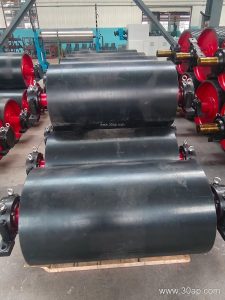
For related components, buyers often review the conveyor pulley, idler roller, and conveyor bracket together so the whole upper run is consistent. A carrying bracket that fits the frame but not the roller wastes both parts.
Installation and Maintenance Notes
Align the bracket square to the belt centerline and tighten bolts to the frame manufacturer’s recommendation. Check for wear at the mounting slots, since elongated holes let the idlers shift and cause belt misalignment. In dusty service, clean the seat area during idler changes. Replacing a worn bracket early is cheaper than tracking problems that damage the belt edge. For more on compatible belting and rollers, visit belt-conveyor-idler.com and review the conveyor belt and idler roller ranges alongside the bracket options.