What a Rubber Lagged Pulley Does on a Conveyor
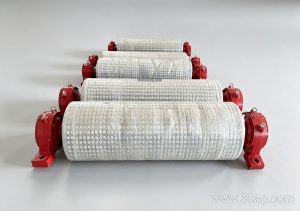
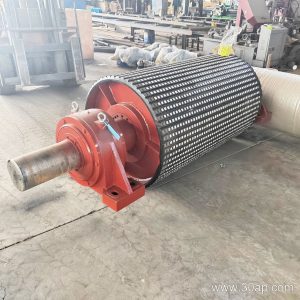
A rubber lagged pulley is a conveyor pulley whose steel shell is covered with a rubber layer to improve grip between the drum and the conveyor belt. In most installations the lagging is applied to the drive pulley, where torque must pass from the drum to the belt without slip. It also appears on tail pulleys and bend pulleys, but the duty is different in each position, so the lagging specification should follow the application rather than a single default recipe.
The rubber covering protects the shell from abrasive carryback and dampens the shock of lumpy material at transfer points. On a belt conveyor handling coarse ore, clinker, or aggregate, this layer often decides how long the pulley surface stays clean and how steadily the belt tracks.
How the Lagging Is Built and Fitted
There are two common routes. In hot vulcanized lagging, uncured rubber sheet is pressed onto a prepared shell and cured in an autoclave or with a heated press, giving a strong bond and a dense surface. Cold bonded lagging uses adhesive to fix pre-formed rubber strips or sheets, which suits workshop repairs and field replacement. Cast lagging is another option, with rubber poured into a mould around the shell.
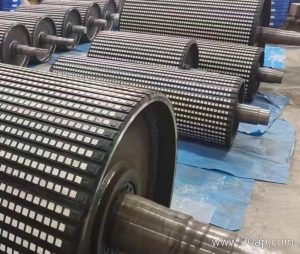
Surface patterns matter as much as the compound. Plain or flat rubber suits general conveying, diamond lagging helps shed water and fine dust, and herringbone grooves push moisture toward the pulley edges. Ceramic lagging, where tiles are embedded in rubber, is chosen for very high tension drives. Typical covering thicknesses are 8, 10, 12, 15, and 20 mm; thicker covers are used where abrasion is severe and the pulley diameter allows it.
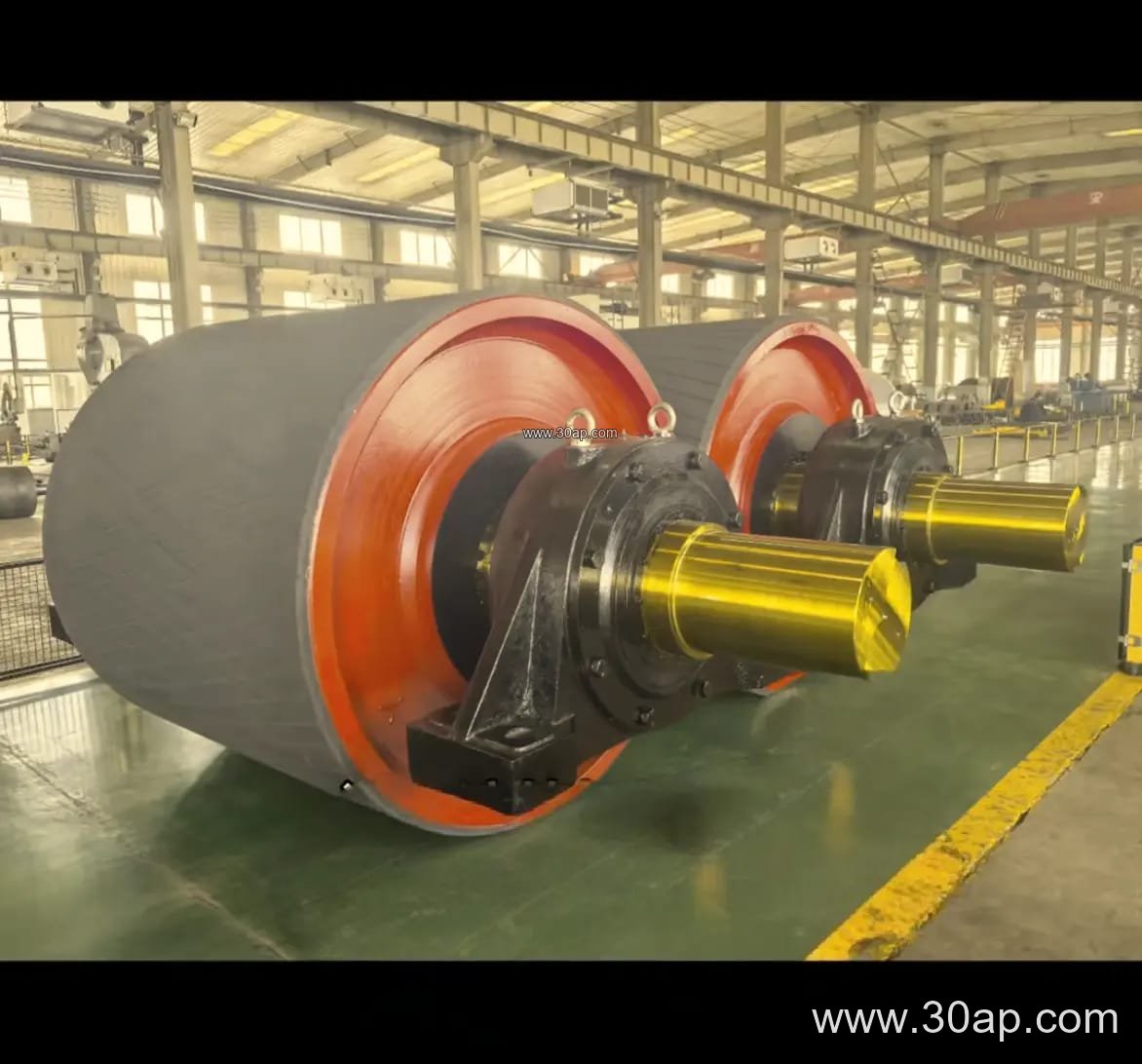
- Shell preparation: cleaning, blasting, and priming before bonding
- Rubber compound: natural rubber, SBR blends, or fire retardant and anti-static grades
- Pattern: plain, diamond, herringbone, or ceramic-in-rubber
- Ends: chamfered or wrapped edges to reduce peeling at the rim
Matching Pulley Size to Belt Width
Belt width and pulley diameter are related but not locked together. A B800 belt may run on a Ø500 drive pulley in one plant and a Ø630 drum in another, depending on tension, wrap angle, and shaft load. The face width of the pulley is normally slightly wider than the belt, so B650 tends to use about 750 mm face, B1000 about 1150 mm, and B1400 about 1600 mm. Shaft diameter is set by torque and bearing load, commonly falling in the Ø80 to Ø200 range for mid-size conveyors, never by belt width alone.
| Belt width | Typical pulley face | Common diameter range |
|---|---|---|
| B500 | about 600 mm | Ø250 to Ø400 |
| B800 | about 950 mm | Ø400 to Ø630 |
| B1200 | about 1400 mm | Ø630 to Ø1000 |
| B1600 | about 1800 mm | Ø800 to Ø1250 |
These are reference combinations, not fixed rules. Final dimensions come from the conveyor design, including the conveyor belt tension rating and the load carried by the conveyor bracket and bearing housings.
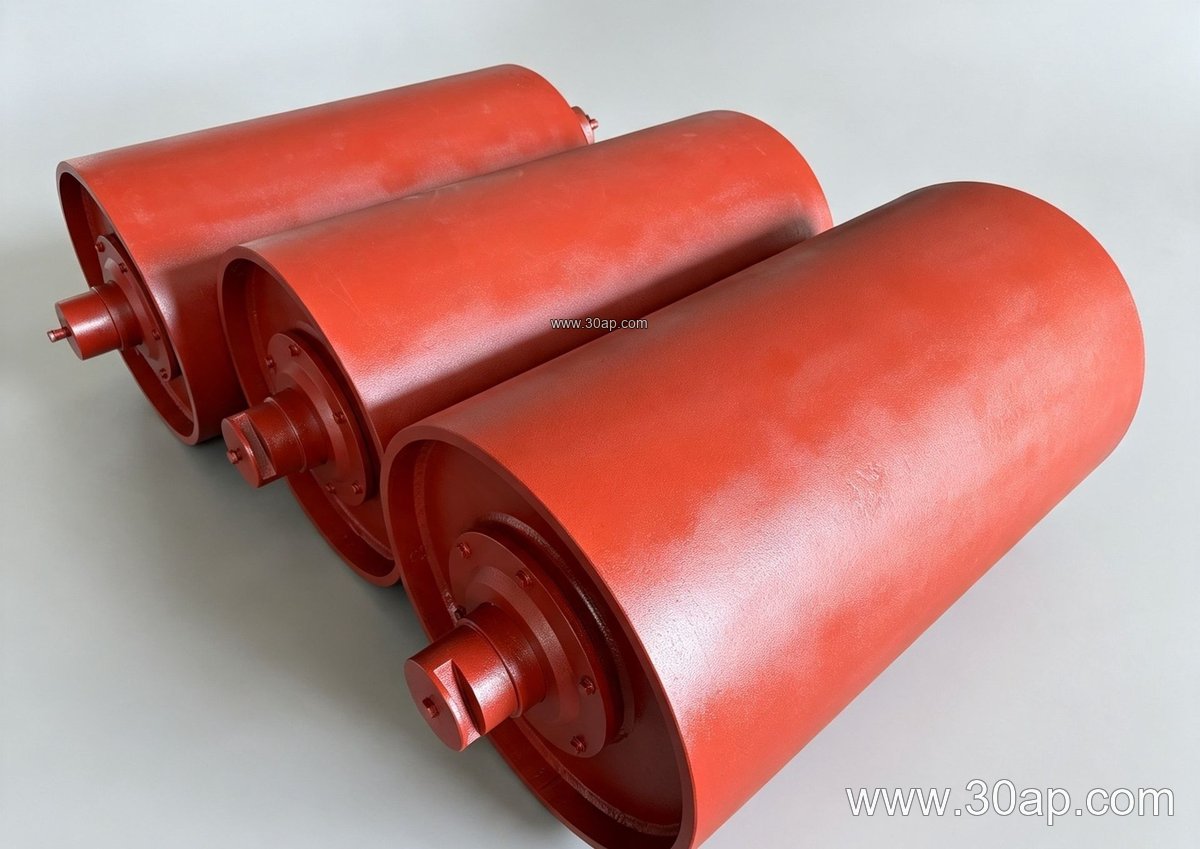
Where the Rubber Lagged Drum Is Used
In a limestone quarry or sand and gravel line, the head drive pulley pulls a heavy abrasive conveyor belt loaded with crushed stone. Here the lagging resists polishing and keeps friction high in wet weather. In a coal preparation plant or a power station coal yard, fire retardant and anti-static lagging grades are often requested because the environment carries dust and the risk of static build-up.
Tail pulleys and bend pulleys also use rubber covers, but with different goals. A tail pulley mainly needs protection from material impact and a surface that sheds fines; a bend pulley needs a smooth, accurate cover that does not disturb belt tracking. A drive pulley is not interchangeable with a tail or bend pulley, and each should be specified for its own position on the conveyor.
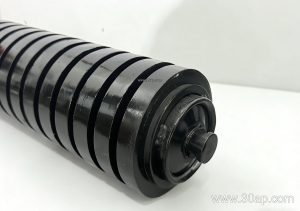
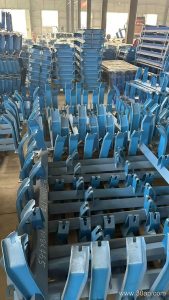
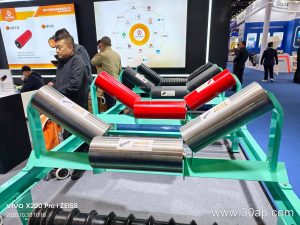
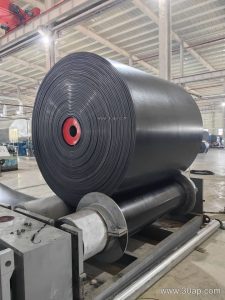
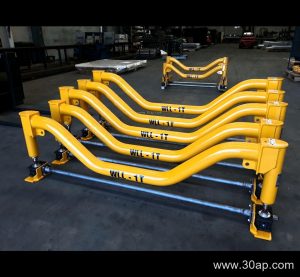
Related equipment works alongside the drum: the idler roller supports the belt between pulleys, and the conveyor bracket holds bearing housings in alignment. Heavy-duty mining conveyors using steel cord belt or multi-ply fabric core belt place higher demands on lagging than a short transfer conveyor, so the pulley specification should be read together with the belt type.
Buyer Checklist Before Ordering
- Confirm the pulley role: drive, tail, take-up, or bend, since the lagging pattern and thickness differ
- State belt width, pulley face width, shell diameter, and shaft diameter separately
- Choose the rubber grade for the site: abrasion resistant, oil resistant, heat resistant, or flame retardant
- Decide between hot vulcanized and cold bonded lagging based on workshop capacity and downtime
- Ask how the lagging edges are sealed, because edge lift is a common failure point
- Check balancing and runout requirements for high-speed drives
- Keep spare lagging sheets or a spare pulley for critical drives in continuous plants
For a cement plant clinker line or an iron ore transfer tower, a well-matched rubber lagged pulley reduces belt slip, extends belt life, and protects the shell from wear. Buyers who provide complete duty information usually receive a more accurate drum, whether the order is for a new conveyor or a replacement unit. More conveyor component references can be reviewed at beltconveyorparts.com, covering pulley, idler, and belt selections for bulk handling systems.