What a Mining Conveyor Pulley Does in a Crushing Circuit
At a quarry or iron ore site, the belt is only as reliable as the components turning it. A mining conveyor pulley is the cylindrical assembly that transfers motion to the conveyor belt at the head, returns it at the tail, and guides it through bends and take-up zones. It works together with the idler roller, conveyor bracket, and the belt itself, but its job is distinct: it carries the full tension of the system and must hold its grip under constant load. In a crushing and screening line, a single head pulley may run continuously for 20 hours a day, so the design, lagging, and shaft fit all matter more than the initial price.
How the Assembly Is Built
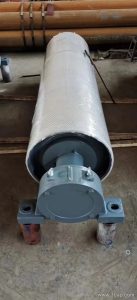
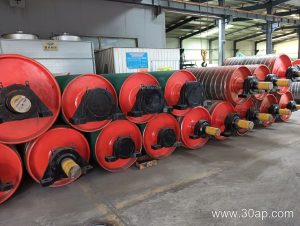
Most units use a welded steel shell with end discs, a through shaft, bearing housings, and a lagging layer on the face. The shell diameter and face width are selected together with the belt width, not in isolation. A common arrangement at a stone crushing plant might pair a B800 belt with a Ø500 head pulley, while a larger iron ore duty could use B1400 × Ø800 or B1200 × Ø1000. These are reference combinations, not fixed rules; the final diameter depends on wrap angle, belt tension, and the torque the drive must transmit.
Shaft diameter is determined by torque and load, so Ø80, Ø100, Ø120, and Ø160 shafts appear across different duty levels. No one shaft size follows automatically from a belt width. Buyers should ask for the shaft calculation, not just a catalog number.
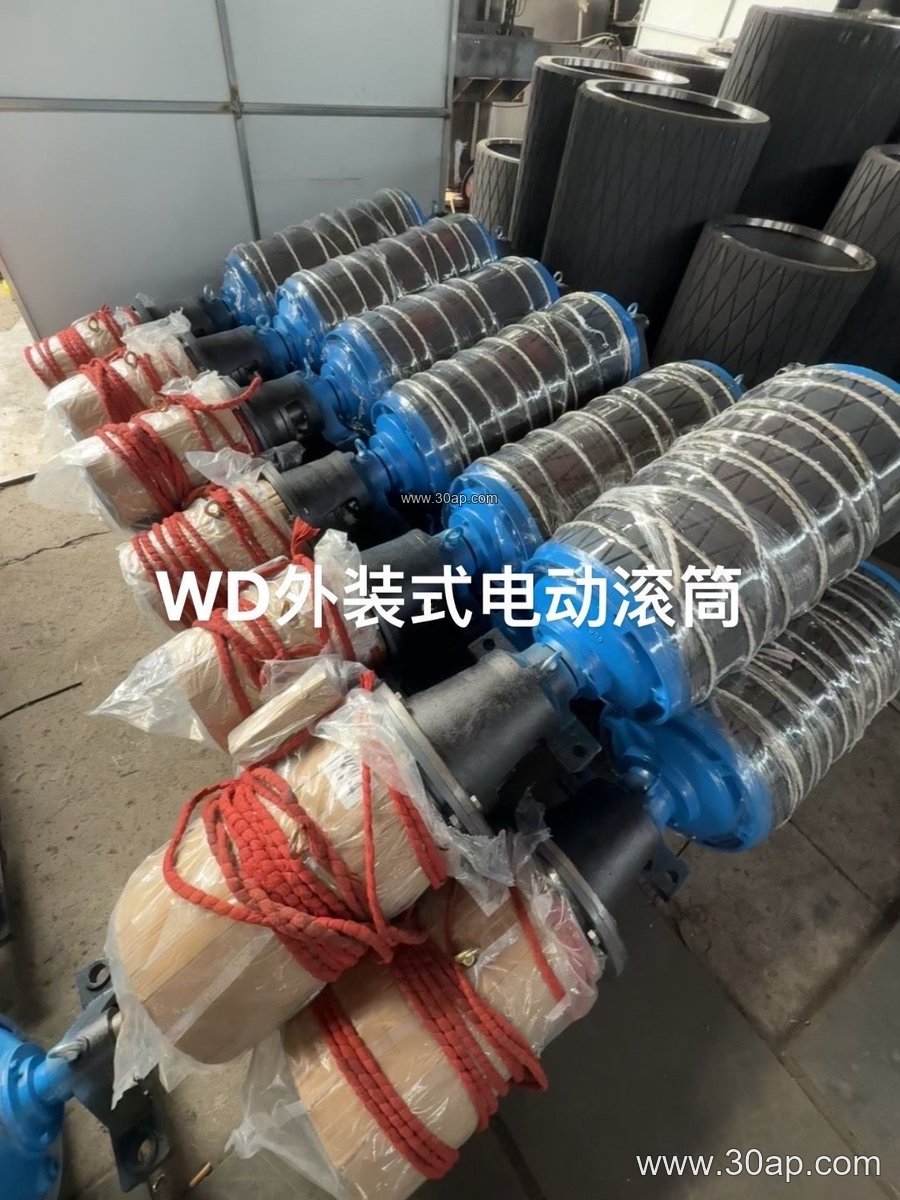
Surface Forms and Where They Fit
The face treatment controls grip and wear life. Plain face is used where slip is not a concern, while rubber lagging, diamond lagging, and ceramic lagging improve traction in wet or dusty conditions. Lagging thickness commonly ranges from 8 mm to 20 mm. At a limestone mine with muddy ground, a diamond lagging on the drive pulley can reduce slip; at a coal handling plant, a flame retardant conveyor belt runs alongside pulleys that must be built for the same fire-safety expectations.
- Plain face: light duty, dry material
- Rubber lagging: general traction, moderate abrasion
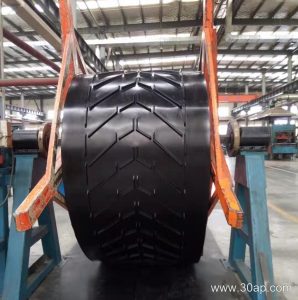
- Diamond or herringbone lagging: wet or dusty belts
- Ceramic lagging: high wear zones, heavy ore
Position Matters More Than the Name
A drive pulley at the head end pulls the belt and carries the highest tension. A tail pulley at the loading point returns the belt and often sits under the impact of falling rock. A bend pulley changes direction at a transfer tower, and a take-up pulley maintains tension as the belt stretches. These are different roles, and they are not interchangeable. A tail pulley cannot simply replace a drive pulley, even if the diameter looks similar, because the load direction and torque path differ. In an underground coal mining conveyor belt system, the take-up pulley may sit in a confined gallery where access for lagging replacement is tight, so the bearing housing design deserves early attention.
Matching the Pulley to the Belt and the Duty
The belt and the pulley are a pair. A heavy-duty mining conveyor belt with a steel cord carcass, such as ST1600 or ST2000, needs a pulley shell and shaft sized for high tension, while an EP conveyor belt like EP200 or EP300 may run on lighter assemblies. At a cement plant handling clinker, heat resistant conveyor belt grades reduce risk near kiln discharge, but the pulley still needs a lagging that tolerates warm surfaces. At a power plant coal yard, a flame retardant conveyor belt is common, and the pulley lagging should be selected with the same fire-conscious approach.
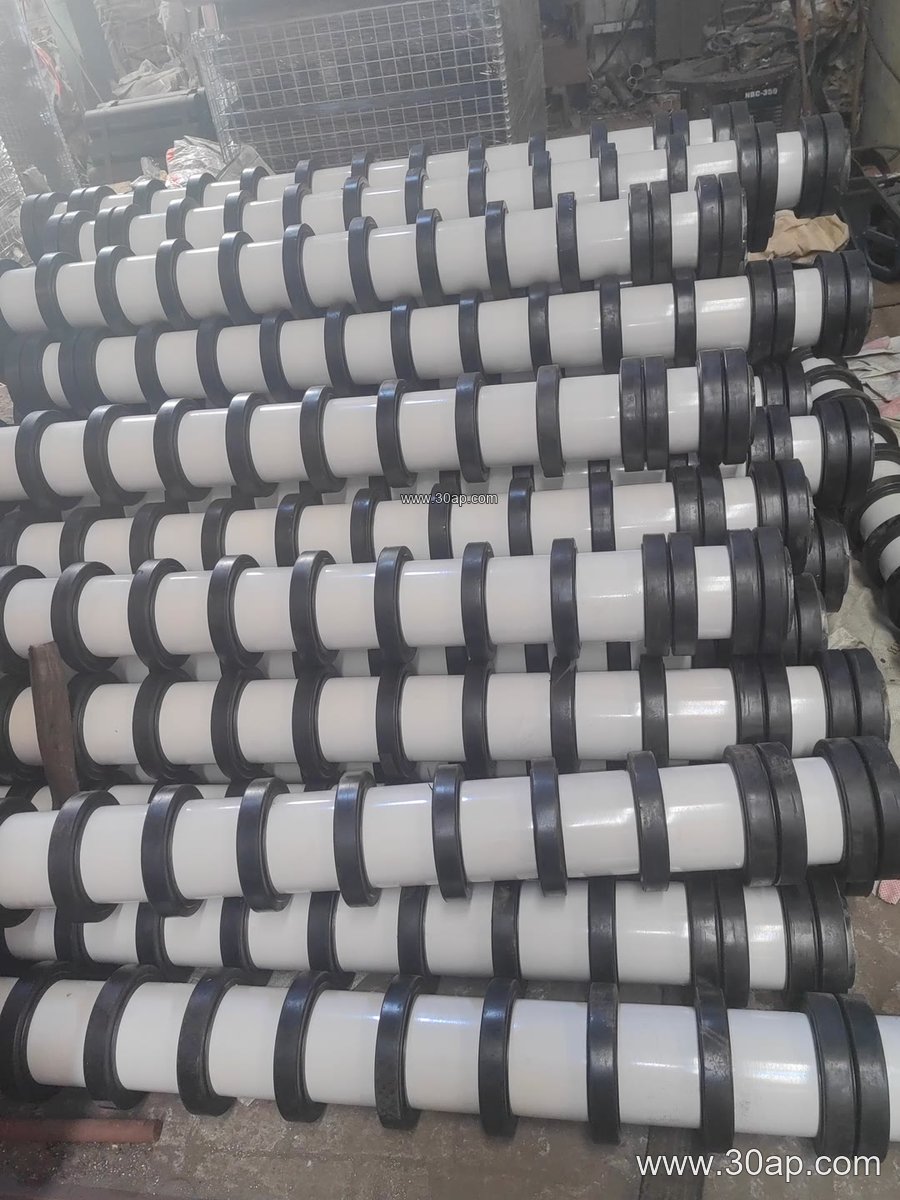
| Belt Width | Typical Pulley Face | Common Diameter Range |
|---|---|---|
| B400 | about 500 mm | Ø200 to Ø400 |
| B650 | about 750 mm | Ø315 to Ø500 |
| B800 | about 950 mm | Ø400 to Ø630 |
| B1200 | about 1400 mm | Ø630 to Ø1000 |
| B1600 | about 1800 mm | Ø800 to Ø1250 |
| B2000 | about 2200 mm | Ø1000 to Ø1400 |
Face width usually exceeds belt width so the belt does not run off the edge. The values above are common reference figures; exact dimensions are confirmed per project.
What a Buyer Should Check Before Ordering
Start with the belt specification, the material being carried, and the installation position. Ask for the shell thickness, shaft material, bearing type, and lagging hardness. Confirm whether the unit is a drive, tail, bend, or take-up pulley, because the load case changes with the position. For a copper ore or gold mining conveyor, abrasive dust can enter bearing seals, so protection details matter. For an aggregate conveyor belt line feeding a crusher, impact at the tail end may call for a heavier shell. Finally, keep spare lagging and bearings on hand; a stopped belt at a port or sinter plant costs far more than the part itself.
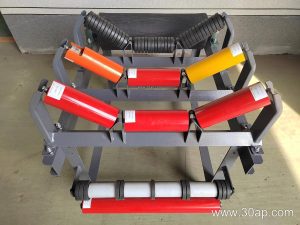
Related components such as the conveyor bracket and idler roller should be reviewed at the same time, since alignment across the whole frame affects pulley life. A well-matched conveyor pulley, belt, and support structure is what keeps a bulk material conveyor belt running through the shift.