What a Mining Conveyor Bracket Does on the Line
A mining conveyor bracket is the supporting frame that holds the idler roller in place and sets the belt’s trough profile. In a quarry, limestone mine or crusher circuit, the bracket carries the load of rock and ore through every idler station, so its geometry has a direct effect on how a Mining Conveyor Belt tracks and wears. The bracket also links the idler to the conveyor stringer, which means it must absorb vibration, impact and misalignment without loosening.
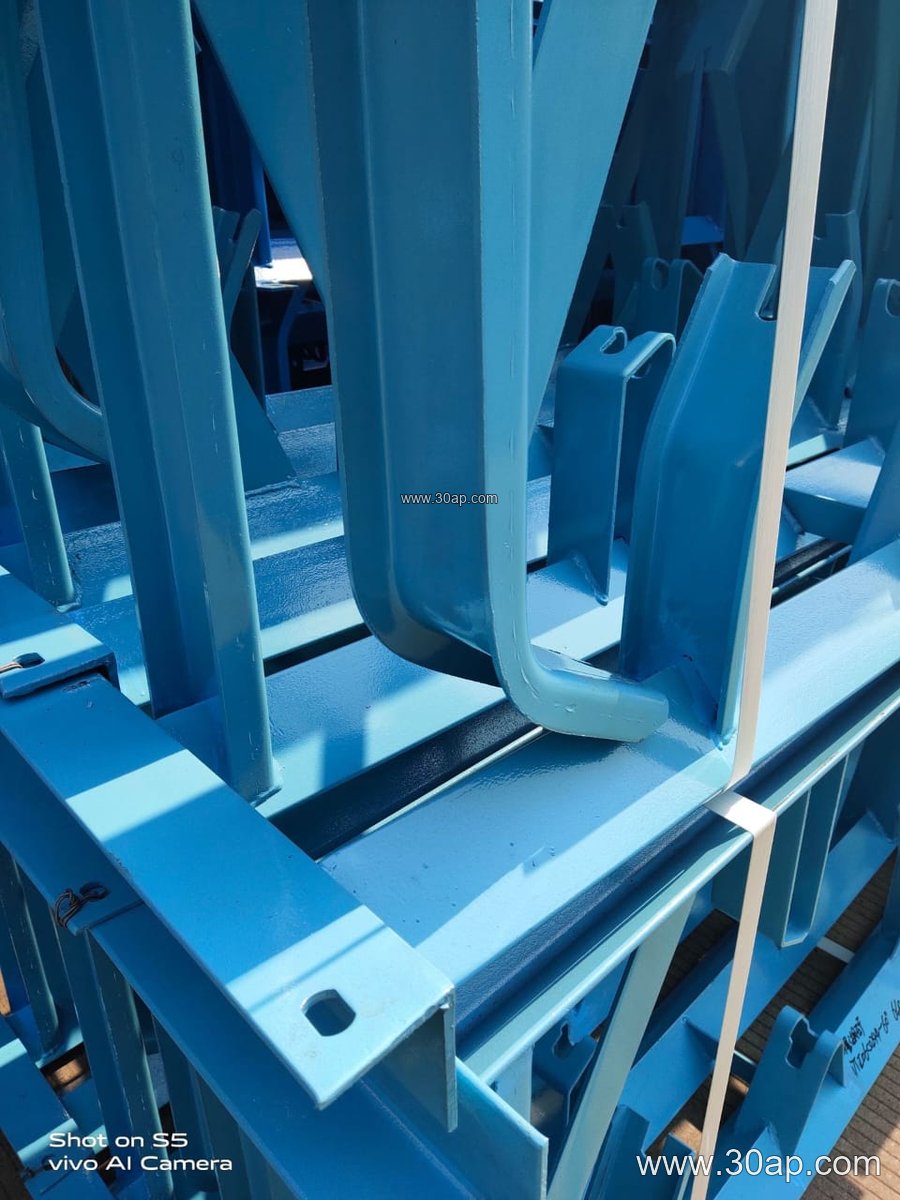
Most brackets are fabricated from angle steel, channel steel or folded steel plate. A troughing bracket, often called a trough bracket, uses two or three idler positions to shape the belt into a trough. A return bracket supports the belt on its way back, and a transition bracket eases the belt from flat to troughed at the tail end.
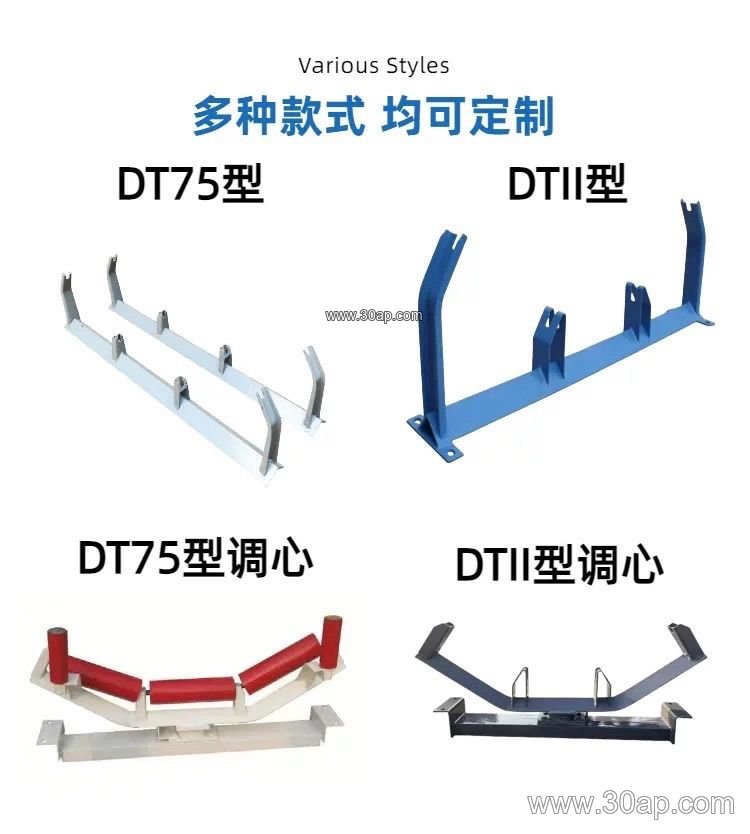
Common Bracket Types and Where They Sit
The bracket family includes several subtypes, and each has a defined place on the conveyor:
- Troughing bracket or upper trough bracket: supports the carrying side, usually with 2 or 3 rolls.
- Transition bracket: placed near the tail pulley to change belt shape gradually.
- Return bracket and V-return bracket: support the empty side of the belt.
- Impact bracket or buffer bracket: fitted under the loading point to absorb material drop energy.
- Self-aligning bracket and forward-leaning bracket: help correct belt drift.
- Suspended bracket: hangs from a wire rope or chain in some mobile or compact installations.
- Adjustable bracket: allows the trough angle to be changed on site.
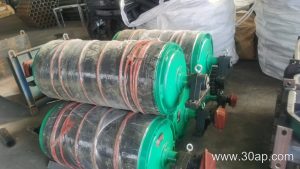
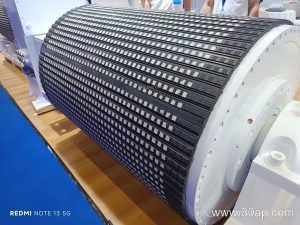
A drive pulley, tail pulley or bend pulley has a different job and is not a bracket. The idler roller sits in the bracket, and the bracket sits on the conveyor structure. When comparing components, keep this division clear: the pulley drives or redirects the belt, while the bracket positions the rollers.
Trough Angle, Belt Width and Roller Diameter
Trough angle and roller diameter are usually chosen together with belt width and material characteristics. Common trough angles are 20, 30, 35 and 45 degrees. An adjustable bracket can move between these angles. Forward-leaning brackets commonly sit at about 1.5 to 2 degrees. Roller diameters such as Ø89, Ø108, Ø133, Ø159 and Ø194 are common, and belt widths from B500 to B2200 appear across bulk material conveyors.
No single belt width is tied to one trough angle or one roller size. A B800 belt may use 30 or 35 degrees with Ø108 rollers depending on the design, while a B1200 line might use 45 degrees and Ø133. Installation hole spacing and crossbeam length vary with belt width and trough angle, so they should be confirmed against the conveyor drawing. The table below lists typical reference combinations only.
| Belt Width | Trough Angle | Roller Diameter | Typical Bracket Role |
|---|---|---|---|
| B650 | 30 degrees | Ø89 | Light to medium aggregate line |
| B800 | 35 degrees | Ø108 | Crusher discharge, sand making plant |
| B1000 | 35 or 45 degrees | Ø133 | Ore and coal conveying |
| B1200 | 45 degrees | Ø133 | Heavy-duty mining conveyor |
| B1400 | 35 or 45 degrees | Ø159 | Power plant coal handling |
| B1600 to B2000 | 35 or 45 degrees | Ø159 or Ø194 | High-capacity bulk terminals |
Matching the Bracket to the Belt and the Site
The bracket should suit the belt it carries. A Steel Cord Conveyor Belt on a long overland run needs steady roller spacing and a rigid bracket to limit sag. An EP Conveyor Belt or Multi-Ply Fabric Core Conveyor Belt in a cement plant usually works with standard troughing brackets, while a Chevron Conveyor Belt or Corrugated Sidewall Conveyor Belt may need extra clearance around the idler. In a coal mining conveyor or underground coal mining conveyor, Flame Retardant Conveyor Belt and anti-static properties matter, and the bracket should be easy to inspect in a confined space.
At a transfer point feeding a crusher, an impact bracket with buffer rollers protects both the belt and the frame from falling rock. On a quarry conveyor belt or aggregate conveyor belt, an Abrasion Resistant Conveyor Belt is common, and brackets should be checked for wear at the mounting slots. In a steel plant or sintering line, a Heat Resistant Conveyor Belt may run near hot material, so bracket position relative to heat sources deserves attention.
Buyer Checklist Before Ordering
- Confirm belt width, trough angle and roller diameter from the conveyor drawing.
- State whether the bracket is fixed or adjustable, and whether it is troughing, transition, return, impact or self-aligning.
- Specify material and finish, such as angle steel, channel steel or folded plate, plus any coating.
- Check hole spacing and crossbeam length rather than assuming a standard dimension.
- Ask how the bracket fits the existing stringer and idler roller, and whether shims or spacers are needed.
For bulk material conveyors, a well-matched bracket keeps the belt centered, reduces idler wear and simplifies maintenance. Whether the line handles iron ore, copper ore, clinker or coal, the bracket is a small part that affects the whole conveyor’s reliability. Buyers can review bracket options together with conveyor pulley and idler roller choices at gxconveyorbelt.com to keep the assembly consistent.