What a Drive Pulley Does
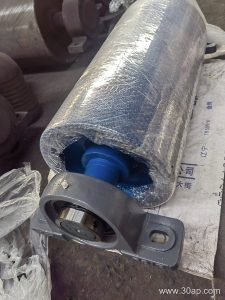
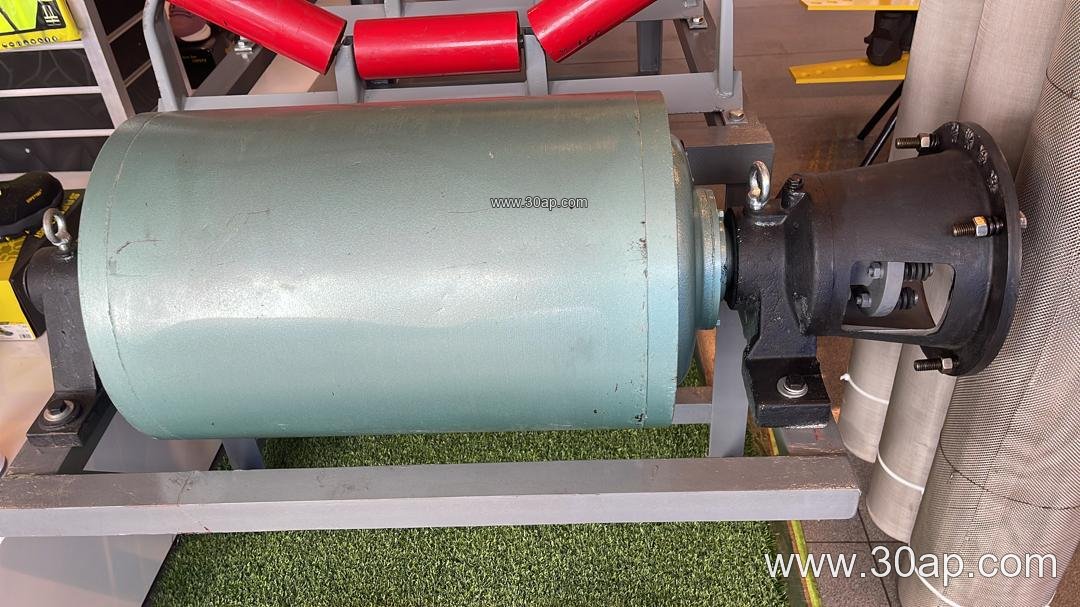
The drive pulley is the powered drum at the head of a belt conveyor that transfers torque from the gearbox or motor to the conveyor belt. Through friction between the pulley shell and the belt cover, it pulls the loaded belt forward, so the drive pulley is the component that actually moves the material. In a quarry, a coal washing plant or a power station coal yard, the drive pulley is usually the largest and most heavily built pulley on the machine, and it often sits inside the head frame or transfer tower.
It is also called a head pulley or drive drum, but it should not be confused with a tail pulley or a bend pulley. Those are unpowered drums that return or redirect the belt. A tail pulley at the feed end and a bend pulley at a take-up or curve do different jobs and are not interchangeable with the drive pulley, even when they look similar.
Construction and Surface Options
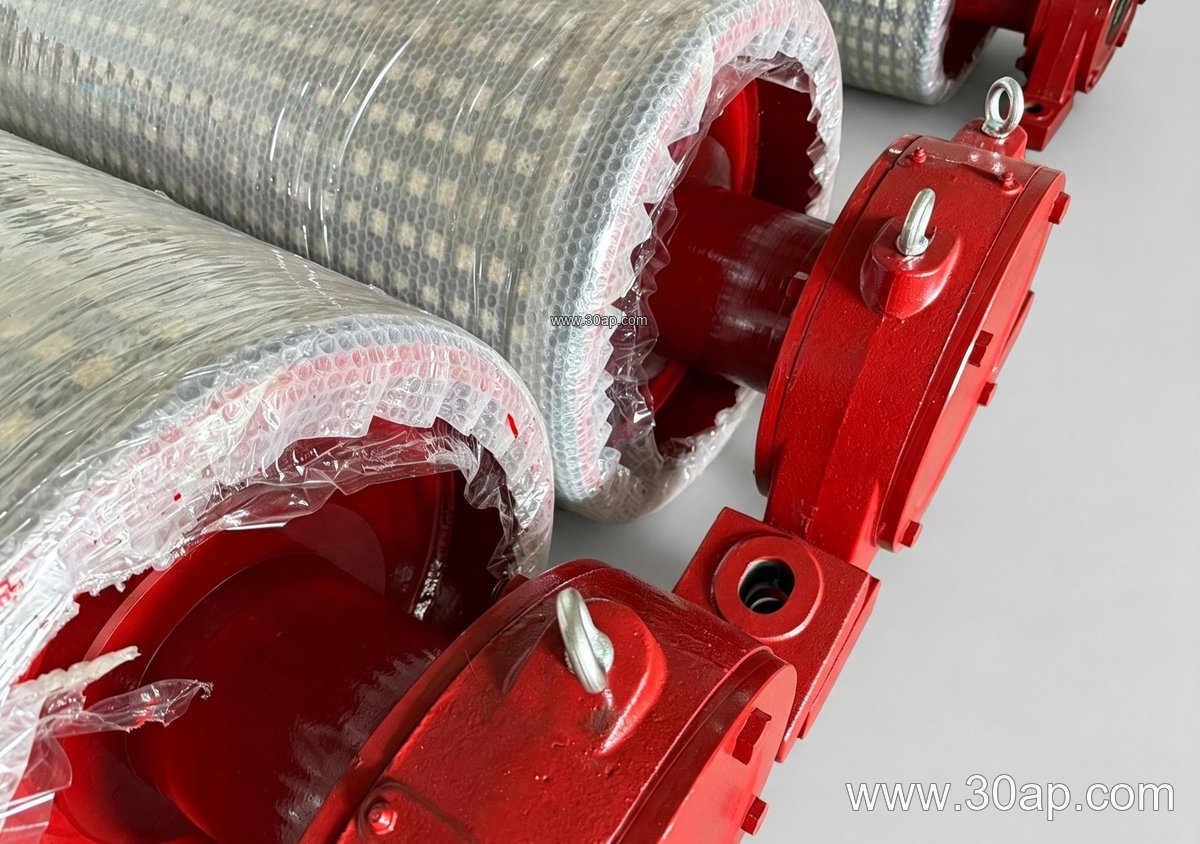
A drive pulley is normally built from a steel shell, end discs, a hub and a shaft, with the shaft keyed to the shell through the hub. The shell is machined to keep the belt tracking straight, and the surface is finished to suit the duty.
- Plain machined shell for light, clean duties
- Cast rubber or cold-bonded rubber lagging for general grip
- Hot-vulcanised rubber lagging for heavy abrasive service
- Diamond or herringbone grooved lagging to improve traction and shed water
- Ceramic lagging for wet, muddy or high-torque drives
Lagging thickness is commonly 8, 10, 12, 15 or 20 mm, chosen with the belt tension and the local climate in mind. A drive pulley handling a wet, gritty aggregate conveyor belt usually benefits from grooved or ceramic lagging, while a clean cement plant clinker line may run a plain or lightly lagged drum.
Where It Is Used
Drive pulleys appear wherever bulk material has to be moved continuously. In an iron ore or copper ore concentrator they sit at the discharge end of long overland conveyors. In a limestone quarry or sand and gravel line they pull crusher feed and product belts. In a coal preparation plant, a drive pulley with flame retardant lagging works alongside a flame retardant conveyor belt and a set of conveyor idler rollers. In a port bulk terminal, large drive pulleys handle ship loading belts, and in a tunnel muck line they run behind the cutter head.
The same drum also drives short transfer belts in a concrete batching plant or a fertiliser warehouse, where space is tight and the pulley diameter is kept modest.
Sizing and Selection Notes
Buyers usually start with the belt width and the required belt tension, then work out the drum diameter and shaft. The shell face is normally wider than the belt; for example, a B800 belt commonly runs on a pulley face of about 950 mm, and a B1200 belt on about 1400 mm. Diameter is not fixed by belt width alone. A B800 conveyor might use a Ø500 drum in a short transfer and a larger diameter on a long, high-tension run, so the drive pulley diameter should be confirmed by the conveyor designer.
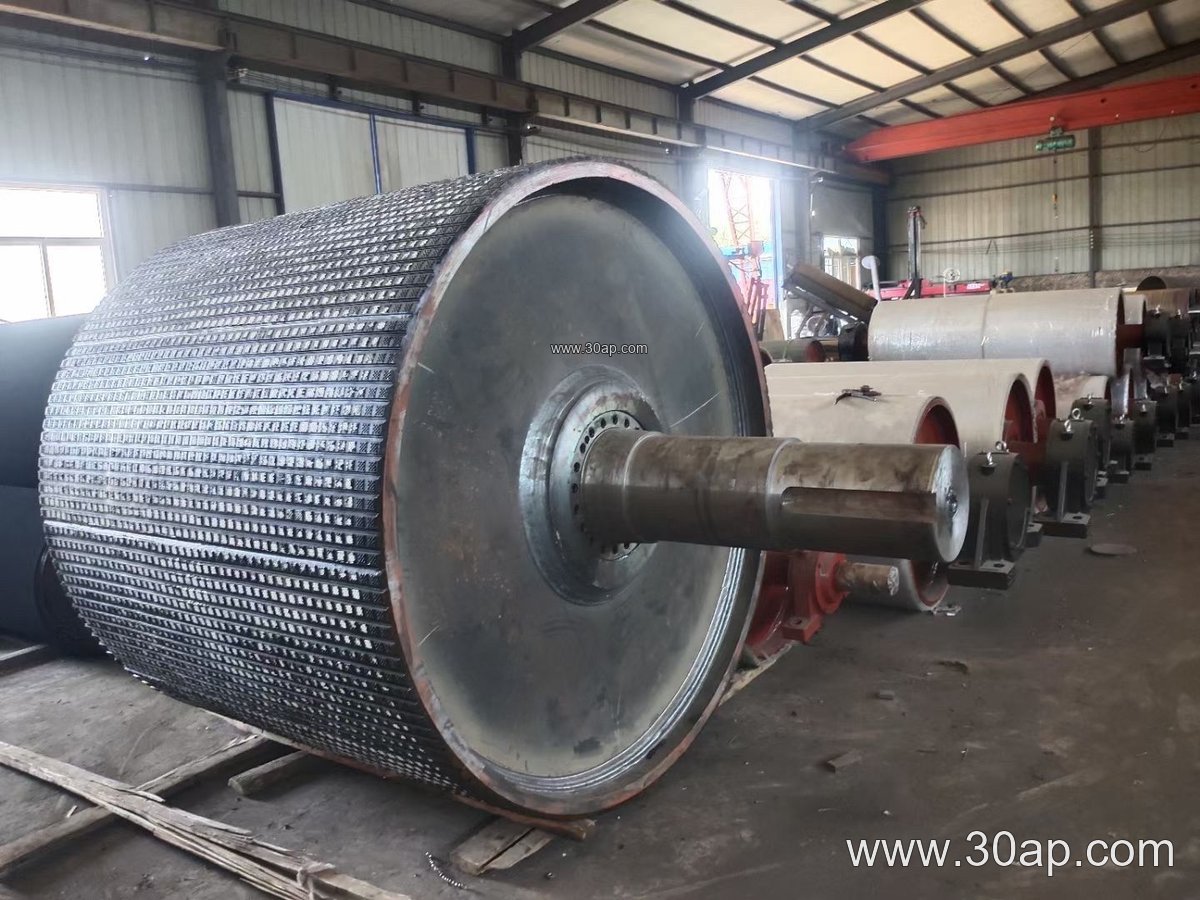
Shaft diameter is set by torque and bearing load, not by belt width. Common shaft sizes include Ø80, Ø100, Ø120 and Ø160, but the final figure should come from the drive calculation.
| Belt width | Typical pulley face | Example diameter |
|---|---|---|
| B800 | about 950 mm | Ø500 |
| B1000 | about 1150 mm | Ø630 |
| B1200 | about 1400 mm | Ø1000 |
| B1400 | about 1600 mm | Ø800 |
These are reference combinations, not fixed rules. The drive pulley must also match the belt type, whether that is an EP conveyor belt, an NN conveyor belt, a steel cord conveyor belt or a heat resistant conveyor belt, because each has its own tension and tracking behaviour. A heavy-duty mining conveyor belt with high tension needs a larger drum and stronger shaft than a light food grade belt.
Buyer Checklist
- Confirm belt width, belt type and maximum working tension.
- State the duty: abrasive, wet, oily, hot or flame retardant.
- Choose lagging material and thickness for the site conditions.
- Check shaft size, bearing type and keyway against the gearbox output.
- Confirm the pulley face width and the position of the conveyor bracket.
- Ask for the balance grade and runout if the drum will run at speed.
On site, keep the lagging clean and check for wear at the same time as the conveyor idler rollers and the belt cover. A worn drive pulley loses grip, the belt slips, and both the belt and the drum wear faster. Matching the drum, the belt and the take-up system keeps the whole conveyor stable, whether it runs in a mine, a cement works or a power plant coal yard.