What a Spiral Idler Does
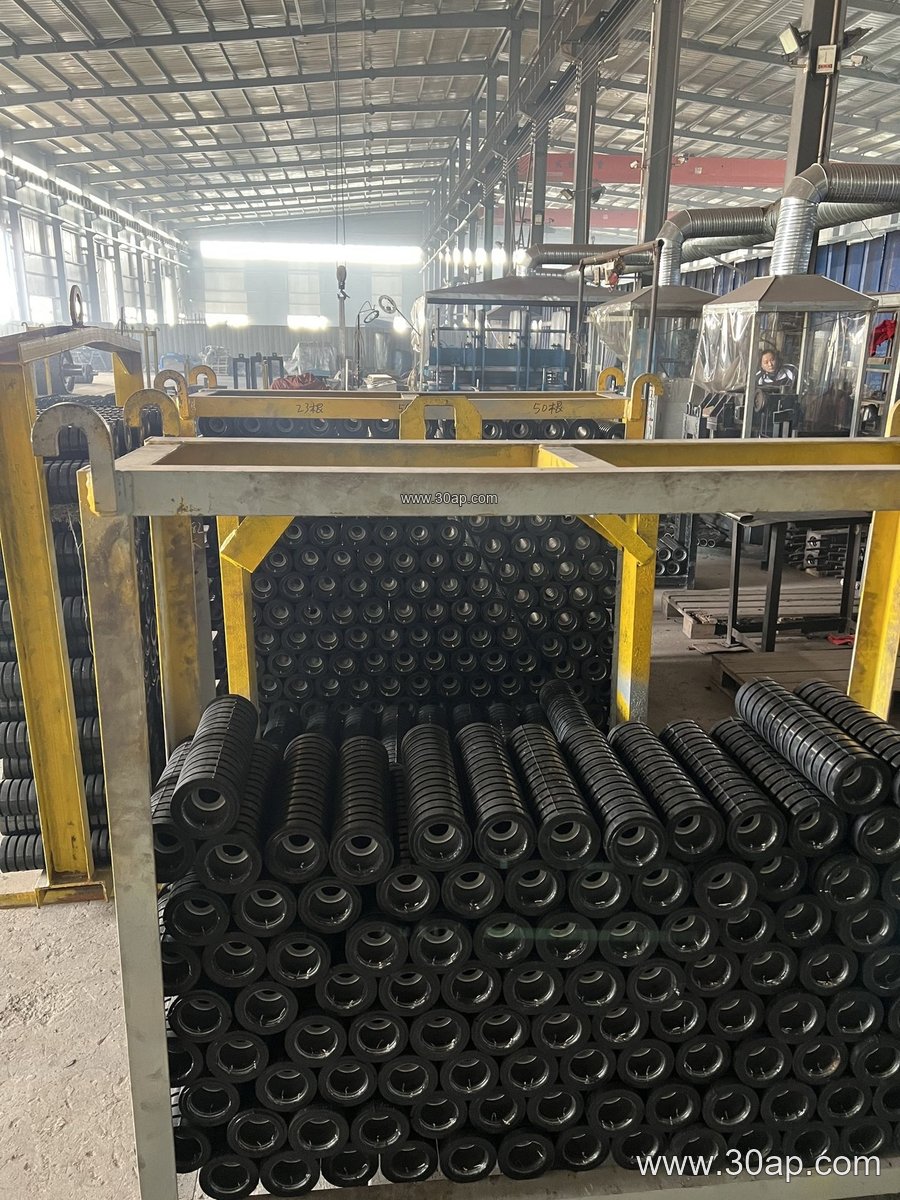
A spiral idler is a carrying roller whose shell is wrapped with a continuous helical strip, usually welded to a steel tube. In a belt conveyor system, this helical conveyor roller serves two jobs at once: it supports the conveyor belt and it helps keep the belt surface cleaner. As the belt passes over the roller, the spiral profile lifts and breaks up stuck fines, dust, and damp material that would otherwise build up on the return side. The result is less material carryback, fewer tracking problems, and a smoother running line.
Because the spiral tends to knock debris loose, this idler roller is often chosen for the return strand in dusty or wet duty. It is not a drive pulley, tail pulley, or bend pulley, and it should never be substituted for those components. Those pulleys transmit power and set belt path; the spiral idler only supports and cleans.
Construction and Common Materials
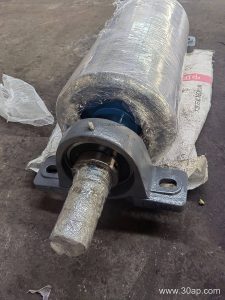
Most spiral idlers combine a steel tube body, a helical flight, and sealed bearing housings at each end. The spiral may be a flat strip or a formed profile, welded along the tube. Shaft ends are usually machined to fit standard conveyor brackets, so a damaged unit can be replaced without altering the frame.
Shell options vary with the duty. Plain steel suits general bulk handling; nylon or ceramic-faced rollers can reduce wear in abrasive service; rubber-covered versions are sometimes used where impact or noise is a concern. Bearing selection is a design decision rather than a fixed rule — common sizes include 6204, 6205, 6305, 6306, 6308, and 6310, and a given shaft diameter may accept more than one bearing class depending on load and sealing.
- Roller diameters often seen: Ø63, Ø76, Ø89, Ø102, Ø108, Ø127, Ø133, Ø159, Ø178, Ø194, Ø219
- Belt widths served: B400, B500, B650, B800, B1000, B1200, B1400, B1600, B1800, B2000, B2200, B2400
- Typical trough angles for related carrying sets: 20°, 30°, 35°, 45°
Roller length follows belt width, trough angle, and the idler set form. As a rough example, three-roll troughing sets commonly use roller lengths near 200 mm at B500, 250 mm at B650, 315 mm at B800, 380 mm at B1000, 465 mm at B1200, 530 mm at B1400, 600 mm at B1600, 670 mm at B1800, and 750 mm at B2000. Side rollers and center rollers can differ, so these figures are reference points, not fixed pairings.
Where Spiral Idlers Fit on the Line
In a quarry or sand and gravel plant, a spiral roller is often installed on the return run beneath a crusher conveyor belt, where fines and dust collect quickly. In a coal handling system at a power plant or a coal preparation plant, the same principle helps limit carryback that would otherwise drop along the walkway. Cement plants and limestone operations also use spiral idlers where damp, sticky material clings to the belt.
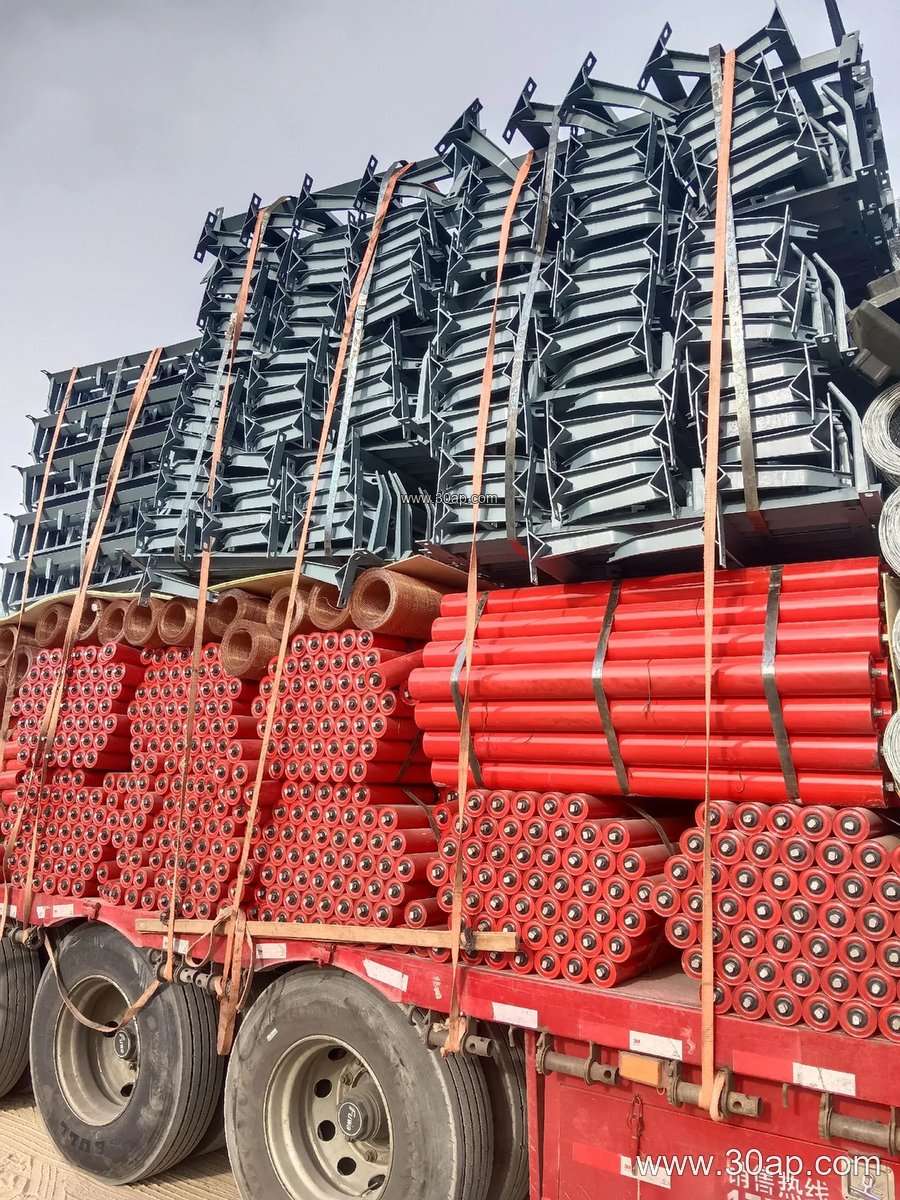
These rollers are normally matched to the belt speed and load on the return strand. On a steep or heavily loaded line, ordinary return rollers may still do the support work, and the spiral unit may be placed at intervals where cleaning matters most. For comparison, a V-return idler or a flat return idler is chosen mainly for belt support and training, while a spiral roller places more emphasis on surface cleaning.
Selection Notes for Buyers
Start with belt width and the return strand layout. Confirm the roller diameter that fits the existing conveyor bracket height, then check shaft size and bearing type against the load. Ask how the spiral is formed and welded, since a poorly finished flight can damage the belt cover. Sealing matters in wet or dusty plants; a labyrinth or multi-lip seal is often preferred where washdown or fine dust is present.
Match the roller to the belt it serves. An abrasion resistant conveyor belt in a hard-rock quarry and a flame retardant conveyor belt in an underground coal mine place different demands on the return components, and the idler should be chosen for the same duty class. Where a steel cord conveyor belt carries high tension, the return idlers still need correct spacing and alignment. On a pipe conveyor belt or a corrugated sidewall conveyor belt, the return arrangement is different, and a spiral idler may not be the right fit.
| Parameter | Common Range | Notes |
|---|---|---|
| Roller diameter | Ø63 to Ø219 | Select by frame height and load |
| Belt width | B400 to B2400 | Confirm against existing structure |
| Bearing | 6204 to 6310 | Not tied to one diameter |
| Shell | Steel, nylon, ceramic, rubber | Match to abrasion and impact |
Finally, check that the spiral direction and pitch suit the belt travel direction, and that the unit can be greased or is sealed for life as required. A short trial on one return section is a practical way to judge cleaning performance before wider replacement.