What a Heavy-Duty Conveyor Bracket Does on a Working Line
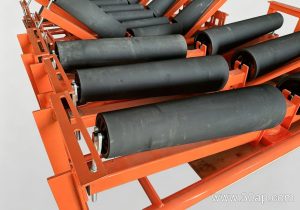
On a busy quarry conveyor or a coal handling system, the idler frames carry far more than the rollers they hold. A heavy-duty conveyor bracket is the structural component that positions and supports the idlers beneath the belt, keeping the trough shape stable while tons of rock, ore, or aggregate move overhead. In practice, this bracket is also called a heavy-duty idler bracket or heavy-duty conveyor idler support frame, and it forms the mechanical link between the conveyor stringer and the rotating parts.
The job sounds simple, but the loads are not. A loaded belt pushes down on the rollers, the rollers push into the bracket, and the bracket transfers that force into the conveyor structure. If the frame flexes or the mounting holes wear oval, the trough angle drifts, the belt tracks poorly, and the roller bearings suffer. That is why heavy-duty designs use thicker sections and stronger joints than light-duty frames.
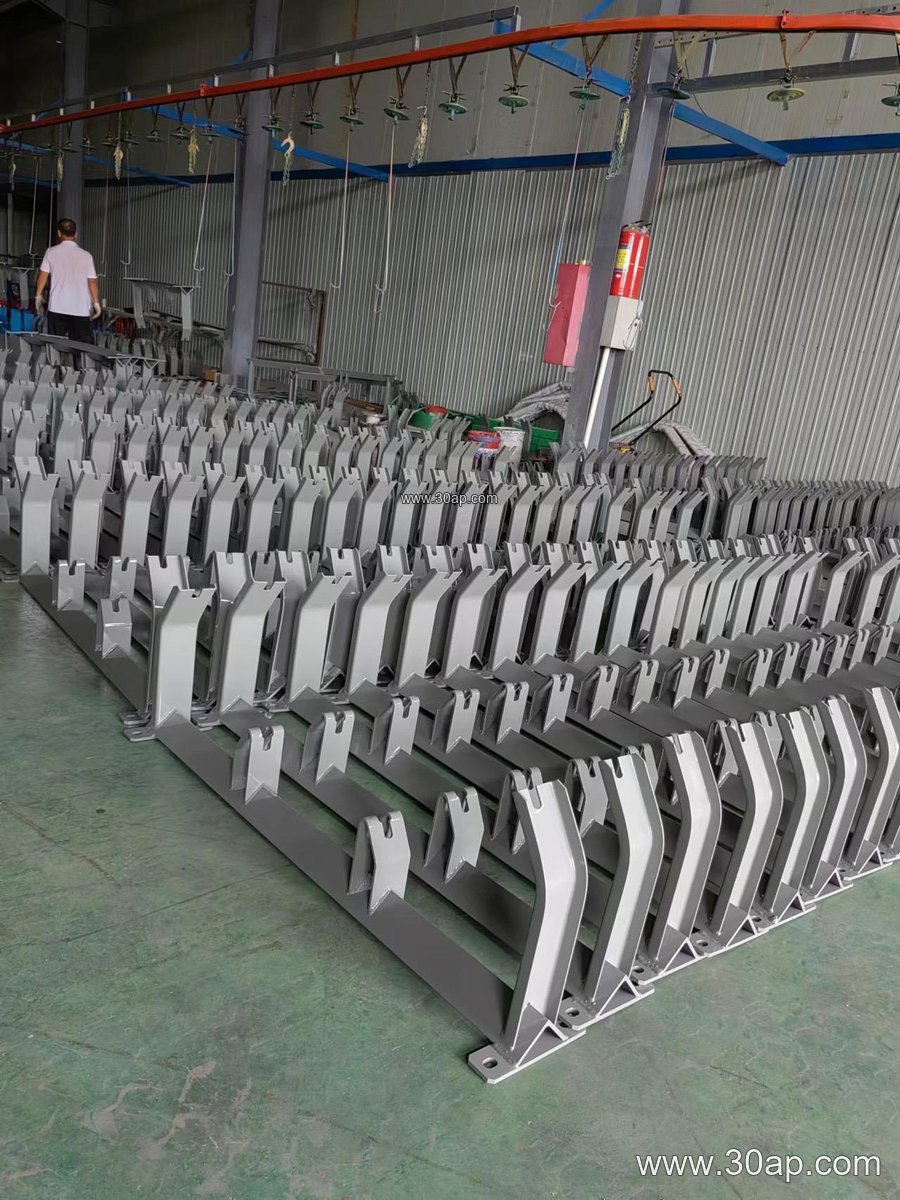
How the Frame Is Built
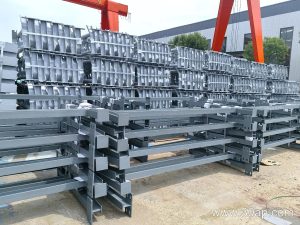
Most heavy-duty conveyor brackets are fabricated from angle steel, channel steel, or folded steel plate. The choice depends on the load case and the mounting method. Common configurations include:
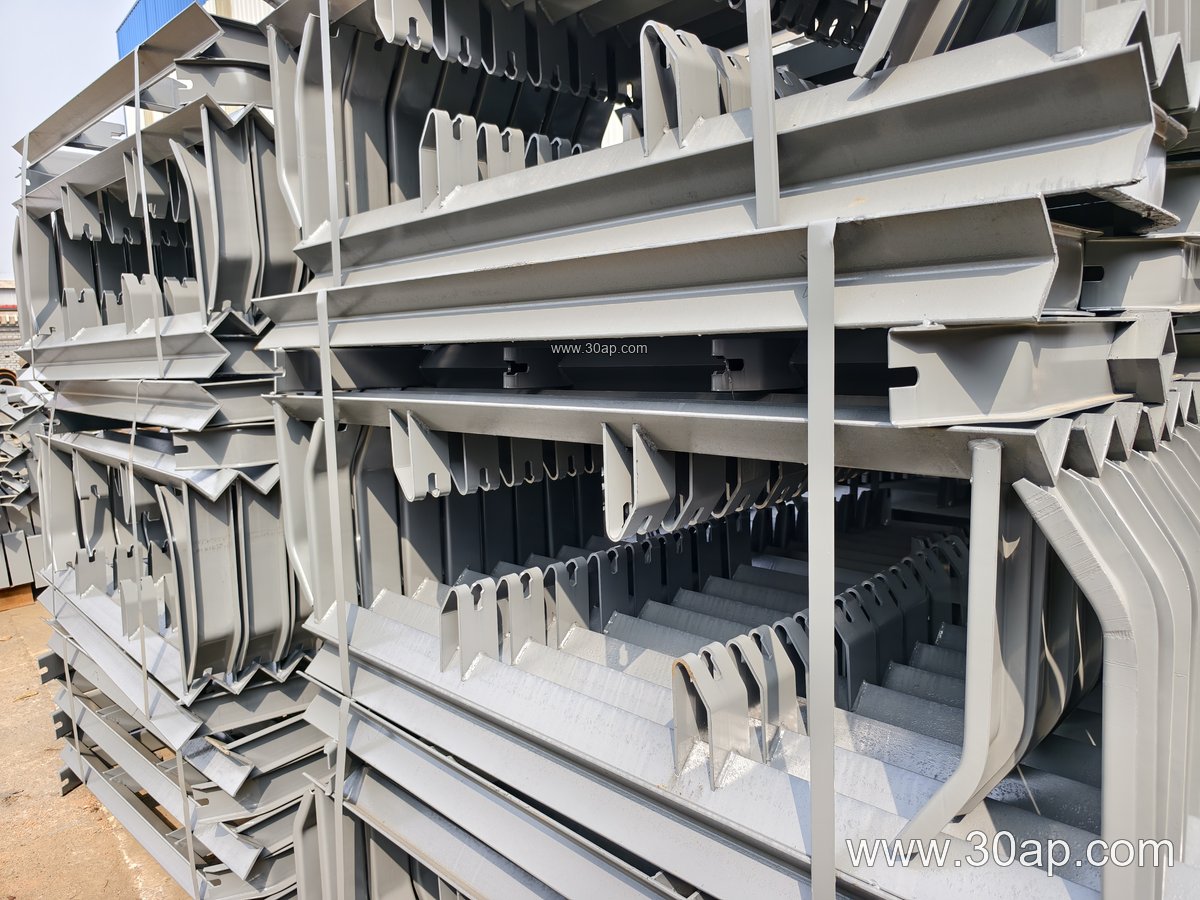
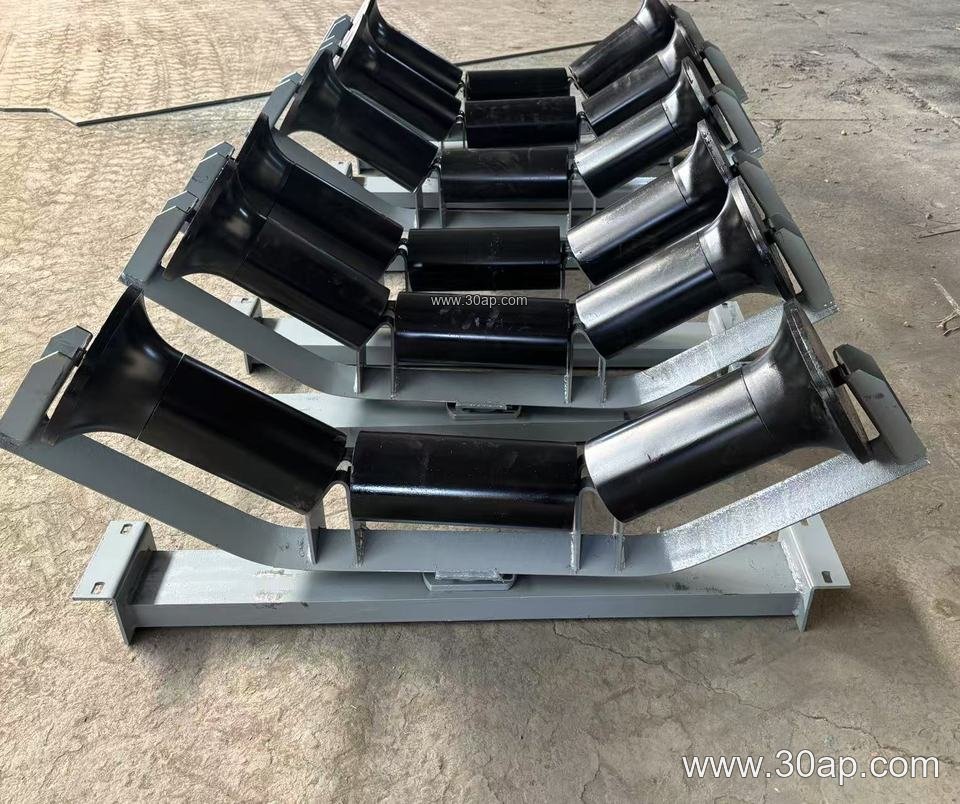
- Trough brackets for the carrying side, often with 20, 30, 35, or 45 degree trough angles
- Transition brackets near pulleys, where the belt changes shape
- Return brackets, including flat return and V-return designs
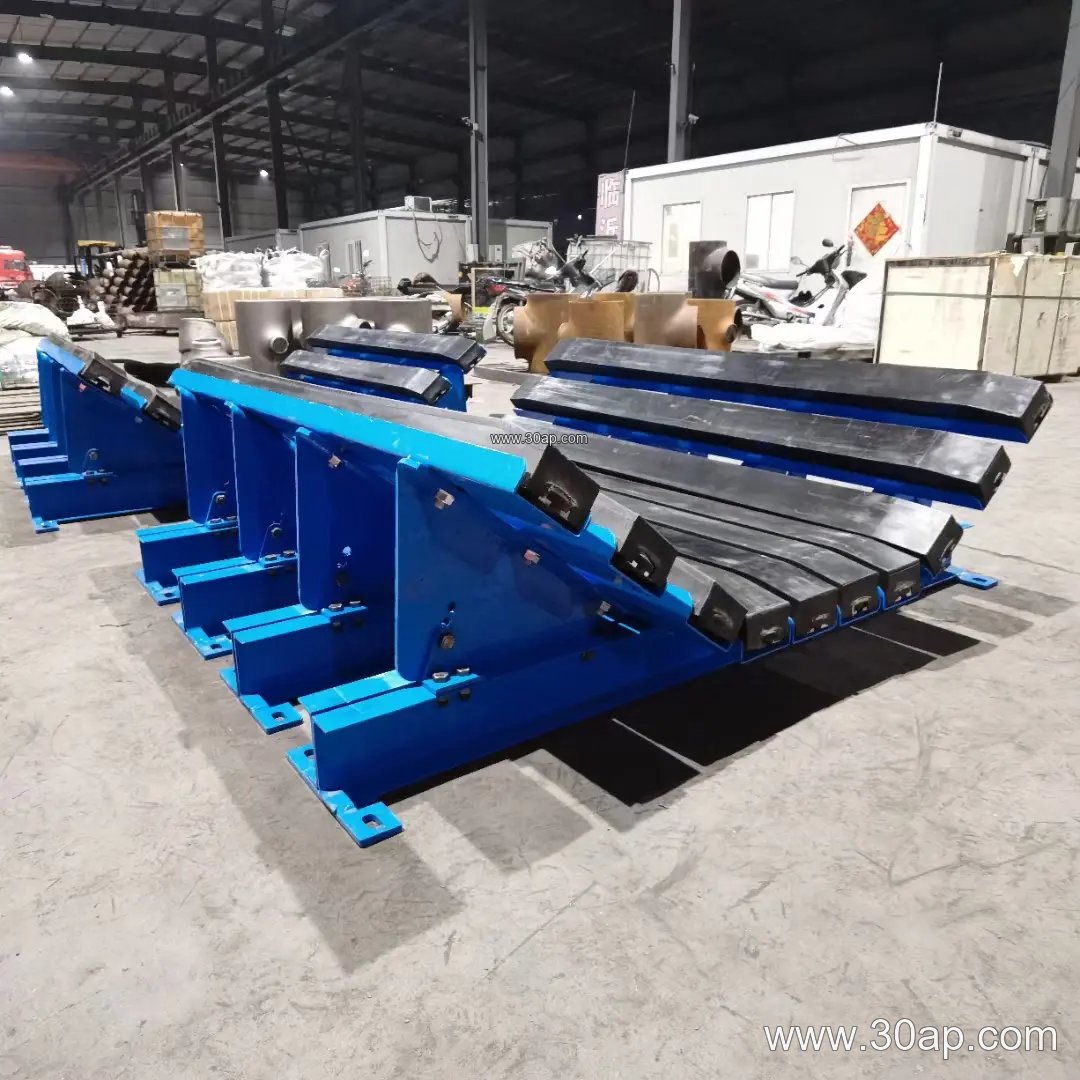
- Impact brackets under loading points, paired with impact idlers
- Self-aligning and forward-leaning brackets for belt training
- Adjustable brackets that allow the trough angle to be set on site
Welds should be continuous where vibration is high, and mounting slots are usually elongated so the frame can be aligned during installation. A well-made heavy-duty conveyor bracket keeps its geometry after years of cyclic loading, which matters more than a fancy paint finish.
Matching Brackets to Belt Width and Roller Diameter
Belt width and roller diameter are the first two numbers a buyer should confirm. The bracket must span the stringers correctly and hold rollers of the right shaft size. Typical belt widths run from B500 and B650 up to B2000 and B2200, and roller diameters commonly include Ø89, Ø108, Ø133, Ø159, and Ø194. These are reference ranges, not fixed pairings; the final combination is set by the conveyor design.
Do not assume that one belt width only fits one trough angle or one roller size. A B800 frame might run at 35 degrees with Ø108 rollers on one line and at a different angle with larger rollers on another. Installation hole spacing and crossbeam length change with belt width and trough angle, so these dimensions should always come from the actual conveyor drawing.
| Parameter | Common Reference Values |
|---|---|
| Belt width | B500, B650, B800, B1000, B1200, B1400, B1600, B1800, B2000 |
| Trough angle | 20°, 30°, 35°, 45° (adjustable frames cover a range) |
| Roller diameter | Ø89, Ø108, Ø133, Ø159, Ø194 |
| Forward lean | about 1.5° to 2° on training brackets |
| Material | angle steel, channel steel, folded plate |
Where These Frames Earn Their Keep
Heavy-duty brackets are common in crushing and screening plants, where drop heights and lump sizes are unforgiving. They also appear in iron ore handling, sinter plants, and cement clinker lines. In a coal preparation plant, flame retardant conveyor belt and fire resistant conveyor belt are specified for safety, but the bracket still has to survive constant vibration and fine dust. At a port or ship loading terminal, wide belts such as 1800mm or 2000mm need frames with enough stiffness to keep the trough from flattening under load.
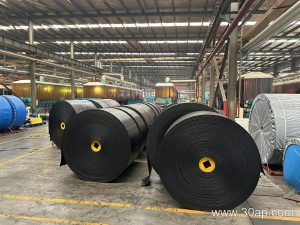
The belt itself influences bracket choice indirectly. A steel cord conveyor belt is stiff and heavy, so transition brackets must be gentle enough to avoid edge stress. A multi-ply fabric core belt or EP conveyor belt is more flexible but still needs stable roller spacing. Abrasion resistant conveyor belt handles the wear, while the bracket handles the geometry. The two must work together, along with the conveyor pulley at each end.
Adjustable or Fixed, and What to Check Before Ordering
Adjustable brackets suit lines where the trough angle may need tuning after commissioning, or where the same frame family serves several belt widths. Fixed brackets are simpler and often stiffer, which helps on high-tonnage lines. When specifying, confirm the belt width, roller diameter, trough angle, mounting hole pattern, and the stringer spacing. Ask whether the frame is for carrying, return, impact, or transition duty, because these are not interchangeable.
Finally, plan for maintenance. Check for loose bolts, cracked welds, and worn mounting slots during every idler change. A heavy-duty conveyor bracket is a long-life part, but it is not maintenance-free. Treat the frame, the idler roller, and the belt as one system, and the conveyor will run straighter and last longer.