What a Corrugated Sidewall Conveyor Belt Is
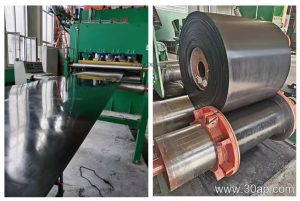
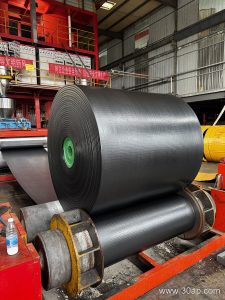
A Corrugated Sidewall Conveyor Belt is a heavy-duty conveyor belt with raised, wave-shaped walls molded onto its edges. Often called a skirted conveyor belt or sidewall belt, it keeps bulk material inside a deep trough so the belt can climb at angles that would cause a flat rubber conveyor belt to spill its load. In mines, coal preparation plants, cement works, power stations, and sand and gravel yards, this design lets one belt replace a series of transfer points and inclined conveyors.
How the Belt Is Built
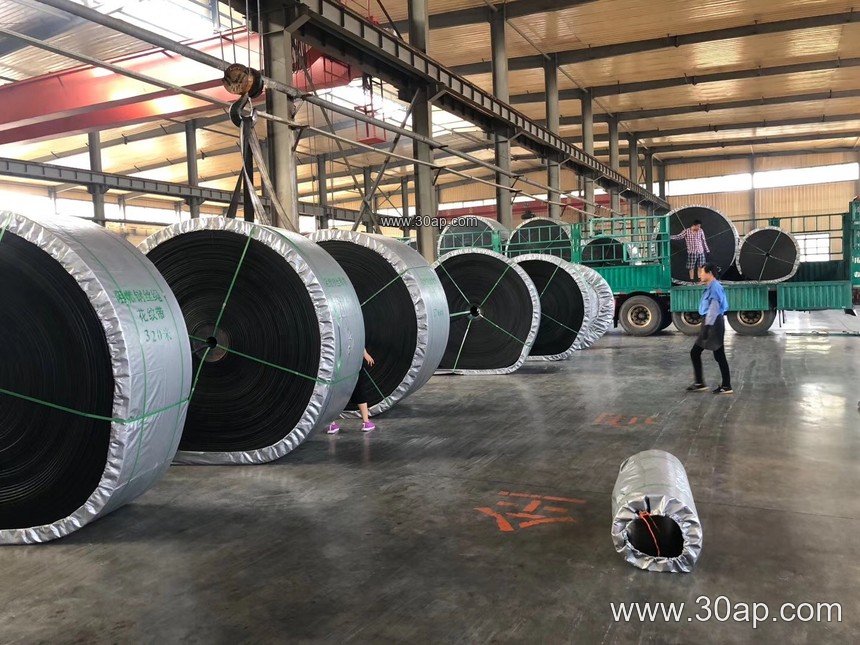
The base is a fabric-cored or steel-cord belt, usually an EP conveyor belt or NN conveyor belt, with a rubber cover chosen for the duty. Two corrugated sidewalls are vulcanized to the edges, and transverse cleats are bonded between them. Together the walls and cleats form open pockets that carry material up steep slopes. The edge profile and cleat pitch are matched to the pulley diameters, so the belt flexes cleanly around the tail pulley and bend pulleys without cracking at the base of the wall.
- Base belt: EP or NN fabric core, or steel cord for high tension
- Sidewall height: selected to suit the material depth and incline
- Cleats: straight, angled, or profiled to match the product
- Cover grade: abrasion resistant, heat resistant, oil resistant, flame retardant, or cold resistant
Typical Construction Data
The figures below show common reference ranges. Actual values are confirmed by the belt designer for each conveyor.
| Item | Common reference |
|---|---|
| Base belt type | EP200 to EP1000, NN200 to NN400, or ST1000 to ST2500 steel cord |
| Belt width | B500, B650, B800, B1000, B1200, B1400, B1600, B1800 |
| Cover thickness | 4+2 mm, 5+2 mm, 6+2 mm, 8+3 mm |
| Fabric plies | 2 to 6 layers, depending on tension |
| Sidewall height | Usually 40 mm to 200 mm, by design |
A 1200mm wide conveyor belt with 6+2 mm covers is a frequent choice for cement and aggregate duty, while narrower B650 or B800 belts suit smaller plants. Wide conveyor belt builds up to B2000 appear in large port and power plant systems. The belt width must never be tied to one fixed pulley size; drive pulley, tail pulley, and bend pulley diameters are each calculated from belt tension, wall height, and cleat spacing.
Where It Fits in the Plant
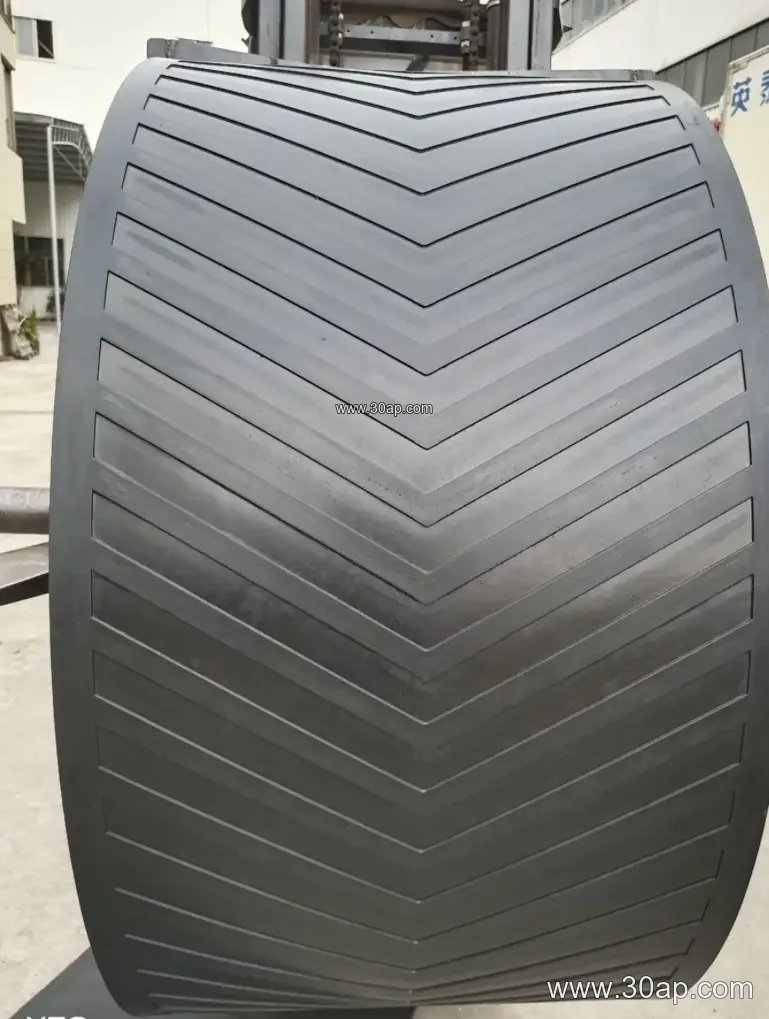
Steep-incline handling is the main job. A Corrugated Sidewall Conveyor Belt lifts crushed rock from a crusher conveyor belt discharge, carries clinker in a cement plant, feeds coal into bunkers, or moves ore in a copper ore or iron ore circuit. Because the load is enclosed by the walls, the belt can run vertically or at angles well beyond the limit of a chevron conveyor belt, which relies on surface pattern rather than containment.
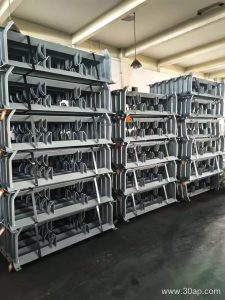
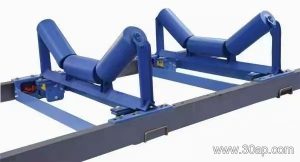
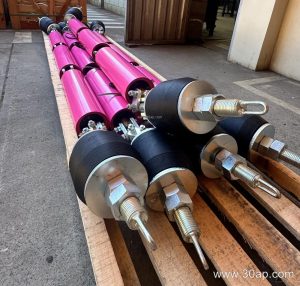
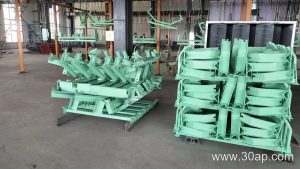
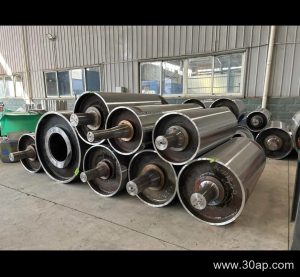
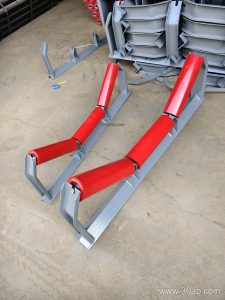
Supporting hardware matters as much as the belt. The conveyor pulley set, idler roller groups, and conveyor bracket frames must be aligned so the walls clear the structure. On a skirted conveyor belt, the return run often uses special flat return idlers, and the bend pulleys are positioned to keep the cleats from rubbing.
Buyer Checklist
Before ordering, confirm the material density, lump size, moisture, and temperature. State the incline angle and the required capacity in tonnes per hour. Specify whether the environment needs a flame retardant conveyor belt for underground coal mining, a heat resistant grade for clinker, or an abrasion resistant cover for sharp quarry rock. Give the pulley diameters and the take-up arrangement so the wall and cleat geometry can be set correctly. Ask for the cleat pitch and wall height in writing, and check that spare idler roller and pulley parts follow the same dimensions.
Finally, plan maintenance. Inspect the wall base for cracks, check cleat wear at the discharge, and keep the belt tracking straight on the tail pulley. A well-matched Corrugated Sidewall Conveyor Belt, paired with correct pulleys, idlers, and brackets, gives reliable steep-angle transport with far fewer transfer points.