What a Take-Up Device Pulley Does
A take-up device pulley is the pulley that moves to keep tension in a conveyor belt. It is part of the take-up system, usually at the tail or along the return run, and it adjusts position to compensate for belt stretch, load changes, and thermal movement. Without enough tension, a conveyor belt can slip on the drive pulley, wander off track, and wear faster. The take-up device pulley is also called a tension pulley or take-up pulley in many plants. It is not the same as a drive pulley, tail pulley, or bend pulley, although it may sit near them in the conveyor layout.
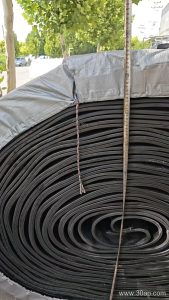
In a quarry, cement plant, or power plant coal yard, the take-up device pulley often works with a heavy-duty conveyor belt carrying abrasive rock or coal. The pulley must rotate freely under load while the take-up frame pulls it back to maintain the correct belt sag.
Construction and Surface Options
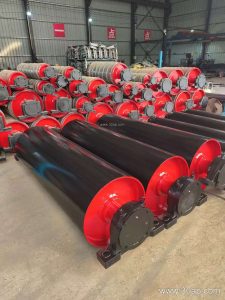
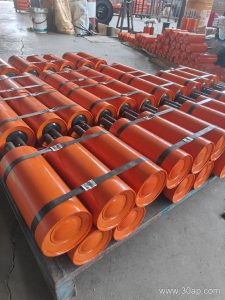
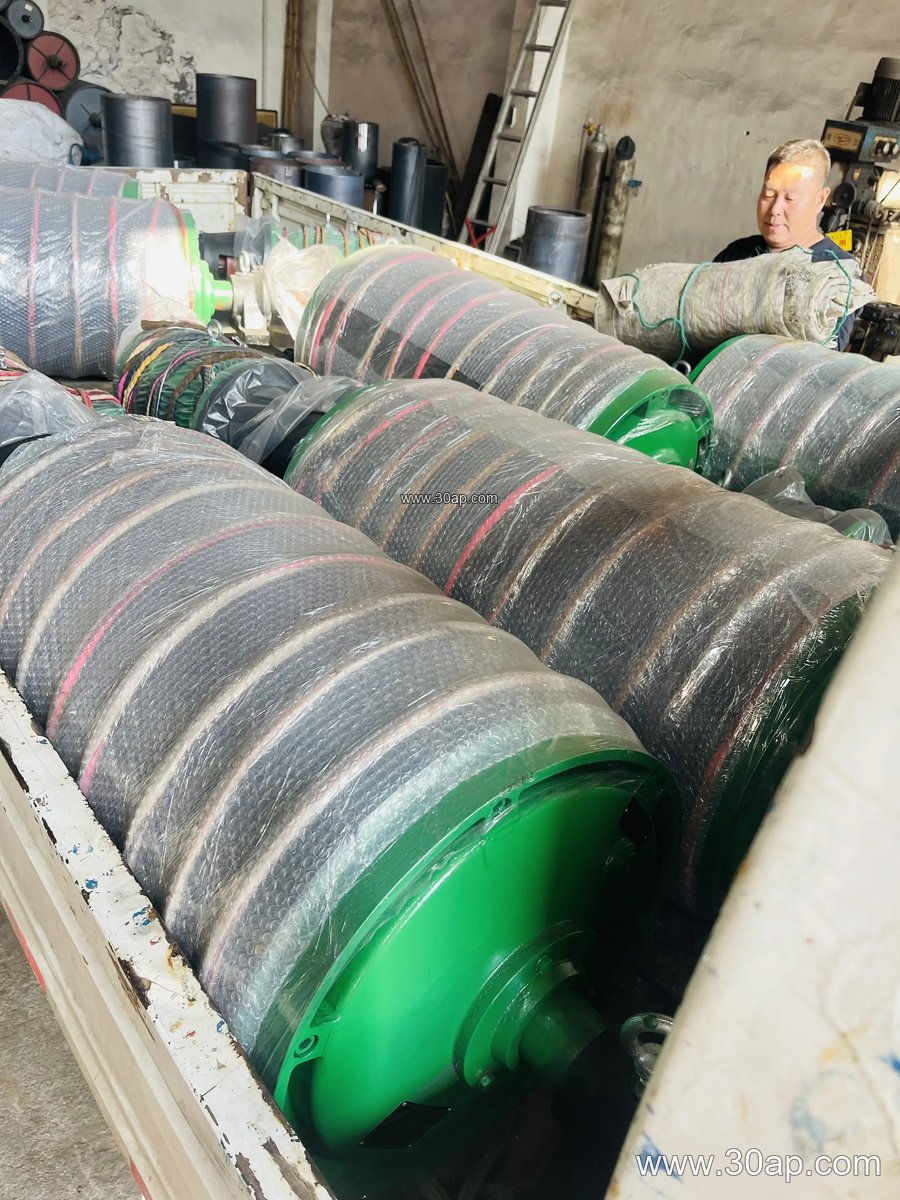
A take-up device pulley is built around a steel drum with welded end discs and a shaft. The shaft is supported by bearings in pillow blocks or a sliding take-up carriage. Common surface forms include plain steel, rubber lagging, and ceramic lagging. Lagging helps grip the belt and reduces slip, but on a take-up pulley the main goal is usually smooth rotation rather than high traction. Rubber lagging in 8 mm to 15 mm thickness is common; ceramic lagging may be used in wet or dirty conditions.
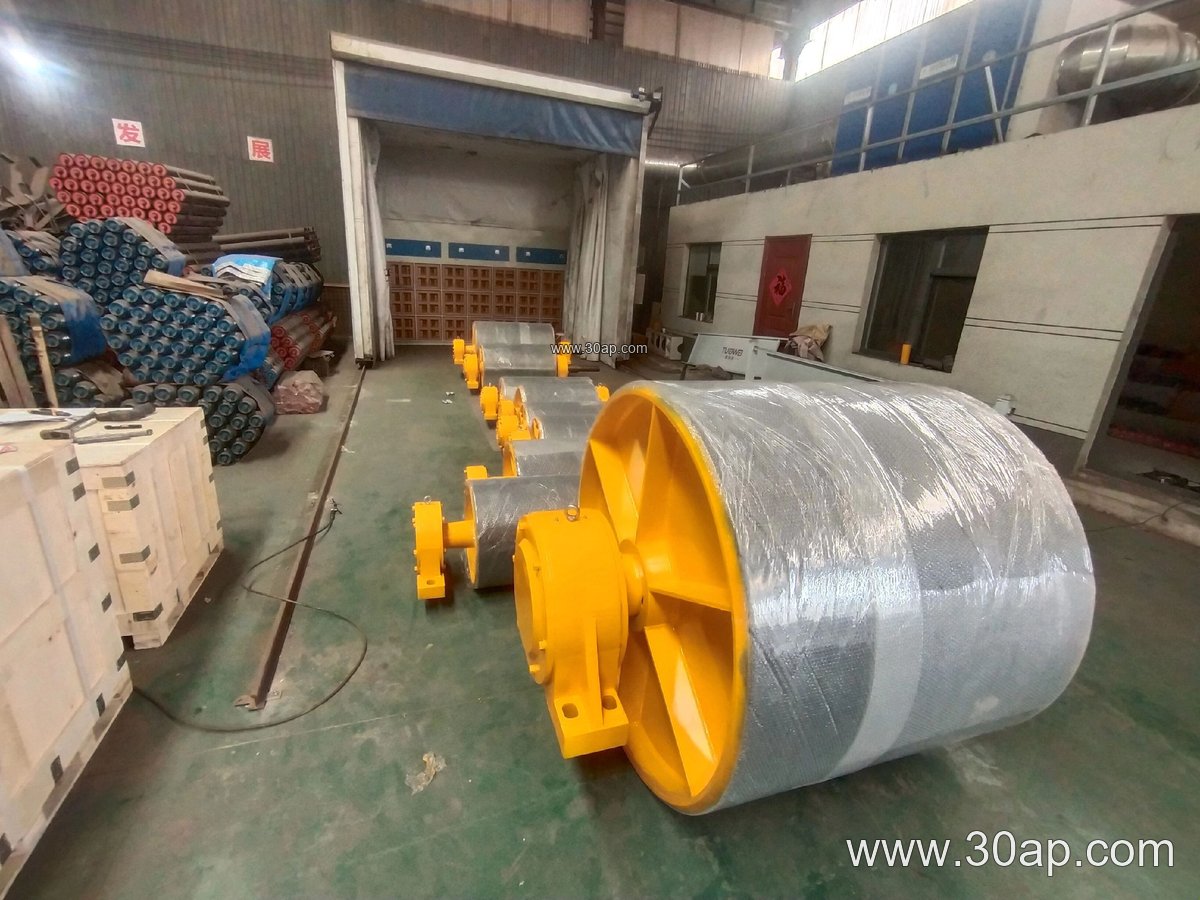
Typical dimensions are selected by belt width and shaft load. For example, a B800 conveyor might use a take-up pulley around Ø400 to Ø500 with a face width near 950 mm. A B1200 system could use a Ø630 or Ø800 pulley with a face width around 1400 mm. These are reference examples, not fixed rules. Shaft diameter is determined by torque and bearing load, often in the range of Ø80 to Ø160 for medium and heavy conveyors, and should be confirmed by the conveyor designer.
Where It Fits in the Conveyor
The take-up device pulley is common in mining, coal preparation, aggregate crushing lines, and port bulk handling. It may be mounted on a horizontal or vertical take-up frame with a screw, gravity, or hydraulic tensioning system. In an underground coal mining conveyor, a compact take-up pulley helps keep the belt tight in limited space. In a stone crushing plant, the pulley must tolerate dust and occasional impact from falling material.
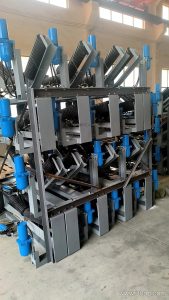
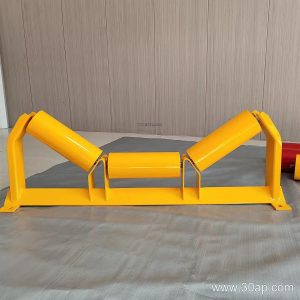
It works together with the conveyor belt, idler roller, and conveyor bracket. The bracket or carriage guides the pulley as it moves. A misaligned take-up pulley can cause belt edge wear, so alignment and bearing condition should be checked during maintenance.
Buyer Checklist
- Confirm belt width and required take-up travel before choosing pulley diameter.
- Check shaft diameter and bearing type against the actual tension load.
- Decide whether plain, rubber-lagged, or ceramic-lagged surface suits the environment.
- Verify face width is wider than the belt, for example B1000 with about 1150 mm face width.
- Match the pulley to the take-up frame and conveyor bracket dimensions.
For a reliable match, share the conveyor layout, belt type, and tension requirement with the pulley supplier. A take-up device pulley is a small part of the conveyor, but it directly affects belt life and drive performance. Visit txconveyor.com for related conveyor components and technical guidance. When selecting a replacement, also review the conveyor belt specification, such as EP conveyor belt or steel cord conveyor belt, because belt elongation affects how much take-up travel is needed.