What an HDPE Idler Is
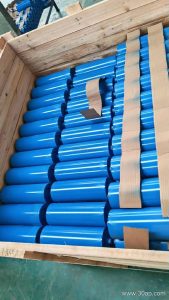
An HDPE idler is a carrying or return roller whose outer body is made from high-density polyethylene rather than the more familiar steel tube. In a conveyor line, it sits under the belt or beneath the return strand and supports the load while letting the belt travel with minimal drag. Because the shell is a polymer, the roller is lighter than a comparable steel roller and tends to run more quietly, which matters in plants where noise and manual handling are everyday concerns.
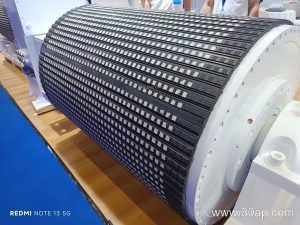
These rollers are often grouped with the general idler roller family used across bulk handling, and they work alongside the conveyor pulley at the head and tail of the line. They are not a substitute for a drive pulley or a bend pulley, and they should not be confused with those components when a project is being specified.
How the Roller Is Built
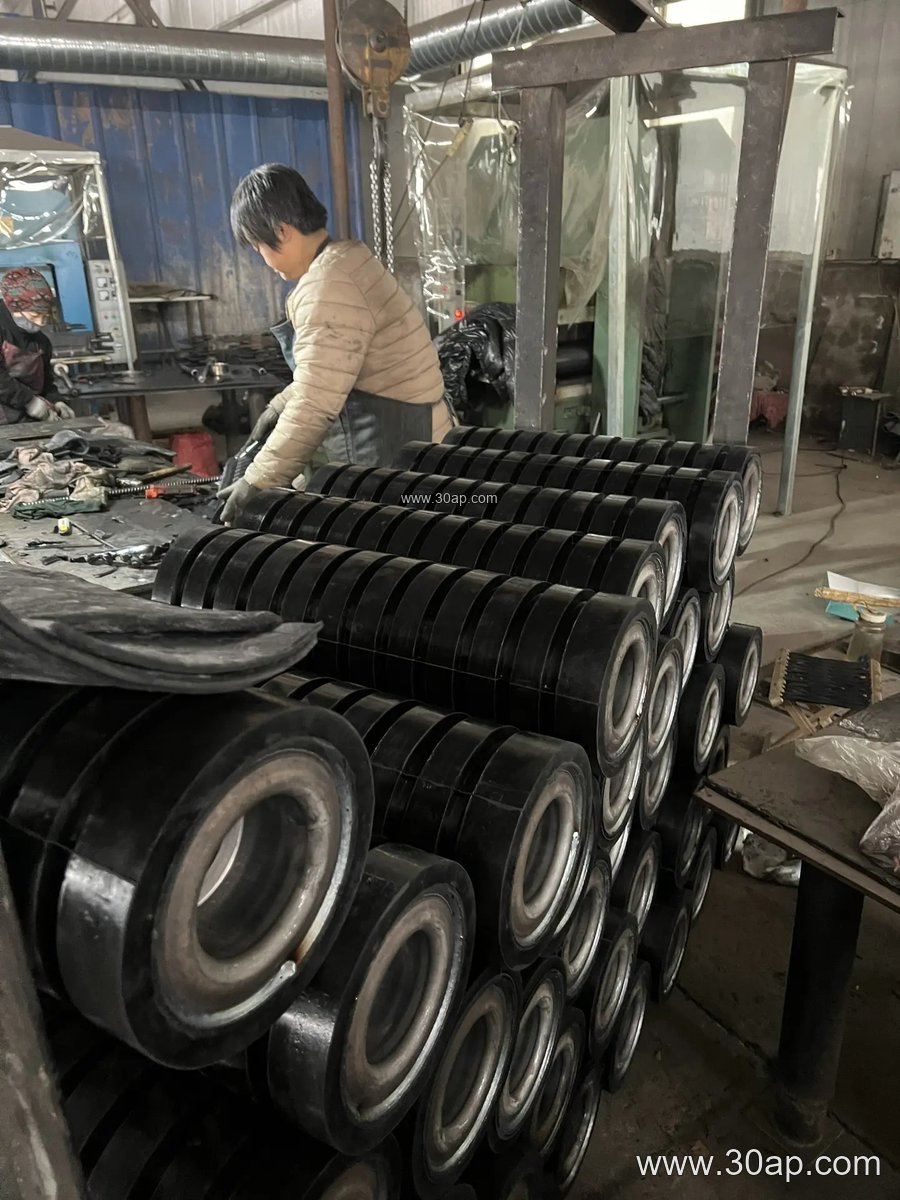
The typical construction pairs an HDPE tube with sealed end caps and a through shaft. Bearings are fitted inside the tube ends, and the seal arrangement is what determines how well the roller survives dust. In aggregate and cement service, fine powder is the main enemy; in a wash plant or a port terminal, moisture and salt spray matter more.
- HDPE shell, usually smooth, sometimes with a slight crown
- Sealed bearing housings, with common bearing sizes such as 6204, 6205, 6305, 6306, 6308 and 6310
- Steel shaft sized by the frame and load, not by belt width alone
- End caps that locate the shaft and protect the bearing cavity
Shell thickness and shaft diameter are design choices. A buyer should not assume that a given belt width fixes a particular shaft size, because the load, spacing and belt tension all influence the selection.
Where HDPE Idlers Fit on the Line
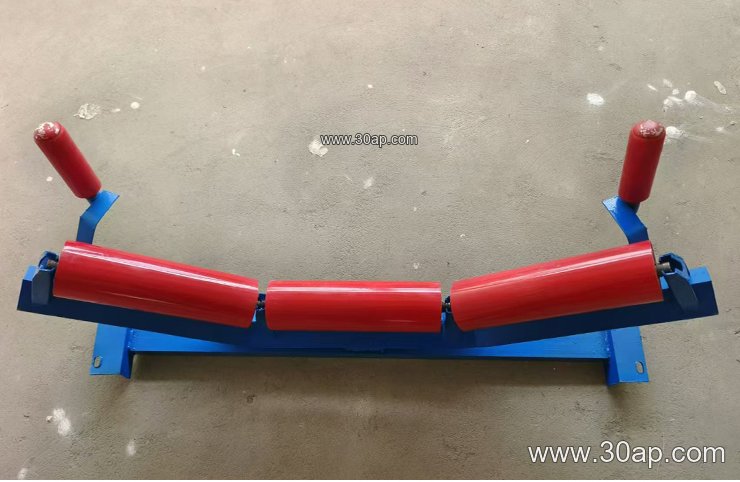
These rollers are commonly used on the carrying side in three-roll trough sets and on the return side as flat or V-return rollers. Trough angles of 20, 30, 35 and 45 degrees are all seen, and the roll length changes with belt width, trough angle and the roll arrangement. For reference, common three-roll trough sets use roll lengths of roughly 200 mm at B500, 250 mm at B650, 315 mm at B800, 380 mm at B1000, 465 mm at B1200, 530 mm at B1400, 600 mm at B1600, 670 mm at B1800 and 750 mm at B2000. These are typical examples, and side rolls and centre rolls may differ.
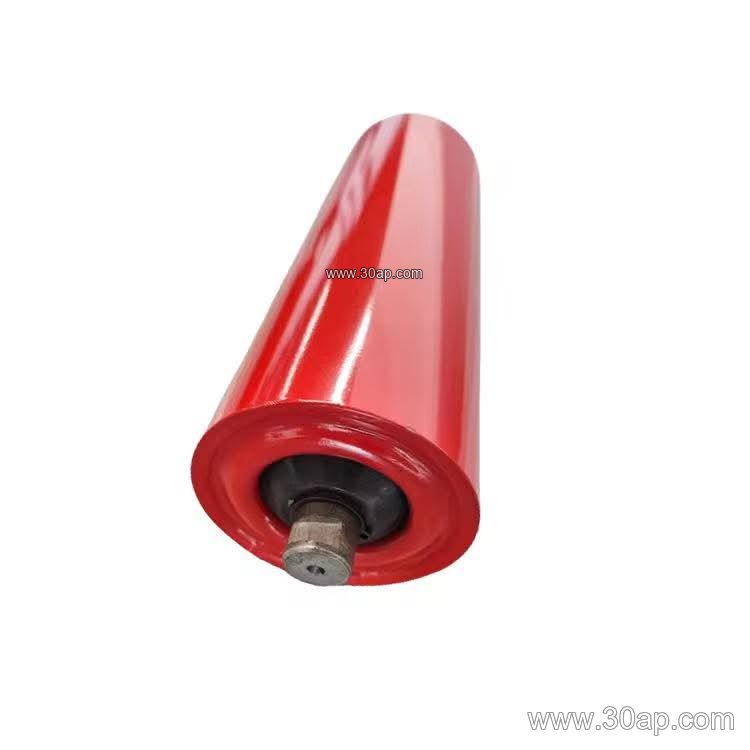
Roller diameters commonly range from Ø63 and Ø76 up through Ø89, Ø102, Ø108, Ø127, Ø133, Ø159, Ø178, Ø194 and Ø219, with the final choice set by belt width, load and frame design. In a sand and gravel line, a lighter HDPE roller can be an advantage on long return runs; in a coal preparation plant, the sealed version is often chosen where fine dust is constant.
Typical applications include:
- Quarry and aggregate conveyor lines handling crushed stone
- Lime and cement plants moving clinker and raw meal
- Power station coal handling and biomass fuel lines
- Port and ship-loading conveyors exposed to humid air
The belt itself still does the work of carrying material, so the idler choice should be matched to the belt. A heavy-duty mining conveyor belt or a steel cord conveyor belt will place different demands on rollers than a light fabric belt on a short transfer.
Matching the Idler to the Belt and the Duty
When selecting an HDPE idler, start with the belt width, the belt speed and the material being carried. An abrasion resistant conveyor belt running at high speed over a long span will need closer roll spacing and a larger diameter than a short feeder. A heat resistant conveyor belt or a flame retardant conveyor belt used in underground coal mining may need a roller that can tolerate elevated temperature or meet fire-safety expectations, so confirm the roller specification rather than assuming the polymer shell is suitable for every duty.
Other belt types influence the idler layout too. A pipe conveyor belt needs a completely different roll arrangement from a troughed line, and a corrugated sidewall conveyor belt or skirted conveyor belt may require clearance checks around the roll ends. Chevron conveyor belts and cleated belts can also affect how the return rollers are positioned.
Points to Check Before Ordering
- Confirm the roll length, diameter and trough angle against the existing frame
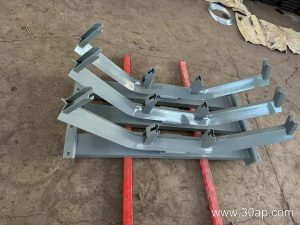
- Check the shaft ends and fixing method so the roller fits the conveyor bracket
- Ask about the seal type and bearing size for dusty or wet service
- Confirm the load rating and recommended spacing for the belt width
- Check whether the application calls for a standard HDPE roll or a steel, nylon or ceramic-faced alternative
HDPE idlers are a practical choice where low weight, quiet operation and resistance to corrosion are priorities. They are not a universal replacement for every roller in a plant, and the correct selection still depends on the belt, the material and the duty cycle. For a complete line, the idlers, the conveyor bracket and the pulleys should be reviewed together so the belt runs true and the components wear evenly.