What a Vertical Guide Roller Does
A vertical guide roller is a small but purposeful component that keeps a moving conveyor belt tracking correctly along a section of the conveyor structure. Unlike the familiar carrying idler roller that supports the belt from below, a vertical guide roller is mounted on a vertical axis, usually at the side of the belt edge, so its cylindrical surface bears against the belt edge or a guide profile. In practice, plant operators in a quarry, a cement plant, or a coal handling system often call this part a belt edge guide roller, vertical side roller, or edge control roller. The names describe the same product; it should not be confused with a conveyor pulley at the head, tail, or bend position, which transmits drive or changes belt direction and is a different component entirely.
The job is simple: resist lateral drift. Long belts, uneven loading, off-center material, or a slight misalignment in the frame can push a belt sideways. A vertical guide roller provides a low-friction stop at the edge, so the belt is nudged back instead of rubbing against the structure. This is especially useful on the return strand, near transfer points, and on conveyors carrying bulk material such as ore, clinker, or aggregate.
Construction and Typical Materials
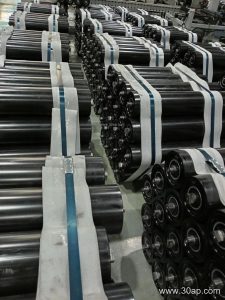
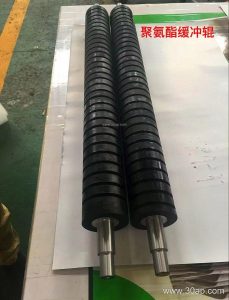
Most vertical guide rollers share a common build: a steel tube body, a shaft, sealed bearings, and end caps. The roller body may be plain steel, nylon-coated, or fitted with a rubber sleeve to protect the belt edge. A rubber-covered version can reduce wear on fabric-core belts, while a nylon surface offers good sliding behavior in dusty conditions. Bearing selection usually follows the load and speed rather than a fixed rule, with common sizes such as 6204, 6205, or 6305 appearing in light and medium-duty units.
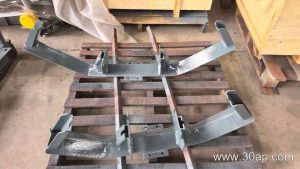
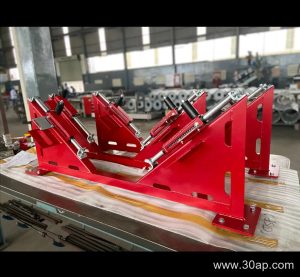
The mounting arrangement matters as much as the roller itself. Vertical guide rollers are often held in a bracket welded or bolted to the conveyor frame, with the roller shaft vertical and the roller free to spin. Some designs include an eccentric or adjustable bracket so maintenance staff can set the gap between the roller and the belt edge. A well-designed bracket keeps the roller square to the belt and allows quick replacement without cutting the frame.
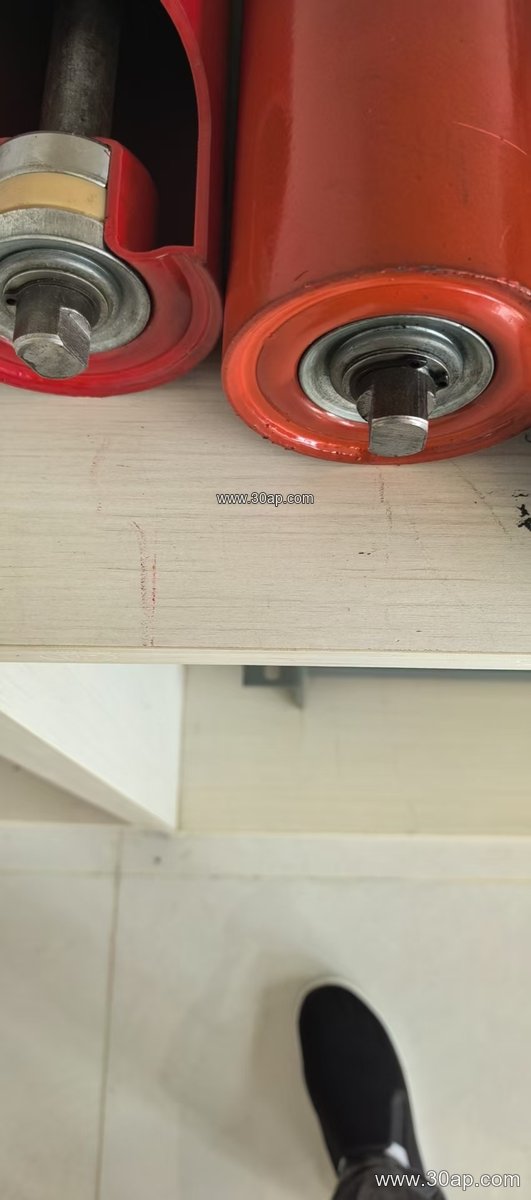
- Roller body: steel tube, nylon, or rubber-sleeved steel
- Bearing: sealed deep-groove ball bearings, sizes chosen by load and speed
- Mounting: fixed or adjustable conveyor bracket, vertical shaft orientation
- Common roller diameters: Ø63, Ø76, Ø89, Ø102, Ø108 mm for light and medium service
Where It Fits on the Conveyor
Vertical guide rollers are most often installed at the edges of the belt, just ahead of a transfer chute, after a curve in the conveyor route, or along a long overland section where wind and load variation cause drift. In a coal mining conveyor or a power plant coal yard, they help keep the belt centered as it leaves the load zone. In a sand and gravel line, they protect the belt edge from rubbing on the frame when feed is uneven. They are also found on the return side, where a flatter belt can wander more easily.
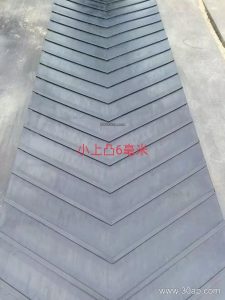
They are not a substitute for a training idler or a self-aligning return roller; those parts correct tracking across the full belt width, while a vertical guide roller acts mainly at the edge. A plant may use both. On a conveyor fitted with a skirted conveyor belt or a corrugated sidewall belt, the guide roller position must be checked carefully so it contacts the belt edge and not the cleat or sidewall.
Matching the Roller to Belt Width and Duty
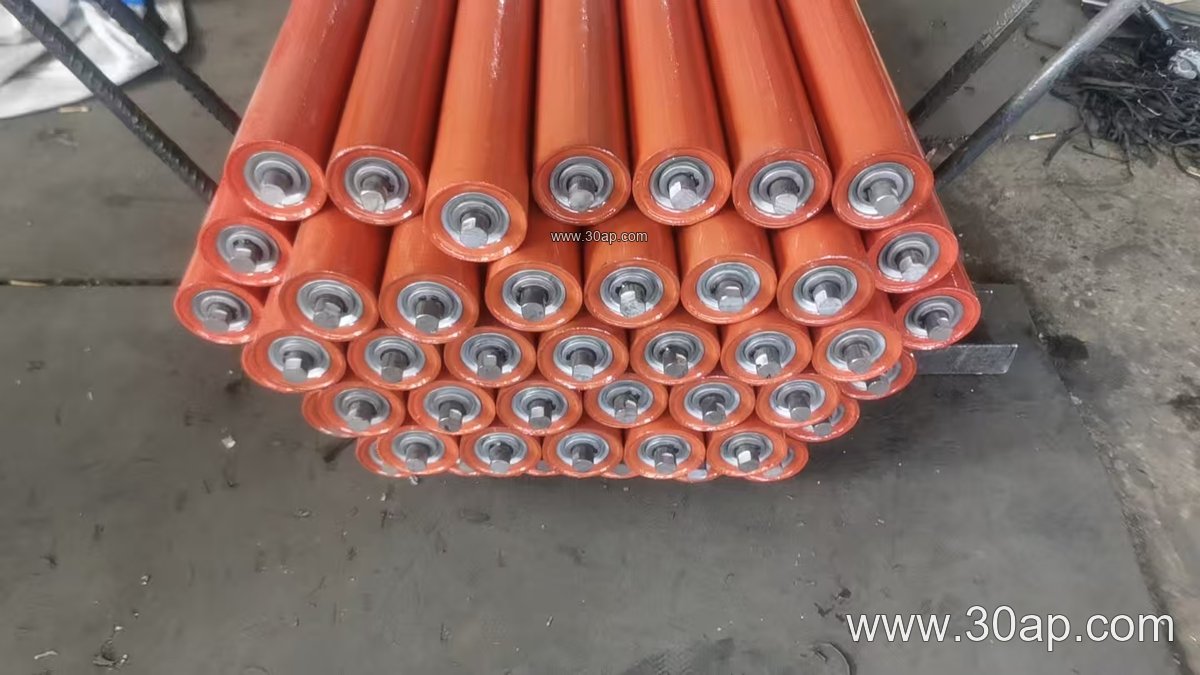
Belt width and conveyor duty guide the choice, but there is no single rule that ties one belt width to one roller diameter. A B650 belt on a light aggregate line may use a smaller guide roller than a B1200 belt in an iron ore plant, yet the final size depends on the frame design, belt speed, and the force the roller must resist. The table below gives common reference ranges, not fixed combinations.
| Belt width | Typical guide roller diameter | Typical service |
|---|---|---|
| B500–B650 | Ø63–Ø89 mm | Light to medium, aggregate and sand |
| B800–B1000 | Ø76–Ø108 mm | Medium, cement and power plant coal |
| B1200–B1400 | Ø89–Ø133 mm | Heavy, mining and port bulk handling |
| B1600–B1800 | Ø108–Ø159 mm | Heavy-duty, ore and large tonnage |
The belt itself also matters. A heavy-duty mining conveyor belt with a thick cover and strong fabric or steel cord reinforcement behaves differently from a thin EP conveyor belt on a short transfer. Abrasion resistant conveyor belt grades and heat resistant conveyor belt grades may need a rubber-sleeved guide roller to avoid edge damage. In dusty or wet conditions, sealed bearings and a corrosion-resistant finish extend service life.
Buyer Checklist
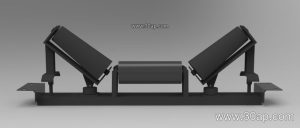
Before ordering, confirm the belt width, the available space at the frame edge, and whether the bracket is fixed or adjustable. Ask for the roller diameter, face length, shaft size, and bearing type so the unit fits the existing conveyor bracket. Specify the roller surface: plain steel for general use, nylon for dusty sliding contact, or rubber for edge protection. Check that the roller can be replaced without removing the belt, and confirm the mounting orientation is vertical, not angled like a troughing idler.
For a second opinion on how the guide roller interacts with the rest of the line, review the belt specification together with the idler and pulley layout. A vertical guide roller is a small part, but matching it to the belt and frame keeps the whole conveyor running straighter in mines, quarries, cement works, and power stations.