What an Anti-Misalignment Guide Idler Does
An anti-misalignment guide idler is a tracking roller installed on a conveyor to keep the belt from wandering sideways. Instead of carrying the full material load, it steers the belt back toward the centerline. The roller usually sits where drift begins, such as just after the tail pulley, ahead of a bend pulley, or along a long run where the belt tends to creep toward one side. In a quarry, a coal washing plant, or a cement kiln feed line, a small lateral shift can quickly turn into edge damage, spillage, and rubbed frames, so this guide idler earns its place as a low-cost correction device.
The product is also called a self-aligning guide roller or a belt training idler. Those names describe the same item; they are not separate conveyor pulley types. A drive pulley, tail pulley, or bend pulley pulls and redirects the belt, while the guide idler only corrects its path.
How the Roller Is Built
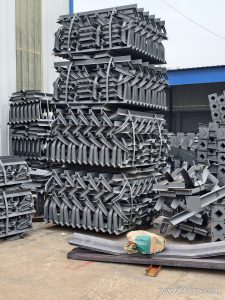
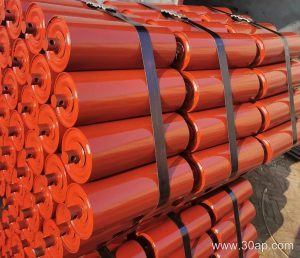
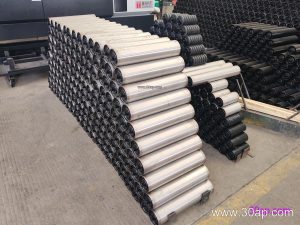
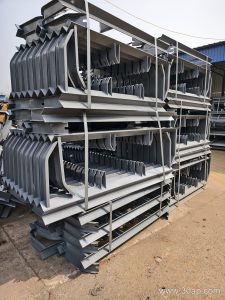
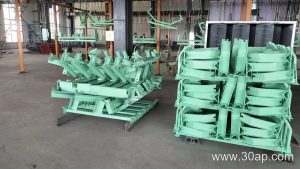
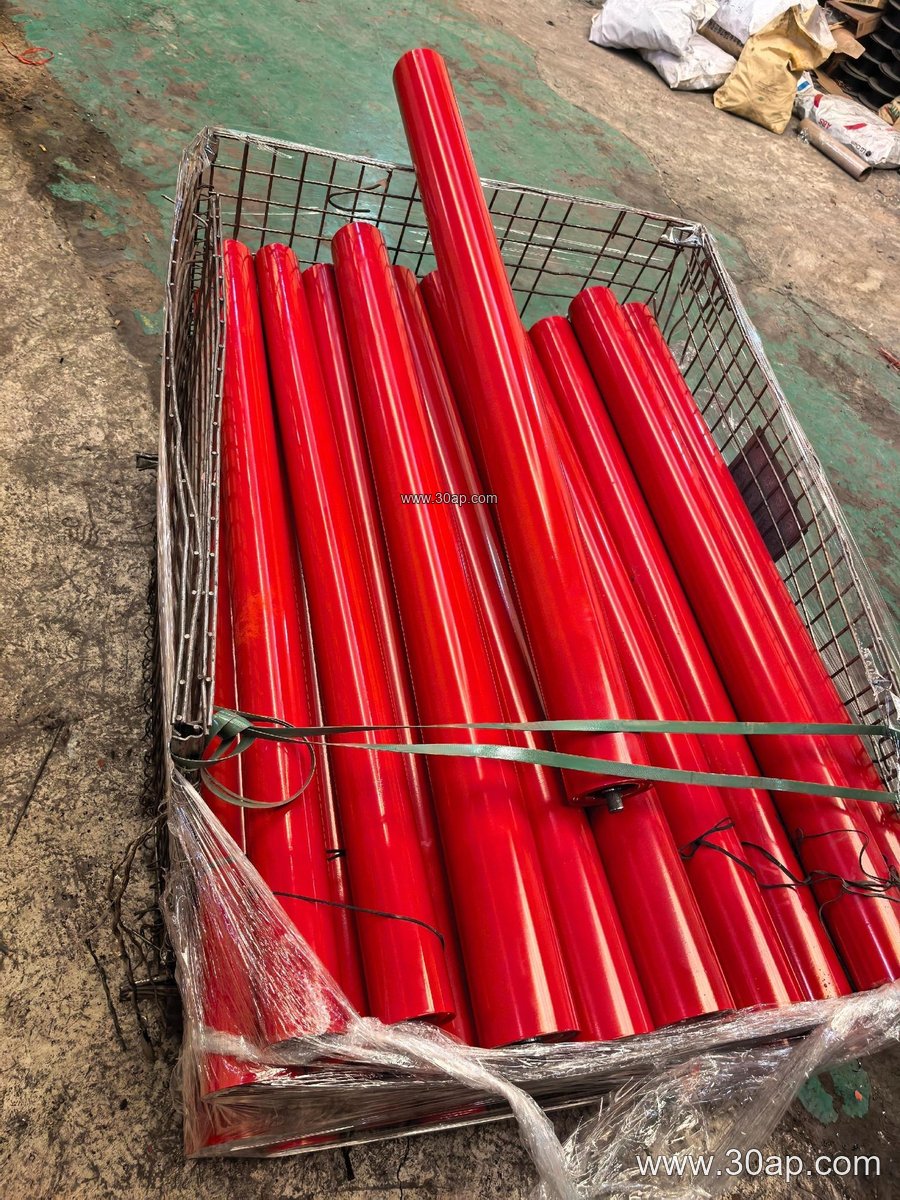
Most units combine a short roller body with a pivoting bracket. The roller is mounted at a slight angle to the belt travel direction, often with a small forward lead of about 1.5 to 2 degrees, so that contact friction pushes the belt back to center. A vertical guide roller or a pair of edge rollers may be added to limit belt movement. Common roller diameters are Ø89, Ø108, Ø127, and Ø133 mm, with larger sizes such as Ø159 or Ø178 mm used on heavy-duty lines. Roll faces can be plain steel, nylon, or rubber-covered for better grip.
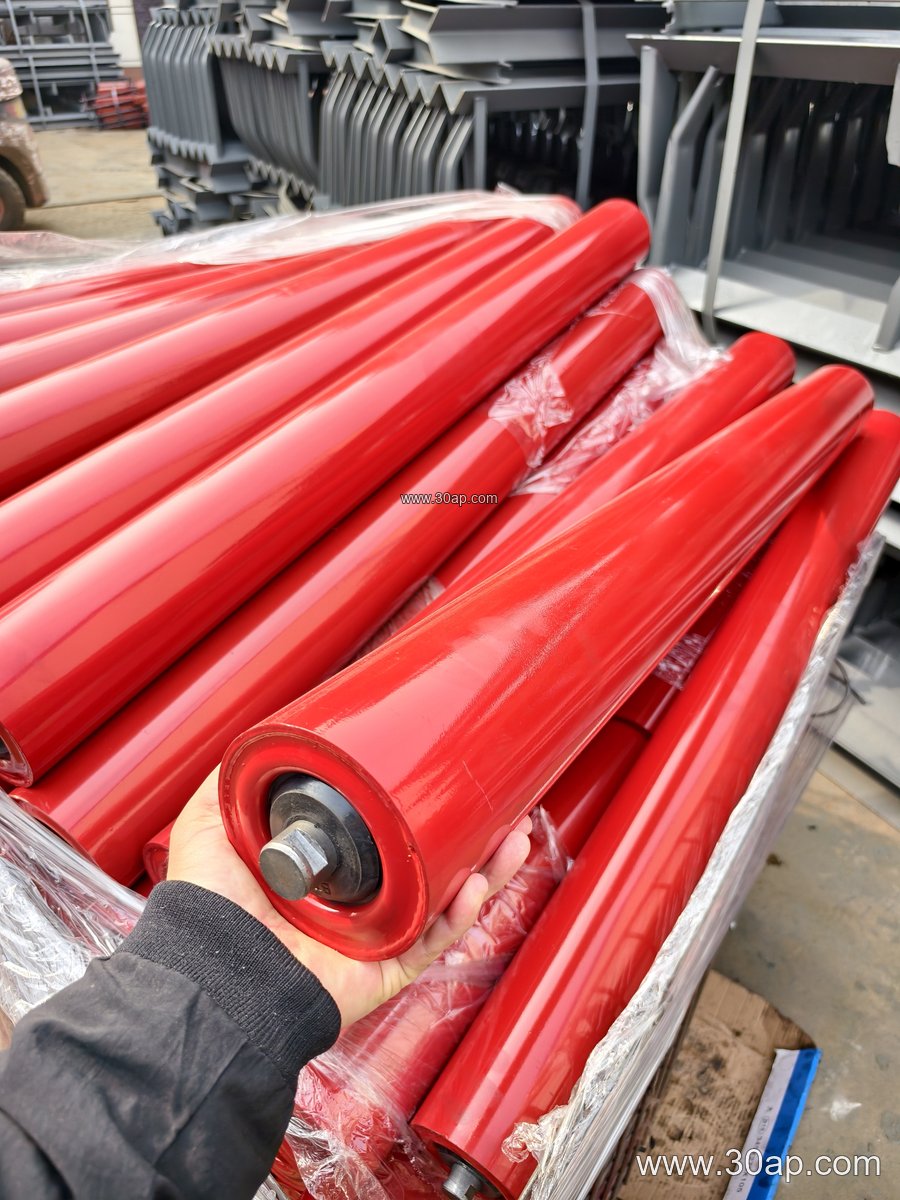
Bearings are usually sealed deep-groove ball bearings, with 6205, 6305, 6306, and 6308 among the common choices. The bearing size is matched to load and shaft design, not to belt width alone. The frame is typically welded steel and bolted to a conveyor bracket, and the pivot should move freely without binding.
Where It Fits on the Conveyor
Typical positions include the carrying side before the first troughing set, the return side near a V-return idler, and the entry to a transfer point. A three-roll troughing idler carries the load, while the guide idler corrects tracking. In an underground coal mining conveyor or a copper ore handling line, the guide unit is often placed after a curve or a loading chute where the belt is most likely to shift.
It is used with many belt constructions, including EP conveyor belt, NN conveyor belt, steel cord conveyor belt, and flame retardant conveyor belt for underground service. On a long overland run with a 1200mm or 1400mm belt, a set of guide idlers spaced at intervals can reduce edge contact with the structure. The same principle applies to a pipe conveyor belt, though the guide arrangement differs because the belt is formed into a tube.
Common Reference Dimensions
The table below gives typical reference values, not fixed supply rules. Roller length changes with belt width, trough angle, and roller arrangement, and side rollers may differ from the center roller.
| Belt width | Typical roller diameter | Typical three-roll center roller length | Common trough angle |
|---|---|---|---|
| B500 | Ø89 to Ø108 mm | about 200 mm | 20 to 35 degrees |
| B650 | Ø89 to Ø108 mm | about 250 mm | 20 to 35 degrees |
| B800 | Ø108 to Ø127 mm | about 315 mm | 30 to 35 degrees |
| B1000 | Ø108 to Ø133 mm | about 380 mm | 30 to 35 degrees |
| B1200 | Ø127 to Ø159 mm | about 465 mm | 35 to 45 degrees |
| B1400 | Ø133 to Ø159 mm | about 530 mm | 35 to 45 degrees |
| B1600 | Ø133 to Ø178 mm | about 600 mm | 35 to 45 degrees |
| B1800 | Ø159 to Ø178 mm | about 670 mm | 35 to 45 degrees |
| B2000 | Ø159 to Ø194 mm | about 750 mm | 35 to 45 degrees |
These values are commonly seen in practice, but final selection depends on belt tension, material load, and frame design. A wide belt does not automatically require one specific pulley diameter, and a given belt width does not dictate a single shaft size.
Buyer Checklist
- Confirm belt width, trough angle, and whether the unit is for the carrying or return side.
- Check the pivot movement and seal quality; a stiff or dirty pivot defeats the purpose of the roller.
- Match the roller face to the environment: rubber for grip, nylon for light material, steel for heavy ore.
- Verify mounting dimensions against the existing conveyor bracket before ordering.
- Review bearing protection where dust, water, or fine aggregate is present.
Routine inspection of edge wear and belt position is often enough to show whether the guide idler is working. If the belt still drifts, check loading alignment, pulley squareness, and belt splice quality before adding more rollers.