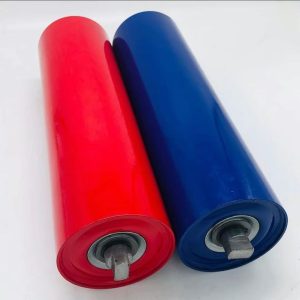
What Pulley Custom Machining Really Involves
Pulley custom machining is the practice of producing a conveyor pulley to the dimensions, load profile and surface condition of a specific conveyor line rather than selecting a stock unit. In a quarry, a cement plant or a power station coal yard, the pulley is rarely a catalogue afterthought: its shell, shaft, hubs, lagging and bearing arrangement have to match the belt width, the tension and the environment. That is why custom-machined conveyor pulleys are common in bulk handling, where a standard drum may fit the frame but not the duty.
The work usually starts from a drawing or a site measurement. Machinists turn the shaft, bore and key the hubs, roll and weld the shell, then finish the face before lagging is applied. The result is a component that behaves as one assembly, not a collection of parts.
Drive, Tail and Bend Pulleys Are Different Jobs
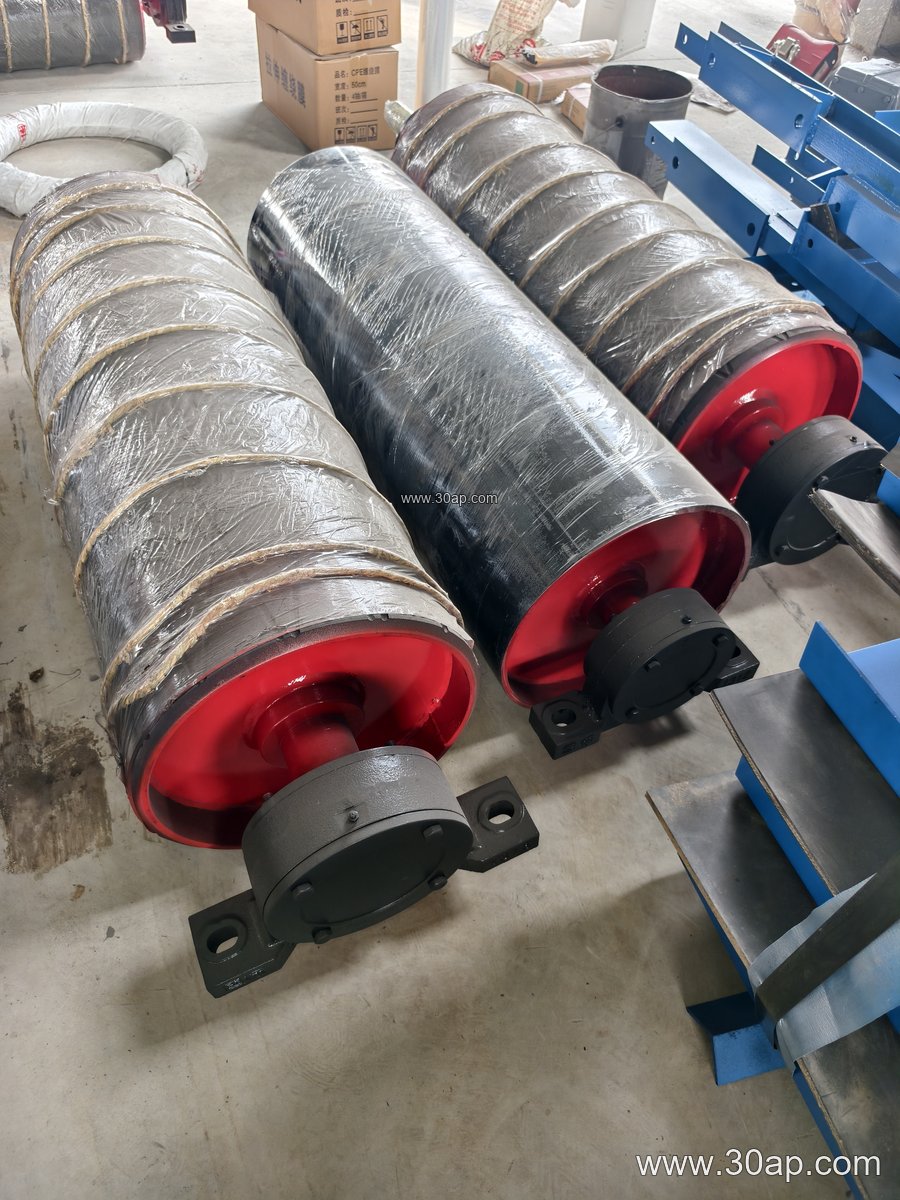
Custom machining follows function. A drive pulley transmits torque and needs a shaft sized for the drive load, plus lagging that grips the belt. A tail pulley at the loading end guides the belt and often carries impact, so its shell and bearing seats may be built heavier. A bend pulley changes belt direction under lower tension and is usually lighter. These are not interchangeable names, and a machined drive pulley should not be ordered from a tail pulley drawing.
Other positions such as head, snub and take-up pulleys each bring their own geometry. When a plant replaces a worn unit, the machinist needs to know the position, the belt pull and the available space before cutting metal.
Shell, Shaft and Surface
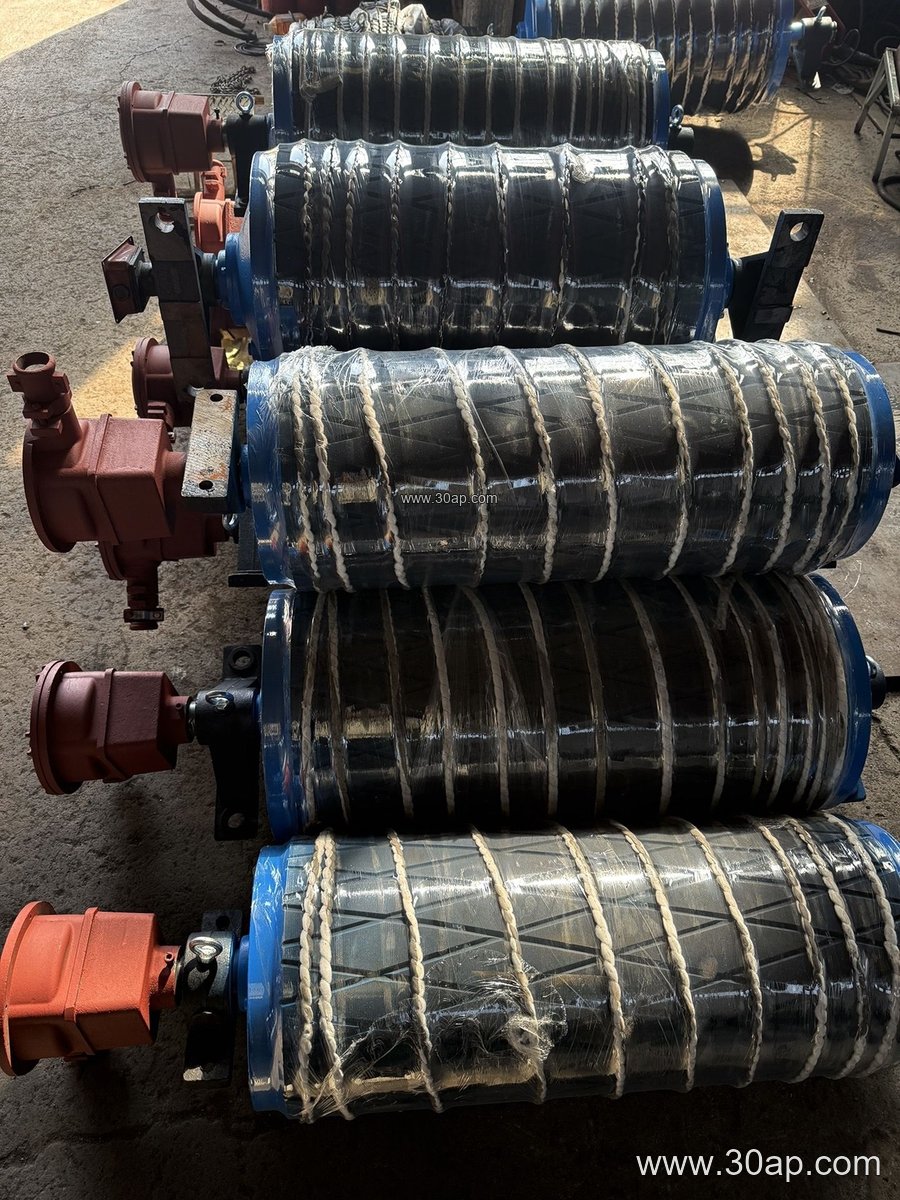
The shell is typically a rolled steel cylinder, machined at the ends for squareness and welded to the shaft or hubs. Shaft diameter is determined by torque and load, not by belt width alone, so common values such as Ø80, Ø100 or Ø140 mm appear only after calculation. Bearing seats, keyways and end plates are machined to tolerance so the pulley runs true.
Surface treatment is a major part of custom work. Plain finish suits light duty; rubber lagging improves grip; ceramic lagging resists wear in abrasive service. Common lagging thicknesses are 8, 10, 12, 15 and 20 mm. The face width normally exceeds the belt width, for example about 950 mm for a B800 belt or 1400 mm for B1200, but these are reference proportions, not fixed rules.
Where These Pulleys Are Used
Custom-machined pulleys appear wherever a belt carries heavy or abrasive material. In a limestone quarry, a head pulley with diamond lagging pulls a abrasion resistant conveyor belt through the crusher discharge. In a coal-fired power plant, a tail pulley works with a flame retardant conveyor belt on the coal yard line. In an iron ore terminal, a bend pulley guides a steel cord conveyor belt around a transfer tower. A cement plant may use a machined take-up pulley behind an EP conveyor belt feeding the clinker silo.
The pulley does not work alone. It sits between conveyor brackets, turns with the conveyor belt and is supported by idler rollers along the carry and return sides. A poorly matched pulley shows up as belt tracking problems, edge wear or noise long before it fails.
Common Reference Dimensions
The table below shows typical combinations used when discussing custom pulley work. Values are for reference and should be confirmed by design calculation.
- Belt width B400: face about 500 mm, typical diameter Ø200 to Ø315 mm
- Belt width B650: face about 750 mm, typical diameter Ø250 to Ø400 mm
- Belt width B800: face about 950 mm, typical diameter Ø315 to Ø500 mm
- Belt width B1000: face about 1150 mm, typical diameter Ø400 to Ø630 mm
- Belt width B1200: face about 1400 mm, typical diameter Ø500 to Ø800 mm
- Belt width B1400: face about 1600 mm, typical diameter Ø630 to Ø1000 mm
- Belt width B1600: face about 1800 mm, typical diameter Ø800 to Ø1250 mm
- Belt width B1800: face about 2000 mm, typical diameter Ø1000 to Ø1400 mm
Larger lines may use B2000 or B2400 belts with shells up to Ø1600 or Ø1800 mm. Shaft sizes from Ø50 to Ø200 mm are common, but the final choice follows the torque and bearing life required.
What a Buyer Should Prepare
A clear enquiry saves machining time. The buyer should state the pulley position, belt width, belt type, expected tension, shaft size if known, lagging preference and the space available for the bearing housings. It also helps to mention the material handled, because a Mining Conveyor Belt carrying wet ore demands different lagging from a food grade belt in a grain silo. Drawings of the conveyor bracket and the existing bearing centres remove guesswork.
Finally, ask how the pulley will be balanced and inspected before shipment. A custom-machined pulley is only as good as its runout and its fit to the shaft. For more on matching pulleys to belts and rollers, see the conveyor component notes at www.zqconveyorbelt.com, where conveyor pulley, idler roller and conveyor belt topics are discussed together.