What an Assembled Pulley Is
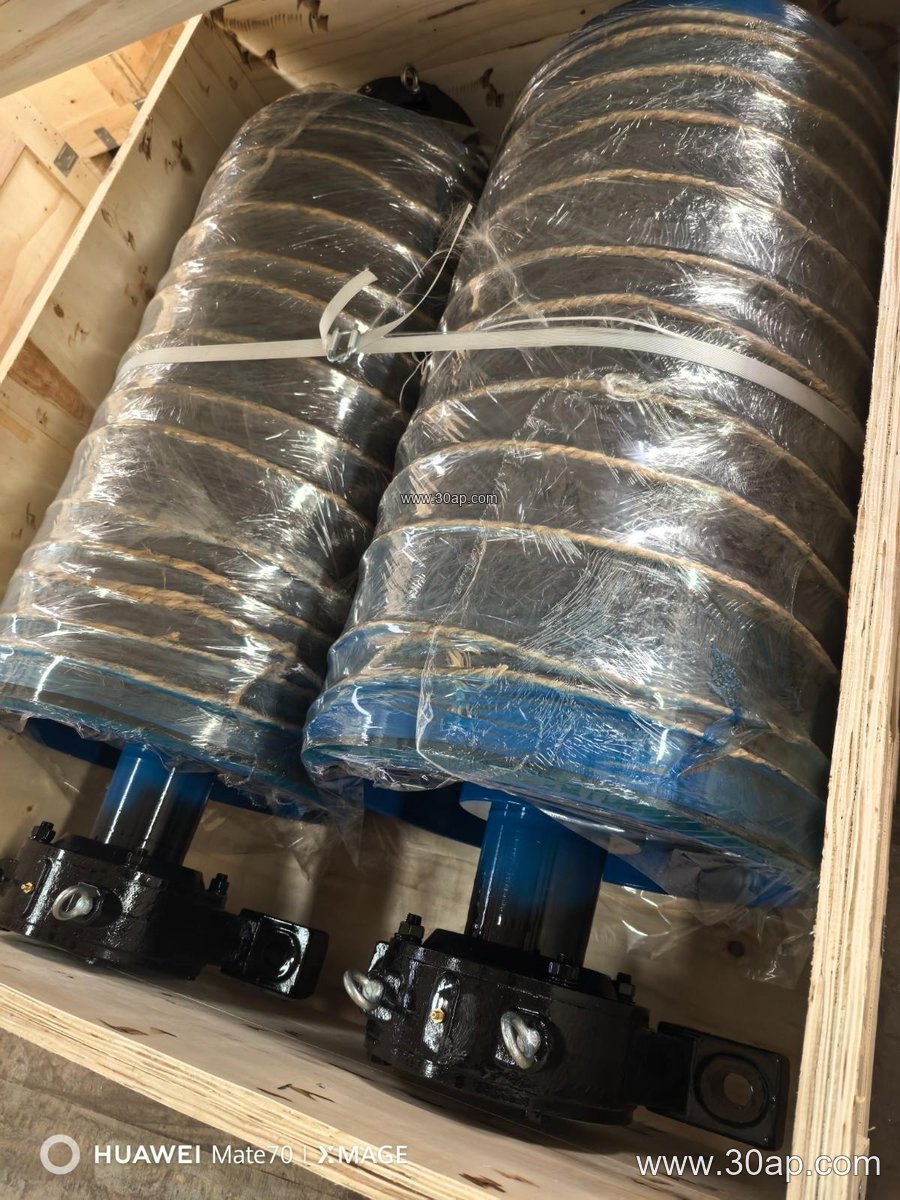
An assembled pulley is a complete, ready-to-mount conveyor pulley that arrives with its shell, shaft, hubs, bearing housings, and locking elements already put together as one unit. Instead of sourcing a bare shell and separate shaft, a plant receives a finished component that can be lifted into a conveyor frame and aligned with the belt path. Buyers often search for this item as a pre-assembled conveyor pulley or a complete pulley assembly, and both names describe the same product. The assembly is the practical building block that carries and guides the belt in mining, quarry, cement, and power plant material handling lines.
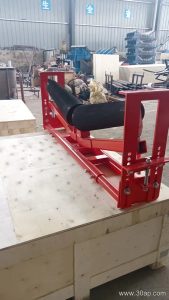
Because the pulley is assembled before delivery, the shaft-to-hub fit, end-disc welding, and bearing seating are handled in one workshop. That reduces field assembly work and lowers the risk of misalignment during installation. A conveyor bracket or frame saddle then supports the bearing housing, so the whole unit can be bolted into position.
How the Assembly Is Built
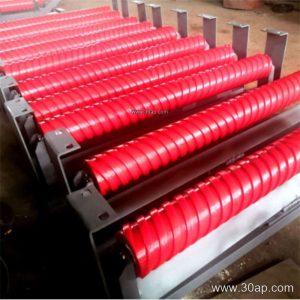
The core parts are the cylindrical shell, the shaft, two end discs or hubs, bearing housings, and a locking system such as a keyed fit or a shrink disc. The shell is usually rolled from steel plate and machined at the ends. Lagging may be bonded to the surface to improve grip. Common surface forms include plain, cast rubber, cold-bonded rubber, hot-vulcanized rubber, diamond grooving, herringbone grooving, and ceramic lagging, with lagging thickness often 8, 10, 12, 15, or 20 mm depending on the duty.
Balance matters on wider and faster units, so the assembled pulley is normally checked for runout before dispatch. Shaft diameter is not fixed by belt width alone; it follows the torque and radial load the pulley must carry. Typical shaft sizes range from about Ø50 to Ø200 mm, but the final value comes from the conveyor design.
Where It Fits in a Conveyor
In a quarry or aggregate line, an assembled pulley is often the head pulley that discharges crushed rock onto a screen. In a coal handling plant or underground coal mining conveyor, it may serve as a tail or take-up pulley that keeps tension on a flame retardant conveyor belt. A cement plant uses them on clinker and raw meal belts, while a power plant uses them on coal feed lines. The same component can act as a bend pulley to change belt direction around a transfer point.
Position changes the job. A drive pulley transmits torque and needs good lagging grip; a tail pulley mainly guides and tensions the belt; a bend pulley redirects the path without driving. These roles are not interchangeable, so the specification should match the actual location.
Common Reference Dimensions
The table below shows typical relationships between belt width and pulley face width. These are reference values, not a fixed rule, and a single belt width can work with more than one pulley diameter.
| Belt width | Typical face width | Example diameter range |
|---|---|---|
| B500 | about 600 mm | Ø250 to Ø400 |
| B650 | about 750 mm | Ø315 to Ø500 |
| B800 | about 950 mm | Ø400 to Ø630 |
| B1000 | about 1150 mm | Ø500 to Ø800 |
| B1200 | about 1400 mm | Ø630 to Ø1000 |
| B1400 | about 1600 mm | Ø800 to Ø1250 |
| B1600 | about 1800 mm | Ø1000 to Ø1400 |
Combinations such as B800 × Ø500 or B1200 × Ø1000 are common in practice, but the drive calculation decides the final diameter. A larger diameter reduces belt bending stress and can extend the life of an EP conveyor belt or steel cord conveyor belt, while a smaller one saves space.
Buyer Checklist
- Confirm the pulley role: drive, tail, bend, take-up, or snub, since each has different loading.
- Match lagging to the material: abrasion resistant lagging for ore, oil resistant grades for oily cargo, and heat resistant options near hot clinker.
- Check shaft diameter against torque, not belt width alone.
- Verify bearing type, housing position, and whether a conveyor bracket is included.
- Ask for runout and balance records on wide or high-speed units.
The pulley must work with the belt it carries. A heavy-duty mining conveyor belt with high tension needs a robust shell and shaft, while a lighter fabric core conveyor belt may suit a smaller assembly. Matching the pulley to the belt, the idler roller set, and the frame keeps the whole line running smoothly. For more on compatible components, see our conveyor pulley and conveyor belt pages.