What a Heavy-Duty Trough Idler Does on the Line
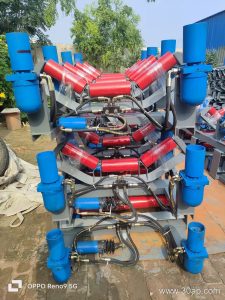
A heavy-duty trough idler is the carrying roller assembly that supports the loaded side of a conveyor belt and shapes it into a trough. On a stone crushing line or a cement plant raw-material conveyor, this idler carries the full weight of lump rock, clinker, or aggregate while keeping the belt tracking in a stable curve. The trough form matters because a flat belt tends to spill material at the edges; the angled side rollers lift the belt edges and keep the load centered. In practice, the heavy-duty version is chosen where ordinary carrying idlers would wear out too quickly, such as the discharge zone under a crusher or the transfer point where impact is continuous.
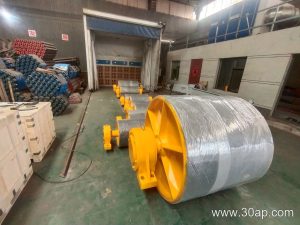
Because the belt is the most expensive wear part on the conveyor, the idler set underneath it deserves the same attention as the conveyor pulley at the head end. A well-matched trough idler reduces belt edge stress and keeps the conveyor belt running straight.
Construction Details That Matter
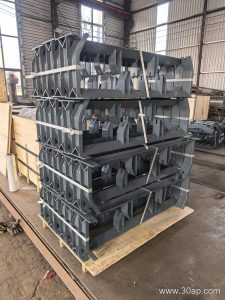
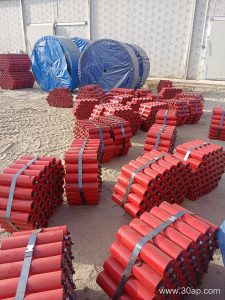
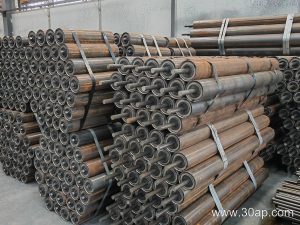
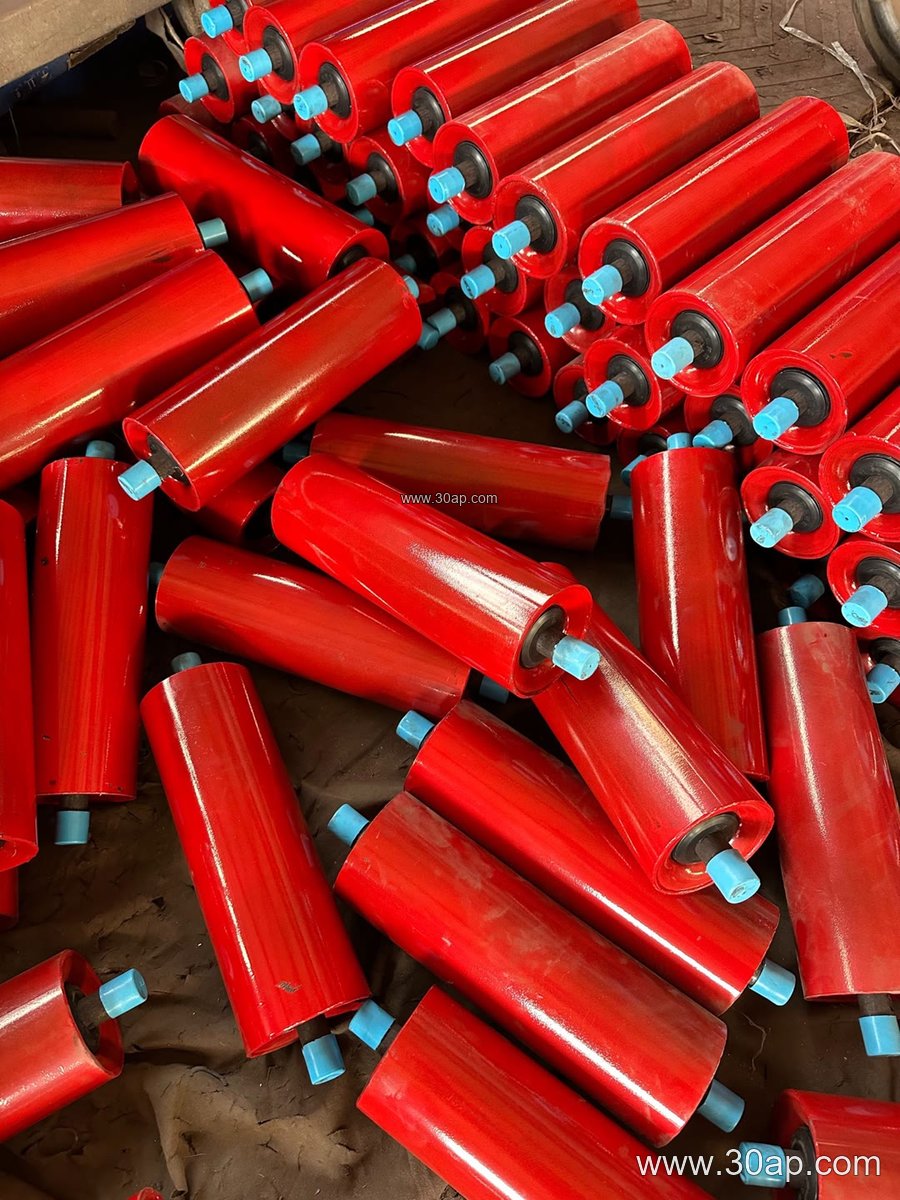
The typical heavy-duty trough idler group uses three rolls in a trough arrangement, with a center roll and two side rolls set at a trough angle. Common trough angles are 20, 30, 35, and 45 degrees, and the choice affects how deeply the belt nests and how much material it can hold. Roll diameters commonly range from Ø89 up to Ø159 and beyond on large installations, while the shell is usually steel tube, sometimes with a rubber ring or ceramic surface for abrasive duty. Bearings such as 6205, 6305, 6306, and 6308 appear across the range, but the bearing is matched to the load and speed by the designer rather than fixed to one roll diameter.
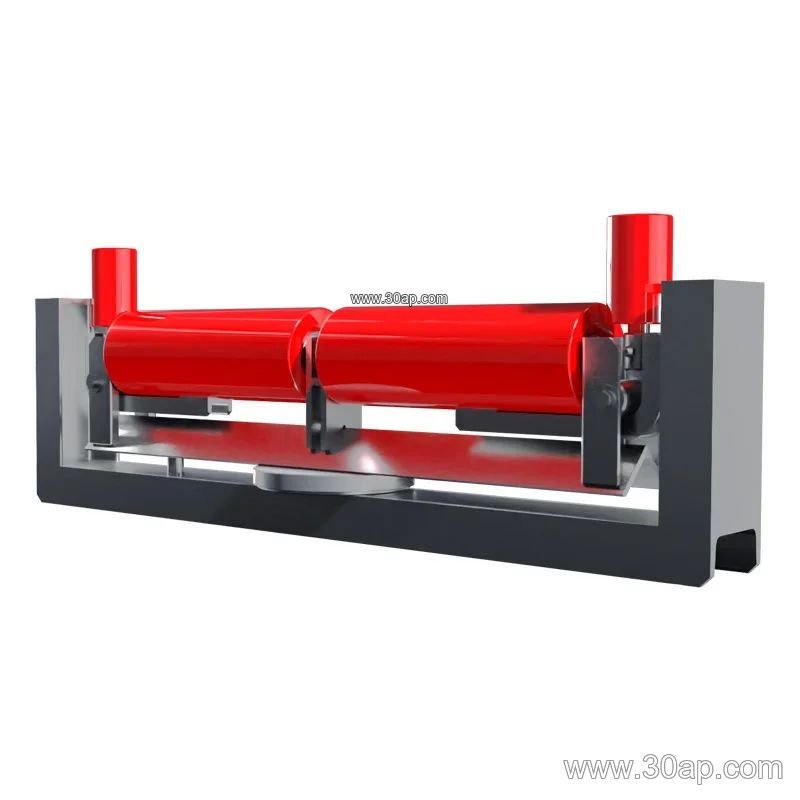
Sealing is where heavy-duty idlers earn their keep. Dust, grit, and water ingress destroy bearings faster than load does, so effective labyrinth seals and grease retention are central to service life. Check that the shaft ends fit the conveyor bracket cleanly and that the roll rotates freely before installation.
Matching Roll Length and Belt Width
Roll length follows belt width, trough angle, and the idler group form. For a three-roll trough set, common center roll lengths are roughly 200 mm for B500, 250 mm for B650, 315 mm for B800, 380 mm for B1000, 465 mm for B1200, 530 mm for B1400, 600 mm for B1600, 670 mm for B1800, and 750 mm for B2000. These are reference examples, not fixed pairings; side rolls and center rolls can differ, and the final length is set by design. A 1200mm wide conveyor belt on a 35-degree trough needs a different roll set from the same width on a 20-degree trough.
Reference Dimensions for Trough Idler Groups
| Belt Width | Typical Center Roll Length | Common Roll Diameter Range | Typical Trough Angle |
|---|---|---|---|
| B500 | about 200 mm | Ø63 to Ø89 | 20 to 35 degrees |
| B650 | about 250 mm | Ø76 to Ø108 | 20 to 35 degrees |
| B800 | about 315 mm | Ø89 to Ø127 | 30 to 35 degrees |
| B1000 | about 380 mm | Ø89 to Ø133 | 30 to 45 degrees |
| B1200 | about 465 mm | Ø108 to Ø159 | 30 to 45 degrees |
| B1400 | about 530 mm | Ø108 to Ø159 | 35 to 45 degrees |
| B1600 | about 600 mm | Ø133 to Ø178 | 35 to 45 degrees |
| B1800 | about 670 mm | Ø133 to Ø194 | 35 to 45 degrees |
| B2000 | about 750 mm | Ø159 to Ø219 | 35 to 45 degrees |
Values are indicative for early planning only. Confirm roll length, shell thickness, and bearing selection against the actual conveyor design and the belt load profile. A heavy-duty conveyor belt carrying iron ore at high tonnage will call for larger roll diameters and heavier shells than a light aggregate line.
Where These Idlers Are Used
Two settings where the heavy-duty trough idler is hard to replace: the primary crushing area of a quarry or copper ore concentrator, and the coal handling stream of a power plant. In both, the belt sees sharp edges, lumps, and constant dust, and the carrying idlers sit directly under the impact zone. Downstream, the same idler group supports the belt through long horizontal runs and gentle curves, working alongside the conveyor pulley at the drive and tail positions to keep tension and tracking stable.
Other common homes include cement plant clinker conveyors, sinter lines at steel plants, and port ship-loading systems where a wide belt moves bulk material at speed. In each case, the heavy-duty trough idler is one part of a system that also includes the conveyor bracket, frame, and the belt itself.
Buyer Checklist Before Ordering
- Confirm belt width and trough angle, since both drive the roll length and the trough depth.
- State the material: abrasive rock, hot clinker, or wet coal each points to a different shell and seal choice.
- Check roll diameter and bearing size against the actual load and belt speed, not against a rule of thumb.
- Verify shaft end dimensions match the existing conveyor bracket before committing to a full set.
- Ask how the seal handles dust and washdown; this is often the difference between two seasons and many years of service.
For abrasive duty, a high abrasion resistant conveyor belt paired with well-sealed trough idlers usually delivers lower total cost than upgrading only one component. For hot material, a heat resistant conveyor belt and heat-tolerant idler surfaces should be considered together. Buyers comparing quotes should look at shell wall thickness, bearing brand and clearance, and seal design rather than price alone. Further details on matching idlers to a specific belt line are available at conveyoridler.com.