What a Rubber Ring Impact Idler Does
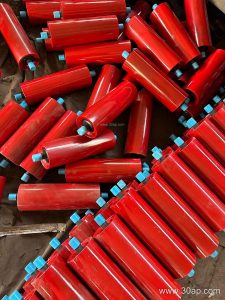
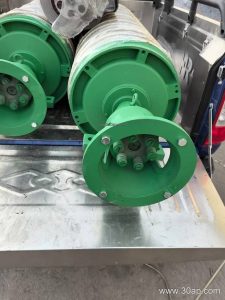
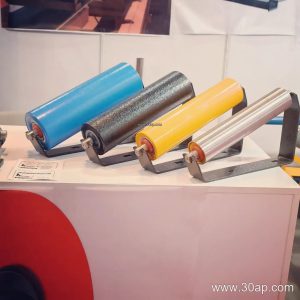
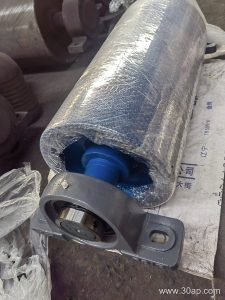
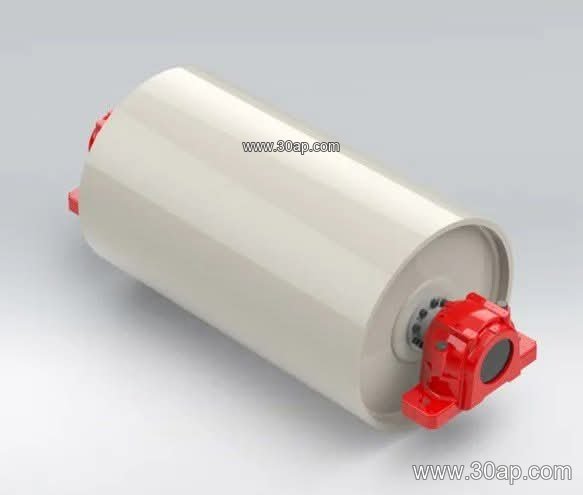
A Rubber Ring Impact Idler is a cushioning roller placed under the conveyor belt at points where material hits the belt with force. Instead of a plain steel shell, the roller carries a series of thick rubber rings or discs along its length. These rings absorb the energy of falling rock, ore, clinker, or aggregate, so the belt and the roller frame see less shock. The same product is also called a rubber-disc impact roller or rubber-ring buffer idler, and those names describe exactly the same item. It is not a drive pulley, tail pulley, or bend pulley; those are conveyor pulleys that transmit or redirect belt tension, while this roller only supports and protects the belt.
Construction and How the Rings Work
The body usually starts with a steel tube and a through shaft, fitted with sealed bearings at each end. Rubber rings are then pressed onto the shell, often held by end plates or retaining collars. The rubber grade is normally chosen for resilience and abrasion resistance rather than for high tensile strength, because the job is to deform and recover. Bearing seats and seals matter as much as the rubber: fine dust from a crusher or a coal bunker will destroy an ordinary bearing quickly, so good labyrinth seals and grease retention are worth checking.
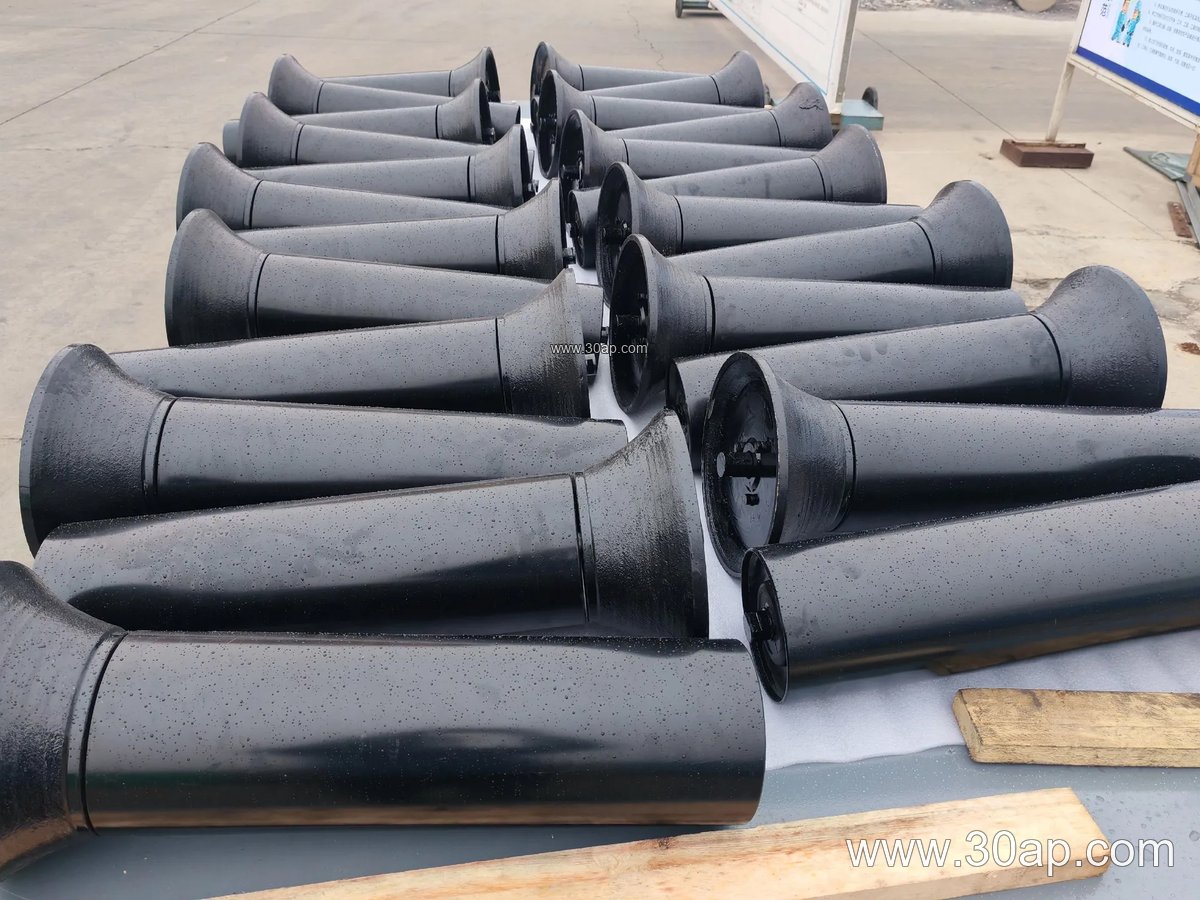
Ring hardness, ring thickness, and the gap between rings vary by maker. A softer ring cushions more but wears faster under sharp, hot material; a harder ring lasts longer but transmits more shock. In practice, the ring pattern is matched to the lump size and drop height at the transfer point.
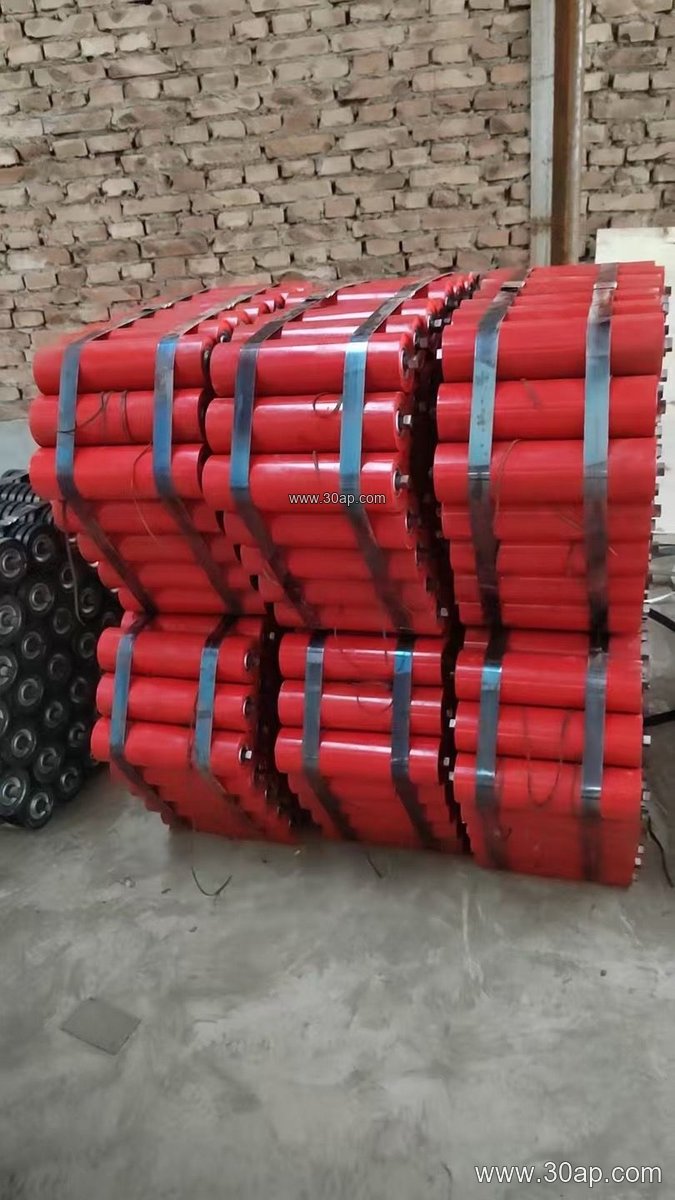
Where It Fits on the Conveyor
The usual location is the loading zone, directly beneath the chute or skirtboard, sometimes on a short impact bed rather than on individual rollers. Typical industries include:
- Quarries and aggregate lines receiving crushed stone from a primary crusher
- Coal handling at a power plant or a coal preparation plant
- Cement plants handling clinker and limestone
- Iron ore, copper ore, and other mineral transfer stations
- Port and ship-loading conveyors with high drop heights
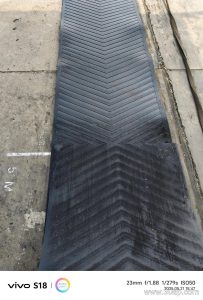
On these conveyors the belt itself is often a heavy-duty rubber conveyor belt or an abrasion resistant conveyor belt, and the impact zone is where most belt damage begins. A few rubber ring impact idlers at the right spot can extend the life of an expensive EP conveyor belt or steel cord conveyor belt far more than adding rollers elsewhere.
Common Sizes and Matching to the Belt
Roller diameter and belt width are selected together, but there is no single fixed pairing. The table below shows typical reference values only; final dimensions follow the conveyor design.
| Item | Common reference values |
|---|---|
| Roller diameter | Ø89, Ø102, Ø108, Ø127, Ø133, Ø159, Ø178 mm |
| Belt width | B500, B650, B800, B1000, B1200, B1400, B1600, B1800 mm |
| Trough angle | 20°, 30°, 35°, 45° |
| Idler set form | single roller, two-roll, three-roll troughing |
| Bearing | 6205, 6305, 6306, 6308, 6310 (matched to load and shaft) |
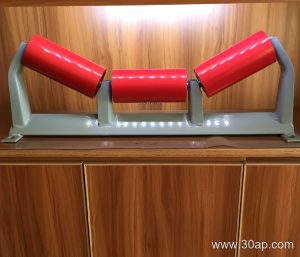
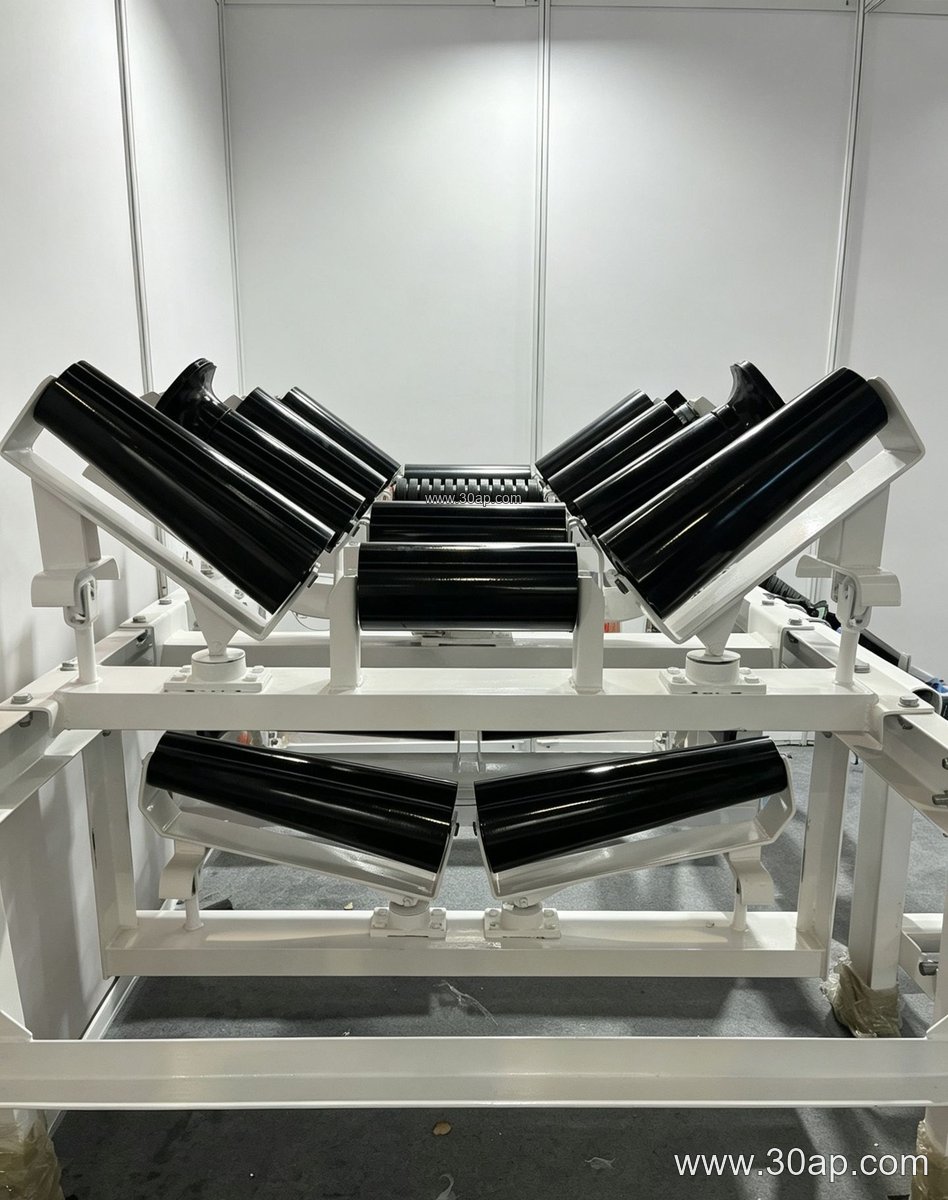
For a three-roll troughing set, the roller length changes with belt width and trough angle. As a rough example, a B800 belt may use rollers around 315 mm long and a B1200 belt around 465 mm, but side rollers and centre rollers can differ, and the impact section may use a different arrangement altogether. Do not assume that one belt width locks in one roller diameter or one shaft size.
Buyer Checklist
- Confirm the actual drop height and maximum lump size at the transfer point.
- State the belt width, trough angle, and whether the impact section is a full idler set or an impact bed.
- Ask about ring hardness, ring thickness, and the retaining method for the rings.
- Check bearing size, seal type, and lubrication access against the local dust and water conditions.
- For hot material such as clinker, confirm the rubber compound suits the temperature; standard rings are not a substitute for a heat resistant conveyor belt in the whole system.
Maintenance is simple but should be regular. Inspect for worn or missing rings, check that the roller still turns freely, and re-grease sealed bearings at the interval recommended for the site. A seized impact roller will flat-spot the belt quickly, especially under a crusher discharge where the load is constant.
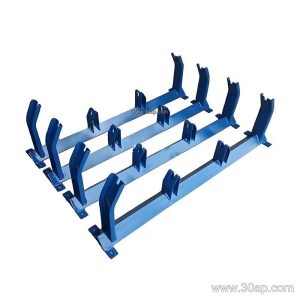
For a full conveyor layout, the impact idlers work alongside the conveyor bracket, the return idler roller, and the conveyor pulley, but each has its own role. Specify the Rubber Ring Impact Idler by duty, not by habit, and the loading zone will reward you with fewer belt replacements.