What an Adjustable Conveyor Bracket Does
An adjustable conveyor bracket is a support component that holds the idler roller assemblies at a controlled position under or over the conveyor belt. Unlike a fixed bracket welded or bolted to one permanent angle, this type lets maintenance staff change the troughing angle, the roller spacing or the belt line height within a defined range. In a stone crushing line or a cement plant, that flexibility matters because the same conveyor frame may carry different loads and belt conditions over its working life.
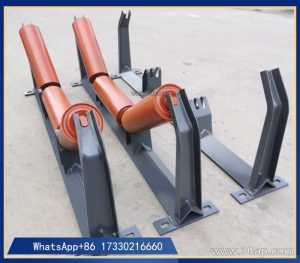
The bracket itself is usually a fabricated steel part. Common materials are angle steel, channel steel or folded steel plate. The frame carries mounting slots or a pivoting arm, so the idler roller can be set at 20, 30, 35 or 45 degrees of trough angle, depending on the design. This is the same product often called an adjustable idler bracket or adjustable roller support bracket, and the names refer to one item, not to separate machine types.
How the Adjustable Design Is Built
A typical adjustable bracket combines a base plate, a pair of side arms and a locking mechanism. The side arms pivot or slide, and bolts lock the chosen position. Some versions use a series of punched holes; others use a curved slot with a clamp bolt. The locking detail should resist vibration, because a loose bracket can shift the roller and cause belt misalignment.
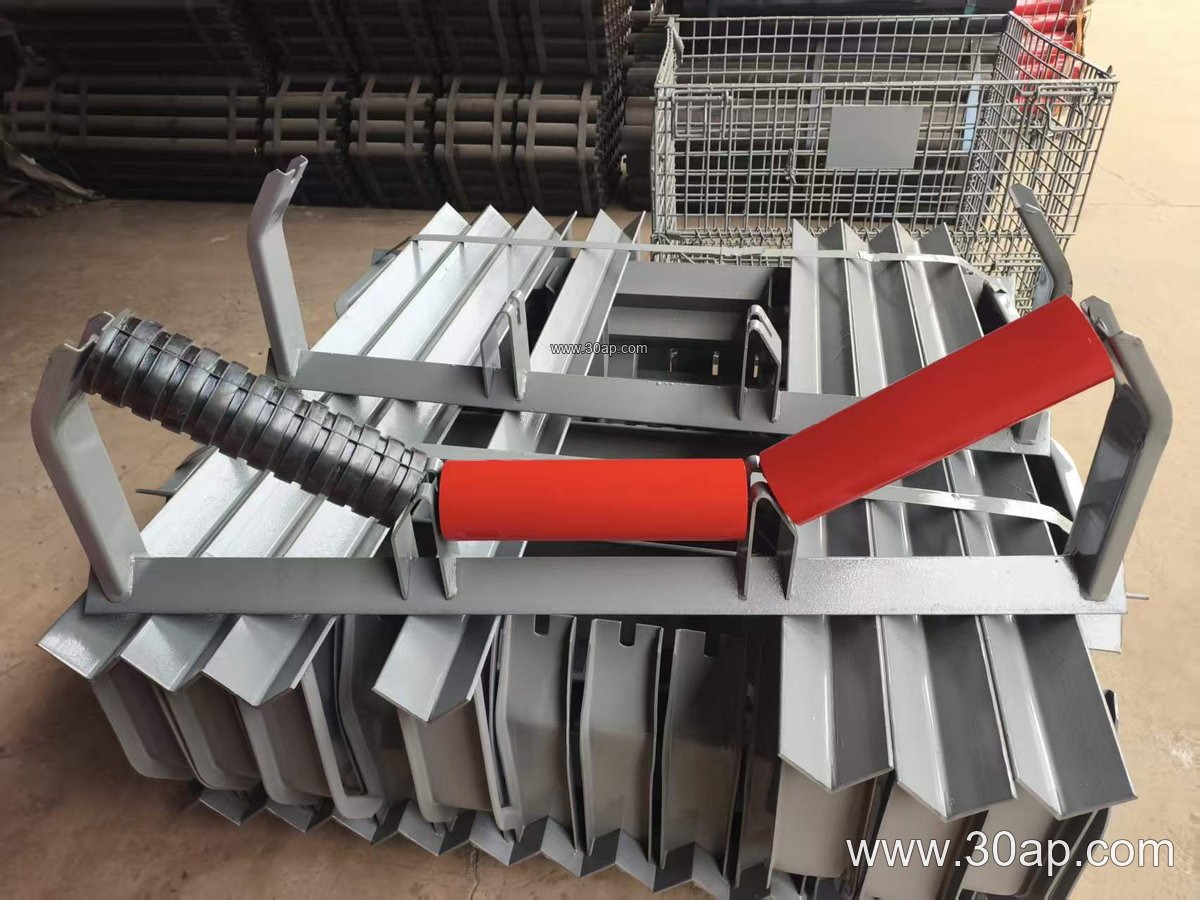
Build quality shows in the welds, the thickness of the steel and the finish. A powder-coated or galvanized surface helps in wet or dusty service. Because the bracket works together with the conveyor belt and the idler roller, the mounting height and hole spacing must match the frame. These dimensions are normally set by the conveyor design, not by a single universal figure.
Where Adjustable Brackets Are Used
These brackets appear wherever the conveyor profile or the material load changes. In a coal handling system at a power plant, the transition zone between the feed point and the steady run is a common location. In a quarry or aggregate line, the bracket helps tune the trough shape after a crusher discharge, where lump size and impact vary.
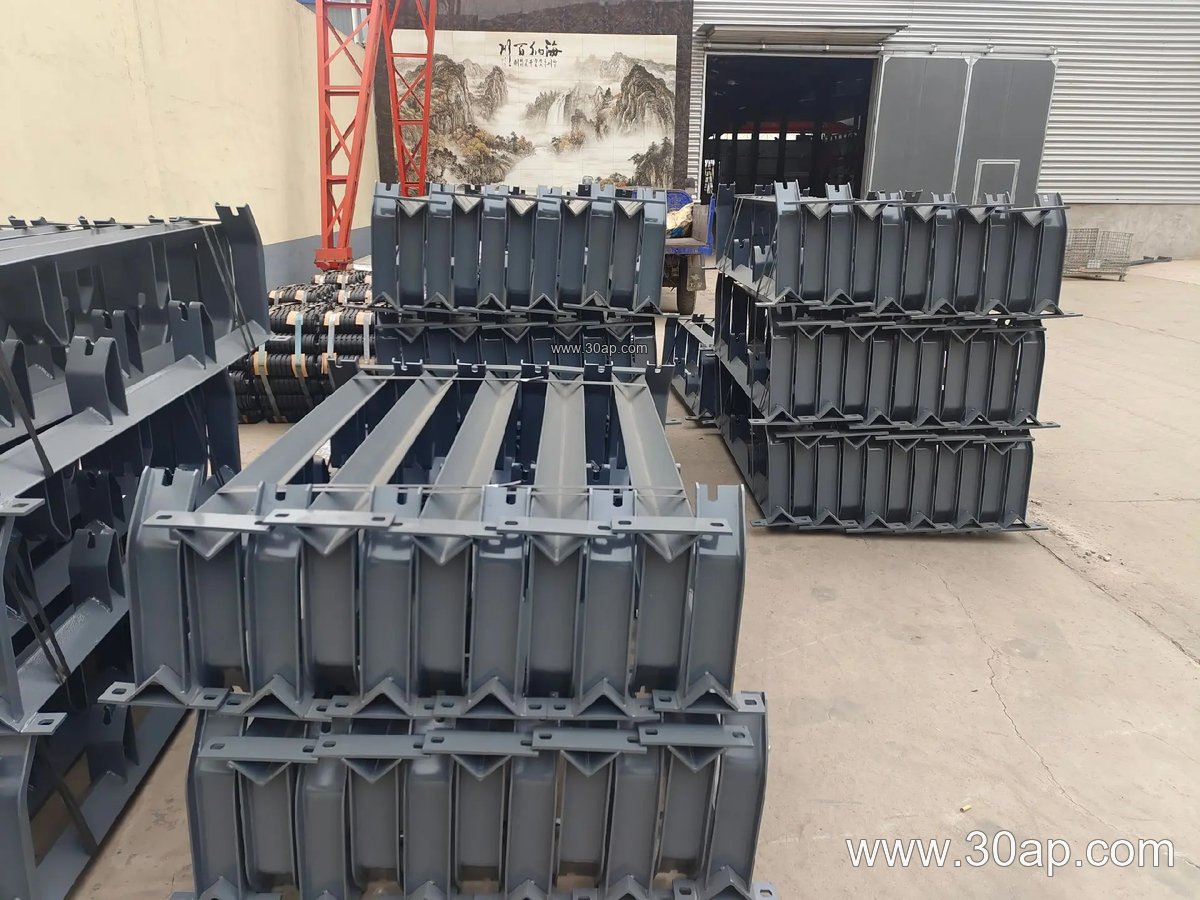
They are also useful on conveyors that carry different products over time, and on frames that must be re-tensioned or re-levelled after installation. A mining conveyor belt in an underground roadway may need periodic adjustment as the floor settles. The bracket allows that correction without cutting and re-welding the frame.
Matching the Bracket to Belt Width and Roller Diameter
Belt width and roller diameter are the first things to check. Common belt widths range from B500 and B650 up to B1800 and B2000. Roller diameters are often Ø89, Ø108, Ø133, Ø159 or Ø194. A wide belt does not force one particular roller size, and one belt width can be paired with more than one trough angle. The table below shows reference combinations only; final values follow the conveyor design.
| Belt width | Typical trough angle | Common roller diameter |
|---|---|---|
| B500 / B650 | 20° to 30° | Ø89 |
| B800 / B1000 | 30° to 35° | Ø108 / Ø133 |
| B1200 / B1400 | 35° to 45° | Ø133 / Ø159 |
| B1600 / B1800 | 35° to 45° | Ø159 / Ø194 |
These figures are reference data, not a supply promise. Installers should confirm hole pitch and crossbeam length against the actual frame. A forward tilt of about 1.5 to 2 degrees is sometimes used on training brackets, but that is a separate function from the adjustable trough angle.
Adjustable Versus Fixed Brackets
A fixed bracket is simpler and cheaper, and it suits a conveyor that will never change duty. An adjustable bracket costs more but pays back when the belt must be re-aligned, when the trough angle needs correction, or when the roller size is changed during an upgrade. For a long overland conveyor carrying abrasive ore, a fixed bracket may be enough. For a short transfer conveyor in a batching plant, the adjustable version is easier to service.
It is worth noting the difference from other support types. A transition bracket, a buffer bracket and a self-aligning bracket each serve their own purpose, and none of them replaces an adjustable bracket as the main subject here. Drive pulleys, tail pulleys and bend pulleys are also different components and should not be confused with the bracket.
Buyer Checklist
- Confirm belt width and the required trough angle range before ordering.
- Check the roller diameter and the shaft end size that the bracket must hold.
- Ask for the mounting hole spacing and crossbeam length for the actual frame.
- Confirm the steel grade and surface treatment for the site conditions.
- Check that the locking bolt can be reached with standard tools.
For a heavy-duty mining conveyor belt or an abrasion resistant conveyor belt on a long run, a sturdy bracket reduces downtime. For lighter duty, such as a food grade conveyor belt in a warehouse, a lighter bracket is often sufficient. Matching the bracket to the belt, the idler roller and the pulley layout is the key to stable tracking and long service life.