What a Conveyor Idler Frame Does
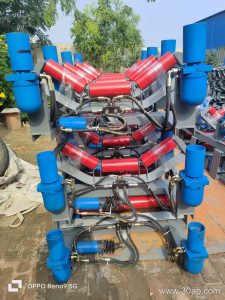
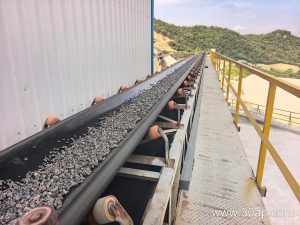
A conveyor idler frame is the structural element that holds idler rollers in the correct position under or above the conveyor belt. Without a rigid, well-aligned frame, even a high-quality idler roller cannot keep the belt tracking properly or maintain its trough shape. In a quarry, a cement plant, or a power plant coal yard, the frame is the quiet workhorse that determines how evenly the belt is supported along the whole run.
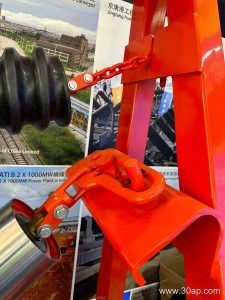
The frame itself carries no drive function. It is not a conveyor pulley, and it should never be confused with a drive pulley, tail pulley, or bend pulley. Those components transmit power or change belt direction, while the idler frame simply locates and supports idlers. A conveyor bracket or mounting plate is the interface between the frame and the conveyor stringer, so alignment at that joint matters as much as the frame’s own strength.
How the Frame Is Built
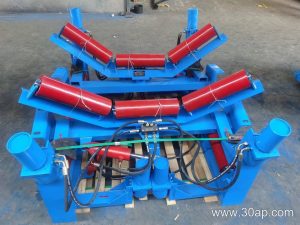
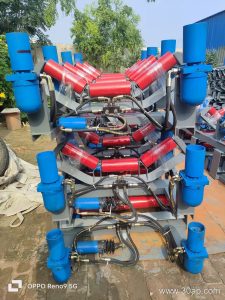
Most frames are fabricated from angle steel, channel steel, or folded steel plate. The choice depends on load, belt width, and the number of idlers carried. A troughing frame usually has two angled wings and a central base, with slots or holes that accept the idler shafts. Return frames are flatter, and V-return frames hold two idlers in a shallow V to help center the belt on the return side.
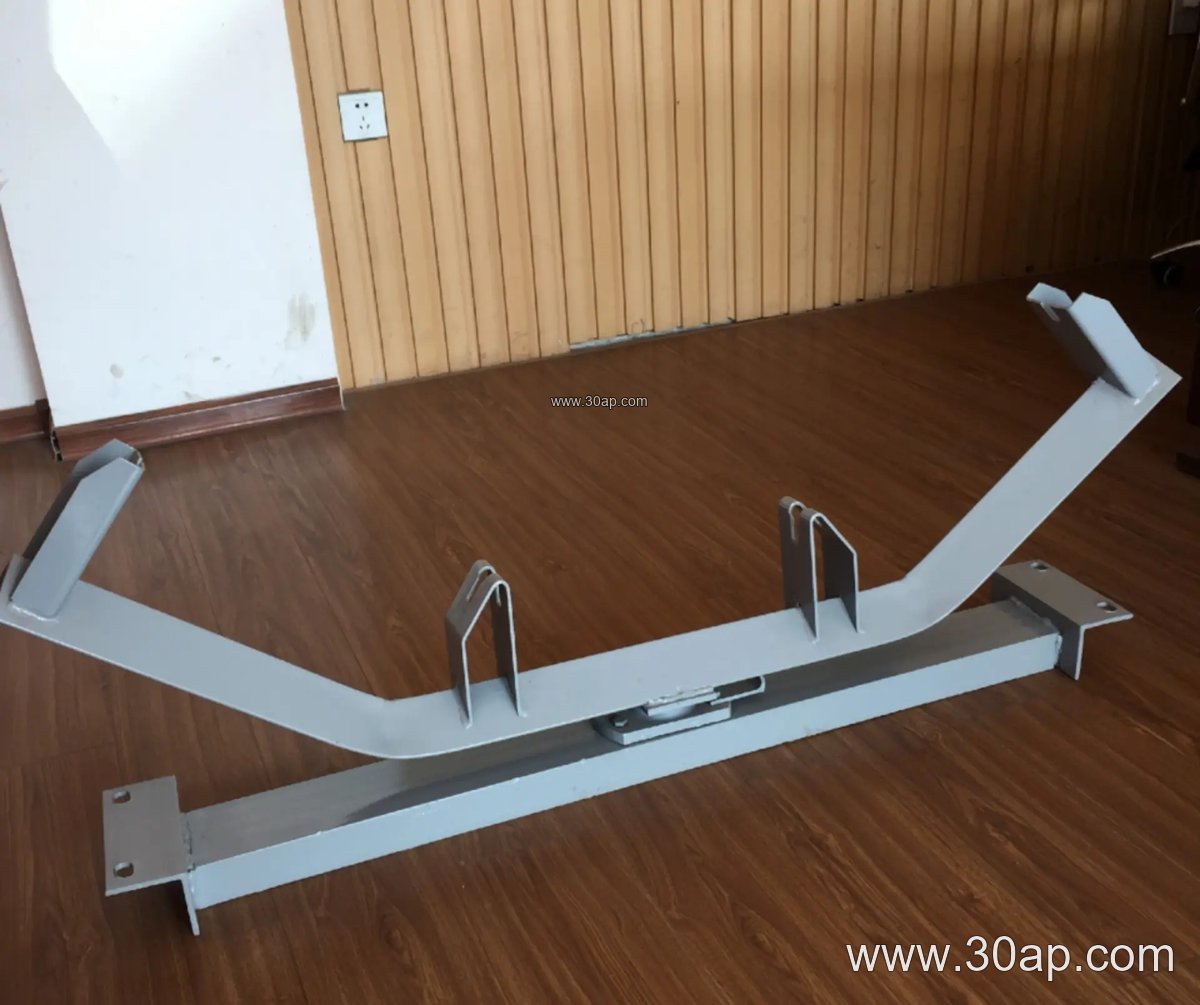
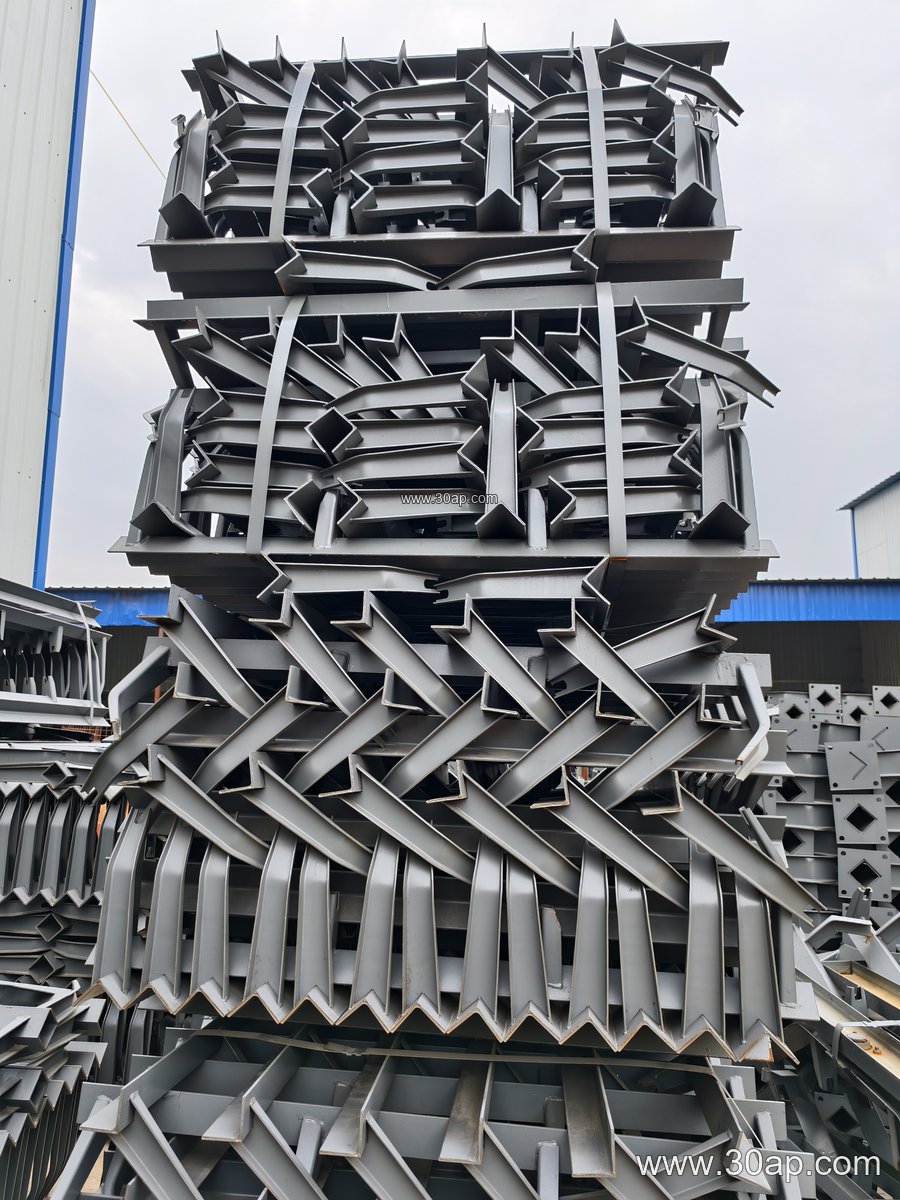
Common frame types include troughing frames, upper transition frames, return frames, flat lower frames, V-return frames, impact frames, self-aligning frames, forward-leaning frames, spiral idler frames, suspended frames, and adjustable frames. Each has a distinct job. A self-aligning frame, for example, corrects minor belt drift, while an impact frame under a loading point absorbs the force of falling material. These are different frame subtypes, not interchangeable with one another.
Matching Frame, Belt, and Idler
Frame selection starts with belt width and trough angle. Typical belt widths run from B500 up to B2200, and common trough angles are 20, 30, 35, and 45 degrees. Adjustable frames can be set between these angles during installation. Idler diameters commonly include Ø89, Ø108, Ø133, Ø159, and Ø194. A frame might be described as B800, 35 degrees, Ø108, or B1200, 45 degrees, Ø133, but no single belt width is locked to one angle or one roller diameter. Mounting hole spacing and beam length change with belt width and trough angle, so they should be confirmed against the conveyor design rather than assumed.
| Frame Type | Typical Position | Common Belt Width | Trough Angle | Idler Diameter |
|---|---|---|---|---|
| Troughing frame | Carrying side | B650 to B1800 | 30 to 45 degrees | Ø89 to Ø159 |
| Transition frame | Near pulley | B800 to B2000 | 20 to 35 degrees | Ø108 to Ø194 |
| V-return frame | Return side | B500 to B1600 | V shape | Ø89 to Ø133 |
| Impact frame | Loading point | B800 to B1600 | 30 to 45 degrees | Ø108 to Ø159 |
Frames work alongside the conveyor belt and the idler roller set. On a heavy-duty mining conveyor belt or a steel cord conveyor belt carrying iron ore, the frame must resist vibration and occasional surge loads. On a long overland line using an EP conveyor belt or NN conveyor belt, consistent frame alignment reduces belt edge wear and extends roller life.
Where These Frames Are Used
You will find idler frames in almost any bulk handling line. In a limestone mine or aggregate crushing circuit, troughing frames carry abrasive rock on an abrasion resistant conveyor belt. In a coal washing plant, flame retardant conveyor belt and self-aligning frames help keep the belt centered through transfer points. Cement plants use them on clinker and raw meal lines, while port terminals rely on wide frames under a 1200mm or 1500mm wide conveyor belt moving at high tonnage.
In a steel plant sintering line or a fertilizer granulation unit, heat resistant conveyor belt and oil resistant conveyor belt may run over frames that need careful spacing to avoid belt sag. The frame does not solve belt problems alone, but correct frame geometry supports every other component in the system.
What Buyers Should Check
- Confirm belt width, trough angle, and idler diameter together, not separately.
- Ask for the mounting hole spacing and beam length that match your stringer layout.
- Specify fixed or adjustable frames based on whether field angle changes are expected.
- Check material thickness and finish for dusty, wet, or corrosive sites.
- Match frame type to position: carrying, return, transition, impact, or self-aligning.
A well-chosen conveyor idler frame keeps idlers square to the belt, spreads load evenly, and makes maintenance faster. Buyers who treat the frame as a precision part rather than a simple bracket usually get longer belt and roller service life in return.