What a Tapered Idler Does
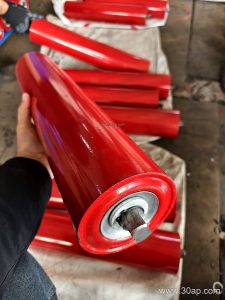
A tapered idler is a roller whose shell is machined with a slight taper along its length. This conical profile is not a decorative detail; it is the feature that makes the roller useful for keeping a conveyor belt centered. As the belt drifts toward one side, it contacts the larger diameter of the taper, which turns faster and gently guides the belt back. In many plants, this component is also called a conical idler or taper roller, and it belongs to the self-aligning family of idlers rather than to standard carrying or return rolls.
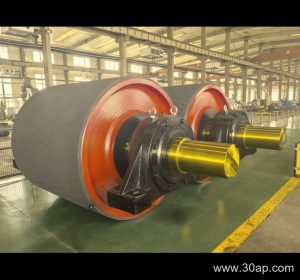
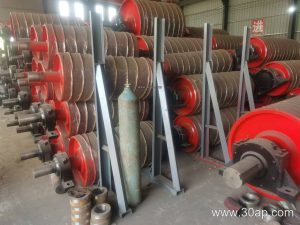
The tapered idler should not be confused with a drive pulley, tail pulley, or bend pulley. Those are conveyor pulleys that transmit power or change belt direction. The tapered idler is a free-rotating roller mounted on a conveyor bracket, usually in pairs, to correct misalignment along the carrying run or return run.
Construction and Mounting
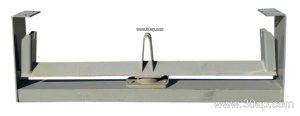
Most tapered idlers use a steel tube shell with a machined taper at one end. The roller surface may be plain steel, nylon-coated, or covered with rubber rings for better grip in wet or dusty conditions. Inside, common bearing sizes include 6204, 6205, 6305, 6306, 6308, and 6310, paired with a labyrinth or contact seal to keep out fines. The shaft ends sit in a bracket that allows the roller to pivot slightly, so the taper can follow the belt edge.
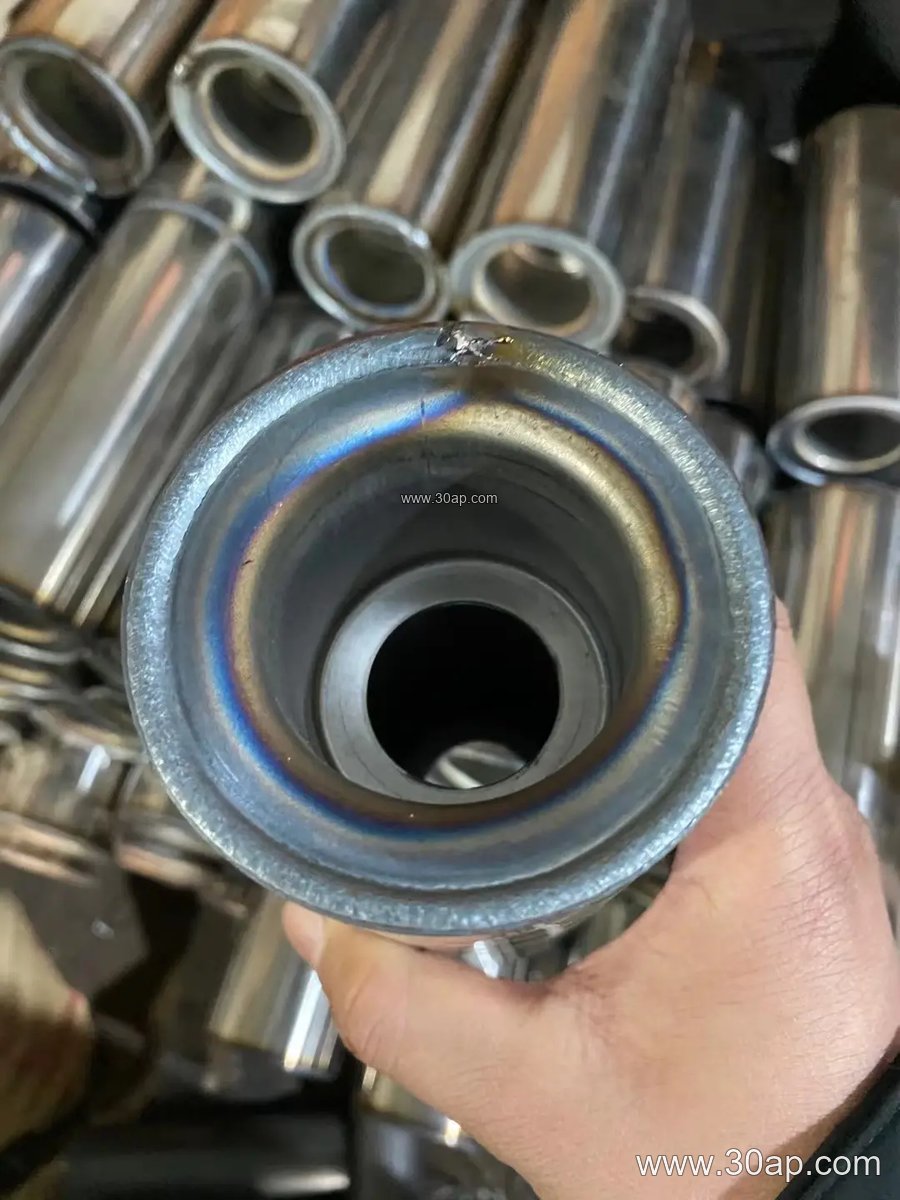
Typical roller diameters for tapered idlers fall in the same range as other idlers: Ø63, Ø76, Ø89, Ø102, Ø108, Ø127, Ø133, Ø159, and larger sizes up to Ø219. The taper itself is usually a few degrees, enough to create a speed difference without putting excessive edge pressure on the belt. Roller length is matched to belt width and mounting position, not chosen from a fixed table.
Where It Fits on the Conveyor
Tapered idlers are common in quarry conveying, limestone and iron ore handling, coal preparation plants, cement plants, and power station coal yards. They are often installed just ahead of the head pulley or after a loading point where the belt is most likely to wander. In a three-roll carrying set, the tapered idlers usually replace the outer rolls, while the center roll remains a standard cylindrical idler. On the return side, they may be used alongside V-return idlers or flat return rollers.
For wider belts, such as 1200mm, 1400mm, or 1800mm wide conveyor belts, a pair of tapered idlers can be more effective than a single self-aligning roller because the taper acts on both belt edges. The same principle applies on narrower 650mm or 800mm belts, but the mounting brackets and roller lengths are smaller.
Selection Points for Buyers
When specifying a tapered idler, the belt width and trough angle matter most. Common trough angles are 20, 30, 35, and 45 degrees. The roller diameter should suit the belt speed and load, while the bearing size should match the shaft and bracket. The roller surface choice depends on the material: rubber rings help in wet aggregate or muddy ore, while nylon or ceramic covers may suit abrasive conditions.
Buyers should also confirm the mounting bracket dimensions and the distance between the taper and the belt edge. A tapered idler works best when the belt has enough tension and the loading is reasonably centered; it is not a substitute for proper belt training or for fixing a badly off-center conveyor pulley. In dusty plants, sealed bearings and a smooth taper surface reduce sticking and extend service life.
Maintenance and Comparison
Inspect tapered idlers for shell wear, seal condition, and free rotation during routine belt inspections. A worn taper or a seized bearing will reduce alignment effect and can damage the belt edge. Unlike a friction self-aligning idler that relies on contact with the belt surface, the tapered idler uses its shape to create a steering force, so the taper must stay clean and true.
For heavy-duty mining conveyor belts, including abrasion resistant and flame retardant conveyor belt systems, tapered idlers are often used together with standard carrying idlers and impact idlers. They are not a replacement for a drive pulley or a bend pulley, but a focused alignment component that helps the belt run straight and last longer.