What a Three-Roll Idler Bracket Does
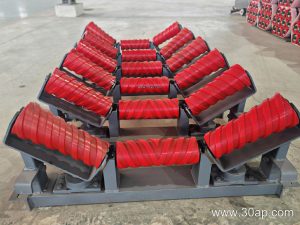
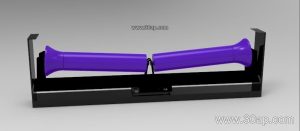
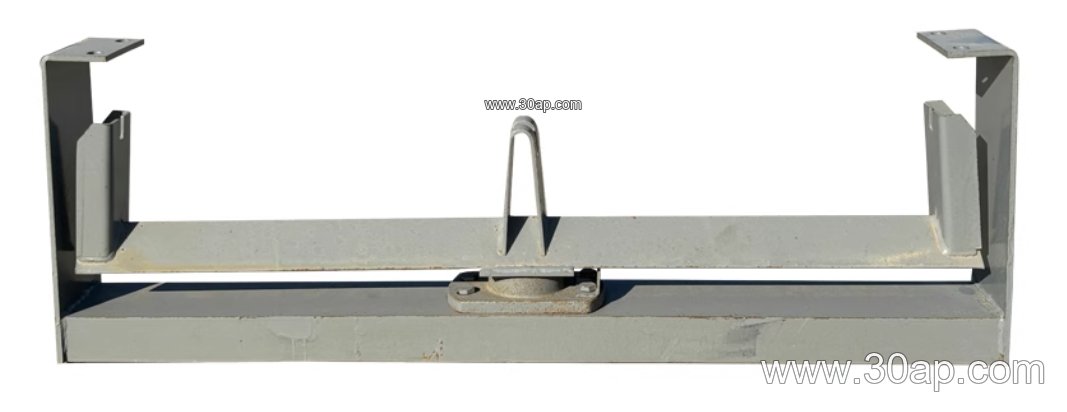
A three-roll idler bracket is the steel support assembly that holds three idler rollers in a trough shape so a conveyor belt can carry bulk material without spilling. The center roll sits flat or slightly raised, while the two side rolls angle upward. This arrangement is why the part is often called a troughing idler bracket or troughing bracket, and the name refers to the same product in everyday plant language. The bracket carries the load from the rollers into the conveyor frame, so its stiffness and alignment matter as much as the rollers themselves.
In a quarry, a cement plant, or a power plant coal yard, a drifting bracket shows up quickly as belt edge wear or material spillage. That is the practical reason maintenance teams keep spare brackets on the shelf alongside the idler roller sets.
How the Bracket Is Built
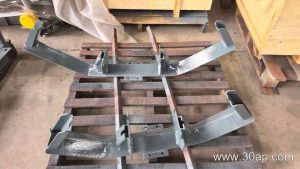
Most three-roll idler brackets are fabricated from angle steel, channel steel, or folded steel plate. The two side arms are formed at a fixed trough angle, and the cross member ties them to the conveyor stringer. Roller slots or mounting holes are positioned so that each idler roller drops in and locks without shimming.
Common trough angles are 20 degrees, 30 degrees, 35 degrees, and 45 degrees. A fixed bracket is welded or bolted at one angle, while an adjustable bracket allows the side arms to be set between these angles during installation. Forward-leaning designs, usually around 1.5 to 2 degrees, are used where belt tracking needs a gentle centering effect. The mounting hole spacing and cross member length change with belt width and trough angle, so they are determined by design rather than treated as a single universal number.
Common Reference Combinations
The table below shows typical pairings used in specifications. These are reference examples, not fixed rules, and a given belt width can work with more than one roller diameter or trough angle.
| Belt Width | Trough Angle | Roller Diameter | Typical Use |
|---|---|---|---|
| B500 | 20 degrees | Ø89 | Light aggregate or sand lines |
| B650 | 30 degrees | Ø89 | Small crusher feed conveyors |
| B800 | 35 degrees | Ø108 | General bulk material handling |
| B1000 | 35 degrees | Ø133 | Cement and coal conveying |
| B1200 | 45 degrees | Ø133 | High-capacity troughing stations |
| B1400 | 35 degrees | Ø159 | Heavy ore and rock duty |
| B1600 | 45 degrees | Ø159 | Mainline mining conveyors |
| B1800 | 35 degrees | Ø194 | Large tonnage transfer points |
Where It Fits on the Conveyor
Three-roll idler brackets are installed on the carrying side of the conveyor, spaced along the stringers between the tail and head pulleys. They are not a substitute for the drive pulley, tail pulley, or bend pulley; those components transmit power and change belt direction, while the bracket only supports the belt and its load.
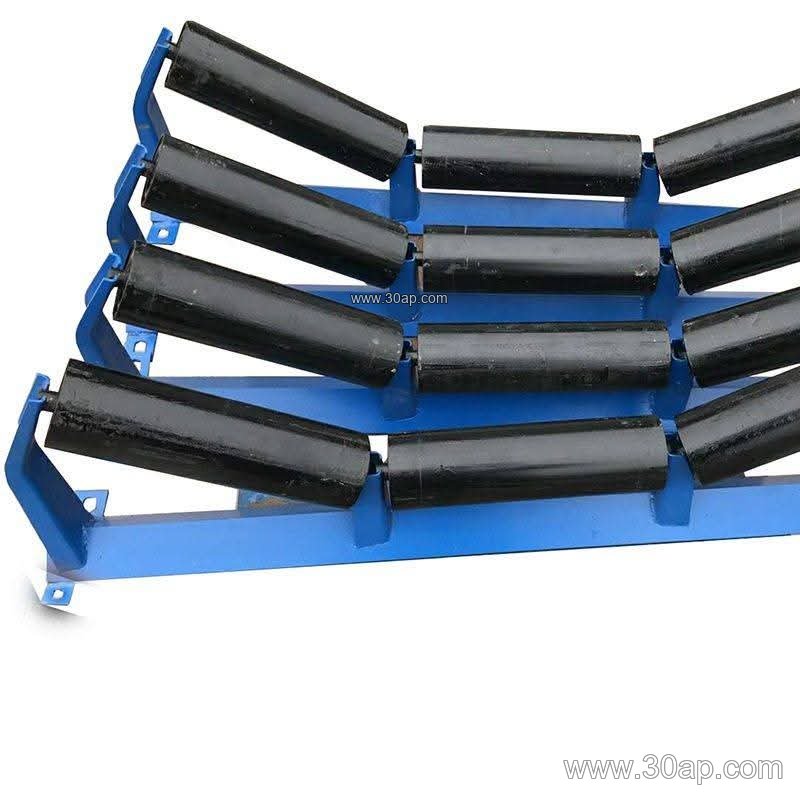
Typical locations include crusher discharge conveyors in a stone crushing plant, coal handling galleries at a power station, clinker transport in a cement works, and ore transfer lines at an iron ore mine. In dusty or wet conditions, a self-aligning bracket or a forward-leaning bracket can help keep the belt centered, especially where the belt carries uneven loads. For impact zones below a crusher, a buffer bracket with resilient roller mounts is a separate subtype and is chosen for shock absorption rather than normal carrying duty.
Buyer Checklist
- Confirm the belt width and the required trough angle before ordering, since the bracket geometry follows both.
- Match the roller diameter to the existing idler roller set so rollers seat correctly in the slots.
- Check the frame hole pattern and cross member length against the actual stringer spacing.
- Decide between fixed and adjustable brackets based on whether the trough angle may need tuning later.
- Consider the environment: abrasive dust, moisture, and temperature affect coating and material choices.
- Ask how the bracket interfaces with the conveyor belt line and whether it is compatible with the belt type in use, such as an EP conveyor belt or a steel cord conveyor belt on the main haul.
On long overland lines, the bracket also influences belt training. A poorly aligned bracket can shorten the life of an otherwise sound abrasion resistant conveyor belt, so installation checks are worth the time.
Maintenance Notes
Inspect brackets during routine roller changes. Look for bent side arms, elongated slots, loose bolts, and corrosion at the weld joints. Replace any bracket that no longer holds the roller axis at the correct angle, because a tilted roller will wear the belt edge and may cause tracking problems. Keeping a small stock of brackets in common widths and angles reduces downtime in continuous operations such as a coal mining conveyor or a port ship loading line.
For plants that also run heat resistant conveyor belt or flame retardant conveyor belt duties, bracket inspection intervals should follow the same schedule as the roller rounds. More information on matching brackets with conveyor components is available at conveyoridler.com, and the same reference applies when selecting idlers for a quarry conveyor belt or an aggregate conveyor belt installation.