What an Assembled Pulley Is
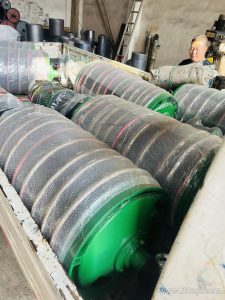
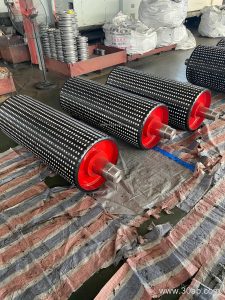
An assembled pulley is a complete conveyor pulley supplied as a finished unit rather than as separate components. It brings together the shell, the shaft, the hub and bearing assembly, the end discs or plates, and the locking elements into one ready-to-install package. In a quarry, a coal preparation plant, or a power station coal yard, maintenance teams often prefer this format because the unit arrives aligned, balanced, and ready for mounting on the conveyor frame. The same product is also described as a complete conveyor pulley assembly or a finished drum pulley, and both terms refer to the same integrated item.
The distinction matters at the purchasing stage. A bare shell, a shaft, and a set of bearings bought separately must be fitted and checked on site. A finished assembly shifts that work to the workshop, where tolerances and balance are easier to control. For a crusher discharge line or an aggregate transfer point, that can shorten downtime noticeably.
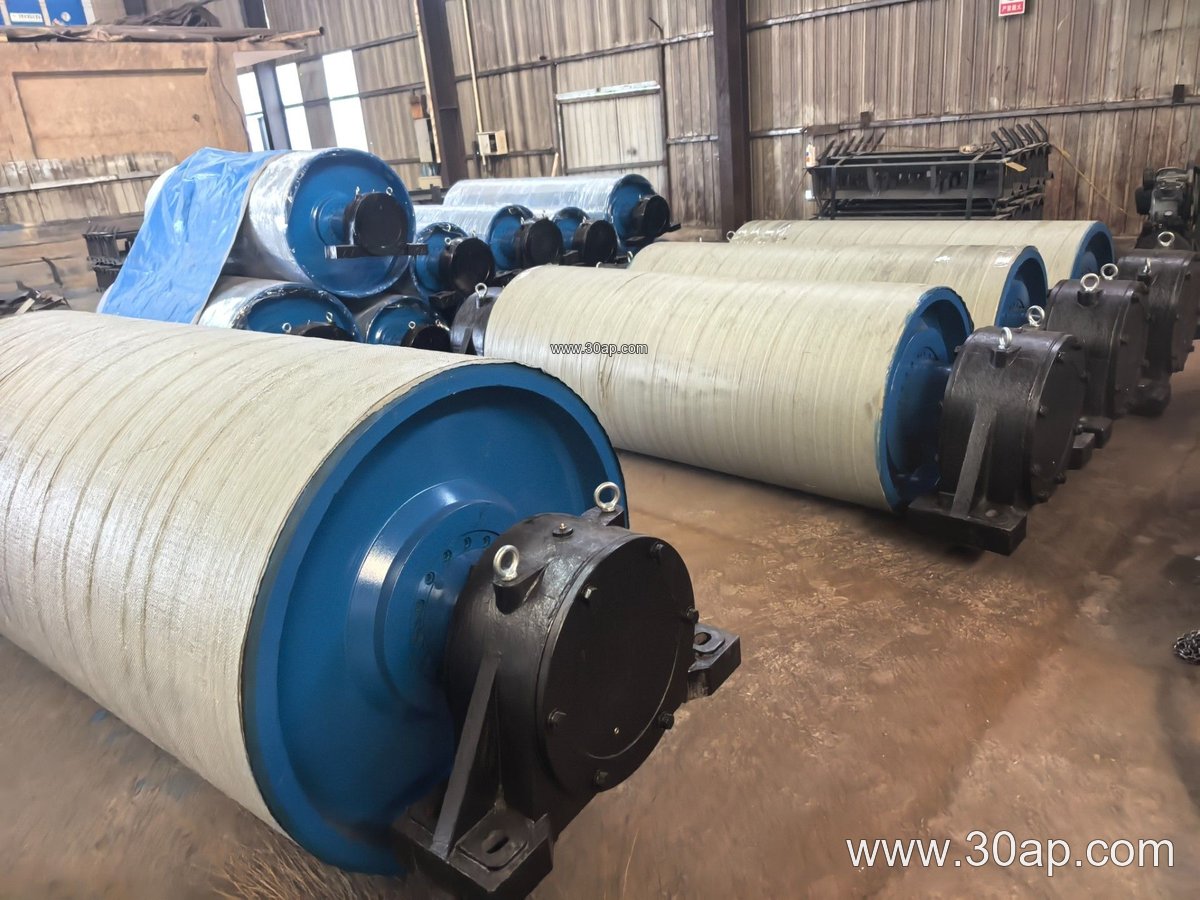
How the Assembly Is Put Together
Most designs use a steel shell machined to the required face width, welded to end discs that carry the hub. The shaft is keyed or shrink-fitted into the hub, and the bearings sit in housings at each end. Locking rings, taper bushes, or keyed connections hold the parts together. Surface treatment is chosen according to the duty: plain machined finish, cast rubber, cold-bonded rubber, hot-vulcanized rubber, diamond grooving, herringbone grooving, or ceramic lagging. Lagging thickness commonly falls in the 8 to 20 mm range.
The face width is normally a little wider than the belt it carries. Examples often quoted are B800 with a face around 950 mm, B1000 with roughly 1150 mm, and B1200 with about 1400 mm. These are reference relationships, not a fixed rule, and the final geometry should follow the conveyor design.
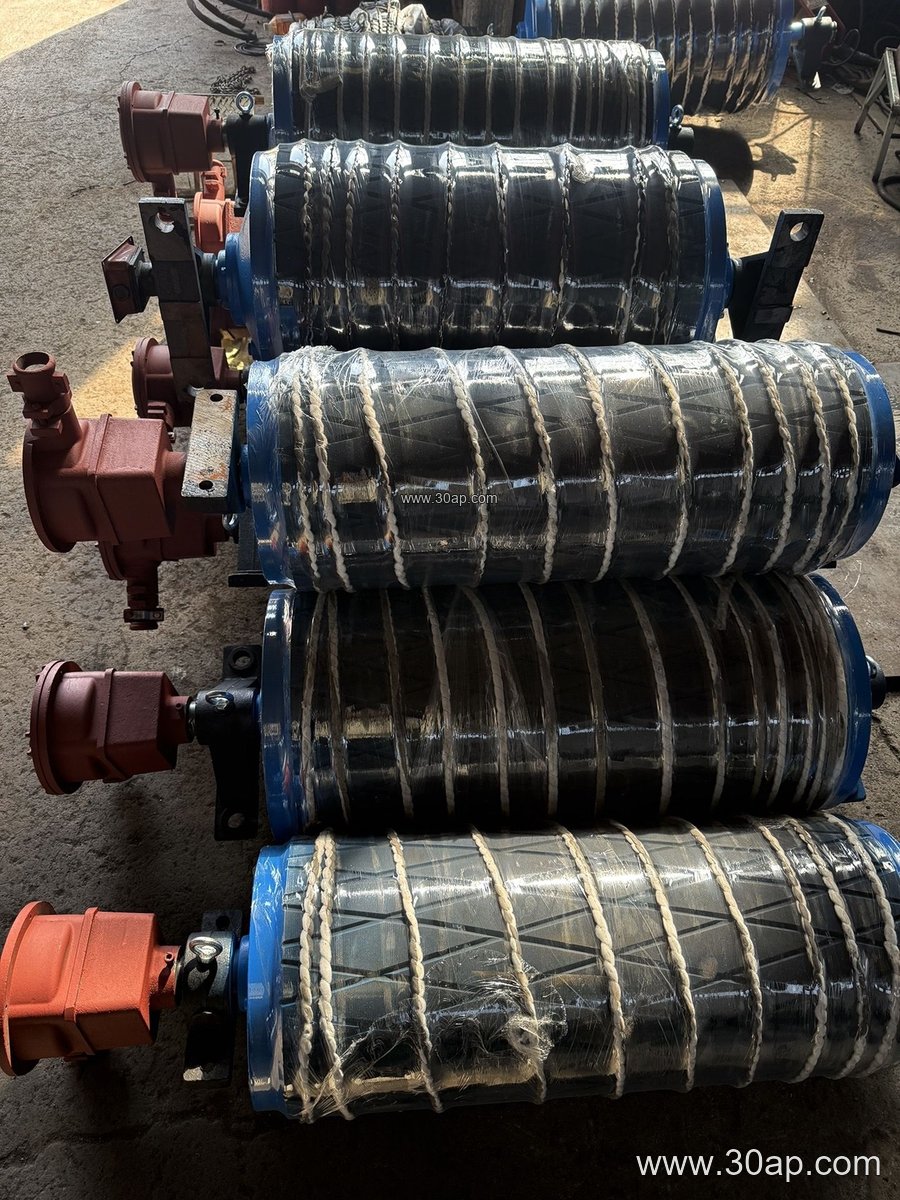
Where Assembled Pulleys Are Used
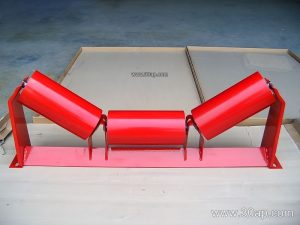
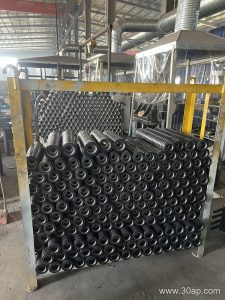
These units appear wherever a conveyor changes direction or transfers power. In a limestone mine, a head pulley at the discharge end drives the belt and throws material into the crusher. At the tail, a return pulley keeps tension and guides the belt back. A bend pulley changes the belt path around a transfer tower, while a take-up pulley maintains tension as the belt stretches. In a tunnel boring operation or a port bulk terminal, the same components sit inside a conveyor bracket and frame, working alongside conveyor idler rollers and the belt itself.
In a cement plant clinker line, heat and dust place demands on the lagging and bearing seals. In a steel plant sinter plant, abrasive fines call for a wear-resistant surface. In a gold mining or copper ore concentrator, heavy loads and long centers require careful shaft sizing.
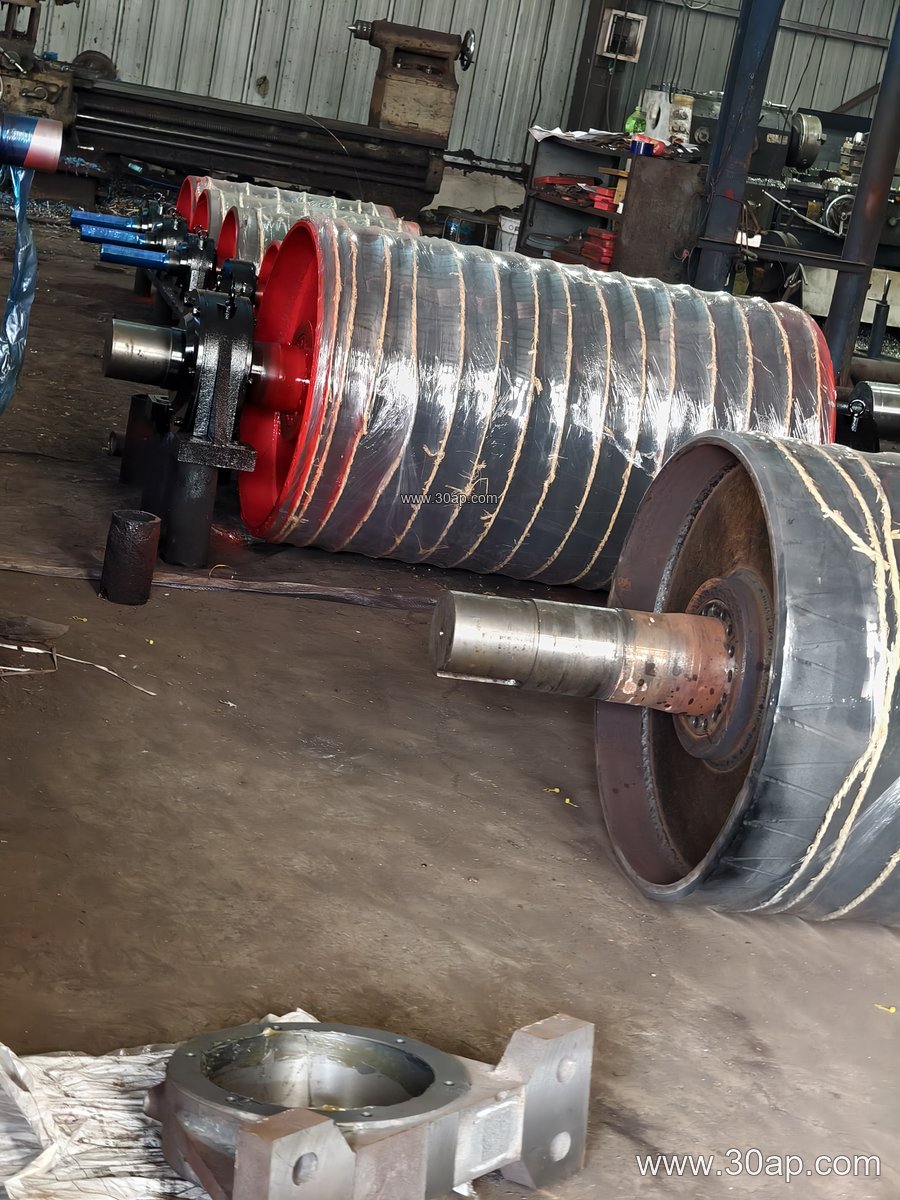
Matching the Pulley to the Belt
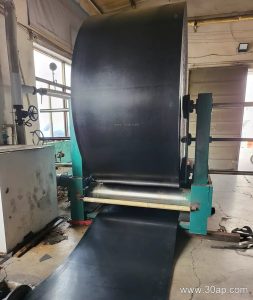
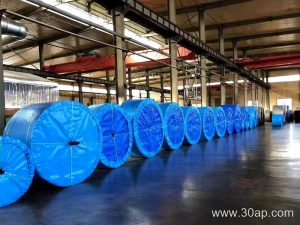
The belt is not an accessory to the pulley; the two work as a pair. A heavy-duty mining conveyor belt with a steel cord or multi-ply fabric core transmits high tension, so the pulley shaft and hub must be sized for that load. An abrasion resistant conveyor belt running over a ceramic-lagged drum benefits from the extra grip, while a flame retardant conveyor belt in an underground coal mine needs a pulley surface that will not create a spark risk through slip.
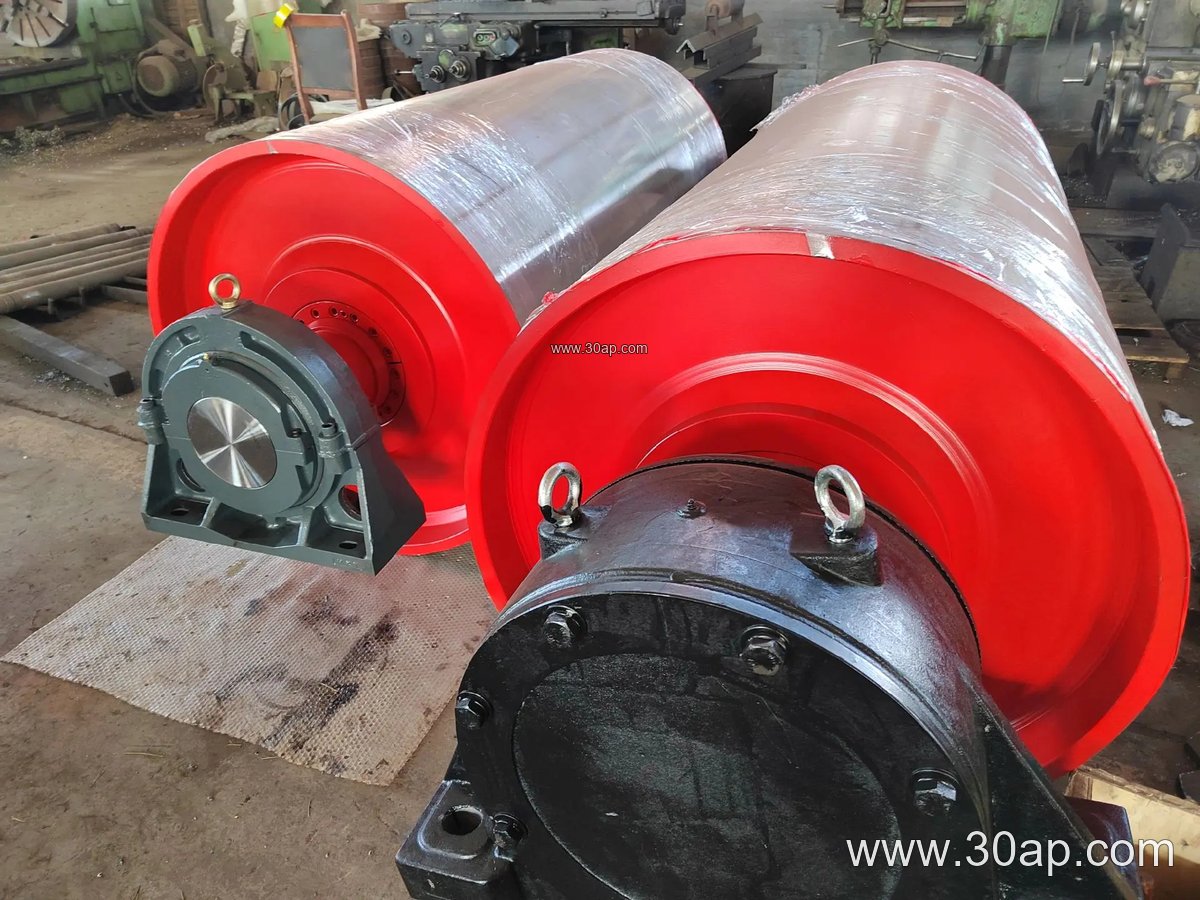
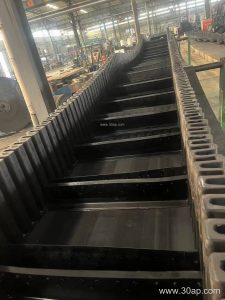
Belt tracking also depends on the pulley. A crowned face can help center a fabric core conveyor belt on a long run, while a flat face is common where a chevron conveyor belt or a corrugated sidewall belt is used and the cleats must clear the drum. A pipe conveyor belt needs a different arrangement entirely and is not a direct swap for a flat-belt pulley.
Common Size References
The table below lists typical combinations seen in catalogues and project drawings. They are reference values only, and each conveyor should be checked by its designer.
- B500 with Ø250 to Ø400, face about 600 mm
- B650 with Ø315 to Ø500, face about 750 mm
- B800 with Ø400 to Ø630, face about 950 mm
- B1000 with Ø500 to Ø800, face about 1150 mm
- B1200 with Ø630 to Ø1000, face about 1400 mm
- B1400 with Ø800 to Ø1250, face about 1600 mm
- B1600 with Ø1000 to Ø1400, face about 1800 mm
- B1800 with Ø1250 to Ø1600, face about 2000 mm
Shaft diameters commonly range from Ø50 up to Ø200, but the correct value depends on torque and radial load, not on belt width alone. A B800 pulley may carry a Ø80 shaft on a short light-duty run or a Ø120 shaft on a heavy crusher discharge. Do not assume one belt width locks in one shaft size.
What Buyers Should Check
Before ordering, confirm the belt width and the required face width, the drum diameter, the shaft diameter and keyway, the bearing type and housing, and the lagging specification. Ask whether the unit is balanced and whether the bearing seats are machined after welding. Check the mounting centers against the conveyor bracket dimensions. For a coal mining conveyor belt or an iron ore conveyor belt application, confirm the surface form and the sealing arrangement suit the dust and moisture level. For a food grade conveyor belt line, confirm the lagging material and finish are appropriate. A clear drawing and a stated duty usually prevent the costly mismatch that appears only after the pulley is on the frame.